


Disclosure: This article contains affiliate links. If you make a purchase through them, AmeriDisability may earn a small commission at no extra cost to you.
Imagine opening a jar of pasta sauce without pain, unlocking the front door with a tap of your Apple Watch, or brushing your teeth without lifting a hand — and doing all of it on your own schedule, in your own home. For the more than 61 million adults in the United States who live with a disability, according to the Centers for Disease Control and Prevention, independence is not a luxury. It is the foundation of a life lived on one’s own terms. The good news: a remarkable wave of products introduced in 2025 and 2026 is making that life more attainable than ever before.
From a robotic toothbrush that cleans in sixty seconds flat to a self-balancing home exoskeleton that received FDA clearance in August 2026, this year’s landscape of adaptive and accessible technology is genuinely exciting. Whether a person is newly navigating life with a disability, managing a progressive condition, or simply looking for smarter ways to stay independent as they age, today’s market offers options at every price point — from a $9 app to a subscription service for a state-of-the-art power wheelchair. This guide walks through the most promising products across five key categories, along with practical advice for choosing, funding, and getting the most out of each one.
Why Innovative Home Products Matter for Independence
The concept of “assistive technology” once conjured images of hospital-grade equipment available only through medical suppliers and therapists. That world is changing fast. Mainstream retailers like Walmart, Best Buy, and Amazon now stock hearing aids, weighted utensils, and AI-powered safety cameras alongside everyday goods. Major appliance brands like Whirlpool and Samsung are building accessibility features directly into their flagship products. And a growing number of start-ups are designing specifically for people with disabilities — not retrofitting consumer products as an afterthought.
The stakes are significant. When people with disabilities have the tools they need to manage daily routines independently, the downstream effects extend far beyond convenience. Research from the Assistive Technology Industry Association (ATIA) consistently links assistive technology access to reduced caregiver burden, decreased hospitalizations, and improved quality of life. For families, the right products can turn an unsustainable caregiving situation into a manageable one. For individuals, they can mean the difference between staying at home and leaving it.
Mobility and Physical Assistance
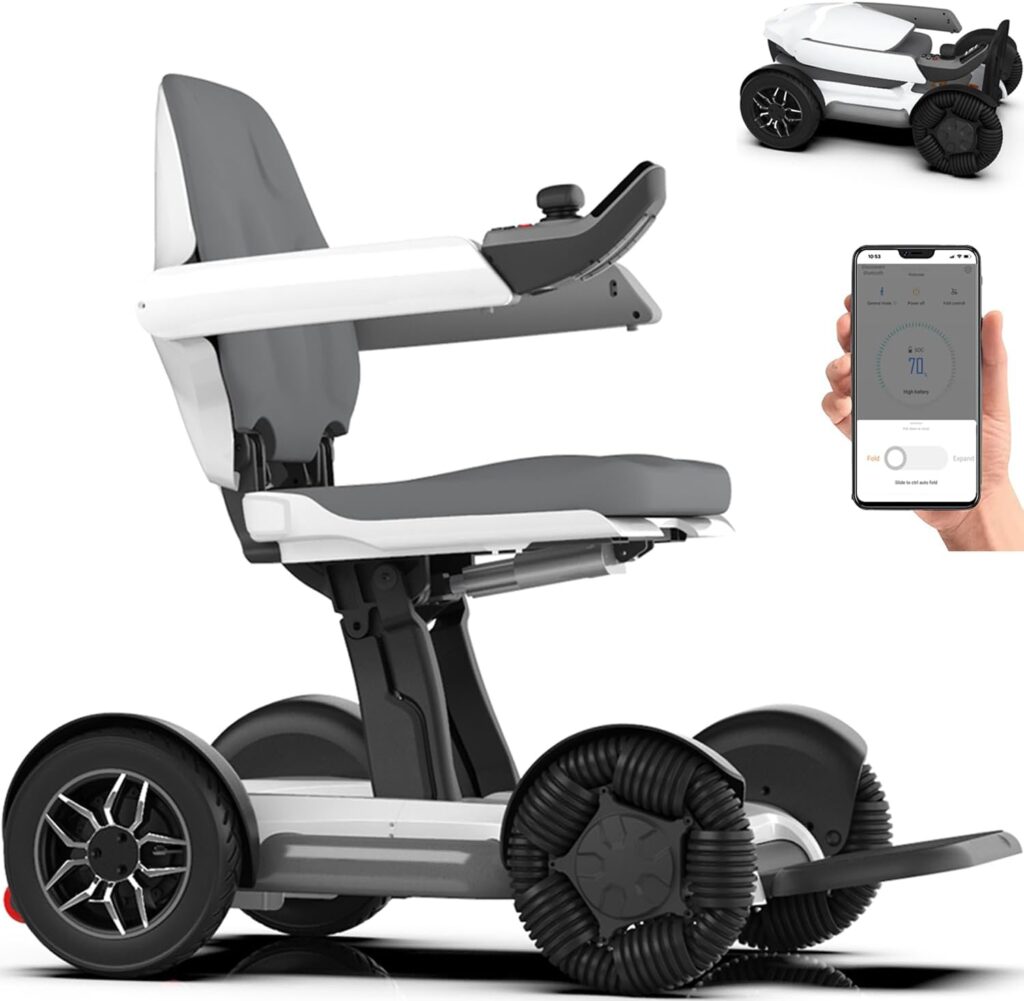
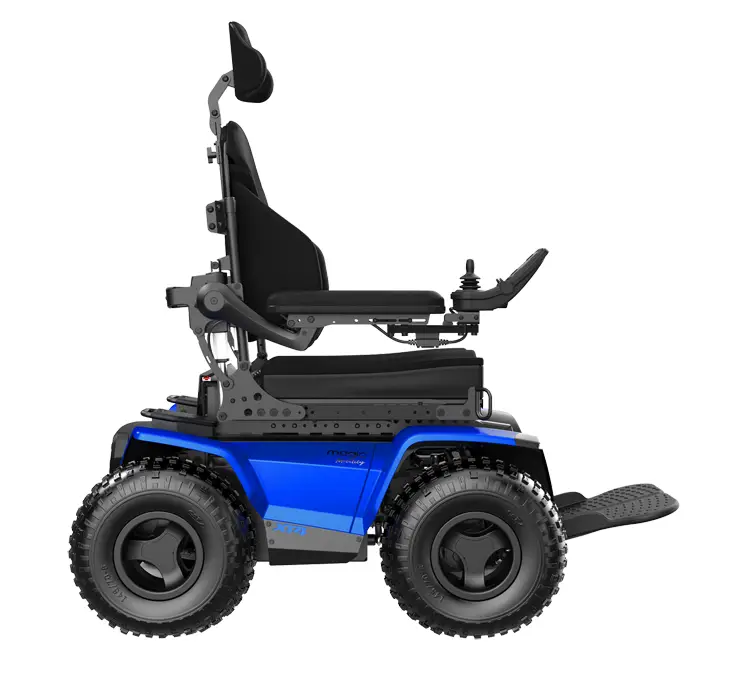
For wheelchair users who travel or live in varied environments, the Robooter X40 Power Wheelchair (debuted at CES 2024) represents one of the most practical advances in foldable power mobility. The chair auto-folds in approximately three seconds via remote control, features omnidirectional ten-inch front wheels for all-terrain use, and carries IPX4 water resistance — all at a consumer-accessible price of approximately $3,499 through MDmaxx. For users who need true off-road capability, the Sunrise Medical Magic Mobility XT4, launched April 2025, offers four 700-watt motors (2,800 watts total), all-wheel suspension, and a real-world range of up to 19 miles — a serious option available through authorized Sunrise Medical dealers at custom quote pricing.
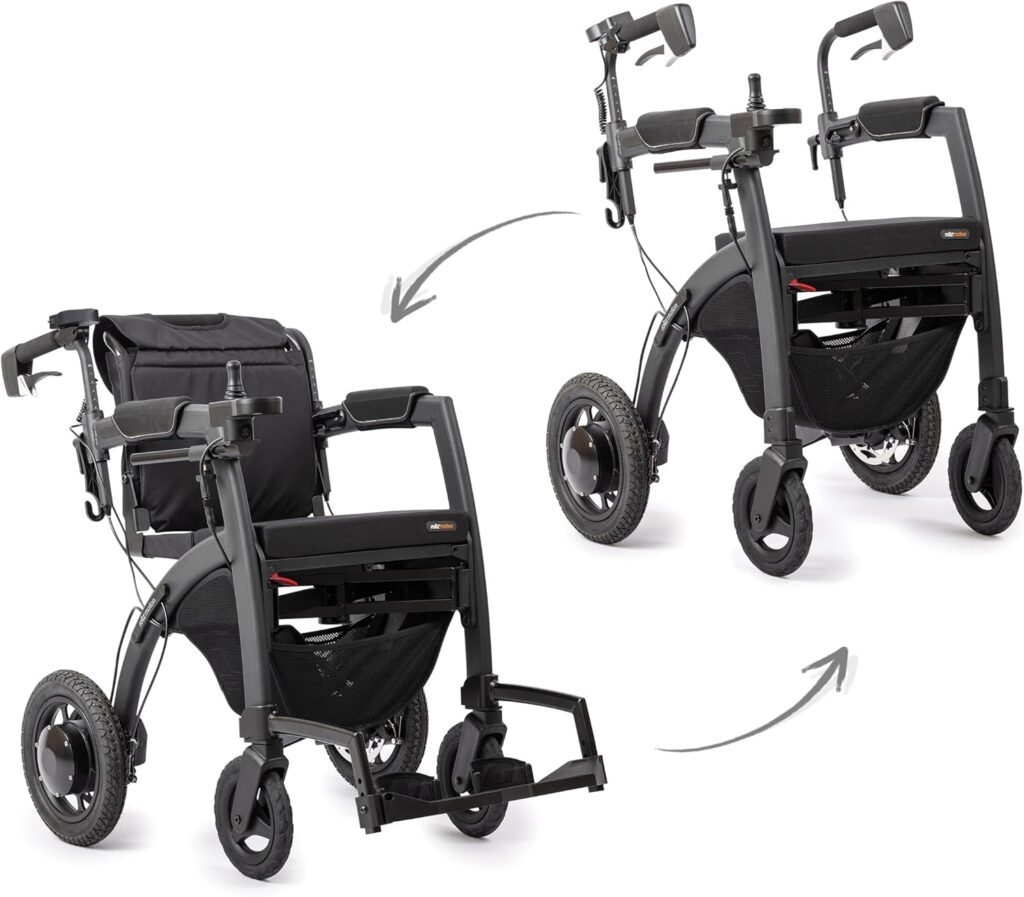

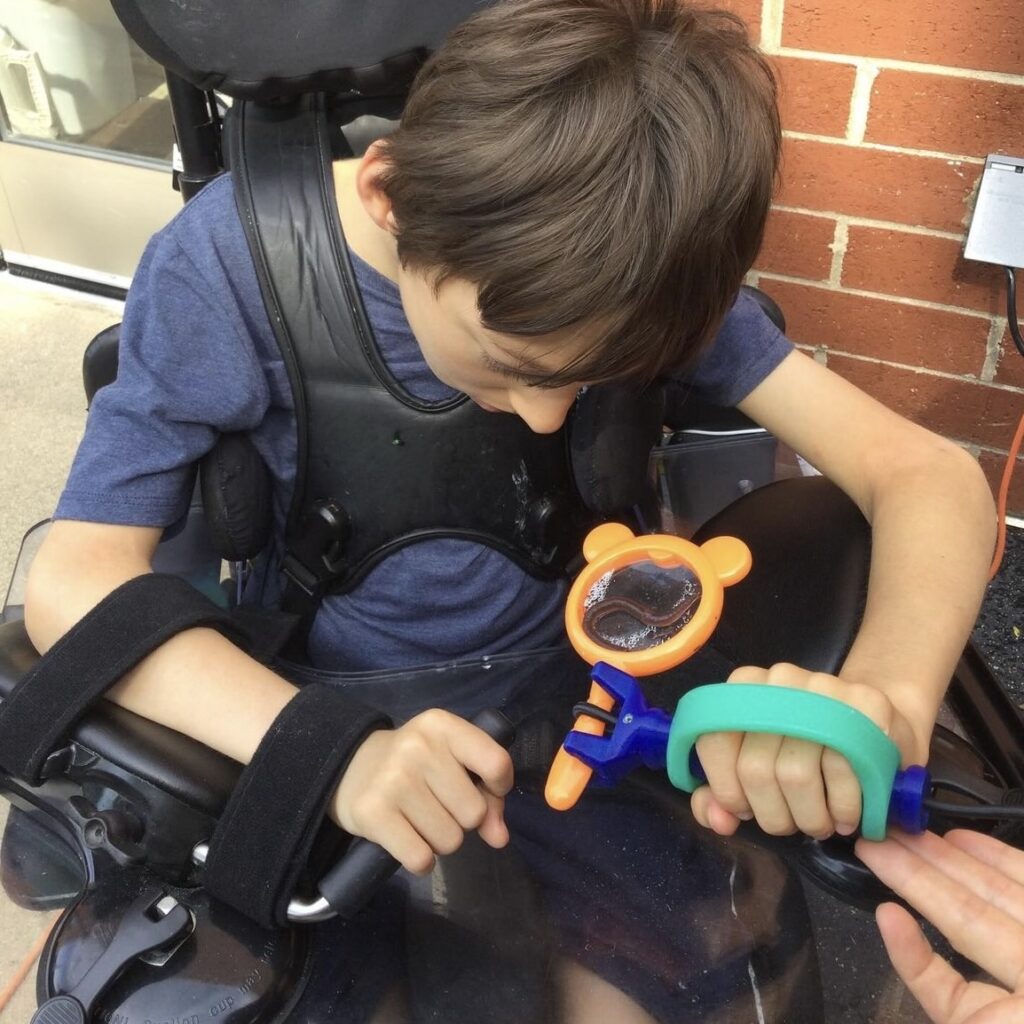
Not every mobility challenge requires a power chair. The Rollz Motion Electric, designed for people managing conditions like multiple sclerosis or Parkinson’s disease, functions as both a rollator walking frame and an electric wheelchair in one foldable unit — eliminating the need to own both devices. For those who can walk but need supplemental support, the Hypershell X Series consumer exoskeleton (starting at approximately $799 for the X Go model at hypershell.tech) uses AI-powered adaptive gait support to reduce physical exertion by up to 39 percent on the flagship X Ultra model, according to the manufacturer. And for the smallest everyday challenge that adds up over a long day — an unstable grip on a cup, utensil, or phone — the EazyHold Adaptive Grip Strap provides a washable, reusable silicone solution that fits any cylindrical handle without modification.
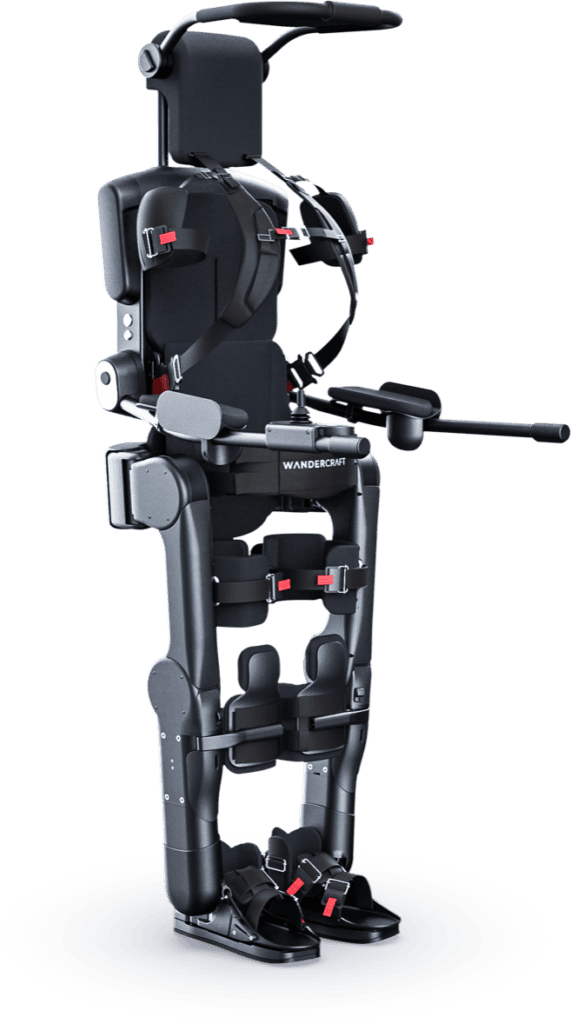
The most dramatic development in this category arrived in August 2026, when the FDA cleared the Wandercraft Eve — the first self-balancing home exoskeleton for wheelchair users in the United States. Designed for adults with spinal cord injury at any neurological level, the Eve enables users to stand and walk on level indoor surfaces and adjacent outdoor areas with a trained companion present (HomeCare Magazine). The device became available through National Seating and Mobility’s 180-plus locations in September 2026, with a Medicare billing pathway under HCPCS code K1007 — a significant step toward making this technology reachable for more people.
Smart Home and Voice-Controlled Tools

A front door that opens automatically, lights that respond to a voice command, and a power recliner controlled from a smartphone: these are no longer science-fiction scenarios. The Open Sesame Automatic Door Opener from Inclusive Inc. is a motorized swing-door system with Wi-Fi control, Amazon Alexa integration, an exterior keypad, and an interior wireless button that can be mounted directly on a wheelchair. Base systems start at approximately $262 and full residential installations begin around $2,514. For users who need keyless entry without a full door system, the Level Lock+ smart lock (approximately $219–$329, available at Amazon, Best Buy, and level.co) opens via an iPhone or Apple Watch tap stored in Apple Wallet, or through Siri or Alexa — a practical solution for people with limited grip or one-handed use.
Safety monitoring has taken a leap forward with the Kami Vision Fall Detect Camera, introduced at CES 2025. Unlike traditional medical alert pendants, this AI-powered security camera detects falls without any wearable device at all — critical for the many seniors who forget or decline to wear a pendant. The system runs approximately $99 for the camera plus approximately $45 per month for professional monitoring, which includes human verification of anonymized footage before emergency services are contacted.
In the kitchen and laundry room, Samsung’s Bespoke AI Washer and Dryer (samsung.com) can be monitored and controlled remotely through the Samsung SmartThings app, which sends end-of-cycle alerts and allows users to start, stop, or delay cycles from a smartphone — a helpful feature for anyone who has difficulty standing at the machine for extended periods. Bixby voice control is available on select models. The Sharp Drawer Microwave SMD2489ES goes further for people with limited hand function, offering more than 35 voice commands and a touchless “Easy Wave Open” door that opens with a hand gesture — no gripping or pulling required. The Pride Mobility My VivaLift! App, launched August 2024, is a free download that mirrors every function of the physical hand control for VivaLift power lift recliners, stores up to five memory positions, and can be shared with caregivers who may need to assist remotely. (App Store (iOS), Google Play (Android), Pride Mobility Press Release)
Adaptive Kitchen and Daily Living Tools

The most symbolically important kitchen launch of 2025 came from an unexpected source: Whirlpool. The Spin&Load Dishwasher Rack ($149.99 at KitchenAid) is a retrofit lower-rack replacement that spins 360 degrees, eliminating the need to lean, stretch, or reposition to reach every dish. Designed in direct partnership with the United Spinal Association and compatible with all 24-inch Whirlpool-brand dishwashers made after 2018, it demonstrates what’s possible when disability advocates have a seat at the design table (Whirlpool press release, May 2025).
For people managing Parkinson’s disease, essential tremor, or similar conditions, the AuntyFey Weighted Utensil Set (approximately $20.97 at Walmart) offers a four-piece set with 3.5-ounce handles, a 45-degree angle, and both right- and left-handed versions — all for under $25. The RoboTwist Deluxe Electric Jar Opener from Granitestone handles another daily frustration with a high-torque, hands-free, 360-degree lid rotation that works on any jar size, available on Amazon, Walmart and TikTok Shop. The StirMATE Smart Pot Stirrer, which clamps onto pots six to twelve inches in diameter and stirs at 30 rotations per minute for up to ten hours on a rechargeable battery, eliminates one of cooking’s most physically demanding tasks for people with limited arm mobility, available on Amazon (IFOPA Guidebook).
Medication management is another area where technology is reducing risk. The Hero Smart Pill Dispenser from herohealth.com holds a 90-day supply of up to ten medications, dispenses doses automatically at preset times, and sends alerts to caregivers by text, push notification, or phone call if a dose is missed. Subscription pricing runs $29.99 to $44.99 per month (plus a one-time $99.99 initiation fee), making this a premium service — but for households managing complex medication regimens, the safety benefits can be substantial.
Personal Care and Bathroom Independence

The standout product of the 2024–2026 cycle in personal care is the Curaprox Samba Robotic Toothbrush, launched June 2024 and described as the world’s first truly robotic toothbrush. The Samba uses high- and low-frequency oscillations to clean both upper and lower teeth simultaneously in approximately 60 seconds — with no hand movement required at all. At $340 from curaprox.us, it is a meaningful investment, but for people with cerebral palsy, ALS, stroke-related paralysis, or severe arthritis, it can restore an element of hygiene that previously required caregiver assistance.
Bathing independence has also advanced. The Sunderwell Electric Tub Transfer Bench, available at Walmart, is a motorized bench with a remote-controlled seat that adjusts from 2.3 to 19 inches, is rated IPX8 waterproof, and supports up to 308 pounds — enabling users who cannot fully bear weight through their legs to enter and exit the tub more safely. For toileting independence, both TUSHY (approximately $400 on Amazon) and the TOTO WASHLET S5 (approximately $1,500–$3,000 for toilet-plus-seat combos, available at retailers like Perigold and lesser priced models on Amazon) offer warm-water cleansing and air-drying that eliminate the twisting and reaching that can be dangerous or impossible after stroke, surgery, or with chronic pain. As a January 2025 Philadelphia Inquirer profile documented, a bidet seat was the product that made a difference for one person managing post-surgical limitations — and later for her mother after a stroke (Philadelphia Inquirer, January 2025).
Communication, Sensory, and Cognitive Support Tools

For people who are blind or have low vision, the OrCam MyEye 3 Pro continues to set the standard for wearable AI assistive technology. The device clips onto any pair of glasses and reads text aloud, identifies familiar faces, and responds to conversational questions through its AI “Just Ask” feature — available with financing starting at approximately $148 per month through orcam.com.
For people who benefit from augmentative and alternative communication, 2025 brought two notable iOS launches. Proclaim AAC, released June 18, 2025, supports individuals with autism, aphasia, ALS, Down syndrome, dementia, and other conditions at a one-time cost of $9.99 on the Apple App Store. SimpleSpeak AAC, free on iOS, added eye-tracking control support compatible with iOS 18 and later in its January 2026 update — bringing previously expensive access technology to anyone with a current iPhone or iPad at no cost.
Social isolation is one of the most significant and least visible threats to senior health. The ElliQ AI companion robot from Intuition Robotics ($249 enrollment plus $39–$59 per month at elliq.com) is designed specifically for adults 60 and older, proactively initiating conversation, sending reminders, facilitating video calls, and monitoring activity for caregivers. In some Florida counties, ElliQ has been provided free to seniors through Area Agency on Aging programs — a sign that public health systems are beginning to take social connectivity tools seriously as preventive care.
For people with hearing loss navigating a world of mainstream audio, the Jabra Enhance series of over-the-counter hearing aids (ranging from $799 to $1,995 per pair at Jabra Enhance, Walmart, Best Buy, and Amazon) requires no audiologist prescription and includes up to three years of remote telehealth care from licensed professionals. The FDA’s 2022 ruling enabling OTC hearing aids made this possible — and the Jabra Enhance is among the clearest beneficiaries.
For people with hearing loss who rely on telephone communication, the CaptionCall 67TB from Sorenson provides 58 dB of amplification and a 7-inch caption screen showing near-real-time transcriptions of incoming calls — and for eligible users, the phone, delivery, setup, and service are provided at no cost through the FCC’s Telecommunications Relay Services program (Sorenson CaptionCall).
What’s Coming Next: Products to Watch
Several products on the immediate horizon deserve attention. Orbit Research has announced both the Flow 40 braille display and the Strata notetaker family, both targeting prices under $2,500 — which would represent a dramatic reduction from the $4,000–$6,000 currently typical for premium braille displays. In the AI companion space, Wispy by CrossSense (winner of a £1 million UK prize) is developing a 24/7 prompt system that provides audio and visual cues for people with dementia when they become disoriented; a smartphone app version is planned for 2025–2026, with an augmented-reality glasses version targeted for 2027. And a New York State pilot launched in July 2026 is evaluating AI-enabled bidet seats in 60 older adults’ homes in partnership with Smart Hygiene and the NY Office for the Aging — a development that could eventually drive broader insurance and Medicaid coverage for these devices (NY Office for the Aging).
Products for Caregivers and Families

The line between products for people with disabilities and products for caregivers is blurring in meaningful ways. The Pride Mobility My VivaLift! App allows a family member to adjust a power recliner from their own device, which matters enormously when grip or button-pressing is difficult for the primary user. The Hero Smart Pill Dispenser sends real-time alerts to up to five designated caregivers if a dose is missed, removing one of the most stressful elements of long-distance caregiving. And the Kami Vision Fall Detect Camera can notify an entire care network the moment a fall is detected — without requiring the person who fell to call for help themselves.
These products collectively shift caregiving from reactive to proactive. When a caregiver can see that a medication was taken, that the person they support moved around the kitchen this morning, and that the front door opened at the expected time, they are not just worrying less — they are providing better care from wherever they are.
How to Choose the Right Products for Your Needs
No product is right for every person, and the best starting point for any adaptive technology decision is a conversation with a professional who specializes in assistive technology. Occupational therapists, certified rehabilitation technology suppliers (CRTS), and Assistive Technology Professionals (ATP) can conduct formal assessments and recommend products matched to specific functional needs and living environments. Many hospitals, rehabilitation centers, and independent living centers offer these assessments, sometimes at no cost.
When evaluating any product, a few key questions are worth asking: Does the product require setup or maintenance that the user cannot manage independently? Is there a return or trial policy? What happens if the subscription or service is discontinued — as Hero Health itself warns, the dispenser stops functioning if the subscription lapses? And does the product integrate with other devices and systems already in use, or does it require an entirely separate ecosystem?
Price alone should not drive the decision. A $20 set of weighted utensils may deliver more daily independence than a $500 device that goes unused because it doesn’t fit the actual routine. Starting with low-cost, high-use tools — grip aids, weighted utensils, a bidet attachment — and adding more sophisticated technology over time is often the most practical approach.
Insurance, Medicare, and Funding Options

The funding landscape for adaptive and assistive technology is complex but navigable. Medicare Part B covers durable medical equipment (DME) that a physician prescribes as medically necessary — including power wheelchairs, certain mobility aids, and, as of 2026, home exoskeletons under HCPCS code K1007 for qualifying diagnoses. Coverage is typically 80 percent after the deductible, with a Medicare supplement plan potentially covering the remainder.
Medicaid varies by state but often includes more extensive coverage than Medicare, particularly through Home and Community-Based Services (HCBS) waivers, which can fund home modifications, adaptive equipment, and personal care technology. Contacting the state Medicaid office directly or working with a benefits counselor through a Center for Independent Living (CIL) is the most reliable way to understand what is available in a given state.
ABLE Accounts (Achieving a Better Life Experience) allow people with disabilities (and families on their behalf) to save up to $20,000 per year tax-free for qualifying disability expenses — including assistive technology. All 50 states now offer ABLE programs, accessible at ablenrc.org.
State Assistive Technology Programs, part of the network coordinated by the Association of Assistive Technology Act Programs (ataporg.org), offer device demonstrations, short-term loans, and reuse programs that allow people to try equipment before purchasing. Vocational rehabilitation agencies can fund assistive technology for people with disabilities who are working or seeking employment. And numerous nonprofit equipment loan programs — including those run by the Muscular Dystrophy Association, United Spinal Association, and local disability organizations — provide devices at low or no cost to qualifying individuals.
Where to Shop: Trusted Retailers and Resources
For people who are new to the adaptive technology market, knowing where to start is half the battle. Amazon Adaptive Living (amazon.com/adaptive) curates products specifically designed for people with disabilities. Rehabmart (rehabmart.com), SpinLife (spinlife.com), and ActiveForever (activeforever.com) are dedicated adaptive equipment retailers staffed by specialists. Maddak/Ableware (maddak.com) is a long-established source for daily living aids.
For category-specific shopping: the Wandercraft Eve is available exclusively through National Seating and Mobility; OrCam products are at orcam.com; ElliQ ships direct from elliq.com; Hero Smart Pill Dispenser is at herohealth.com; Open Sesame automatic door systems are at inclusiveinc.org; and Kami Vision cameras are at kamivision.com.
Tips for Getting the Most Out of Adaptive Products
Setup and training make an enormous difference in whether a product gets used. Before purchasing any device, a person should watch manufacturer tutorial videos, look for product-specific online communities (particularly for power wheelchairs and AAC devices, where user communities are robust), and ask the retailer whether setup assistance is included. Many certified rehabilitation technology suppliers offer in-home setup and training as part of the purchase.
For smart home products in particular, taking time to create customized Alexa or Google Home routines — “good morning” routines that turn on lights, announce the weather, and remind about medications all at once — can multiply the value of a single Echo device many times over. For power wheelchair users, scheduling an annual reassessment with an ATP ensures that equipment settings are optimized as needs change over time.
Finally, connecting with a Center for Independent Living in the local area is one of the most underused resources available. CILs are consumer-directed organizations staffed primarily by people with disabilities, and they offer peer mentorship, equipment demonstrations, and benefits counseling — often at no charge.
Frequently Asked Questions
Are any of these products covered by Medicare? Some are. Power wheelchairs prescribed as medically necessary are covered under Medicare Part B DME benefits. The Wandercraft Eve home exoskeleton is billable under HCPCS code K1007 for qualifying diagnoses. Always obtain a formal prescription and prior authorization before purchasing DME intended for Medicare reimbursement. Contact the Medicare helpline at 1-800-MEDICARE or visit medicare.gov for guidance.
How do I find an assistive technology professional? The Rehabilitation Engineering and Assistive Technology Society of North America (RESNA) maintains a directory of certified ATP (Assistive Technology Professional) and CRTS (Certified Rehabilitation Technology Supplier) professionals at resna.org. Many hospitals, rehabilitation centers, and Centers for Independent Living also provide AT assessments.
Is the CaptionCall phone really free? For people with hearing loss who certify that captions are necessary to use the telephone, the phone, delivery, setup, and ongoing captioning service are provided at no cost through the FCC’s Telecommunications Relay Services fund. Visit captioncall.com or call 1-877-557-2227 to apply.
What is the difference between a rollator and a power wheelchair? A rollator is a wheeled walking frame — users walk while holding the frame for balance and support. A power wheelchair is a motorized chair in which the user sits and drives using a joystick or other controller. The Rollz Motion Electric is a hybrid that functions as both.
Can I try AAC apps before committing? Yes. Both SimpleSpeak AAC (free) and Proclaim AAC ($9.99) are low-cost enough to trial directly. PRC-Saltillo and Tobii Dynavox both offer trial versions of their software, and many state AT programs have loaner devices available for evaluation.
The products featured in this guide represent something bigger than convenience — they represent the growing recognition that good design should work for every body. Whether you start with a $9.99 app that gives someone a voice, a $20 jar opener that restores independence in the kitchen, or a cutting-edge exoskeleton that FDA cleared just this year, every step toward greater accessibility is worth taking.
If you or someone you love is navigating life with a disability, a chronic condition, or the natural changes that come with aging, know that the market is finally moving in your direction. Explore what fits your needs, ask your occupational therapist for personalized recommendations, and don’t hesitate to check with Medicare, Medicaid, or your state’s assistive technology program — many of these products may be covered or subsidized. Independence looks different for everyone, and you deserve tools that work for yours.
