

The disability arts movement has arrived at a turning point. From the Kennedy Center’s “We Hold These Truths” exhibition showcasing 15 young artists with disabilities to a nationally touring show celebrating 50 years of progressive disability studio history, October 2026 is one of the most active moments for disability arts in recent memory.
Crip Art — a growing movement within disability culture that centers disabled identity, aesthetics, and lived experience as the subject and the lens — is increasingly being collected by major museums, programmed by renowned arts organizations, and purchased by serious collectors. This is no longer a niche conversation. It is a cultural shift.
In October, Disability History Month and the height of the disability arts community’s exhibition season, we explore what the movement means, who is powering it, and where you can engage with it right now.
What Is Crip Art — and Why Does It Matter
Crip Art is not art about disability as tragedy or triumph. It is art that centers disability as a mode of being, a perspective, a culture — not a condition to be cured or overcome. The term “crip” has been reclaimed by disability activists and artists as a source of pride, in the same tradition as other reclaimed identity terms across civil rights movements.
Crip Art challenges viewers to examine their own assumptions about bodies, ability, productivity, and beauty. A painting by an artist with cerebral palsy is not valuable because it was made despite physical difficulty — it is valuable because of what the artist has to say, and because disability experience itself is a rich and largely undertold source of human perspective. Major institutions are beginning to recognize this: SFMOMA, the Smithsonian, the Kennedy Center, and regional art museums across the country have all actively acquired or exhibited disability-centered art in recent years.
Current and Recent Landmark Exhibitions (2024–2026)
Limitless: Celebrating Artists with Disabilities — National Touring Exhibition (Fall 2026–2029)
The most significant traveling disability arts exhibition currently on the road is Limitless: Celebrating Artists with Disabilities, organized by Bedford Gallery in Walnut Creek, California. The exhibition showcases 65 works by 49 artists with intellectual and developmental disabilities — ceramics, textiles, painting, drawing, and more — and celebrates 50 years of pioneering progressive art studio history through the work of three nationally recognized Bay Area institutions: Creative Growth Art Center, Creativity Explored, and NIAD (National Institute of Art and Disabilities). Curated by Emilee Enders, Limitless began its national tour in Fall 2026 and will travel through 2029. Check the Bedford Gallery website for current and upcoming tour venues near you.
Kennedy Center Access/VSA — “We Hold These Truths” (2026)
The Access/VSA Emerging Young Artists Program at the John F. Kennedy Center for the Performing Arts selected 15 finalists nationwide for its 2026 cohort, including UA Little Rock student Preston Lowe. The 2026 program theme, We Hold These Truths, invites artists with disabilities ages 16–25 to explore how their disability identity intersects with their deepest-held values and creative voice. Finalists received stipends and a fully funded professional development residency in Washington, D.C., including workshops and networking events. The exhibition opened at the Kennedy Center in March 2026 and is now touring nationally — an extraordinary platform for emerging disability artists at the start of their careers.
SFMOMA and Creative Growth: “The House That Art Built” – (2024 Exhibition)
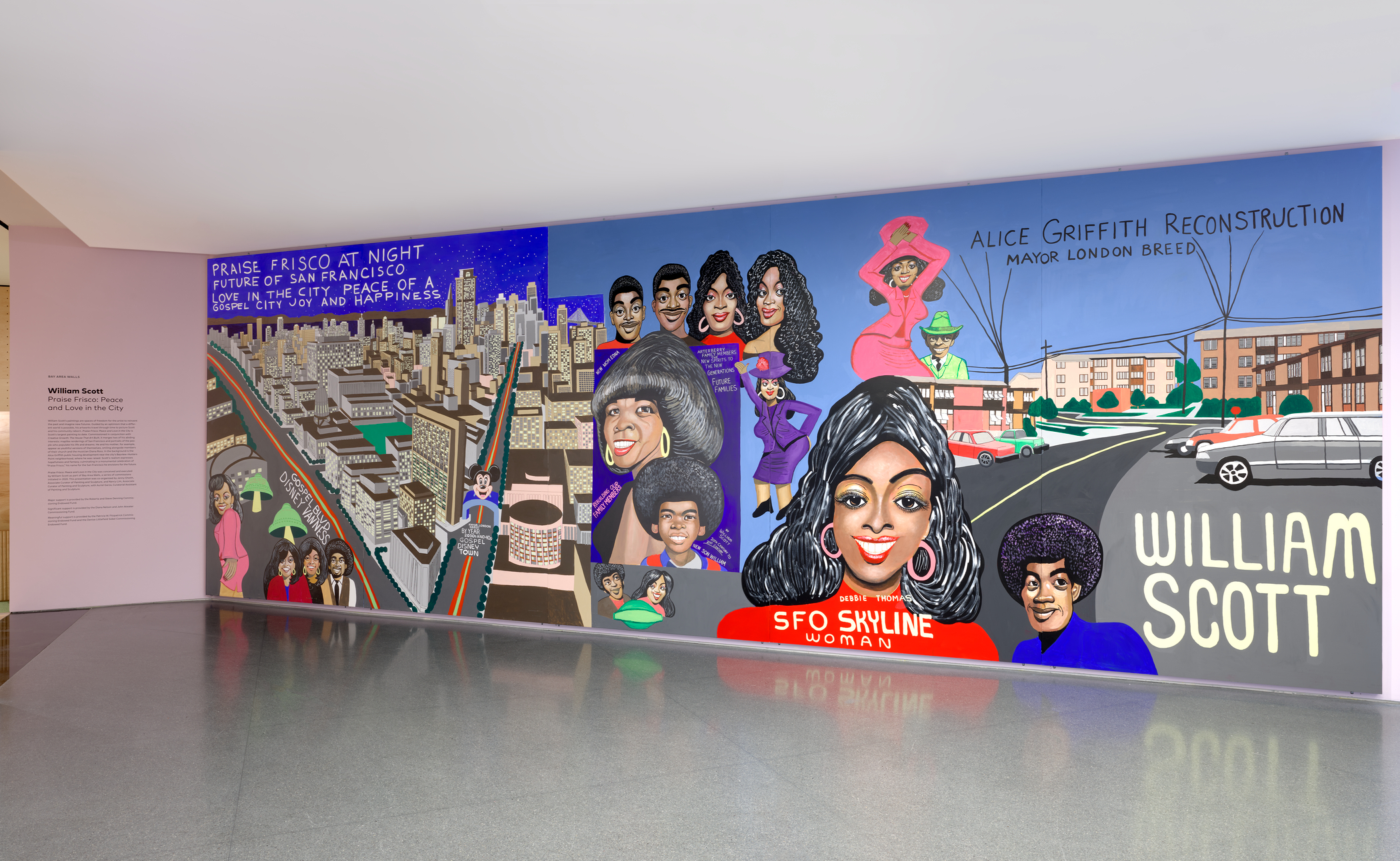
In one of the most significant museum partnerships in recent disability arts history, the San Francisco Museum of Modern Art (SFMOMA) presented Creative Growth: The House That Art Built — an exhibition of more than 80 recently acquired works by artists from the Creative Growth Art Center in Oakland, spanning acrylic painting, oil pastel drawing, ceramics, sculpture, and film. Featured artists included Camille Holvoet, Dwight Mackintosh, Dan Miller, Judith Scott, and William Scott, among others. The acquisition and exhibition marked a landmark moment: works by artists with developmental disabilities entering the permanent collection of one of the country’s foremost contemporary art museums, not as curiosities, but as serious additions to the American art canon.
Zimmerli Art Museum — “Smoke & Mirrors” – (2024 Exhibition)
The Jane Voorhees Zimmerli Art Museum at Rutgers University mounted Smoke & Mirrors, guest curated by disability arts scholar and curator Amanda Cachia. The exhibition featured 14 international artists with disabilities who explored “access aesthetics” — the ways artists with disabilities make systemic inequities in art institutions visible, using humor, antagonism, transparency, and invisibility. The exhibition grew directly from a 2022 disability community roundtable the museum hosted, which drew more than 40 participants with disabilities from New Brunswick and Middlesex County. It is a model for how regional museums can authentically integrate disability voices — not as an afterthought, but as a driver of exhibition programming from the ground up.
Artists to Know Right Now
The disability arts movement is driven by individual artists whose practices are as diverse as their backgrounds. Here are five artists currently exhibiting — or whose recent landmark work has reshaped how institutions think about disability and art.
William Scott | Creative Growth Art Center, Oakland / SFMOMA / Limitless National Tour (2024)
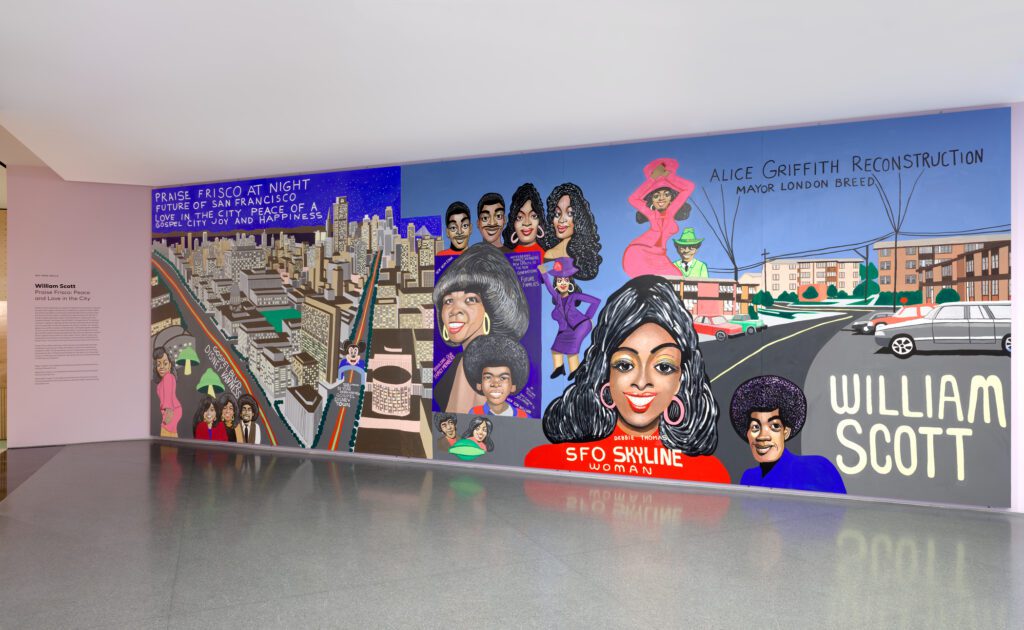
William Scott (born 1964, San Francisco) has practiced at Creative Growth since 1992. A self-taught painter, Scott creates brilliantly colored portraits of his personal heroes — Black musicians, politicians, civil rights leaders, family members — alongside map-like renderings of a utopian “Praise Frisco,” his gospel-filled vision of a future San Francisco. His work is held in the permanent collections of the Museum of Modern Art (New York), the Studio Museum in Harlem, LACMA, and SFMOMA. SFMOMA commissioned a major wall-scale painting by Scott as the centerpiece of the Creative Growth: The House That Art Built exhibition. His work is included in the Limitless national tour now traveling the country. Artist profile: creativegrowth.org/artist/william-scott
Ron Veasey | Creative Growth Art Center, Oakland / SFMOMA / Limitless National Tour
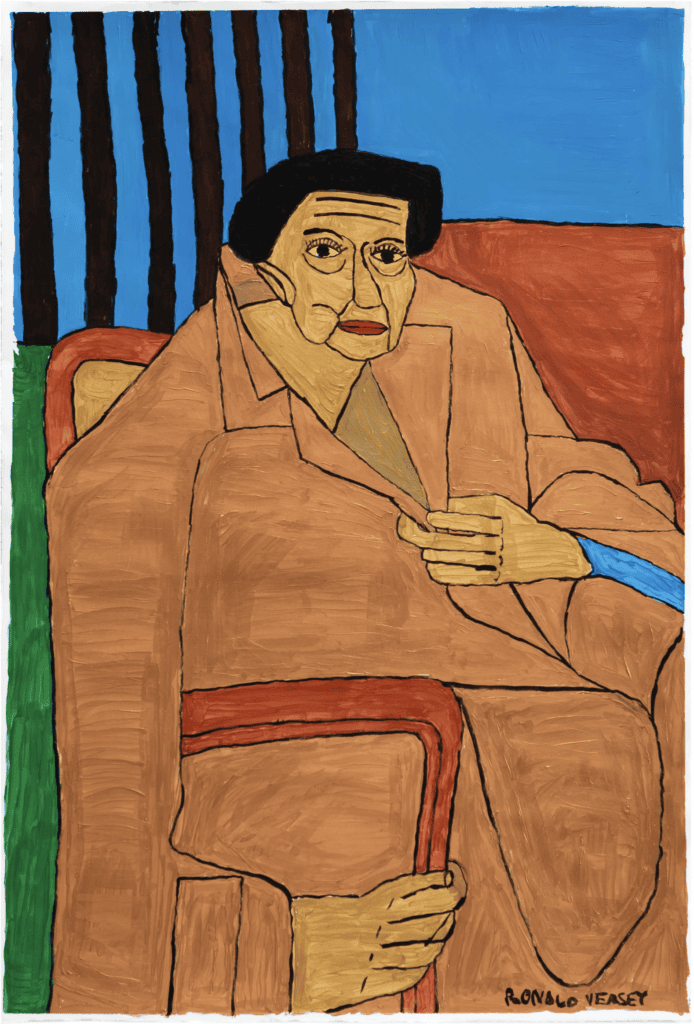
Ron Veasey (born 1957, Las Vegas) has been at Creative Growth since 1981 — over four decades of sustained studio practice. Veasey draws from fashion magazines and photography books to create boldly colored, large-scale portraits: figures outlined in black marker, forms filled with geometric shapes and vivid color. His work is in the SFMOMA permanent collection and is featured in the Limitless national touring exhibition. Over 40 years, Veasey has refined a signature style immediately recognizable for its confidence and visual intensity. Artist profile: platformart.com/artists/ron-veasey/
Preston Lowe | Kennedy Center Access/VSA 2026 “We Hold These Truths”
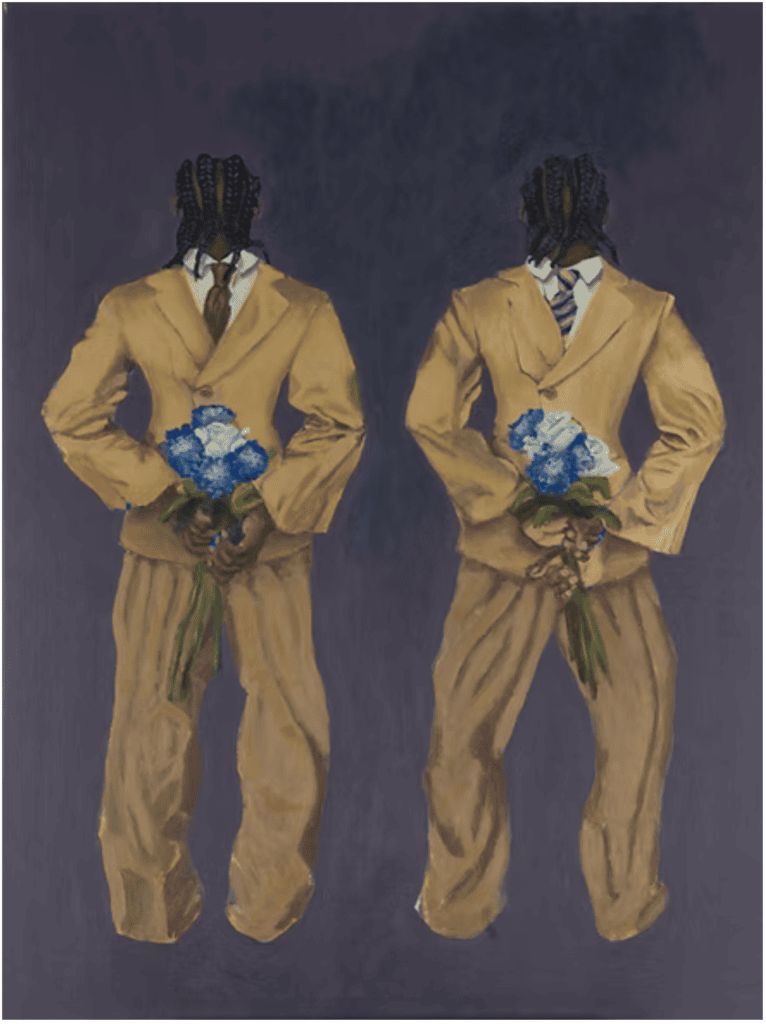
Preston Lowe is an 18-year-old freshman at the University of Arkansas at Little Rock with a cognitive disability that affects how quickly he absorbs information and verbally expresses himself — a dimension that, by his account, deepens rather than limits his artistic voice. Selected as one of 15 artists nationwide for the Kennedy Center’s 2026 Access/VSA Emerging Young Artists Program, Lowe’s piece Flip Side explores how people perceive themselves and one another, using layered imagery and tactile, unconventional materials. Flip Side was previously exhibited at Little Rock City Hall through the iCREATE Public Art Program before its national Kennedy Center debut. As Lowe said of his training at UA Little Rock: “This space has allowed me to develop my skills more intentionally, build meaningful connections, and stay grounded in my purpose.” More at: ualr.edu/art
Musicians with Disabilities: Young Artists Redefining Classical Music
The disability arts movement is not confined to visual art. Across the country, musicians with disabilities are reshaping classical music, jazz, and contemporary composition — and one organization is at the forefront of making that visible.
From the Top’s Musicians with Disabilities (MWD) program — based at fromthetop.org/MWD — gives young musicians with disabilities a professional platform typically reserved for nondisabled virtuosos: live performance, recording studio time, and public advocacy through the nationally distributed From the Top radio program on NPR. A 2026 short documentary produced with Vanishing Angle, available on YouTube, brings viewers inside the program and introduces several of its participants.
Julia LaGrand is the film’s guide — a 21-year-old blind violinist and disability activist who was featured on From the Top in 2021. LaGrand, who has been blind since childhood and a finalist in the National Braille Challenge for over a decade, reads music through Braille notation. Speaking in the documentary about her early awareness of disability, she reflects: “I remember very much feeling like people are becoming a little bit more wary of me as someone sort of different from them.” In the years since, she has transformed that experience into both artistic excellence and advocacy — mentoring younger musicians with visual impairments and modeling what professional musicianship looks like for blind artists navigating collaborative performance settings. In the documentary, she is visibly moved by collaborating with another blind musician: “Seeing Macy work in a very different way than I do, but a way I could sort of recognize was very cool to me.”
The From the Top Musicians with Disabilities program is produced in partnership with Access/VSA at the Kennedy Center. Learn more at fromthetop.org/MWD or watch the full documentary at youtu.be/dQqMpMcrr4w.
The Organizations Powering the Disability Arts Movement
VSA Arts (vsaarts.org), a program of the Kennedy Center for the Performing Arts, provides resources, exhibitions, and professional opportunities for artists with disabilities across the lifespan — from the Emerging Young Artists program for teens to adult professional development. Creative Growth Art Center (creativegrowth.org) in Oakland, California has operated since 1974 as a professional studio for adults with developmental, physical, and mental disabilities, and now counts SFMOMA among the institutions that permanently collect its artists’ work. Creativity Explored (creativityexplored.org) and NIAD Art Center (naidart.org) both operate on the same model — studio space, professional representation, and market access — and are co-presenting partners in the Limitless national tour.
These organizations share a belief: artists with disabilities deserve professional infrastructure, not charity. That distinction matters enormously to the artists themselves.
Museum and Gallery Accessibility: The Ongoing Challenge
The disability arts movement’s rise has coincided with — and accelerated — a broader reckoning about museum accessibility. The Americans with Disabilities Act requires accessible facilities, but physical access alone is not cultural inclusion. Exhibitions like Smoke & Mirrors at the Zimmerli raise harder questions: Are museums acquiring work by artists with disabilities, or only displaying it? Are artists with disabilities paid the same rates as nondisabled artists? Are curatorial and leadership roles open to people with disabilities?
Progress is real but uneven. The Limitless tour, the SFMOMA acquisition, and the Kennedy Center’s VSA platform suggest momentum. The next step — and the advocacy community’s ongoing push — is for disability arts leadership inside institutions: curators, directors, and board members who bring disability perspective to every exhibition decision, not just dedicated disability programming.
CURRENT EXHIBITIONS: DISABILITY ARTS IN 2026
- Limitless (national tour, Fall 2026–2029) — 49 artists with IDD, 65 works: bedfordgallery.org
- Kennedy Center VSA “We Hold These Truths” — 15 emerging artists with disabilities, touring: kennedy-center.org
- Creative Growth ongoing studio gallery — Oakland, CA: creativegrowth.org
- Creativity Explored — San Francisco: creativityexplored.org
- Disability Arts Online — International listings: disabilityarts.online
Search “[your city] disability arts” to find local exhibitions and studios.
How to Support Disability Arts in 2026
Supporting the disability arts movement is concrete and meaningful: attend the Limitless traveling exhibition when it reaches a venue near you; purchase work directly from Creative Growth, Creativity Explored, or NIAD (proceeds support the artists’ studios and livelihoods); follow Disability Arts Online (disabilityarts.online) for international exhibition listings and criticism; advocate at your local museum for disability arts acquisitions and accessible programming. And this October, take a moment to explore who is making art in your community — you may find extraordinary work right nearby.
Start with the Limitless national tour — visit bedfordgallery.org/exhibitions/traveling/limitless-celebrating-artists-with-disabilities for current tour venues. Then explore vsaarts.org, creativegrowth.org, and disabilityarts.online to follow disability artists, attend exhibitions, and support the studios that give these artists a professional home. October is the right moment to engage.
