

Imagine calling a ride to your doctor’s appointment and knowing, before the car even arrives, that the driver will not refuse you because of your guide dog. That the car will announce your stop out loud. That you can honk it from your phone to find it in a crowded parking lot. That there is no stranger behind the wheel whose mood, biases, or discomfort will determine whether you make it where you need to go.
For the 61 million Americans living with a disability, that kind of transportation certainty has never existed — until now.
Waymo, the fully autonomous robotaxi service operated by Alphabet (Google’s parent company), has been quietly transforming the transportation landscape in cities across the country since its first commercial launches in 2018. As of late 2026, Waymo operates in approximately 15 U.S. markets — including Phoenix, Los Angeles, San Francisco, Tampa, Orlando, San Antonio, and Nashville — with more cities on the way. And for many people with disabilities, particularly those who are blind or have low vision, the reaction to their first ride is not just appreciation. It is something closer to disbelief that this has taken so long.
“Because the person driving it didn’t want a dog in their car,” explained Chelsea Bridges, a certified vision rehabilitation therapist at Lighthouse for the Blind and Low Vision in Tampa, describing how clients have been turned away by human rideshare drivers. “With Waymo, they’re not going to turn you down.”
This is what autonomous transportation looks like when it works. And for the disability community, working is still only part of the picture.
The Transportation Gap Is Real — and Documented

Before understanding why Waymo matters, it helps to understand what it is replacing — or trying to.
According to the Bureau of Transportation Statistics (BTS), based on the most recent National Household Travel Survey, 18.6 million Americans have travel-limiting disabilities. On any given travel day, 40.2% of working-age adults with travel-limiting disabilities stayed home entirely — compared to 34.1% of their peers without disabilities. Among adults 65 and older with disabilities, that figure climbs to 57.1%.
This is not a matter of preference. It is a structural problem rooted in decades of inaccessible transit design.
The ADA requires that public transit agencies provide paratransit service for eligible riders — but that service comes with severe restrictions. Scheduling windows are rigid, same-day booking is generally not required, and service is limited to within three-quarters of a mile of fixed bus routes. For anyone who lives outside a fixed route, needs a spontaneous trip, or requires transportation after typical operating hours, paratransit simply does not fill the gap. A 2025 report from the National Council on Disability (NCD) found that roughly one-third of people with disabilities report being unable to get transportation for unplanned or spontaneous events.
Private rideshare has helped some — and failed others profoundly. In September 2025, the U.S. Department of Justice sued Uber under the ADA for systematic refusals of riders with service animals and stowable wheelchairs, alleging the conduct continued even after investigations and warnings. A separate Forbes investigation confirmed that service animal refusals remain a documented and persistent problem on both major platforms.
Meanwhile, research from the AAA Foundation for Traffic Safety shows that Americans outlive their ability to drive safely by an average of 7 to 10 years — closer to 6–7 years for men and roughly 10 years for women. An estimated 3.6 million Americans miss or delay medical care each year due to lack of transportation, according to the National Academies of Sciences, Engineering, and Medicine. That gap — between needing to get somewhere and having a reliable, dignified way to do it — is exactly the space autonomous vehicles have the potential to fill.
Enter the Robotaxi: What Waymo Actually Is
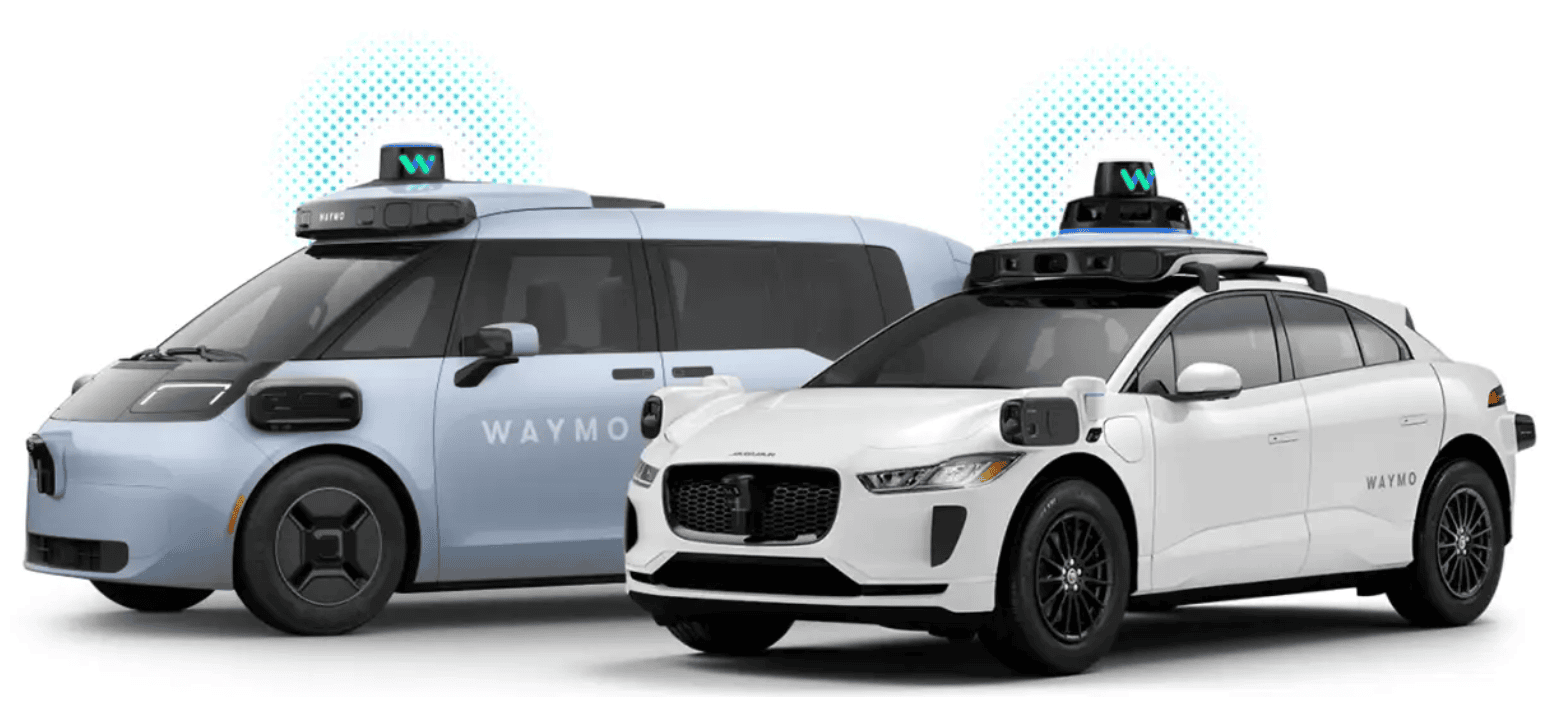
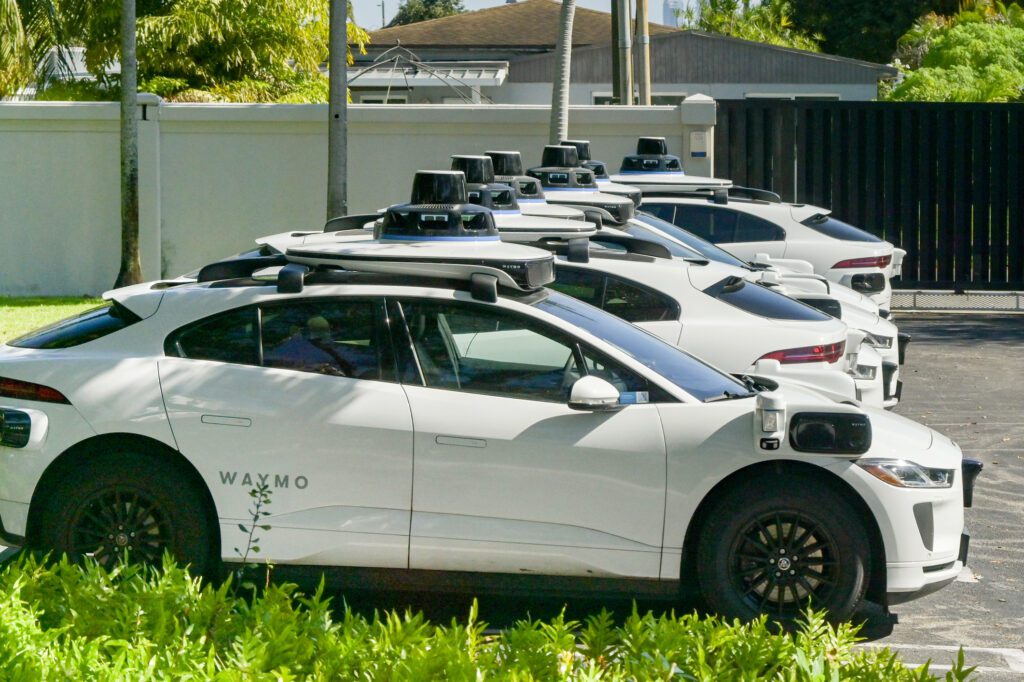
Waymo’s vehicles are fully self-driving — no human backup driver is present during commercial rides. The cars use a system called LiDAR (light detection and ranging), which uses laser light to build a continuous 360-degree map of the environment around the vehicle. Combined with cameras, radar, and audio sensors, the system detects lane markers, pedestrians, cyclists, traffic signals, temporary construction zones, and changing road conditions in real time.
The cars — currently Jaguar I-Pace electric SUVs — are summoned through the Waymo One mobile app. A rider opens the app, enters a destination, and is matched with a nearby vehicle. The app supports Apple’s VoiceOver and Android’s TalkBack screen readers, making it operable without sight. Once a car is en route, riders can trigger an external honk or a musical audio cue from the app to identify their specific vehicle.
Waymo’s own safety data — spanning 271 million driverless miles — shows 95% fewer crashes involving serious injury or death compared to what a human driver would statistically produce over the same distance. An independent review by the Insurance Institute for Highway Safety (IIHS) found a 68% lower overall crash rate compared to human drivers.
Why Driverless Is Different for People with Disabilities
The most significant thing about an autonomous vehicle is what it removes: the human driver.
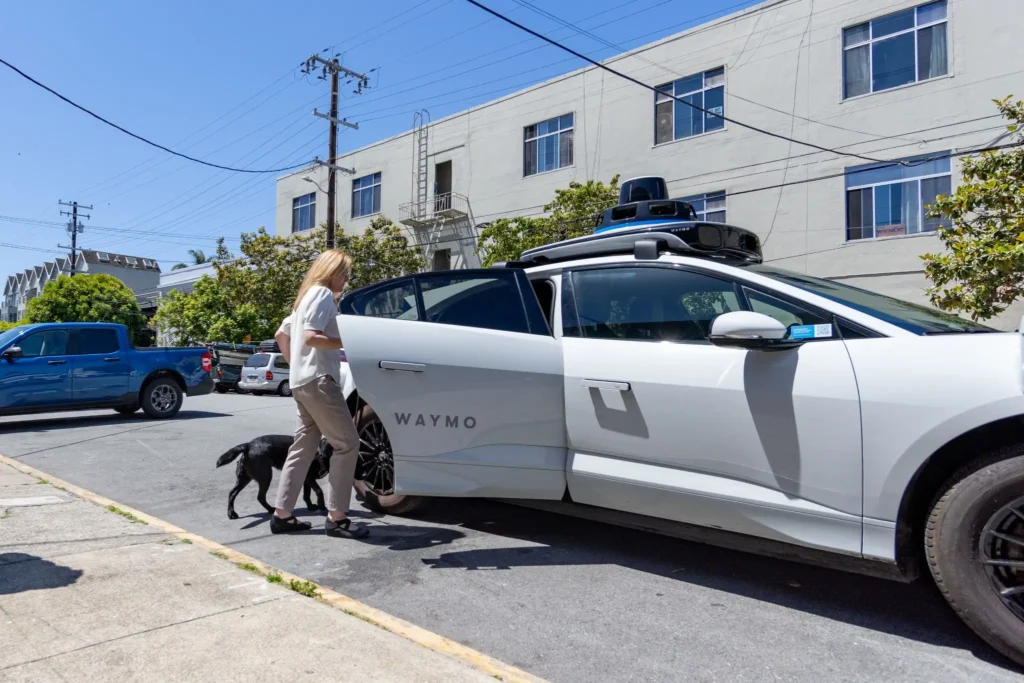
For people with disabilities, that human driver has historically been the single most unpredictable variable in the transportation equation. Drivers have refused rides to people with guide dogs — a violation of the ADA — claiming they were allergic or simply did not want a dog in their vehicle. Drivers have denied rides to blind passengers carrying white canes, to people in manual wheelchairs who needed to fold and stow their chair, and to people who communicated differently than expected.
“Some people get denied just because they’re blind and they have a white cane,” said Debbie Malone, president of the National Federation of the Blind of Florida’s Tampa chapter. “With Waymo, they’re not going to turn you down.”
This is not a minor convenience. For many people with visual impairments, cognitive disabilities, or communication differences, the unpredictability of a human driver is not just frustrating — it is a reason to avoid transportation altogether. Removing that variable removes a barrier that no amount of policy enforcement has fully solved.
The National Federation of the Blind has called Waymo’s technology a potential “game changer,” emphasizing that full autonomy eliminates driver discretion — the human variable most likely to produce illegal ride denials.
Accessibility Features Built Into Waymo
Waymo has formalized its accessibility work through the Waymo Accessibility Network, launched in October 2022 with 13 founding member organizations. The network includes the National Federation of the Blind, the American Council of the Blind, United Spinal Association, United Cerebral Palsy, the Epilepsy Foundation of America, Best Buddies International, and the American Association of People with Disabilities (AAPD), among others. Waymo was recognized as a semifinalist in the U.S. Department of Transportation’s Inclusive Design Challenge for this work.
Specific features built into the current service include:
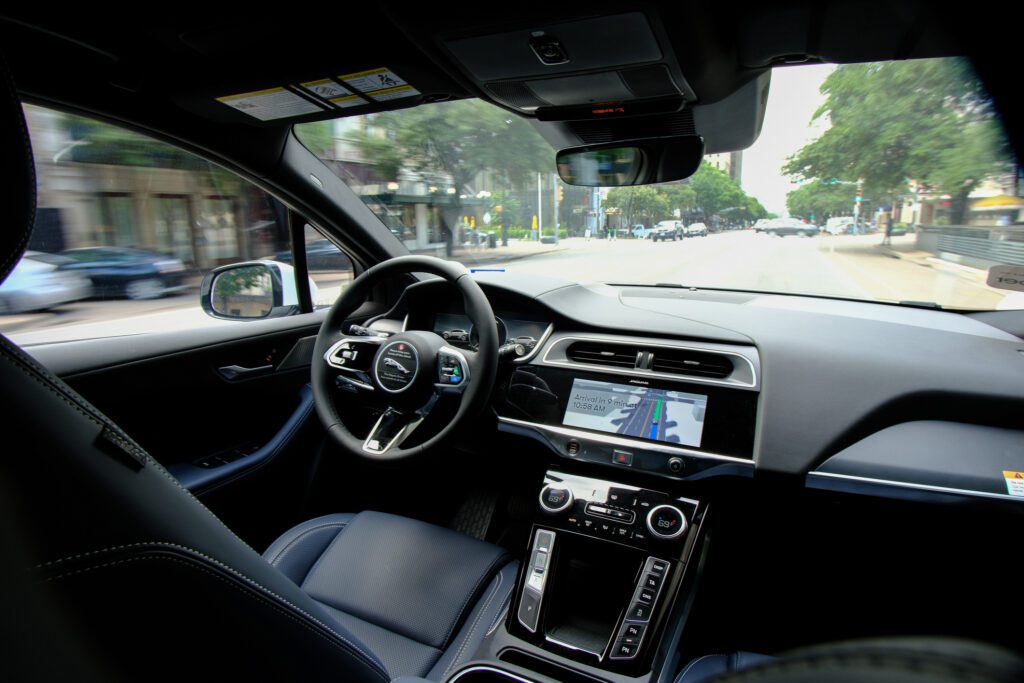
For blind and low-vision riders: Full screen-reader compatibility (VoiceOver on iOS, TalkBack on Android) throughout the Waymo One app. A car-locating sound feature allows riders to trigger an external honk or a musical melody through the vehicle’s exterior speakers to identify their car. In-car audio narration announces turns, stops, and arrival. Post-drop-off turn-by-turn walking directions to the rider’s final destination are delivered through the app.
In-car announcements: A February 2026 update added granular control over in-ride narration — riders can adjust how much the car announces mid-trip through Account → Accessibility → In-car announcements.
Guide dog and service animal policy: Waymo does not refuse rides based on the presence of any service animal. This directly addresses the pattern of illegal ADA-violating refusals by human drivers.
For deaf and hard-of-hearing riders: Because the driverless format requires no verbal communication with a driver, many passengers report that the autonomous ride experience is inherently more accessible for communication-related disabilities. All trip information is delivered visually through the app.
What Riders with Disabilities Are Saying
Chelsea Bridges, who is visually impaired and has never driven, has taken Waymo seven times since the service launched in Tampa in September 2026. She described it as genuinely useful while being honest about the learning curve.
“My foot always catches and I almost end up, like, falling into the car because it’s higher than normal,” she said, noting that the vehicle’s step height is a practical challenge. Identifying which Waymo is hers in a pickup area also remains difficult.
But the benefits, she said, outweigh the adjustments. “I do like that they’ll let you know when you’re getting close to your destination when it’s time to get out.”
In San Francisco, blind riders Ruben Brunt and Sarah Funes described the experience as providing independence they had not had before — riding without any social interaction with a driver, without the anxiety of wondering whether they would be accepted or turned away.
Laura Sneed, director of outreach and engagement for AARP Florida, noted that Waymo is opening doors for older adults who have retired from driving but still need to get around. “It is always uncomfortable to navigate a new type of transit system that you’re not used to,” she said, noting that AARP has been using a buddy system to help older adults navigate the app and ride experience. “The nice thing is that the more options that we have, the more space we’re making [it] more available and more accessible for older adults — and really people of all ages.”
Real Limitations You Should Know
Waymo is a genuine breakthrough for certain disability populations — but a notable gap for others. Before assuming it is the right option, here is what it does not yet do:
Power wheelchair users are largely excluded. Standard Waymo vehicles (Jaguar I-Pace SUVs) cannot accommodate power wheelchairs that cannot be folded and stowed. Riders who must remain in their chair cannot access the fully autonomous service. In Nevada, advocate Kelsey Brickl, a power wheelchair user, filed an emergency petition arguing Waymo’s rollout violated state accessibility law. The case highlights a categorical exclusion that affects millions of Americans who rely on complex power chairs.
No automated wheelchair securement exists in any commercial AV fleet. Even where accessible vehicles are offered, they require human assistance for boarding and securing — meaning independent access for power chair users remains unavailable from any AV provider.
Step height is a real barrier for users with gait, balance, or moderate mobility impairments, even if they are not wheelchair users. Bridges’ description of catching her foot on entry is a signal that the current vehicle body was not designed with mobility diversity in mind.
No driver means no physical assistance. If a rider needs help with a door, luggage, or navigation after drop-off, there is no one to help. Waymo’s app can provide walking directions to a final destination, but the car cannot provide in-person support.
Service is still limited geographically. Despite Waymo’s rapid expansion, it remains unavailable in most of the country. Suburban and rural areas — where disabled people often live, and where transit options are thinnest — remain unserved.
The app is a requirement. Waymo requires a smartphone and the Waymo One app to book rides. For people with cognitive disabilities who find app navigation difficult, or for older adults unfamiliar with smartphone technology, this is a genuine access barrier. AARP’s buddy system approach is a practical workaround, but it is not a built-in solution.
The Bigger Picture: What Comes Next
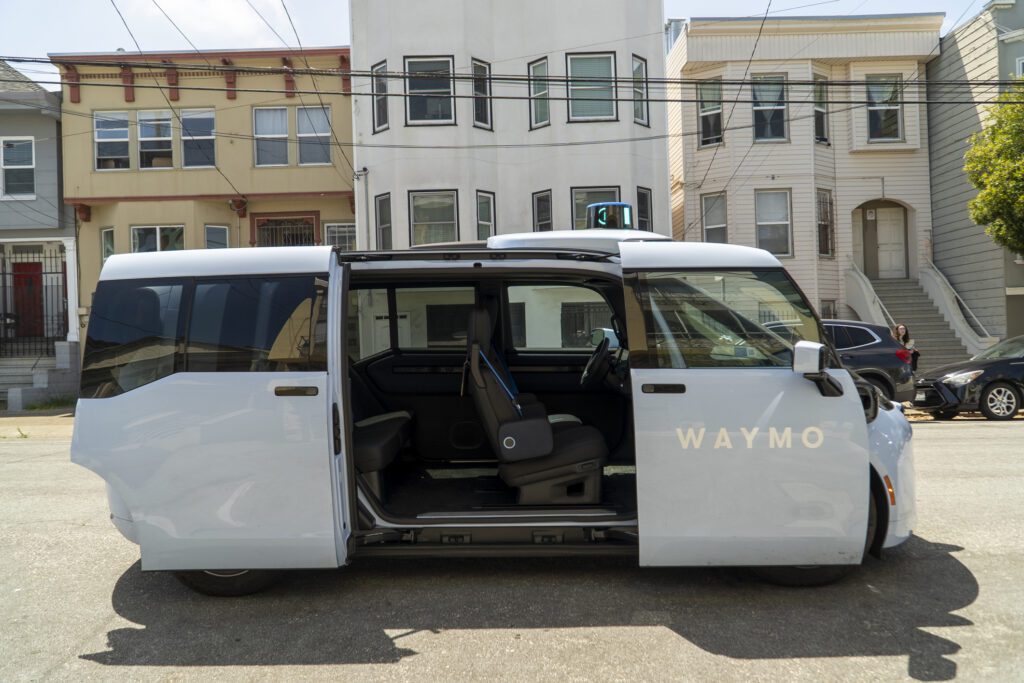
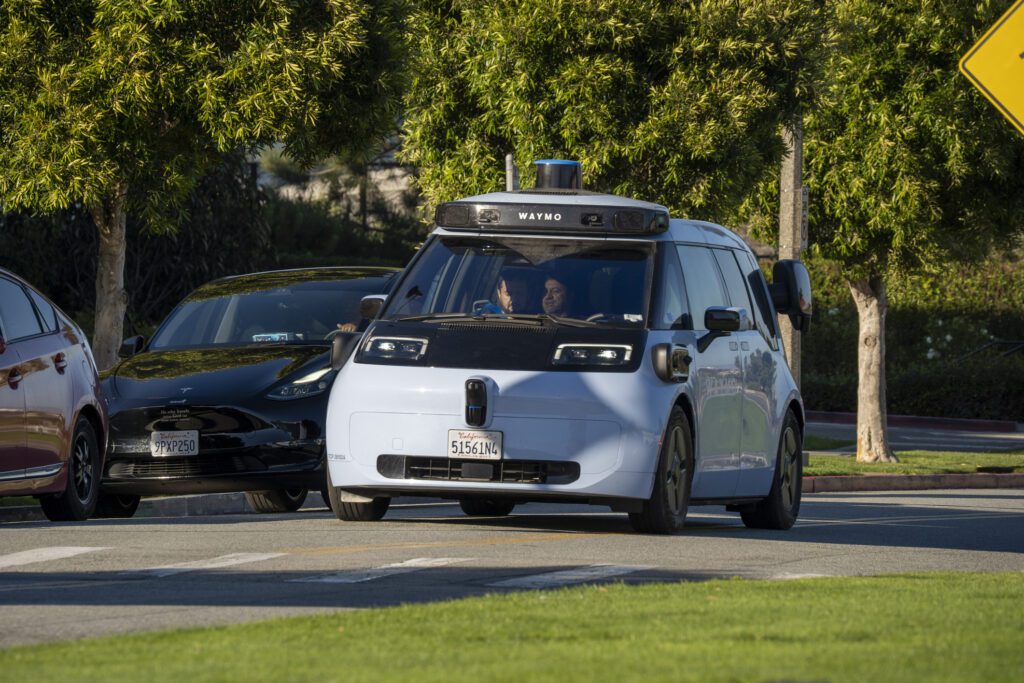
Waymo’s next-generation vehicle — the Ojai — began carrying passengers in May 2026 and was purpose-built with accessibility at its core. Features include a flat floor, low step-in height, Braille labels, grab bars, and full screen-reader compatibility. Its design reflects what Waymo heard directly from the disability community about the limitations of the current Jaguar I-Pace body.
On the policy front, the Autonomous Vehicle Accessibility Act (H.R. 4419) — introduced in 2025 by Reps. Greg Stanton (D-AZ) and Brian Mast (R-FL) with support from the NFB, the Blinded Veterans Association, and Waymo — would prohibit states from requiring a licensed human driver in Level 4 or 5 autonomous vehicles (which would bar blind people from independent autonomous travel) and would allocate $5 million for ADA-related transportation infrastructure research. The bill is in committee as of this writing.
The AAPD’s We Will Ride initiative continues to convene national disability organizations to engage with AV companies on inclusive design standards. And May Mobility — a smaller AV company focused on municipal contracts — has deployed wheelchair-accessible autonomous shuttles in Grand Rapids, Minnesota, where approximately 8% of riders use wheelchairs. It is the only company confirmed to offer autonomous WAV service as of this writing.
The disability community is clear-eyed about all of this. The National Council on Disability has warned that AV deployment is moving faster than accessibility standards. The Disability Rights Education and Defense Fund (DREDF) has flagged that not all AVs are being trained to detect people in wheelchairs or with service animals in their path. There is work to do — both inside the vehicles and in the policy frameworks governing them.
How to Sign Up for Waymo
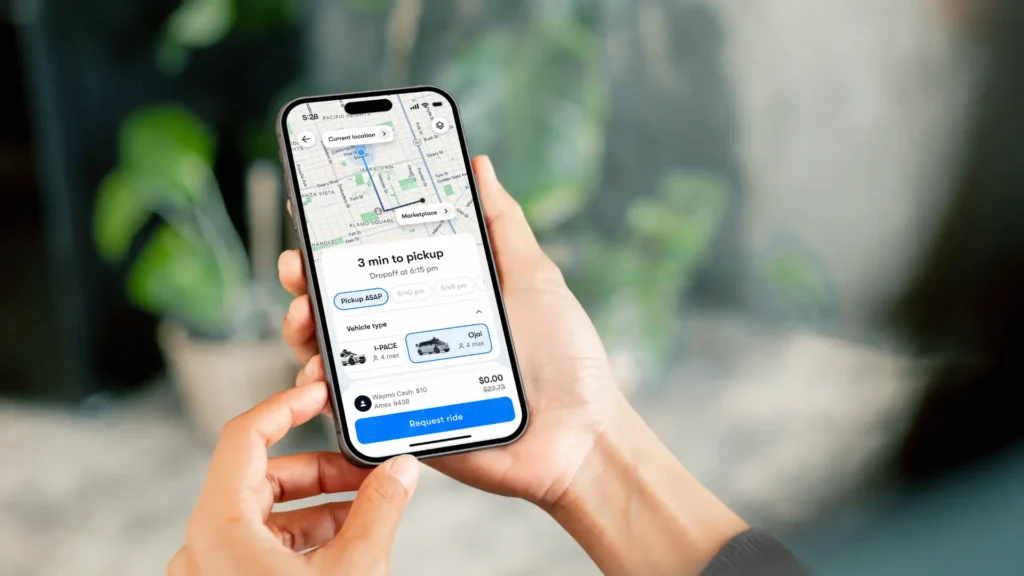
- Download the Waymo One app from the App Store or Google Play. The app is screen-reader compatible.
- Check if your city is live at waymo.com. Current confirmed markets include San Francisco, Los Angeles, Phoenix, San Diego, Las Vegas, Tampa, Orlando, Miami, San Antonio, Nashville, Austin, and others.
- Sign up for updates for cities not yet fully open at waymo.com/updates.
- In Atlanta and Austin, Waymo is accessible through the Uber app: Account → Settings → Ride Preferences → Autonomous Vehicles → toggle Waymo on.
- In Nashville, Waymo is accessible through either the Waymo One app or the Lyft app.
- Use the accessibility features: When your car is nearby, use the in-app honk or melody feature to identify it. Enable in-car announcements under Account → Accessibility.
If you are an older adult or need help getting started, contact your local AARP chapter — many are actively running buddy programs to support first-time autonomous riders.
Is Waymo Right for You? A Quick Guide
| Your Situation | Can Waymo Help? | Key Notes |
| Blind or low-vision | Yes — strong fit | Screen-reader app, audio car-locator, in-car narration, no service animal refusals |
| Deaf or hard of hearing | Yes | No verbal driver interaction required; all info through the app |
| Manual wheelchair user (chair folds) | Yes, with transfer | You fold your chair and store it; you transfer to a seat independently |
| Power wheelchair user | Not yet | Current vehicles cannot accommodate non-folding power chairs |
| Older adult transitioning out of driving | Yes, with support | AARP buddy programs available in some markets; app setup required |
| Cognitive or communication disability | Often yes | Removes human driver social dynamic; app may require initial support |
Download Waymo One: Available on iOS and Android | Screen-reader compatible Sign up for updates: waymo.com/updates Waymo Accessibility Network: waymo.com/waymo-accessibility-network
What You Can Do
Transportation is independence. If you or someone you love has been waiting for a ride option that treats people with disabilities the same as everyone else — Waymo may already be in your city.
- Check your city: Visit waymo.com to see if Waymo is available or coming to your area. Sign up for updates at waymo.com/updates.
- Download and set up: Get the Waymo One app on iOS or Android. Enable screen-reader support and in-car announcements in the accessibility settings.
- Bring a buddy: If it’s your first time or you’re helping a family member, AARP’s buddy system approach is a great model — try one ride together before going solo.
- Advocate for accessibility: Power wheelchair users deserve autonomous transportation too. Support the AAPD’s We Will Ride initiative and contact your congressional representative about the AV Accessibility Act (H.R. 4419).
- Tell us your experience: Have you taken a Waymo ride? Share your experience in the AmeriDisability community — your story could help someone else take the first step.
AmeriDisability is committed to keeping the disability community informed about technology that matters. Explore more tech coverage at AmeriDisability.com.
Sources
-
- Quotes from Chelsea Bridges, Debbie Malone, and Laura Sneed originally appeared in “Are Waymo’s Driverless Cars the Next Step in Accessibility?” by Emma Brisk, WUSF, October 28, 2026.
If You Liked This Article, You May Also Like
- Best Adaptive Home Products of 2026: Tools for Independence and Daily Living
- Federal Policy and Americans with Disabilities in 2026: What Has Changed, What Is at Stake and What the Data Show
- Paris Paralympics 2024: Elevating Disability Rights and Global Perceptions
- Resources for Individuals and Employers to Combat Disability Discrimination
