

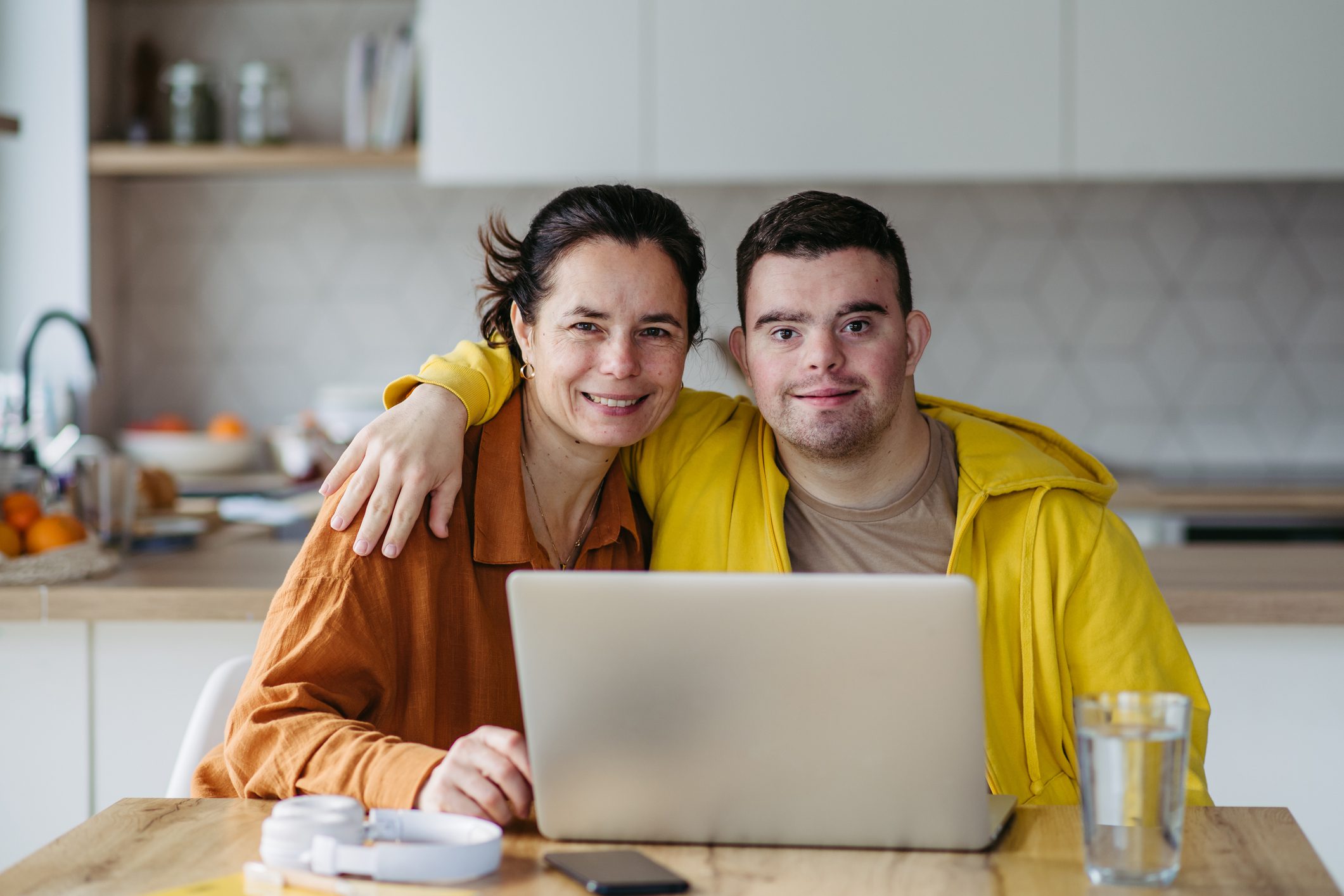
When Jessica Patay’s son Ryan was diagnosed with Prader-Willi Syndrome at just five weeks old, her world shifted completely. Prader-Willi Syndrome is a rare genetic condition that affects muscle tone, appetite regulation, and development, and Ryan’s diagnosis meant that Patay would spend years navigating medical appointments, educational planning, benefit systems, and the relentless emotional labor that falls on the shoulders of a family caregiver. What she found — or more precisely, what she didn’t find — was a community of mothers going through the same thing.
“I looked around and there was no space that really held the specific grief, joy, and exhaustion of being a mom doing what I was doing,” she has said in interviews. So in 2017, she built that space herself. She founded We Are Brave Together, a 501(c)(3) nonprofit that now supports more than 4,000 caregiving mothers in all 50 states and more than 20 countries, offering Connection Circles, retreats, and community resources for moms raising children with every kind of disability and neurodiverse diagnosis. Patay has also authored two books on caregiving, Becoming Brave Together and Suddenly Brave Together.
Patay’s path from overwhelmed parent to nonprofit founder is not unique. Across the country, caregivers — parents, spouses, siblings, and adult children of people with disabilities — are turning the gaps they discover into businesses, nonprofits, and advocacy organizations. They are building the supports they once desperately needed, and in doing so, they are reshaping the disability services landscape from the ground up.
The Caregiver-to-Entrepreneur Pipeline: Why It Happens

The numbers behind family caregiving in the United States reveal an enormous, often invisible workforce. According to the Family Caregiver Alliance, more than 53 million Americans provide unpaid care to an adult or child with a disability, chronic illness, or aging-related need. These caregivers spend years — sometimes decades — learning to navigate healthcare systems, government benefit programs, school districts, insurance companies, and community services. In the process, many develop expertise that most professionals simply do not have.
That expertise, combined with firsthand knowledge of what is missing, creates a natural pipeline toward entrepreneurship and nonprofit leadership.
Caregivers who start businesses or nonprofits typically cite one of several motivations. First, there is the gap: the service, product, or support that simply does not exist for the person they love. Second, there is the community problem: the isolation and lack of peer support that makes caregiving so unsustainable. Third, there is the systems problem: policies, programs, or funding structures that do not serve people with disabilities well, and that caregivers are uniquely positioned to change.
What caregivers bring to these ventures is credibility forged in lived experience, networks of other families who face the same challenges, and — often — a drive that professional entrepreneurs rarely match. When the mission is personal, burnout and quitting carry a different weight.
Real Stories: Caregivers Who Built Something New
Suzanne Mintz and Cindy Fowler — Caregiver Action Network (1993)
In 1974, Suzanne Mintz was 28 years old when her husband Steven was diagnosed with progressive multiple sclerosis. For years she navigated his care largely on her own, without resources, training, or community support designed for someone in her position. Around 1991, she connected with her friend Cindy Fowler, who was caring for a mother with Parkinson’s disease. Despite the differences in their situations, the two women discovered that the challenges they faced — emotional, logistical, financial, and physical — were strikingly similar.
That recognition became the seed of what would eventually grow into the National Family Caregivers Association, co-founded by Mintz and Fowler in 1993. The organization, now known as the Caregiver Action Network, became one of the first national voices specifically for family caregivers. It established the roots of National Family Caregivers Month, celebrated each November. Mintz has testified before Congress, authored books on caregiving, and spent decades advancing policy on behalf of the tens of millions of Americans doing this work. Her story illustrates a truth that many caregiver-entrepreneurs discover: sometimes the most powerful thing you can build is not a service, but a movement.
Michele Thorne — Care 4 the Caregivers (2018)
When Michele Thorne’s children were diagnosed with autism, she did what many parents in her position do: she threw herself into finding the best possible care for them. As a former geneticist with degrees in molecular biosciences and biotechnology, she was more equipped than many to navigate complex medical systems. What she was not equipped for — and what she found almost no one was addressing — was the emotional, physical, and educational toll the caregiving role was taking on parents like her.
In 2018, Thorne founded D.A.M.E.S. Charities, which later became Care 4 the Caregivers, a Phoenix-area nonprofit offering free mental health counseling, parent training, and community support specifically for caregivers of children with disabilities. She was later joined by co-founder Dr. Gabrielle Ficchi, a licensed therapist, certified rehabilitation counselor, and researcher whose own academic work focuses on disability pride and independent living.
The organization’s core insight is simple and often overlooked: if the caregiver breaks down, so does the care. Keeping caregivers mentally and physically healthy is not a luxury — it is a disability services strategy. Care 4 the Caregivers has since expanded its programming and continues to serve families in the greater Phoenix area.
Jessica Patay — We Are Brave Together (2017)
As described above, Jessica Patay founded We Are Brave Together in 2017 after her son Ryan’s diagnosis with Prader-Willi Syndrome made her aware of how isolated caregiving mothers can become. What began as a small community effort has grown into a global network of more than 4,000 caregiving mothers representing families navigating autism, rare diseases, Down syndrome, cerebral palsy, developmental disabilities, and many other conditions. The organization’s model — peer connection, shared experience, and community ritual — has proven deeply effective, in part because it was designed by someone who needed it, not by professionals observing from a distance. Patay has also published two books and regularly speaks on caregiving, identity, and the particular grief and love that come with raising a child with significant support needs.
Rob Scheer — Comfort Cases (2013)
Rob Scheer grew up in the foster care system himself and later adopted children through foster care with his husband, Reece. When his children arrived with their belongings packed in trash bags — a common and dehumanizing experience for youth in the system — Scheer recognized it as more than a logistical issue. It was a symbol of how foster youth are treated: as temporary, disposable, not worth a proper bag.
In 2013, Scheer founded Comfort Cases, a nonprofit dedicated to ensuring that every child in foster care receives a backpack filled with essentials — toiletries, a stuffed animal, a journal, and other comfort items — instead of a garbage bag. Many of the youth served by Comfort Cases live with disabilities, mental health diagnoses, and trauma-related conditions. By 2019, the organization had distributed more than 250,000 cases and received national recognition, including the Warren and Mary Alice Babineaux Award from the National Council For Adoption. Scheer has appeared on The Today Show and was the subject of a 2019 documentary, A Forever Family: Fostering Change One Child at a Time. His story illustrates how personal experience with the systems that serve people with disabilities — not just caregiving for them — can catalyze meaningful organizational change.
Common Gaps That Drive Caregiver Entrepreneurs

Across the stories of caregiver-turned-founder, certain themes recur with striking regularity. These are the gaps that keep showing up:
Peer support and community. Professional services rarely substitute for the lived-experience wisdom of someone who has been through the same thing. Caregivers repeatedly describe isolation as one of the hardest parts of the role, and organizations that build genuine peer community fill a need no clinical program can.
Caregiver mental health. The emotional toll of disability caregiving is well-documented and chronically under-addressed. Few existing programs are designed specifically for the person providing care, as opposed to the person receiving it.
Transition points. Gaps in services tend to cluster around transitions: when a child with a disability ages out of school-based services, when a person with a disability moves from one type of residential support to another, or when a caregiver loses a spouse and must navigate benefits as a surviving partner. These are moments when nothing fits and no one is there.
Cultural and linguistic access. Disability services have historically been designed for and by white, English-speaking, middle-class families. Caregivers from communities of color, immigrant families, and rural communities often find that existing organizations simply do not speak to their experience.
Products and technology. Some caregiver-entrepreneurs start businesses rather than nonprofits because the gap they identified is a product or technology: an adaptive tool, an accessible toy, a scheduling platform, or a supply delivery service that doesn’t yet exist.
Resources for Caregivers Considering Starting a Business or Nonprofit
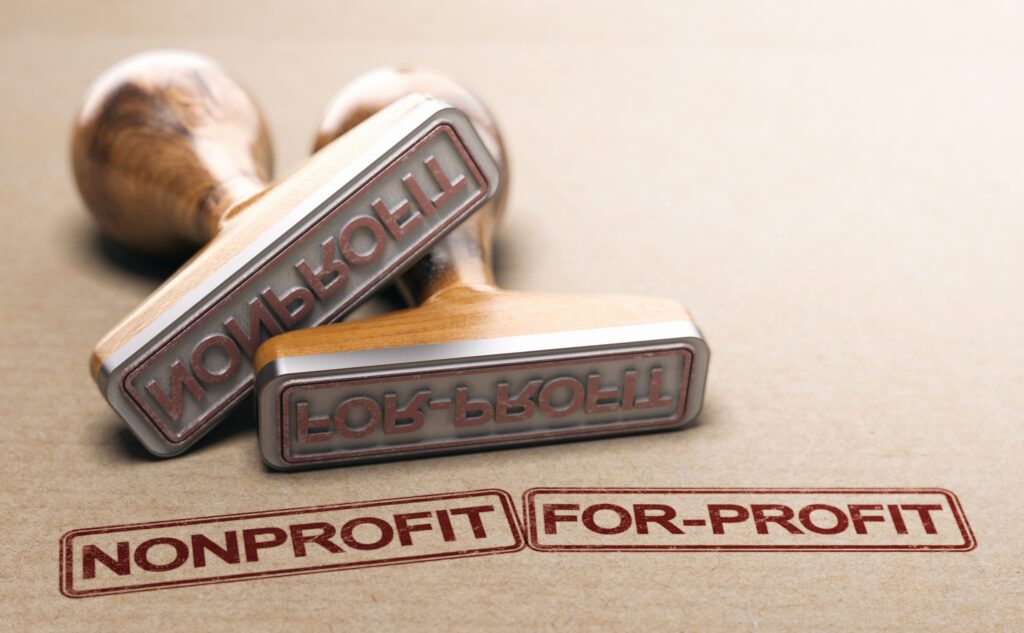
If your caregiving experience has revealed a gap you feel called to fill, you are not alone — and you are not without support. Here are verified starting points:
For aspiring nonprofit founders: – National Council of Nonprofits — How to Start a Nonprofit: A free, plain-language guide covering the questions to ask, the federal and state filings required, and the standard policies every new organization needs. The Council recommends connecting with your state’s nonprofit association for local guidance. – IRS Publication 4221-PC: The IRS compliance guide for 501(c)(3) public charities — required reading before you file for tax-exempt status. – Foundation Center / Candid: Offers training, funding research tools, and educational programs for new nonprofit leaders.
For aspiring small business owners: – U.S. Small Business Administration (SBA): The SBA’s network of Small Business Development Centers (SBDCs) and Women’s Business Centers offers free or low-cost consulting and training nationwide, including for people with disabilities and caregivers starting businesses. – SCORE: SCORE provides free mentoring from experienced business professionals to entrepreneurs at every stage. Chapters are available across the country, and many offer virtual mentorship. – Department of Labor — Office of Disability Employment Policy (ODEP) Self-Employment Resources: ODEP’s self-employment hub connects aspiring entrepreneurs with disabilities and their caregivers to planning tools, benefits counseling, and business development resources. – Job Accommodation Network (JAN) Self-Employment Hub: JAN consultants can assist with business development planning, financing strategies, and navigating income supports while starting a business.
For disability-specific business support: – Disability:IN: A national nonprofit that supports disability-owned businesses and connects entrepreneurs with corporate supply chain opportunities.
The Emotional Journey: Turning Pain Into Purpose Without Burning Out
The caregiver-to-entrepreneur arc can look like a triumph from the outside. From the inside, it is often exhausting, complicated, and emotionally layered in ways that outsiders rarely see.
Many caregiver-founders describe a period they call “the gap year” — a time when the idea is clear but the capacity is not. They are still providing full-time care, still managing crises, still carrying the full weight of advocacy for the person they love. Adding a business or nonprofit on top of that is not a graduation from caregiving; it is a parallel track, at least for a while.
Mental health professionals who work with caregiver-entrepreneurs note several patterns worth attending to. The first is urgency overload: because the problem is personal and the stakes are real, caregiver-founders often try to do everything immediately. This leads to exhaustion and, eventually, the same burnout they were trying to prevent for others. The second is identity fusion: when the organization becomes the extension of a beloved family member’s needs, it can be difficult to make strategic decisions that prioritize the organization’s sustainability over the founding narrative. The third is grief: some caregiver-entrepreneurs find that building something meaningful surfaces the grief they set aside while providing care. That grief is not a problem to solve; it is part of the work, and it benefits from professional support.
For those considering this path, disability mental health advocates consistently recommend the following: build your peer network before you need it, hire or partner with people who complement your gaps, and treat the sustainability of the founder as the first sustainability problem of the organization. You cannot build lasting support structures for others on an empty tank.
If You Liked This Article, You May Also Like
- Federal Policy and Americans with Disabilities in 2026: What Has Changed, What Is at Stake, and What the Data Show
- Resources for Individuals and Employers to Combat Disability Discrimination
- Best Adaptive Home Products 2026
AmeriDisability.com is your source for disability news, advocacy, lifestyle, and community. Subscribe to our newsletter to receive new articles directly in your inbox.
