


There is a moment many adult children recognize — a bathroom floor they notice is slippery, a staircase their parent takes too quickly, a stove left on a little too long. The fear arrives quietly, and with it comes a conversation no one quite knows how to start. How do you tell someone you love that you are worried about their safety in the home they have lived in for decades — without sounding like you are taking over, or worse, treating them like a child?
This conversation sits at the intersection of love, fear, and autonomy. It is one of the most emotionally loaded discussions families face, and it rarely goes smoothly the first time. But it is also one of the most important. Falls and home accidents remain a leading cause of serious injury and death among older adults, and the right changes — made collaboratively — can extend the years a person lives safely and independently at home.
This guide is for the adult children, siblings, and family members navigating this terrain. It offers language, strategies, and practical resources to help you approach the conversation with respect, and to make changes that genuinely serve your parent’s freedom rather than limit it.
Why This Conversation Is So Hard
Independence is not just a practical matter — it is deeply tied to identity and dignity. For many older adults, the ability to manage their own home, their own schedule, and their own daily routines represents who they are. A suggestion that something in that home needs to change can feel, even when kindly intended, like a verdict: that they are no longer capable.
According to AARP’s Home and Community Preferences Survey, more than three in four adults age 50 and older want to remain in their current home as they age — a figure that rises even higher among adults 65 and older. The desire to age in place is not simply stubbornness — it is connected to social ties, familiarity, autonomy, and mental health. Research from the National Institute on Aging consistently shows that older adults who remain in their own homes report higher satisfaction and lower rates of depression than those who transition to institutional care settings prematurely.
Adult children, meanwhile, are often managing their own fear. They may have watched a friend’s parent suffer a serious fall. They may be carrying the weight of being geographically distant and unable to check in daily. They may be concerned about their parent’s isolation, medication management, or cognitive changes — and feeling guilty for noticing.
Both of these emotional realities are valid. The conversation fails when one perspective erases the other. It succeeds when both are held at the same time.
Signs It May Be Time to Have the Talk

There is rarely one clear trigger. Usually, it is a collection of smaller observations that accumulates over time. The following are signs that a home safety conversation may be overdue:
- A recent fall or near-miss. Even a fall that did not cause serious injury is a significant warning sign. The CDC reports that falls are the leading cause of injury-related death among adults 65 and older, and that one in four older adults falls each year. According to CDC fall prevention data, a person who has fallen once doubles their chances of falling again.
- Difficulty with stairs or thresholds. Hesitation at steps, gripping railings tightly, or avoiding certain areas of the home can signal balance or strength changes.
- Clutter or tripping hazards you notice during a visit. Loose rugs, cords across walkways, stacked items on stairs, or furniture arranged in ways that limit clear passage are common contributors to falls.
- Bathroom concerns. The bathroom is the site of a disproportionate number of home injuries for older adults. No grab bars, a slippery tub or shower, or low toilet height are significant risk factors.
- Medication or memory concerns. Missed medications, forgotten stove burners, or confusion about daily routines may indicate that additional support systems are needed.
- Isolation or limited mobility outside the home. A parent who is spending more time at home, particularly one who has stopped driving, may be experiencing mobility limitations that also affect safety inside.
- Your parent mentions it themselves. Many older adults are aware of their own concerns and will bring them up indirectly — mentioning that the stairs “feel different” or that they have been extra careful in the shower. This is an opening.
How to Start the Conversation
The most important principle: lead with curiosity, not conclusions. When a conversation begins with “We need to talk about some changes to your house,” it immediately positions your parent as the subject of a decision already made. When it begins with “I’ve been thinking about how I want to stay as independent as possible as I get older — can we talk about what that might look like for you?” it becomes a shared exploration.
Specific language and approaches that work:
- Frame it as love, not alarm. “I love you and I want you to be in this house for as many years as possible. That’s what this is about.”
- Share your own experience. “I read something recently about how small changes in the bathroom can prevent serious injuries. I actually started thinking about my own house. Can we look at yours together?”
- Invite their perspective first. “Is there anything around the house that has felt harder lately? Anything you’ve thought about changing?” Many parents will surprise you with their own list.
- Involve a third party. Sometimes the conversation is easier when it comes from a physician, an occupational therapist, or a trusted family friend. Ask your parent’s doctor to bring up home safety at the next appointment, or suggest a home safety assessment framed as “something the doctor recommended.”
- Make it collaborative, not corrective. “Can we walk through the house together and think about what would make it work best?” positions you as a partner, not an evaluator.
- Choose the right time. Do not have this conversation during a visit that is already emotionally charged — immediately after an argument, in the middle of a family gathering, or when your parent is tired or unwell. Find a calm, unhurried moment.
- Return to it. One conversation is rarely enough. Plant seeds. Let your parent sit with the idea. Follow up gently over subsequent visits or calls.
What to avoid: ultimatums, catastrophizing, comparisons to other people’s parents, or language that implies your parent is not capable of making their own decisions. The goal is partnership, and partnership requires patience.
Home Safety Modifications That Preserve Independence
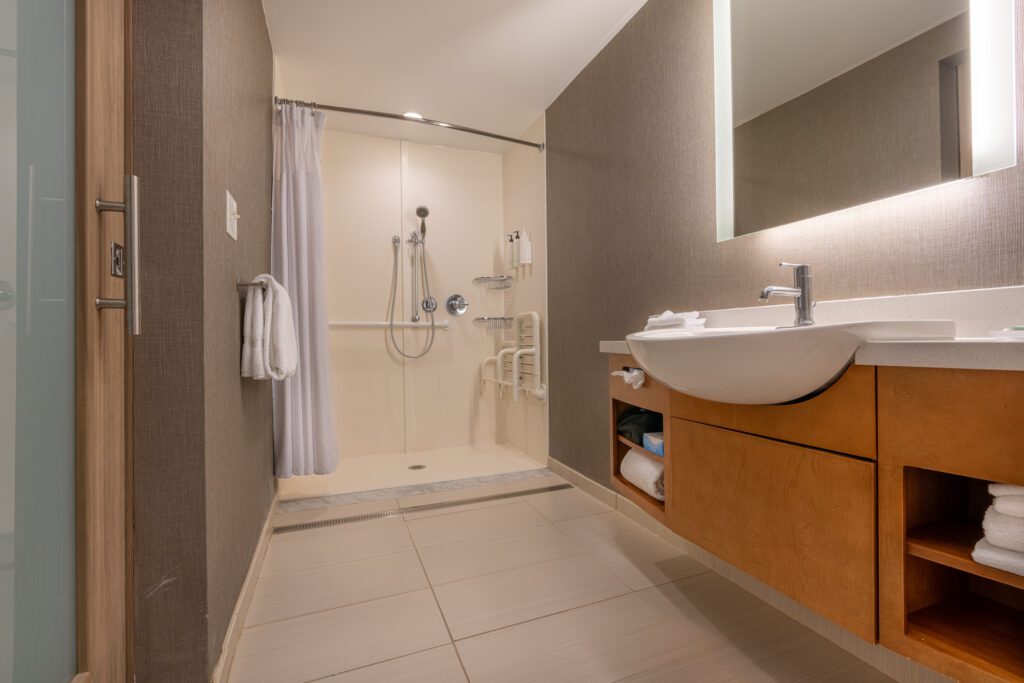
The right modifications do not restrict a person’s freedom — they extend it. Here is a practical overview of evidence-based changes that allow older adults to continue living independently and safely.
Grab Bars and Bathroom Safety
The bathroom is one of the highest-risk areas in the home for older adults. Installing grab bars in the shower, next to the bathtub, and beside the toilet dramatically reduces fall risk. Modern grab bars are available in finishes that match bathroom decor and in designs that look nothing like institutional fixtures.
Look for bars rated to support at least 250 pounds and ensure they are anchored into wall studs, not just drywall. Products like the Moen Home Care Designer Grab Bar and the Delta Faucet grab bar series offer stylish options that are ADA-compliant. A walk-in shower with a zero-threshold entry and a fold-down shower bench removes the need to step over a tub edge entirely.
Non-slip mats with suction cups in the tub or shower, combined with a bath mat outside, add another layer of protection. A raised toilet seat or a comfort-height toilet (sometimes called an ADA toilet) reduces the effort required to sit and stand, which is a significant fall risk point.
Lighting
Inadequate lighting is a primary contributor to nighttime falls, particularly on stairs and in hallways between the bedroom and bathroom. Motion-activated night lights plugged into outlets along this path are inexpensive and highly effective. Under-cabinet lighting in the kitchen improves visibility at the counter and stove. Smart bulbs or automated lighting systems that gradually brighten as dawn approaches can help a person navigate the home without reaching for a switch in the dark.
For stairways, make sure every step is clearly visible and that handrails run the full length of the staircase on both sides if possible. Stair edge tape in a contrasting color can help define step boundaries.
Fall Prevention Throughout the Home
- Remove or secure loose rugs. Area rugs are a leading tripping hazard. Remove them where possible, or replace them with non-slip rugs or use rug pads and tape to anchor them securely.
- Clear walking paths. Ensure that main walkways — particularly between the bedroom, bathroom, kitchen, and living room — are clear of furniture, cords, and stored items.
- Rearrange frequently used items. Items used daily should be stored between hip and shoulder height to reduce bending and reaching. A reaching tool (grabber) placed in key locations can extend range without the fall risk of a step stool.
- Stair lifts. For homes with significant staircase use, a stairlift can be transformative. Products from Bruno, Acorn, and Stannah are well-reviewed and can often be installed in a single day without structural modification. Many can be rented, and some older adults qualify for assistance programs.
- Ramps and threshold modifications. Exterior steps are frequently the site of falls. Portable or permanent ramps, combined with a sturdy handrail, allow safer entry and exit. Threshold ramps inside the home ease transitions between floor surfaces.
Does Medicare Cover Home Modifications?
Traditional Medicare (Parts A and B) does not generally cover home modification costs such as grab bars or ramps. However, Medicare Advantage plans (Part C) may include supplemental benefits that cover some home safety modifications — coverage varies by plan. Medicaid may cover modifications for eligible lower-income older adults through Home and Community-Based Services (HCBS) waivers. The U.S. Department of Housing and Urban Development (HUD) administers grant programs for low-income homeowners, and many states and counties offer their own modification assistance programs. AARP’s website and the Eldercare Locator can help identify local options.
From Our Shop
Ready to put these ideas into action? These printable guides walk you through it room by room.


Technology That Supports Independent Living

The technology available to support aging in place has expanded dramatically in recent years, moving well beyond the classic medical alert button. Today’s options are unobtrusive, effective, and designed to empower older adults rather than surveil them.
Medical Alert Systems
Personal emergency response systems (PERS) allow a person to call for help at any time with the press of a button. Modern devices include GPS capability (for use outside the home), automatic fall detection, two-way voice communication, and water-resistant designs for bathroom use. Well-regarded providers include Life Alert, Medical Guardian, Bay Alarm Medical, and ADT Health. Monthly monitoring costs typically range from $20 to $50, and most devices require no landline. Some Medicare Advantage plans include PERS as a covered benefit.
Smart Home Technology
- Voice-activated assistants (Amazon Echo, Google Nest) allow a person to control lights, thermostats, and appliances; make calls; set medication reminders; and access information without navigating a phone or computer. For older adults with limited mobility or vision impairment, these devices can meaningfully extend functional independence.
- Smart doorbells and locks allow a person to see and speak to visitors without walking to the door, and to let in family members or caregivers remotely. Keypad or fingerprint entry removes the risk of lost keys.
- Medication management devices such as the Hero or Philips Medication Dispensing Service automatically dispense the correct medications at the correct times and send alerts if a dose is missed — addressing one of the most common and consequential safety challenges for older adults managing multiple prescriptions.
- Stove shut-off devices such as the iGuardStove or Wallflower Smart Monitor automatically cut power to the stove if it has been left on unattended, reducing fire risk.
- Passive monitoring systems like motion sensors placed throughout the home (not cameras) can alert family members to unusual patterns — a door that has not opened by mid-morning, for instance — without the privacy intrusion of video surveillance. Products like Alarm.com and CarePredict offer these features.
When More Help Is Needed: From In-Home Care to Assisted Living Options

Home safety modifications and technology address many risks, but there are situations where a person needs ongoing human support. Recognizing this is not a failure — it is part of thoughtful planning.
In-home care ranges from a few hours of assistance per week (housekeeping, errands, meal preparation) to full-time skilled nursing care provided in the home. Home health aides, certified nursing assistants (CNAs), and licensed practical nurses (LPNs) can support a person while they remain in their own home. Medicare covers skilled home health care (physical therapy, wound care, nursing) when it is ordered by a physician and provided by a certified agency. Non-medical in-home assistance is not covered by traditional Medicare but may be available through Medicaid or long-term care insurance.
Adult day programs offer structured daytime activities, socialization, meals, and health monitoring, allowing an older adult to continue living at home while receiving support during the day. These programs are significantly less expensive than residential care and provide meaningful social engagement.
Independent living communities and continuing care retirement communities (CCRCs) offer apartment-style living with available services — without the medical focus of a nursing facility. For an older adult who is isolated or who has outgrown their current home’s manageability, these communities can offer a genuinely appealing option, particularly when explored proactively rather than in a crisis.
Memory care and skilled nursing facilities provide higher levels of care for individuals with dementia or significant medical needs. The transition to these settings is most successful — both practically and emotionally — when it is planned collaboratively and in advance, rather than precipitated by an emergency.
A geriatric care manager (also called an aging life care professional) can conduct a comprehensive assessment of a person’s needs and options and help the family navigate the full range of available services. The Aging Life Care Association maintains a national directory.
From Our Shop

What You Can Do
If this article helped you think through a conversation you have been putting off, the next step is simpler than you might think: start with one question. Ask your parent what they love most about living in their home, and what — if anything — has felt harder lately. Listen more than you speak. If you are ready to take concrete action, the CDC’s free STEADI home safety checklist is a practical place to begin.
The goal is not a perfectly safe house. The goal is the longest possible life of meaning, connection, and self-determination — in the place your parent calls home.
If You Liked This Article, You May Also Like
- Best Adaptive Home Products of 2026 — A curated guide to the tools and products that make daily life more manageable for older adults and people with disabilities.
- Federal Policy and Americans with Disabilities in 2026: What Has Changed, What Is at Stake, and What the Data Show — An in-depth look at the policy landscape affecting disability rights and services in 2026.
- Resources for Individuals and Employers to Combat Disability Discrimination — Practical tools and guidance for understanding and addressing discrimination in housing, employment, and services.
AmeriDisability.com is your source for disability news, advocacy, lifestyle, and community. Subscribe to our newsletter to receive new articles directly in your inbox.
