Description
When more than one person is caring for someone, the caregiving itself is usually only half the work. The other half is the coordination — who’s doing what, who knows what, who’s deciding what, and who feels seen by the rest. The Family Caregiving Coordination Workbook is for that other half. It gives families a structured way to design roles, hold useful meetings, communicate without exhausting one person, coordinate finances, and work through disagreements that come up — without pretending family caregiving will be easy.
This Workbook Is For You If Your Family Includes…
- Adult siblings sharing care for an aging parent
- Spouses caring for a partner with help from extended family
- Adult children of divorced or blended families coordinating across households
- An only child working with extended family, friends, or hired help
- A long-distance family member who wants to do more but isn’t sure how
- A primary caregiver carrying most of the weight, alone
What’s Inside The Family Caregiving Coordination Workbook
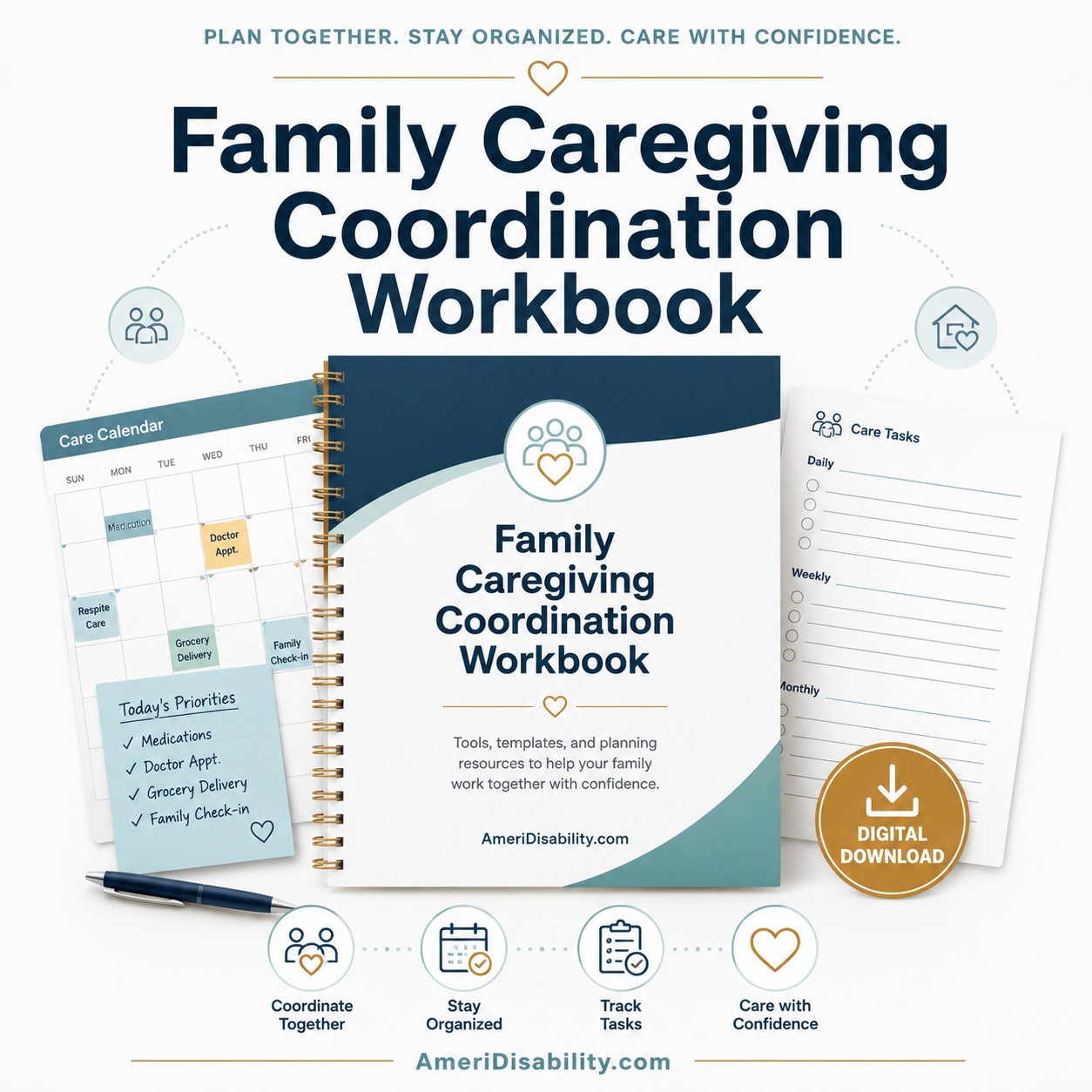
The Family Caregiving Coordination Workbook is 56 pages organized into 11 sections:
- The Reality of Family Caregiving — common patterns, including the ones nobody talks about
- Who’s Already Doing What — honest inventory, often the first time imbalance becomes visible
- The Care Recipient’s Voice — what your loved one wants about who helps with what
- Designing Family Roles — based on capacity (time, skills, proximity, relationship)
- The Caregiving Roles Map — formalized roles and responsibilities in one document
- The Family Meeting — agendas, ground rules, scripts, meeting log
- Communication Systems — how the family stays in sync without burning out one person
- Financial Coordination — shared expenses, contributions, when to involve professionals
- Disagreements and Conflict — ground rules, patterns, scripts, and when to bring in outside help
- The Long-Distance Caregiver — what family members far away can actually do
- Reviewing and Adjusting — quarterly review worksheet for when needs change
What This Family Caregiving Coordination Workbook Is Not
This workbook is not family therapy. It cannot heal old wounds between family members. It is not a legal document for power of attorney, conservatorship, or estate matters — those require qualified legal counsel. And it is not a guarantee of family harmony.
What it can do is give the family a shared structure to work from, common language to use, and tools to keep the work distributed and the communication honest. For families where coordination is possible, that’s a lot. For families where it isn’t, the workbook helps name what’s not working so you can seek the right outside support — a geriatric care manager, an eldercare mediator, a family therapist, an elder law attorney.
A Note For The Primary Caregiver
If you’ve been carrying most of the work, this workbook is also for you. It validates what you’ve been experiencing — and gives you the language and structure to bring family members into more equal contribution without it feeling like a fight.
A Note For The Family Member Further Away
If you’ve been at a distance and wondering what you can really do, the workbook has a dedicated section for you. There’s a lot you can carry from anywhere — and the workbook helps you name it, propose it, and follow through.
The Bottom Line
Family caregiving works better with structure. $19 — instant PDF download. Designed to be shared with the whole family.