Description
Pain trackers can feel like spending energy you don’t have to record information you can’t bring yourself to revisit. Many quit within a week. This tracker is built differently — short check-ins, simple scales, structured location maps, and pages designed to show patterns without dwelling. Enough data to support real conversations with providers, captured in a way that doesn’t require you to relive your worst days every time you fill in the page.
What’s Inside
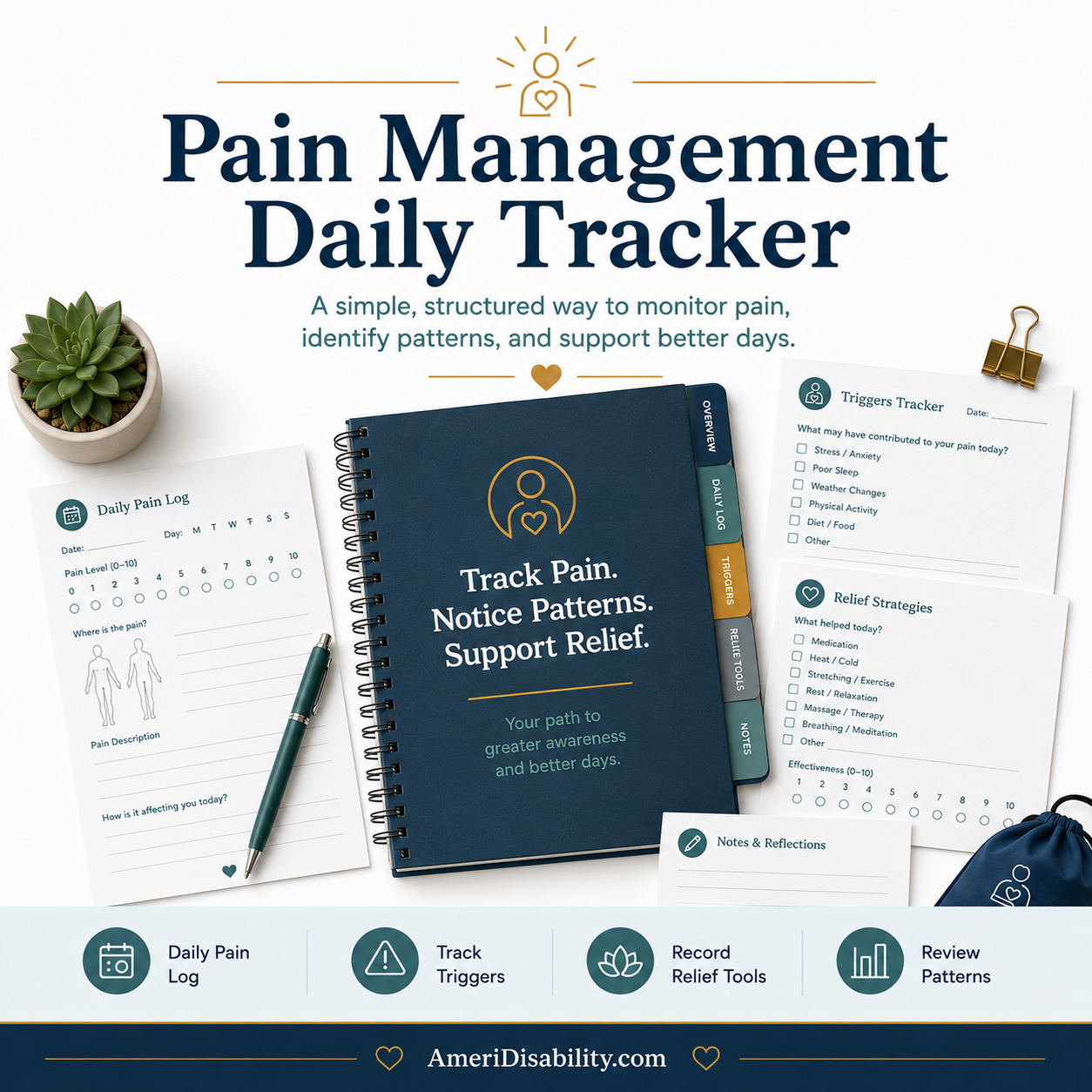
The Pain Management Daily Tracker is 37 pages organized into 9 sections:
- How to Use This Tracker — setup options (print monthly/weekly/digital/hybrid), the under-2-minute rule, when to fill in, what to do on bad days
- Daily Pain Log — detailed daily format with pain quality checkboxes (sharp, dull, burning, throbbing, electric, etc.) plus 7-day weekly grid with pain-specific metrics
- Pain Location Map — structured body region grid (head, neck, upper body, lower body, arms, legs) with pain/severity/notes for each region. Easier than free-form drawings; more accessible; prints cleanly
- Trigger & Relief Log — common triggers organized by category (activity, weather, sleep, food, stress, other); relief approaches (physical, medical, mind/sensory); weekly trigger-relief review
- Medication Response — current medications list, dose-level daily log (pain before, 1hr later, 4hrs later), monthly effectiveness summary. Important: tracks response only, not for self-medication decisions
- Sleep & Energy Notes — monthly grid + sleep-pain relationship questions (sleep and pain affect each other in both directions)
- Weekly Pattern Summary — at-a-glance review in 5-10 minutes. Notice and move on, don’t dwell
- Provider Conversation Prep — pre-appointment checklist + summary template designed for actual specialist visits
- Appointment Summary — what was discussed, what was decided, between-appointment notes for the next visit
This Pain Management Daily Tracker Is For…
- People with chronic pain conditions (fibromyalgia, complex regional pain syndrome, neuropathy, endometriosis, arthritis, chronic back pain, migraine, others)
- Recent surgery patients managing recovery and post-surgical pain
- People preparing for a pain specialist visit who need to bring data
- Caregivers tracking pain for a loved one who can’t self-report (cognitive differences, non-verbal communication, dementia, very young children, post-surgical)
- People in ongoing pain treatment who want to track medication response
- Anyone whose pain experience needs to be communicated more clearly than “a lot” or “not great”
Why This Pain Management Daily Tracker Is Different
Most pain trackers ask you to write narrative descriptions, journal emotional responses, or fill out lengthy daily reflections. For people actually living with chronic pain, that’s often too much.
- Mostly checkboxes and scales. Free-text fields are short and optional. Under 2 minutes a day.
- Designed to not retraumatize. No required dwelling on pain. Quick capture, scannable review.
- Pain location map is structured, not free-form. A grid by body region. Cleaner data for providers, easier on you.
- Medication response without medical advice. Tracks effectiveness and side effects. Doesn’t tell you what to do — that’s between you and your prescriber.
- Caregiver-aware. Includes guidance for tracking pain in non-verbal loved ones.
- Provider-ready summaries. The conversation prep template is designed for actual specialist visits.
How This Differs From The Chronic Illness Symptom & Flare Tracker
If you’ve seen our Chronic Illness Symptom & Flare Tracker (the anchor of the Health & Wellness Bundle), here’s how this one is different:
- The Symptom Tracker covers the big picture: pain, fatigue, brain fog, mood, sleep, triggers, flares across many chronic conditions
- The Pain Tracker zooms in on pain specifically: pain quality, pain location mapping, dose-level medication response, pain-specialist prep
Many chronic pain patients benefit from both. The Symptom Tracker captures overall patterns; the Pain Tracker captures pain-specific details that pain specialists need. The Health & Wellness Bundle ($59) includes both.
Part Of The Health & Wellness Bundle
The Pain Management Daily Tracker is part of the Health & Wellness Bundle ($59), which gathers AmeriDisability resources for people managing chronic conditions. The bundle is anchored by the Chronic Illness Symptom & Flare Tracker; companion resources include the Mental Health & Disability Journal.
The Bottom Line
Track your pain without reliving it. See your pain clearly so others can too. Data for conversations with providers — captured in a way that respects your energy.
$12 — instant PDF download. 37 pages.