


Medical Disclaimer: This article is for informational purposes only and does not constitute medical advice, diagnosis, or treatment. Always consult your qualified healthcare provider regarding any medical symptoms, conditions, or concerns. Do not disregard professional medical advice or delay seeking it because of something you have read here.
Imagine going to the emergency room with severe chest pain. You tell the nurse, then the intake coordinator, then the attending physician. Each time, you describe the pressure in your chest, the shortness of breath, the radiating pain down your left arm. But you also have Down syndrome. And somewhere in the clinical handoff — between your words and the physician’s chart — the chest pain stops being an emergency and becomes a behavioral concern. The classic heart attack workup is never ordered. You are discharged with a mild sedative.
This scenario is not hypothetical. Variations of it have killed people. The phenomenon has a name: diagnostic overshadowing.
What Is Diagnostic Overshadowing?
Diagnostic overshadowing occurs when a healthcare professional attributes a patient’s new or worsening symptoms to a pre-existing disability or chronic condition, rather than investigating those symptoms as potentially separate medical issues. The disability becomes a cognitive shortcut — a lens that distorts clinical judgment by making the clinician assume the disability explains what they are seeing, without looking further.
The term was first formally introduced in the literature in the 1980s and has since been studied across a range of disability populations. A 2024 systematic review published in the American Journal on Intellectual and Developmental Disabilities (Dell’Armo & Tassé) defined it specifically as “a bias in which symptoms of a psychological disorder are falsely attributed to a known diagnosis of intellectual disability.” The review pooled 25 studies and found that one-third showed no evidence of overshadowing — the authors graded the overall evidence as limited due to small samples and methodological variation — while still confirming that the phenomenon is real and documented. But the concept extends far beyond psychological symptoms and intellectual disability; it encompasses physical health, pain, and virtually every domain of medicine where a disability label is present in a patient’s chart.
The World Health Organization has acknowledged that diagnostic overshadowing contributes to lower life expectancy among people with intellectual disabilities and mental illness. In plain terms: when doctors stop looking because they think they already have an answer, patients suffer and sometimes die.
Who Is Most at Risk?

Diagnostic overshadowing affects a wide range of disability communities, but research consistently identifies certain groups as particularly vulnerable.
People with Intellectual Disabilities
This is the population where diagnostic overshadowing has been most extensively studied. According to a 2019 meta-analysis published in the Journal of Applied Research in Intellectual Disabilities, adults with intellectual disabilities experience psychiatric disorders at estimated rates of 30–40%, compared to roughly 15–20% in the general population — yet those conditions are frequently missed, misdiagnosed, or undertreated. As noted by Dell’Armo and Tassé in their 2024 systematic review, overshadowing in this population operates as “a bias in which symptoms of a psychological disorder are falsely attributed to a known diagnosis of intellectual disability” — negatively affecting the accuracy of clinical judgment. A 2004 study published in the Journal of Applied Research in Intellectual Disabilities surveying 133 psychologists and 90 psychiatrists found measurable evidence that the bias was present among clinicians working with this population.
Compounding this, people with intellectual disabilities may have difficulty articulating their symptoms in ways clinicians expect — not because the symptoms aren’t real, but because communication differences are misread as confirmation that nothing else is wrong.
Autistic People
Autistic people face diagnostic overshadowing across the full spectrum of support needs. For those who are nonspeaking or who communicate differently, pain responses, changes in behavior, or signs of internal distress may be read by clinicians as “typical autism behaviors” rather than as signals requiring investigation. For autistic adults who do communicate verbally, their self-reports are frequently dismissed or reinterpreted through an autism-colored lens.
Research synthesizing autistic adults’ experiences with mental health services has consistently found that care is perceived as inaccessible and invalidating, and that clinicians frequently lack the training to distinguish autism-specific presentations of emotional distress from symptoms requiring clinical intervention. When clinicians lack training in autism, they often cannot distinguish between distress caused by an untreated condition and behavior rooted in autistic neurology — and the safer, faster assumption tends to be the latter.
People with Mental Health Diagnoses
For people living with schizophrenia, bipolar disorder, depression, or other psychiatric conditions, physical symptoms are routinely attributed to mental illness. A person experiencing psychosis who also develops appendicitis may have abdominal pain dismissed as somatic delusion. A person with borderline personality disorder reporting extreme fatigue may be told it is psychological — even when the underlying cause is thyroid disease or anemia. According to a 2022 report by Massachusetts Legal Services, this pattern has been identified as a form of discrimination that may carry legal implications under state public accommodations law.
People with Physical Disabilities
People who use wheelchairs, have chronic pain conditions, or live with complex physical disabilities also encounter overshadowing, particularly when seeking care for symptoms outside their primary diagnosis. A wheelchair user who reports shoulder pain may be told it is simply a result of propelling their chair — without further investigation into rotator cuff tears, tendinitis, or other structural problems that would prompt imaging in a nondisabled patient. A person with cerebral palsy describing fatigue or cognitive changes may be told this is expected with their condition, even when early-stage hypothyroidism or sleep apnea is the actual cause.
Real-World Impact: When Overshadowing Causes Harm

The human cost of diagnostic overshadowing is documented in research, government inquiries, and advocacy reports that span decades and continents.
The Mencap “Death by Indifference” Report (UK, 2007)
One of the most cited documents on this subject is Death by Indifference, a 2007 report from the UK disability charity Mencap. The report examined six preventable deaths of people with intellectual disabilities in National Health Service care and concluded that the deaths resulted from “widespread ignorance and indifference” toward people with learning disabilities and their families. Diagnostic overshadowing — attributing physical symptoms to intellectual disability rather than investigating them — was identified as a central mechanism in multiple cases.
The UK government launched an independent inquiry following the report’s publication. Mencap subsequently tallied 74 deaths of people with learning disabilities in NHS care over a decade that the organization attributed to institutional discrimination.
The NHS England Learning from Lives and Deaths (LeDeR) programme — which reviews the deaths of people with a learning disability and autistic people — has continued to document this pattern annually. The 2023 LeDeR national report, published in September 2025 and covering 3,556 deaths notified in 2023, identified recurring failures in diagnosis and treatment as contributing factors in preventable deaths, with new emphasis on people from ethnic minority backgrounds and those with severe or profound learning disabilities. According to a 2025 analysis of LeDeR programme data, two-fifths (39.5%) of deaths among adults with severe or profound intellectual disability from 2020–2022 were classified as avoidable.
U.S. Research and Health Disparities
In the United States, the National Council on Disability (NCD) has documented systemic health disparities affecting people with disabilities in its annual Progress Reports. The NCD’s 2024 Progress Report includes a dedicated chapter on health disparities — a development made more urgent by the National Institute on Minority Health and Health Disparities (NIMHD)’s 2023 decision, recommended by NCD, to formally designate people with disabilities as a “Health Disparities Population.” This designation, finalized September 26, 2023, was a landmark recognition that disabled people face systemic inequities in health outcomes, in part because their experiences have historically been excluded from health disparities research. NCD’s 2023 Framework to End Health Disparities of People with Disabilities provides the most direct federal policy articulation of how diagnostic bias contributes to those disparities.
The Rush University Medical Center, in partnership with the University of Minnesota’s Institute on Community Integration and the Golisano Institute for Developmental Disability Nursing at St. John Fisher University, operates a federally funded project specifically focused on “End Diagnostic Overshadowing.” The project launched in November 2024 with an NIH R01 grant and runs through 2029; it uses chart reviews, staff interviews, and development of EHR decision-support tools to systematically reduce overshadowing in clinical settings. Similar work is being conducted through the Association of University Centers on Disability (AUCD).
Why It Happens: The Roots of Diagnostic Bias

Diagnostic overshadowing is not simply individual clinician carelessness. It is the product of intersecting structural, educational, and cognitive forces.
Limited disability training in medical education. Most medical and nursing schools in the United States provide minimal formal training in disability-informed care. When future clinicians learn almost nothing about the lived experience of disability, they enter practice without the tools to separate disability-related presentation from new medical symptoms.
Cognitive shortcuts under time pressure. Clinical decision-making is inherently pattern-based, and healthcare systems create intense time pressure on providers. A disability label in a chart becomes a shortcut: the clinician sees the diagnosis and builds an interpretive framework around it before the patient finishes speaking. The more time pressure exists, the more heavily cognitive shortcuts are weighted.
Siloed specialty care. Developmental disabilities, psychiatric care, and physical medicine are often managed by separate specialists with limited interdisciplinary communication. When no single provider holds a whole-person view of the patient, it becomes easier for new symptoms to fall through the cracks between departments.
Implicit ableism. Research on healthcare provider attitudes has consistently found evidence of implicit bias against people with disabilities — assumptions that disabled patients have lower quality of life, that their physical complaints are secondary to their disability management, or that they are “difficult” patients. These biases operate below conscious awareness and shape clinical decisions even among providers who consciously hold egalitarian values.
Communication barriers. When a patient communicates differently — through augmentative and alternative communication (AAC) devices, through a support person, through behavior — the burden of interpreting that communication falls on clinicians who may lack the skills or patience to do it accurately. The result is that symptoms go unrecognized or are misread.
How to Advocate for Yourself or a Loved One

Systemic problems require systemic solutions, and the responsibility for fixing diagnostic overshadowing belongs to healthcare institutions and policymakers — not to patients. That said, there are practical strategies that may help people with disabilities and their advocates navigate appointments more effectively.
Use the term. Naming “diagnostic overshadowing” directly in a clinical encounter signals to providers that you are aware of the bias and expect your symptoms to be evaluated independently of your disability.
Bring a support person. A trusted advocate — a family member, friend, or professional support person — can help ensure your symptoms are communicated clearly, documented accurately, and taken seriously.
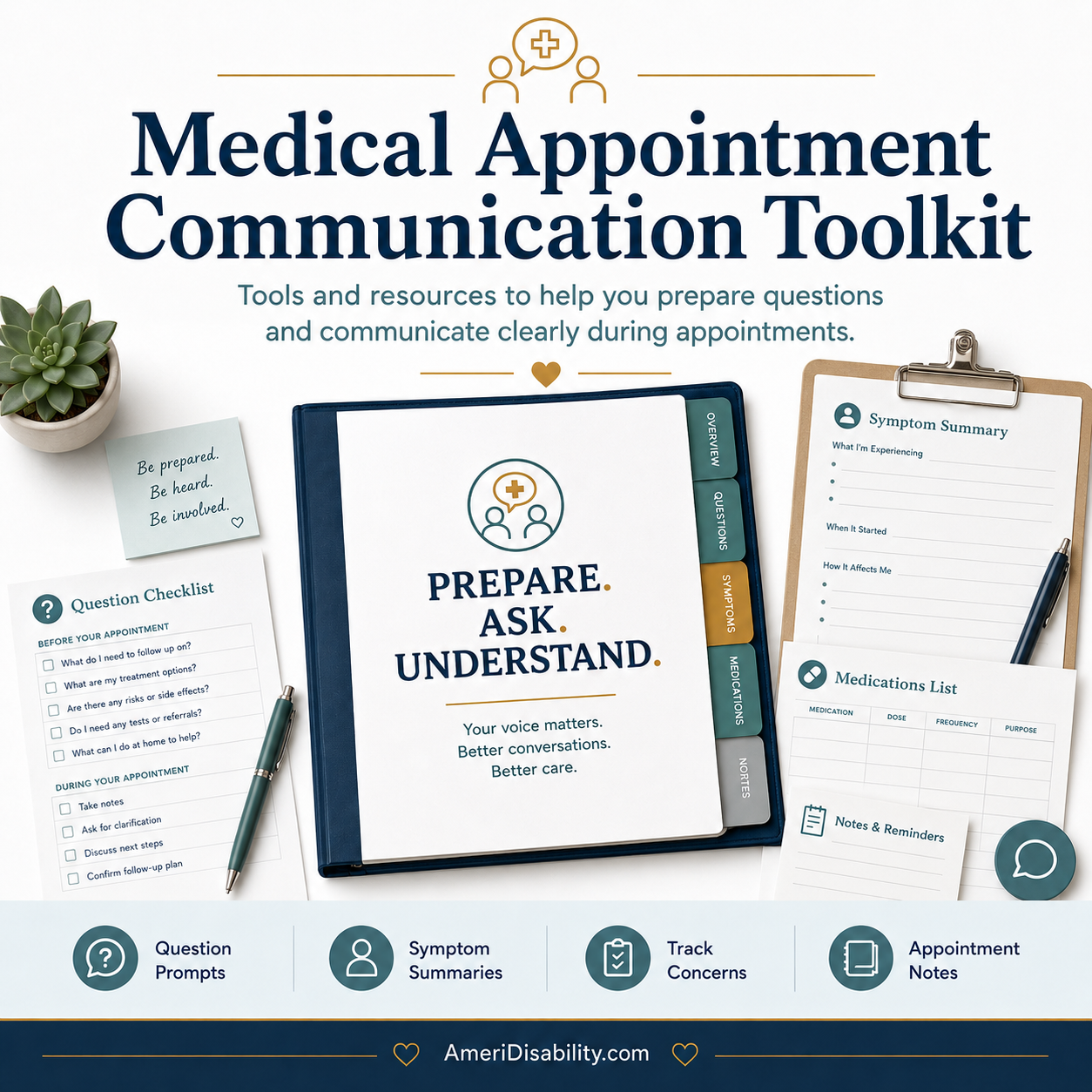
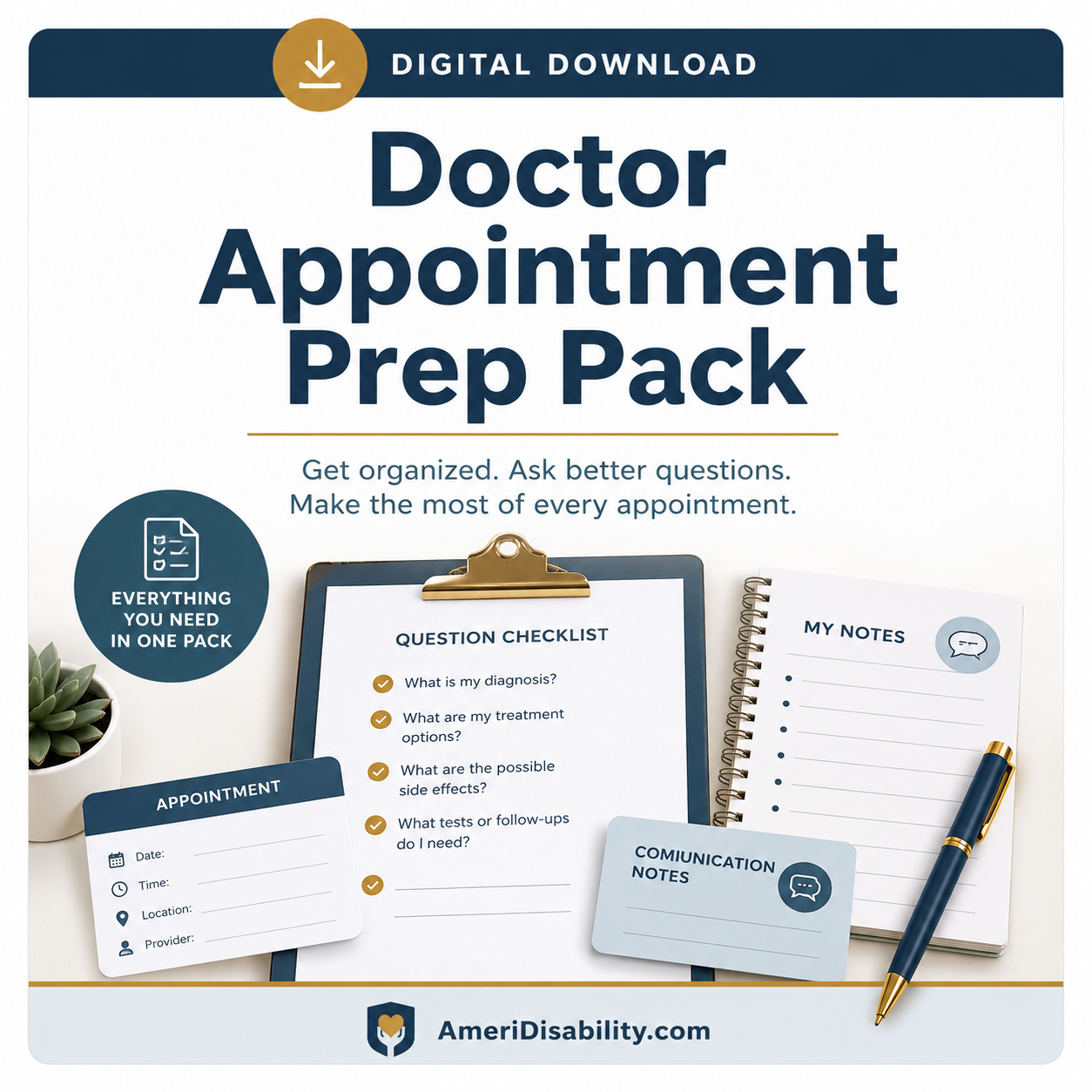
Prepare written symptom descriptions. Write down the specific symptoms, when they started, how they have changed, and how they differ from your baseline. Present this in writing so it becomes part of the encounter record.
Ask direct questions. If a provider attributes your symptoms to your disability without further investigation, ask: “What would you do if a patient without my disability came in with these same symptoms?” and “What additional tests or evaluations would rule out other causes?”
Request a second opinion. You have the right to seek care from another provider. Disability-informed healthcare directories and patient advocacy organizations can help identify clinicians with relevant training.
Document everything. Keep records of your appointments, what symptoms you reported, what was ordered or not ordered, and what you were told. This documentation is valuable if you need to escalate.
Know your rights. Under the Americans with Disabilities Act and Section 504 of the Rehabilitation Act, healthcare providers receiving federal funding are prohibited from discriminating against people with disabilities. If you believe you have experienced discriminatory care, you can file a complaint with the U.S. Department of Health and Human Services Office for Civil Rights.
Connect with disability-led advocacy organizations. The Autistic Self Advocacy Network (ASAN), the National Council on Disability, and state-based disability rights organizations can provide guidance, resources, and sometimes direct support in navigating healthcare discrimination.
What Healthcare Systems Are Doing to Address It

The movement to address diagnostic overshadowing within healthcare institutions is growing, though progress is uneven.
New research confirming the stakes. A 2026 mixed-methods systematic review published in the Journal of Public Health (Martinez-Navarro & Martinez-Martinez) found that patients who experience diagnostic overshadowing face significant emotional and physical consequences — including death — and that the bias worsens health inequities, particularly for people with psychiatric diagnoses. The same research team identified system-level responses as essential, finding that individual clinician education alone is insufficient. This is among the most current peer-reviewed evidence on the subject.
Clinical training initiatives. Rush University Medical Center, in collaboration with the University of Minnesota Institute on Community Integration and St. John Fisher University’s Golisano Institute, launched a five-year NIH-funded project in November 2024 to develop and test clinical training and EHR decision supports specifically targeting diagnostic overshadowing. Some medical schools have also begun incorporating disability-led instruction into curricula.
Safeguarding policies. In the United Kingdom, NHS England requires local NHS trusts to participate in the LeDeR mortality review programme, which provides annual data on preventable deaths and systemic failures. No equivalent federal mandate exists in the United States, though some state Medicaid programs have adopted disability-competency training requirements for providers.
Health equity research. The NIH’s formal designation of people with disabilities as a health disparities population in 2023 opens new pathways for federally funded research specifically targeting the health gaps — including misdiagnosis — that affect disabled people. The NCD’s 2024 and 2025 Progress Reports continue to push for legislative and regulatory action on healthcare discrimination.
Patient-centered communication tools. Health systems are increasingly piloting structured communication protocols — such as communication passports, care plans that travel with patients across settings, and AAC-compatible intake processes — that reduce the risk of miscommunication contributing to overshadowing.
Peer support and health navigation programs. Some disability-led organizations operate health navigation programs where trained peers with disabilities help others prepare for and follow up on medical appointments. These programs are grounded in evidence that peer support improves health outcomes and reduces the power imbalance inherent in clinical settings.
From Our Shop
Ready to put these ideas into action? These printable guides can help.
What You Can Do
If you or someone you support has experienced diagnostic overshadowing, you are not alone — and your experience matters. Share this article with a healthcare provider, a care coordinator, or a family member who supports someone in navigating medical care. Consider bringing it to your next appointment as a conversation starter.
If you work in healthcare, this is an invitation to examine your practice honestly: when you see a disability diagnosis in a patient’s chart, does it change the questions you ask? The tests you order? The weight you give to self-reported symptoms? Clinical bias is not a character flaw — it is a product of training gaps and system design. It can be unlearned, and your patients deserve that work.
Demand better from your health system. Ask your hospital or clinic whether they offer disability-competency training to staff. Ask whether their intake processes accommodate people who communicate differently. Ask whether they have a mechanism for patients to report diagnostic overshadowing. These questions matter — and asking them is a form of advocacy.
If You Liked This Article, You May Also Like
- Federal Policy and Americans with Disabilities in 2026: What Has Changed, What Is at Stake, and What the Data Show — A data-driven look at the policy landscape affecting disabled Americans, including healthcare coverage and civil rights protections.
- Resources for Individuals and Employers to Combat Disability Discrimination — Practical tools and organizations for people who have experienced discrimination — including in healthcare settings.
- Best Adaptive Home Products 2026 — For people managing chronic conditions or disabilities at home, the right adaptive tools can make daily health management more manageable and independent.
Medical Disclaimer: This article is for informational purposes only and does not constitute medical advice, diagnosis, or treatment. Always consult your qualified healthcare provider regarding any medical symptoms, conditions, or concerns. Do not disregard professional medical advice or delay seeking it because of something you have read here.
AmeriDisability.com is your source for disability news, advocacy, lifestyle, and community. Subscribe to our newsletter to receive new articles directly in your inbox.
