


The holiday season brings tables crowded with food, houses full of laughter, and — if we are being honest — a quiet undercurrent of worry on both sides of the door. The host spends the days before the gathering rearranging furniture and Googling things like “how wide does a doorway need to be for a wheelchair.” The guest spends those same days wondering whether to mention their needs at all, bracing to feel like a burden, or quietly calculating whether they can manage the three front steps before deciding to come.
That mutual anxiety is real, and it matters. According to the Centers for Disease Control and Prevention, more than one in four adults in the United States — over 70 million people — lives with some form of disability. That means disability is not an edge case at the holiday table; it is part of the everyday fabric of American families. The good news is that thoughtful hosting does not require a home renovation. Most of what makes a gathering accessible comes down to communication, small physical adjustments, and genuine attention to the needs of the people you have invited.
This guide is for hosts who want to do right by their guests — and for guests who want to share it with the people they love.
Start With a Conversation: Ask, Don’t Assume

The single most powerful thing a host can do costs nothing: ask.
Before the gathering, reach out to any guest who has a disability and open a straightforward, low-pressure conversation. The goal is not to make the guest feel spotlighted or different — it is to gather the information you actually need to make them comfortable.
A simple message works well: “I want to make sure the gathering is comfortable for everyone. Is there anything I can set up or plan for that would be helpful for you?”
A few principles to keep in mind:
- Ask directly but gently. Vague offers (“just let me know if you need anything!”) put the burden on the guest to raise what may feel like an awkward topic. A specific, open-ended question makes it easier to respond.
- Ask once and accept the answer. Some people will give you a detailed list; others will say they are fine. Both answers are valid. Do not probe, over-reassure, or circle back repeatedly.
- Keep the information private. What a guest shares about their access needs is not for the group chat.
- Adjust as needed, then move on. Once you have made arrangements, you do not need to announce or narrate them to the room.
Disability encompasses an enormous range of experiences — mobility differences, chronic illness, vision or hearing loss, cognitive and learning differences, mental health conditions, and more. Some disabilities are visible; many are not. Assuming you already know what someone needs — or assuming that because they “look fine” they have no needs — is how hosts unintentionally make guests feel unseen.
Making Your Home More Accessible for the Holidays

Physical access is often the first concern, and rightly so. A guest who cannot get through the front door or cannot safely use the bathroom cannot fully participate in the gathering.
Parking and Arrival
- Designate a parking spot as close to the entrance as possible for guests who have difficulty walking distances. If you have a driveway, offer it.
- Clear ice, snow, and wet leaves from walkways before guests arrive. These are fall hazards for everyone, and especially dangerous for people who use mobility aids or have balance differences.
- If your entrance has steps, consider a portable threshold ramp for one or two steps (available at hardware stores and online for $30–$150). For more than two steps, ask the guest in advance if they have a preferred workaround — some have their own ramps; others may be able to use a side or rear entrance.
- Ensure your porch light is working and that pathways are well lit.
Entry and Interior Navigation
- A standard interior doorway is 32 inches wide; a wheelchair typically requires a minimum of 32–36 inches of clear passage. Measure your key doorways and share this with any guest who uses a wheelchair or large power chair.
- Remove throw rugs, which are tripping hazards and can catch wheelchair wheels. Roll them up and store them for the duration of the gathering.
- Create clear pathways through main gathering areas — at minimum 36 inches of unobstructed space between furniture pieces.
- Rearrange furniture if needed so guests who use wheelchairs, walkers, or other mobility aids can move freely and sit alongside other guests rather than at the edge of the room.
Bathroom Accessibility
- Clear a path to the bathroom and make sure the door opens fully.
- If your bathroom door is narrow, ask your guest whether they need a larger space; if the answer is yes, work together to identify the best option.
- A portable grab bar (suction-cup or clamp-on styles do not require installation) placed near the toilet can make a significant difference. Many cost under $50.
- Ensure adequate lighting in the hallway and bathroom.
- Leave the bathroom door open or slightly ajar as a signal that it is available and accessible, rather than having guests feel they need to announce themselves.
Seating
- Offer a firm chair with armrests in addition to sofas or low seating. Soft, deep seating is difficult for many people to get in and out of safely.
- Ask the guest in advance whether they prefer to transfer out of their wheelchair or remain in it during the meal. Do not assume.
- Ensure there is a place at the main table — not at a side table or separate area — for every guest.
Accessible Holiday Meals: Dietary Needs, Seating, and Serving
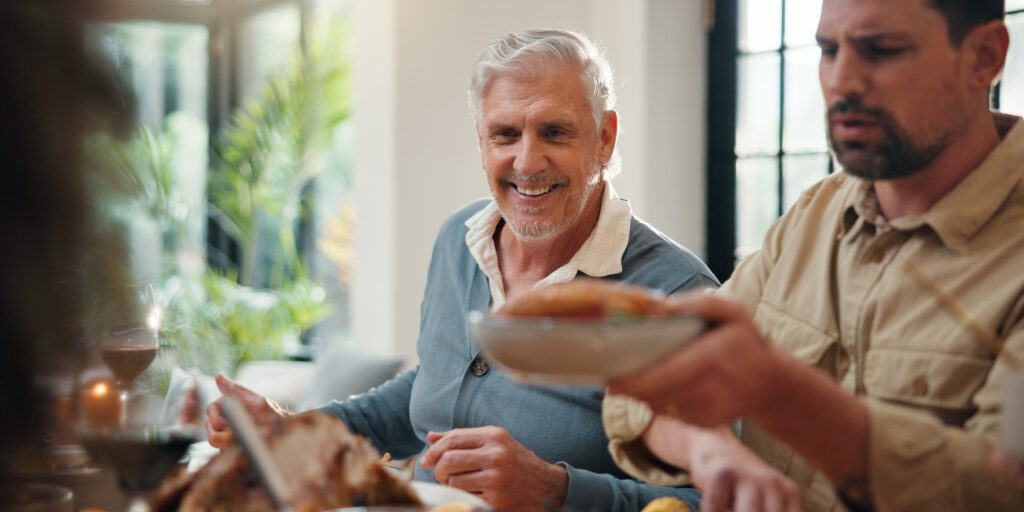
Disability and dietary needs often intersect. A guest might have dysphagia (difficulty swallowing) and require modified food textures. Another might have a motor tremor that makes passing dishes or handling certain serving styles difficult. Still another may take medications that interact with alcohol or certain foods.
- Ask about dietary needs when you ask about access needs — the same conversation covers both.
- Label dishes, especially if any contain common allergens. A simple tent card or sticky note is enough.
- Offer a variety of textures where possible. Soft or easily-cut dishes alongside others give guests choices without requiring a separate “special plate.”
- Consider the serving style. Buffet-style meals require guests to stand in line, hold plates, and navigate a food table — all of which can be difficult. Family-style service (dishes passed at the table) or plated meals are more accessible. If you host a buffet, let guests who need it know they can be seated while you or another guest fills their plate.
- Provide non-alcoholic options that feel like real choices, not afterthoughts. Sparkling water, cider, and mocktails let every guest participate in a toast.
- Keep the table clear of decorative clutter that makes it hard for guests to reach dishes or see one another.
Sensory Considerations: Light, Sound, and Crowd Management
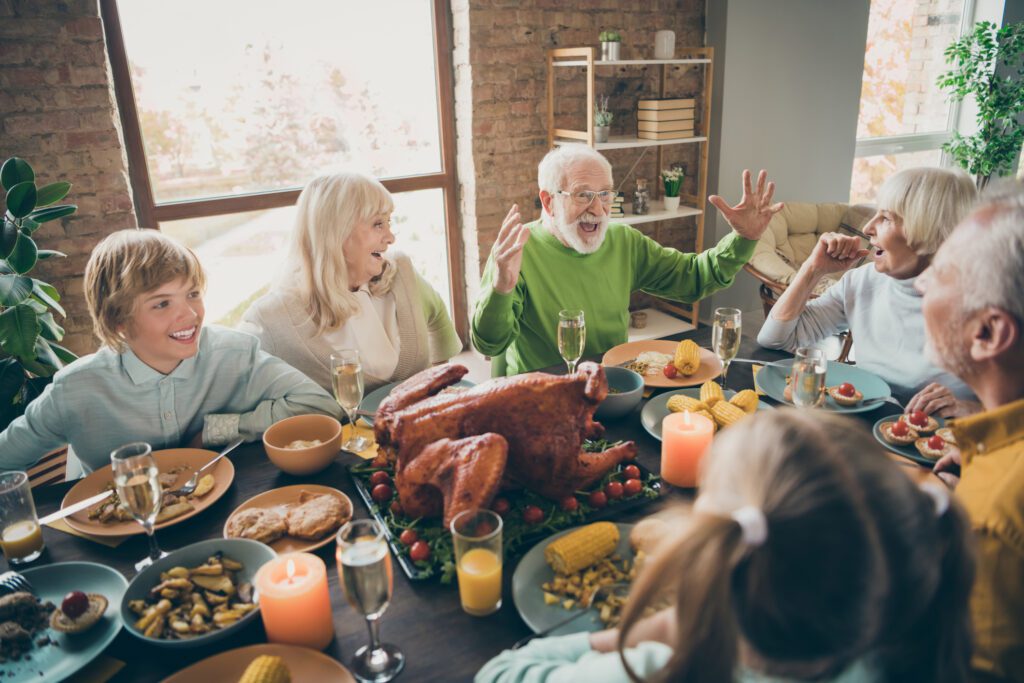
For guests with sensory sensitivities — including many people with autism spectrum conditions, PTSD, traumatic brain injury, migraines, anxiety disorders, and certain vision or hearing conditions — the sensory environment of a holiday gathering can be as significant a barrier as a physical step.
Sound
- Background music playing at a moderate volume during dinner is generally fine; loud or competing audio sources (the game on TV, music in one room, children playing in another) make it very difficult for people with hearing loss to follow conversation or for guests with sensory sensitivities to stay regulated.
- If you use captioning devices or apps, consider mentioning that to guests with hearing loss. The Hearing Loss Association of America offers a free holiday-specific guide with practical tips for making gatherings easier for guests with hearing loss.
- Designate a quieter room or area where a guest can step away from the noise if needed.
Light
- Avoid very bright or rapidly flickering lights (certain holiday light displays can trigger migraines or seizures in susceptible individuals — ask if you are unsure).
- Ensure the main gathering and dining areas are well and evenly lit, which helps guests with low vision.
- If you use scented candles or sprays, be aware that strong fragrances can trigger headaches or breathing difficulties for some guests.
Crowd and Social Dynamics
- Let guests know in advance roughly how many people will be attending. Unexpected large crowds can be difficult for guests with anxiety or sensory sensitivities.
- Identify and share a quiet space — a bedroom, a home office — where a guest can take a break if the gathering becomes overwhelming.
- Do not draw attention to a guest who steps away. This is a dignified and self-managing strategy, not a disruption.
Accessibility Checklist for Holiday Hosts
Use this list in the days before your gathering. No single home will check every box — the goal is awareness and thoughtful preparation.
Before the Gathering
- Reached out to guests with disabilities to ask about their specific needs
- Confirmed parking and arrival logistics
- Confirmed bathroom access
- Asked about dietary needs and food modifications
Outside and Entry
- Walkways, steps, and driveway cleared of ice, snow, and debris
- Entry path well lit
- Steps assessed; portable ramp available or alternative entrance identified if needed
- Door hardware operable with one hand (lever handles are more accessible than round knobs)
Inside the Home
- Throw rugs removed or secured
- Clear pathways (minimum 36 inches) through main gathering areas
- Firm seating with armrests available
- Place at the main table available for every guest
- Bathroom accessible, well lit, and stocked with essentials
- Grab bar available near toilet if needed
- Quiet space identified for breaks
Meals and Drinks
- Dietary needs confirmed and accommodated
- Dishes labeled for allergens
- Non-alcoholic drink options available and offered
- Serving method considered (plated or family-style rather than stand-up buffet)
- Table clear of excess clutter
Sensory Environment
- Music at moderate, manageable volume
- Lighting even and adequate
- Fragrance use considered
- Guest informed of quiet space option
When Guests Use Mobility Aids, Service Animals, or Medical Equipment
Mobility Aids
Wheelchairs, walkers, canes, and scooters are extensions of the person using them — treat them accordingly. Do not move, lean against, or rest items on a guest’s mobility aid without asking. Ensure there is a place near the guest’s seat to park a walker or fold a wheelchair if the guest transfers to a chair.
Service Animals
Under the Americans with Disabilities Act, service animals — dogs (and in some contexts, miniature horses) trained to perform specific tasks for a person with a disability — are permitted in any space their handler enters. If a guest brings a service animal to your home:
- Do not pet, feed, or distract the animal. A service animal is working, even if it appears relaxed.
- Do not ask the guest about the nature of their disability as a condition of the animal’s presence.
- You may ask two questions only: (1) Is this a service animal required because of a disability? and (2) What work or task has the dog been trained to perform?
- Provide water for the animal if the guest will be there for several hours.
- If other guests have allergies, address this by ensuring the animal has a designated area and speaking with both guests in advance — do not exclude the service animal handler.
Medical Equipment
Guests who use oxygen concentrators, insulin pumps, cochlear implants, power wheelchairs, or other powered equipment may need access to an electrical outlet. Ask in advance and ensure a convenient outlet is available. Do not unplug their equipment to charge your phone.
From Our Shop
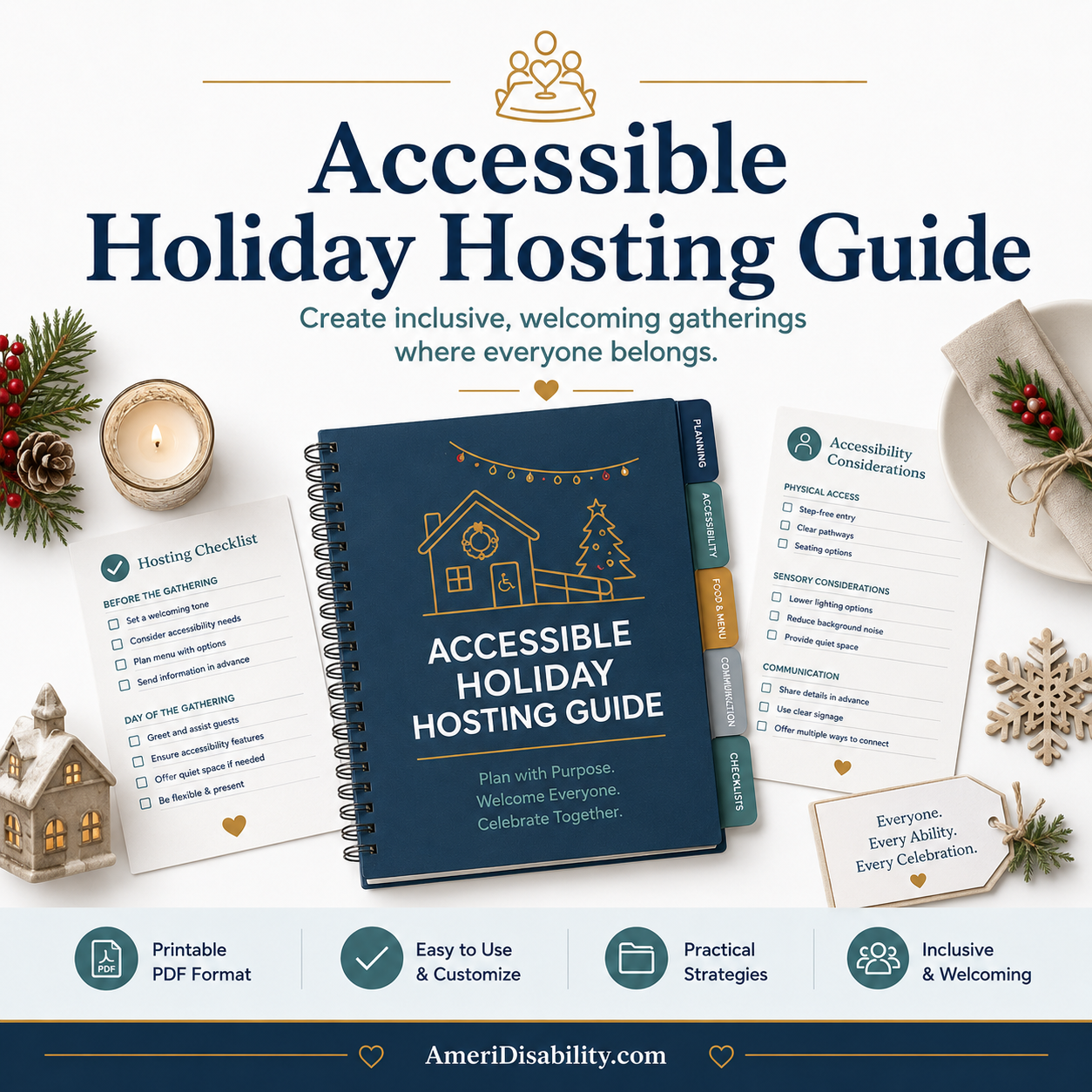
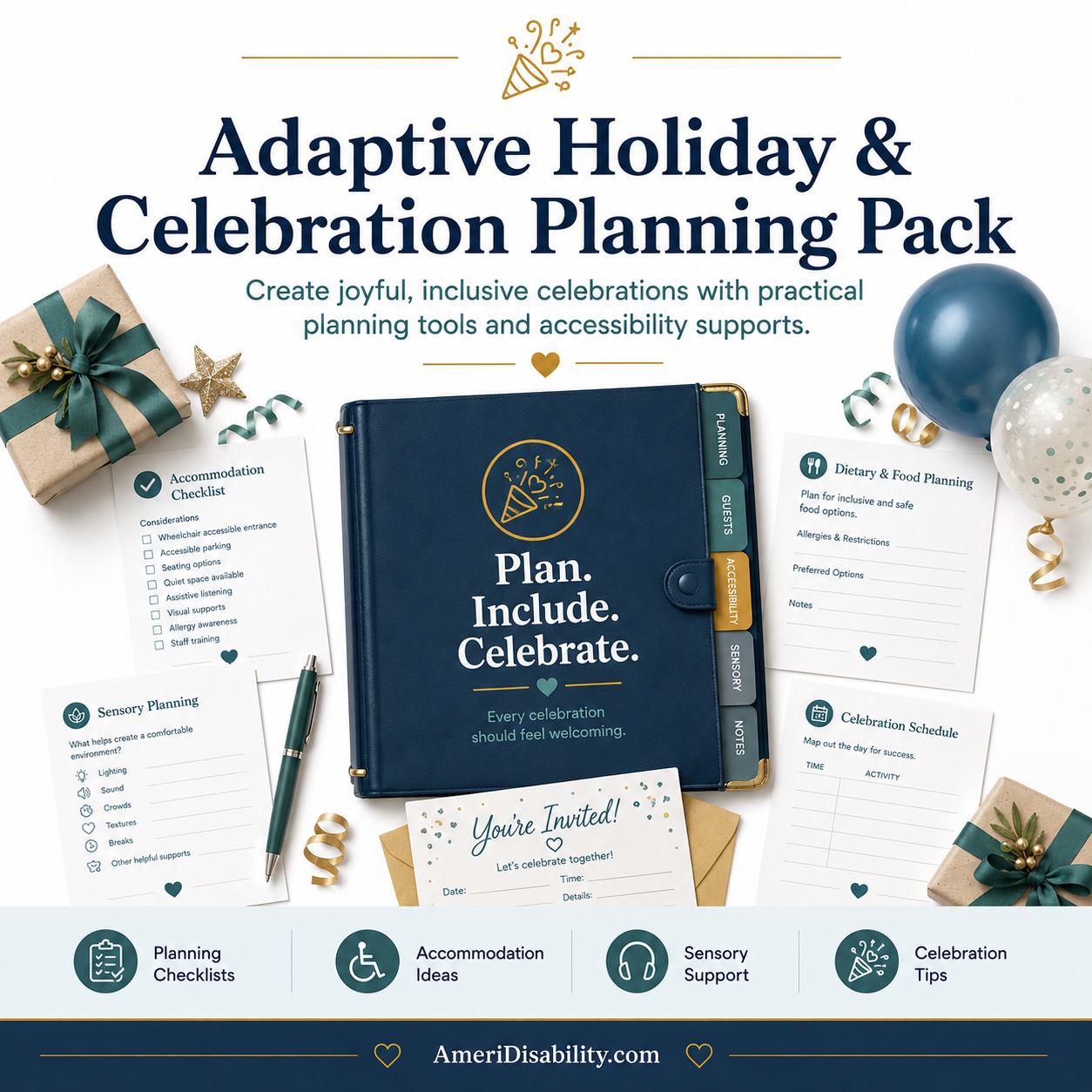
Ready to put these ideas into action? These printable guides can help.
What You Can Do
Share this guide with the people you love. Send it to the family member who is hosting Thanksgiving this year, the neighbor organizing the block party, or the colleague planning the office holiday gathering. Accessibility is not a checklist item to satisfy — it is an act of hospitality that tells your guests: You belong here. We made room for you.
If you are a guest with a disability, consider sharing this article with your host. Most people genuinely want to do the right thing; they just do not know where to start.
If You Liked This Article, You May Also Like
- Holiday Air Travel with a Disability: What to Arrange Before You Leave for the Airport — A comprehensive guide to your rights under the Air Carrier Access Act, wheelchair protections, TSA Cares, and everything to arrange before your flight.
- Accessible Holiday Decorating: Creative Ideas for People with Limited Mobility or Vision — Practical decorating ideas that are beautiful, manageable, and safe for people with limited mobility, low vision, or other physical differences.
- Adaptive Clothing Gift Guide for Adults and Seniors: What to Know Before You Shop — A buyer’s guide to adaptive clothing features, trusted brands, and what to look for when shopping for a loved one with a disability or limited dexterity.
AmeriDisability.com is your source for disability news, advocacy, lifestyle, and community. Subscribe to our newsletter to receive new articles directly in your inbox.
