Description
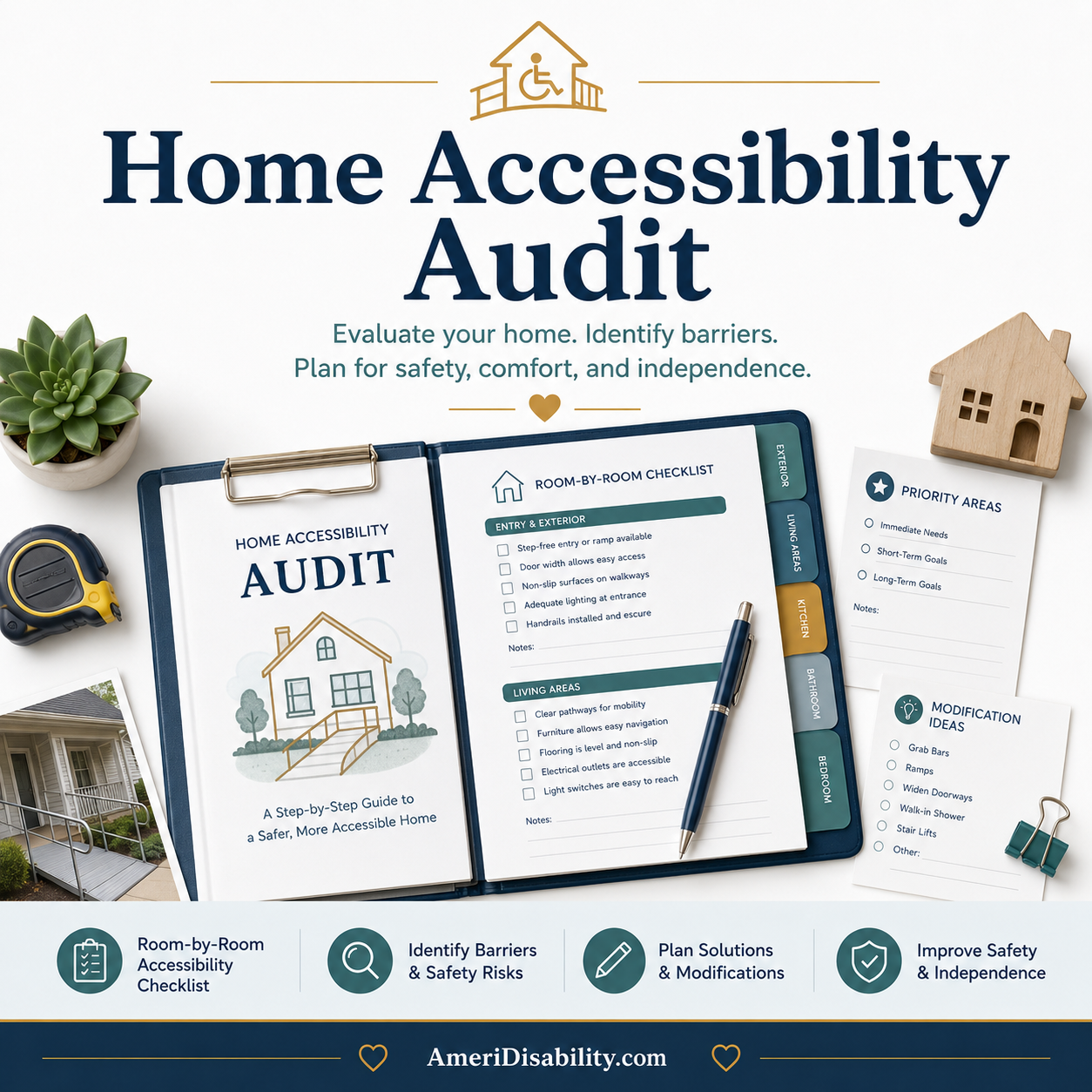
Most homes weren’t built with accessibility in mind. After a new diagnosis or as we age, barriers we never noticed become daily obstacles — and we don’t always know which ones to fix first. This home accessibility audit walks you through every room with specific things to look for, then helps you prioritize changes by impact and cost. DIY-friendly. Honest about when to hire a professional. Real cost ranges. Renter-aware.
What’s Inside
The Home Accessibility Audit is 51 pages organized into 12 sections:
- How to Use This Audit — different starting points (post-diagnosis urgent, parent moving in, aging in place planning, longer-horizon), DIY vs. professional decisions, working with limitations (rentals, budget, historic homes)
- Entry & Exit Access — main entrance audit, ramp specs, lighting, steps and stair safety at entrances
- Living Areas — pathways and clearances, furniture and seating, outlets and switches
- Kitchen — reach and storage, counter and workspace, appliances, kitchen lighting
- Bathrooms — the highest-stakes room. Layout, toilet, shower/tub, sink/mirror, floor and lighting (with grab bar installation safety)
- Bedrooms — bed access, bed-to-bathroom path (the most frequently used route), lighting, closet access
- Stairs & Level Changes — stair safety audit, alternatives (single-floor living, stair lifts, platform lifts, home elevators, ramps)
- Outdoor & Pathways — walkways, driveway, garage, mailbox/trash/yard maintenance
- Lighting & Visibility — whole-home audit, glare and visibility, night lighting (the most under-appreciated improvement)
- Smart Home & Assistive Tech — voice devices, medical alerts (Life Alert, Apple Watch, smart home), smart locks, other useful additions
- Priority Worksheet — fillable fix-first / plan-next / wish list / pro-needed tables
- Budget Planning — cost ranges across six tiers, funding sources (Medicare, Medicaid HCBS waivers, VA HISA/SAH grants, long-term care insurance, state programs, nonprofits like Habitat for Humanity and Rebuilding Together, tax deductions), phasing modifications over time
This Home Accessibility Audit Is For…
- Older adults thinking about aging in place — staying in their own home as long as possible
- Adult children helping parents who are losing mobility or facing new health conditions
- Families with newly diagnosed members — mobility, vision, hearing, cognitive, or chronic conditions
- Caregivers planning home modifications for someone in their care
- Homeowners planning ahead for changes they may need in 5-10 years
- Renters working within the constraints of what their lease allows
- Anyone recovering from surgery, injury, or illness who needs the home to support recovery
Honest About What This Audit Does
- Will help you see your home objectively — concrete list, not vague impressions
- Will help you prioritize — HIGH, MED, LOW priorities, with the priority worksheet to sort them
- Will give you cost ranges — real numbers, not vague “varies”
- Won’t replace a professional evaluation when one is needed — OTs, CAPS contractors, accessibility consultants do work this audit can’t. The audit tells you when their expertise matters most
- Won’t fix structural problems — stairs to the front door, narrow doorways, second-floor bathrooms are structural realities the audit helps you understand
- Won’t pretend modifications are free — many are inexpensive, but bathroom renovations and stair lifts cost what they cost. The audit covers funding sources honestly
Renter-Aware
Most accessibility products assume homeowners. This audit covers what renters can do within lease constraints:
- Federal Fair Housing Act provisions on reasonable modifications
- Modifications that don’t require structural changes (portable grab bars, threshold ramps, removable shower seats, magnetic door holders, lever handle adapters)
- Funding sources that work for renter modifications
Part Of The Senior & Aging In Place Bundle
The Home Accessibility Audit is part of the Senior & Aging in Place Bundle ($79), which gathers AmeriDisability resources for older adults staying in their own homes and the families and caregivers supporting them.
The Bottom Line
A home you can stay in. A home that welcomes who lives there. Most homes weren’t built for accessibility — most can be substantially improved without rebuilding. Start with what’s urgent. Phase in what’s not.
$17 — instant PDF download. 51 pages.