Description
Accessibility is most often added at the end of event planning — when the venue is locked in, the agenda is packed, the speakers are confirmed, and the budget is gone. By then, it’s too late to make the event truly inclusive. The accessible thing you can manage at that point is a fraction of what would have been possible if accessibility had been a planning principle from day one. This toolkit walks you through accessibility considerations at every planning stage — venue selection through speaker prep through day-of coordination through post-event feedback.
What’s Inside
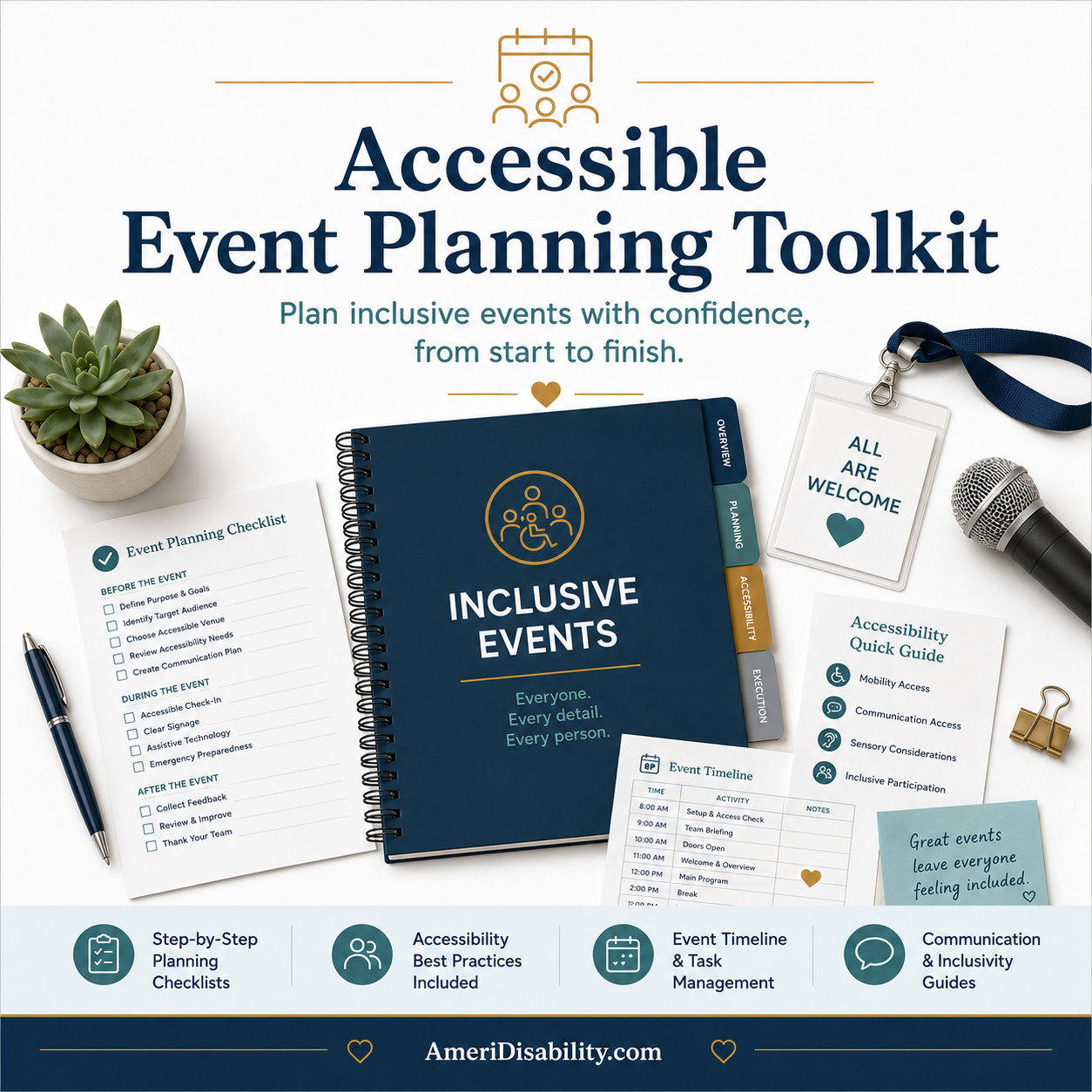
The Accessible Event Planning Toolkit is 42 pages organized into 10 sections:
- Accessibility as a Planning Principle — the cost curve (why decisions made 12 months out are vastly cheaper than decisions made 1 week out), the framing shift, who benefits from accessible event design
- Venue Accessibility Checklist — the audit BEFORE signing the contract. Physical access, sensory, hybrid considerations. Venue questions to ask before signing. Walk-through checklist for the venue visit
- Communication Access — CART, ASL interpretation, auto-captioning, audio descriptions, hearing loops. What each is, when needed, lead times (CART 2-4 weeks, ASL 4-8 weeks), realistic costs. With a planning template
- Sensory Considerations — lighting, sound, crowds, service animals. Designing a quiet space that actually works
- Inclusive Registration Form — what to ask, what NOT to ask, confidentiality, follow-up workflow. Full template included (you have it as the free download)
- Presenter and Speaker Prep — briefing speakers (with email template). Microphone discipline, accessible slides, Q&A accessibility, panel discussion conventions
- Materials and Signage — programs, name tags, wayfinding signage. Common issues (tiny name tags, color-only coding) and how to fix them
- Day-of Coordinator Checklist — the accessibility coordinator role, pre-event walkthrough, active monitoring during the event, responding when something goes wrong
- Post-Event Feedback — the accessibility-specific feedback survey template, how to act on what you learn, building institutional knowledge
- Budget Realities and Creative Solutions — what costs money (CART, ASL, alternative formats), what doesn’t (most planning decisions), creative cost solutions (sponsorship, phasing, hybrid models)
Templates included throughout
Six ready-to-use templates:
- Communication access planning template
- Inclusive registration form template (full version)
- Speaker briefing email template
- Day-of coordinator checklist
- Post-event accessibility feedback survey
- Venue and visit audit checklists
This Accessible Event Planning Toolkit Is For…
- Nonprofit event planners (conferences, fundraisers, community events)
- Conference organizers across industries
- Faith community event hosts (services, retreats, gatherings)
- Small business workshop and training hosts
- Educators planning school events, parent nights, ceremonies, performances
- Membership organizations hosting meetings, AGMs, and member events
- Anyone planning an event who wants every attendee to be able to show up
Honest About Realities
- The toolkit names that accessibility costs are real (CART, ASL, alternative formats) AND that most planning decisions cost little or nothing
- The toolkit notes that the absence of accommodation requests is often the result of an inaccessible event, not evidence that no disabled attendees want to come
- The toolkit acknowledges that legal compliance varies by venue, business structure, and jurisdiction — and routes you to an attorney for specifics
- The toolkit doesn’t assume you have an accessibility budget; Section 10 covers prioritizing within limits
Part of the Accessibility Bundle
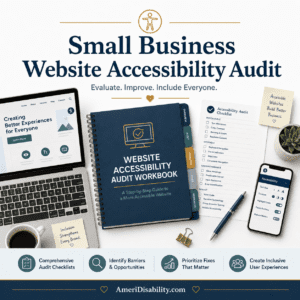
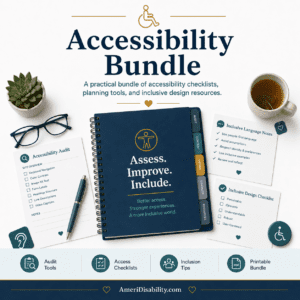
The Accessible Event Planning Toolkit is part of the Accessibility Bundle ($89), which also includes the Small Business Website Accessibility Audit Checklist (the anchor), the Accessible Social Media Content Checklist, and the Faith Community Accessibility Toolkit.
The Bottom Line
Accessibility is a planning principle, not a final check. Early decisions cost less and accomplish more. This toolkit makes the planning concrete: templates, checklists, decision frameworks for every stage of event design.
$24 — instant PDF download. 42 pages. Six templates included.