


Going to the movies should be a joy — the shared experience of story, laughter, and wonder on a giant screen. But for many people, a standard movie theater can feel overwhelming. Booming sound systems, complete darkness, flashing previews, and the expectation of sitting still and silent for two hours can make what should be a fun outing feel impossible.
According to the CDC’s 2023 autism prevalence data, 1 in 36 children in the United States has been identified with autism spectrum disorder — a figure that underscores how large the community is that can benefit from more accessible entertainment options. Beyond autism, millions more Americans live with sensory processing differences, anxiety disorders, ADHD, and other conditions that can make a standard movie theater environment genuinely difficult to navigate.
The good news: an expanding network of movie theaters across the United States now offers sensory-friendly screenings — adapted showings designed so that everyone, regardless of sensory needs or disability, can enjoy the movies. This October, as theaters roll out a slate of family-friendly films perfect for the season, there has never been a better time to find a sensory-friendly showing near you.
What Makes a Screening “Sensory-Friendly”?
A sensory-friendly screening is a specially adapted showing of a film that modifies the typical theater environment to reduce sensory overload. According to the American Occupational Therapy Association (AOTA), sensory processing differences affect how the nervous system receives and responds to sensory information, and environmental modifications — such as those made in sensory-friendly screenings — are a recognized strategy for enabling fuller participation in daily activities. Standard features of a sensory-friendly showing typically include:
- Raised lighting levels throughout the auditorium, so the house lights are dimmed but not fully dark
- Reduced volume on both the film audio and any advertisements
- No or minimal previews — screenings often start with the feature film immediately, skipping the loud trailer reel
- Freedom to move and vocalize — audience members are welcome to get up, walk around, stim, talk quietly, or react to the film without judgment
- Relaxed social rules — theater staff are trained to welcome a wider range of behavior and create a genuinely inclusive environment
Some theaters go further, offering quiet rooms or sensory break areas adjacent to the auditorium, and allowing guests to bring in comfort items, fidget tools, or special seating aids.
Who Benefits From Sensory-Friendly Screenings?
While sensory-friendly programs were originally developed with autistic people and people with sensory processing differences in mind, these screenings have grown to serve a much broader community. The CDC’s 2023 autism surveillance data places autism prevalence at 1 in 36 children — and autistic individuals of all ages face real barriers at standard theaters, where bright lights, loud sounds, and rigid social expectations can create significant obstacles. The American Occupational Therapy Association recognizes sensory processing disorder as a condition in which the brain has difficulty receiving and responding to sensory input, making environmental adaptations like sensory-friendly screenings clinically meaningful.
People who benefit from sensory-friendly screenings include:
- Autistic people of all ages, for whom bright lights, loud sounds, and rigid social expectations can create significant barriers
- People with sensory processing differences, including those with hypersensitivity to sound or light, as described by the American Occupational Therapy Association (AOTA)
- People with anxiety disorders, who may find the unpredictable nature of standard screenings — sudden loud sounds, strobe effects, jump scares — particularly distressing; the National Alliance on Mental Illness (NAMI) notes that anxiety disorders are the most common mental health condition in the U.S., affecting more than 40 million adults
- People living with dementia or Alzheimer’s disease, who may benefit from a calmer, more forgiving environment
- People with ADHD, who may need to shift position, move around, or take breaks without feeling out of place
- People with chronic pain conditions, for whom sitting completely still for extended periods is not physically possible
- Young children and their caregivers, especially those attending a first movie experience
- Caregivers and family members of people with disabilities, who can relax and enjoy the film alongside their loved ones
In short, sensory-friendly screenings make movies more accessible for a wide cross-section of the disability community — and more enjoyable for many neurotypical people as well.
Major Theater Chains and Their Programs

AMC Theatres — Sensory Sensitive Screenings
AMC is the largest provider of sensory-friendly programming in the United States. Through a long-standing partnership with the Autism Society of America (ASA), AMC offers its “Sensory Sensitive Screenings” program at participating locations nationwide. These screenings are typically held on the first Saturday of each month and feature a current family film. The program was developed in direct collaboration with the Autism Society of America’s National Autism-Friendly Screening Program, ensuring that modifications reflect the actual needs of the community the program serves.
“The Autism Society of America’s partnership with AMC has helped create a nationwide model for inclusive entertainment — one that recognizes that movie-going is a shared cultural experience that should be available to everyone.” — Autism Society of America – (https://autismsociety.org)
To find upcoming AMC sensory screenings, visit https://www.amctheatres.com/programs/sensory-friendly-films. Guests can search by location and sign up for email notifications when a new month’s screening is announced.
Regal Cinemas
Regal Cinemas offers sensory-friendly screenings at select locations. Scheduling and frequency vary by location, so guests are encouraged to check the sensory section of the Regal website at https://www.regmovies.com/promotions/my-way-matinee or contact their local theater directly. Regal also provides accommodations for guests with other accessibility needs, including assistive listening devices and closed captioning equipment.
Cinemark
Cinemark has offered sensory-friendly screenings at various locations, particularly in partnership with local disability organizations and advocacy groups. Availability can vary widely by region. If your nearest Cinemark does not currently list sensory screenings, the theater’s guest services team may be able to provide information about upcoming events or connect you with a regional disability liaison.
Independent and Art House Theaters
Many independent cinemas, particularly those affiliated with disability advocacy organizations or located in areas with active autism communities, also host sensory-friendly events. Check with your local community center, autism society chapter, or disability resource network for events that may not be listed on major chain websites.
“Sensory-friendly screenings are one of the clearest examples of how small, low-cost environmental modifications can remove significant barriers for people with disabilities.” — ADA National Network (https://adata.org)
Tips for First-Time Attendees
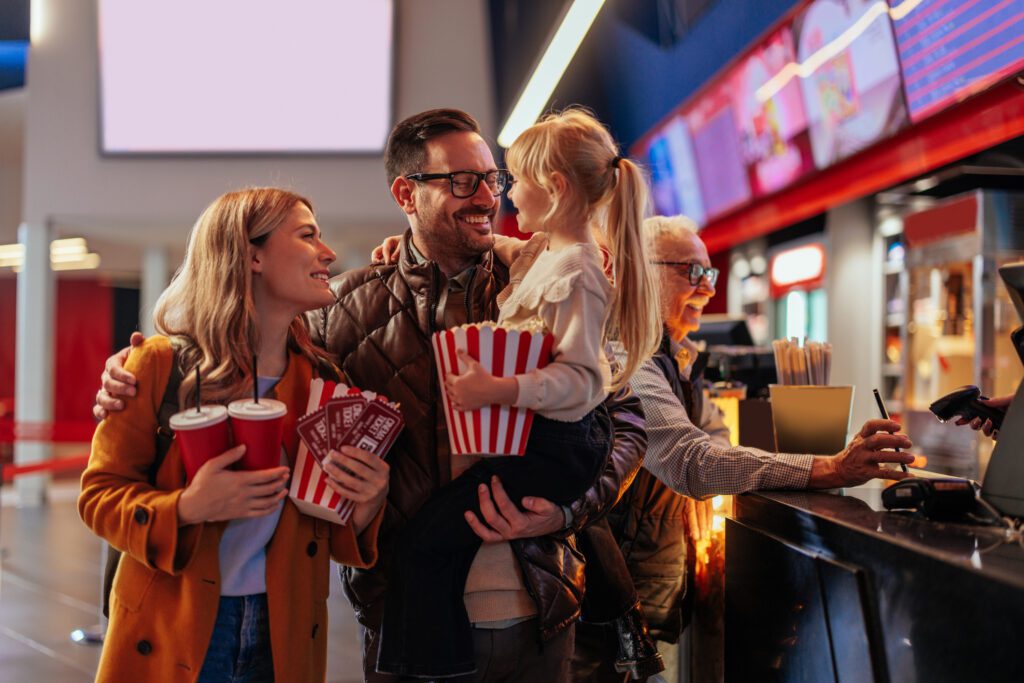
Attending a sensory-friendly screening for the first time can still feel daunting, even with the adapted environment. Here are some practical tips:
- Arrive early. Arriving before the auditorium fills up allows you to settle in at your own pace, choose your seat without navigating a crowded space, and get comfortable before the film begins.
- Choose your seat strategically. Aisle seats near an exit make it easy to step out if needed. Seats toward the back of the auditorium can reduce visual and auditory intensity. Some people prefer the front rows where peripheral distractions are minimized.
- Bring comfort items. Noise-canceling headphones, earplugs, fidget tools, weighted lap pads, sunglasses, or a favorite blanket are all welcome. The American Occupational Therapy Association (AOTA) identifies these types of sensory supports as evidence-informed tools for managing sensory sensitivities in real-world environments. Many sensory-friendly screenings explicitly encourage guests to bring anything that helps them feel comfortable.
- Prepare with a preview. If possible, watch a trailer of the film at home beforehand so the person attending knows what to expect from the content and story.
- Talk to theater staff. Staff at sensory-friendly screenings are trained to be helpful and accommodating. Do not hesitate to ask for assistance locating accessible seating, requesting a quieter space, or asking about the auditorium layout.
- Know it is okay to leave and return. Sensory-friendly screenings are relaxed environments. Stepping out for a break and coming back is entirely acceptable.
What to Do If Your Local Theater Doesn’t Offer Sensory Screenings
If your nearest theater does not currently offer sensory-friendly programming, you are not without options. Consider the following steps:
- Contact the theater directly. Many theaters are responsive to community requests, especially if they hear from multiple families and individuals. A polite letter or email to theater management explaining the need and pointing to the AMC/Autism Society model can be persuasive.
- Connect with local advocacy organizations. Your local Autism Society chapter, Arc chapter, or disability resource center may already be in conversations with area theaters. Joining that effort amplifies your voice.
- Reach out to the ADA National Network. The ADA National Network provides free guidance to both individuals and businesses about accessibility requirements and best practices. Theater operators can receive free technical assistance on implementing sensory-friendly programming.
- Propose a partnership. Theaters may be more receptive if approached by an organized group willing to promote the screenings and guarantee an audience. Schools, therapy practices, disability organizations, and parent groups have all successfully partnered with local cinemas to launch sensory programs.
Accessibility Features Beyond Sensory Modifications
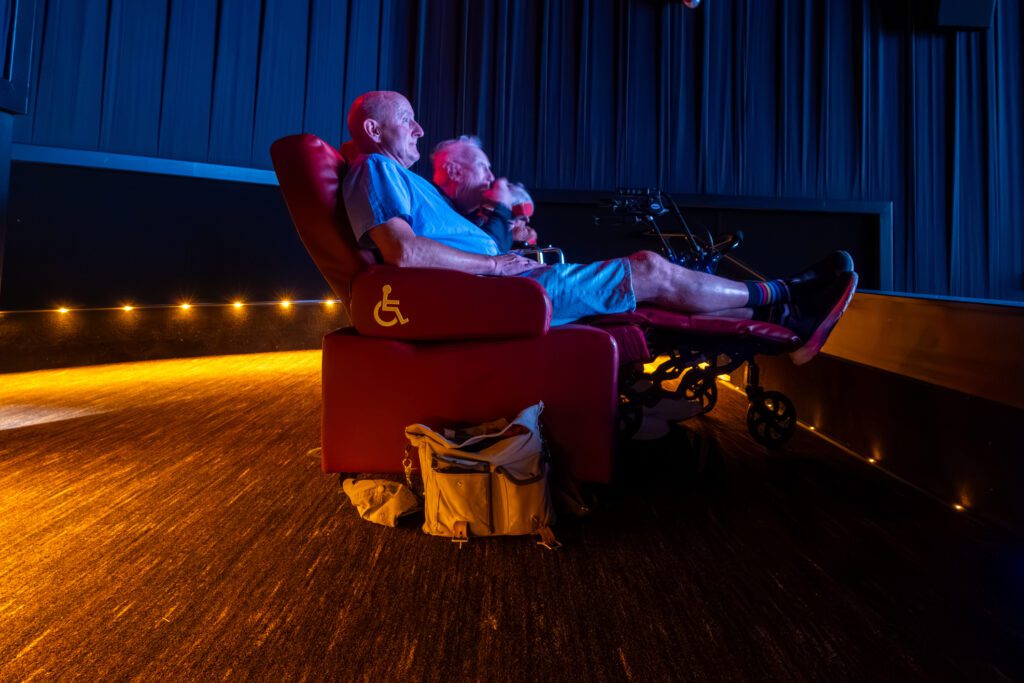
Sensory-friendly programming exists alongside a range of other accessibility features that guests may wish to take advantage of, all of which are supported by the ADA National Network’s guidance on entertainment venue accessibility:
- Closed captioning devices — portable screens or glasses-style devices that display captions for people who are deaf or hard of hearing
- Audio description headsets — wireless devices that provide a spoken narration of visual action on screen for people who are blind or have low vision, in partnership with the Described and Captioned Media Program (https://dcmp.org)
- Accessible seating — designated spaces for people who use wheelchairs or other mobility devices, as well as companion seating
- Assistive listening systems — hearing loop or FM systems available in many auditoriums to assist people with hearing aids or cochlear implants
Ask at the box office or accessibility desk about which of these features are available at your location.
Additional Source References
- AMC Theatres Sensory Sensitive Screenings program overview: https://www.amctheatres.com/programs/sensory-friendly-films
- Autism Society of America, National Autism-Friendly Screening Program: https://autismsociety.org
- CDC Autism Data and Statistics (2023), “1 in 36 children identified with autism spectrum disorder”: https://www.cdc.gov/autism
- American Occupational Therapy Association (AOTA), Sensory Processing: https://www.aota.org
- National Alliance on Mental Illness (NAMI), Anxiety Disorders: https://www.nami.org
- Described and Captioned Media Program: https://dcmp.org
- Regal Cinemas Sensory: https://www.regmovies.com/promotions/my-way-matinee
- ADA National Network: https://adata.org
QUICK REFERENCE: Finding Sensory-Friendly Screenings
What to Bring: – Noise-canceling headphones or earplugs – Fidget tools or comfort items – Sunglasses (if light sensitivity is a concern) – Snacks (confirm theater’s outside food policy) – Favorite blanket or weighted lap pad
Find a sensory-friendly screening near you this October. Visit AMC’s Sensory Sensitive Screenings page at amctheatres.com/programs/sensory-friendly-films to search by location and sign up for monthly alerts. If your local theater doesn’t yet offer sensory-friendly shows, use the ADA National Network’s resources at adata.org to learn how to make the request — and share this article with your community to spread the word.
