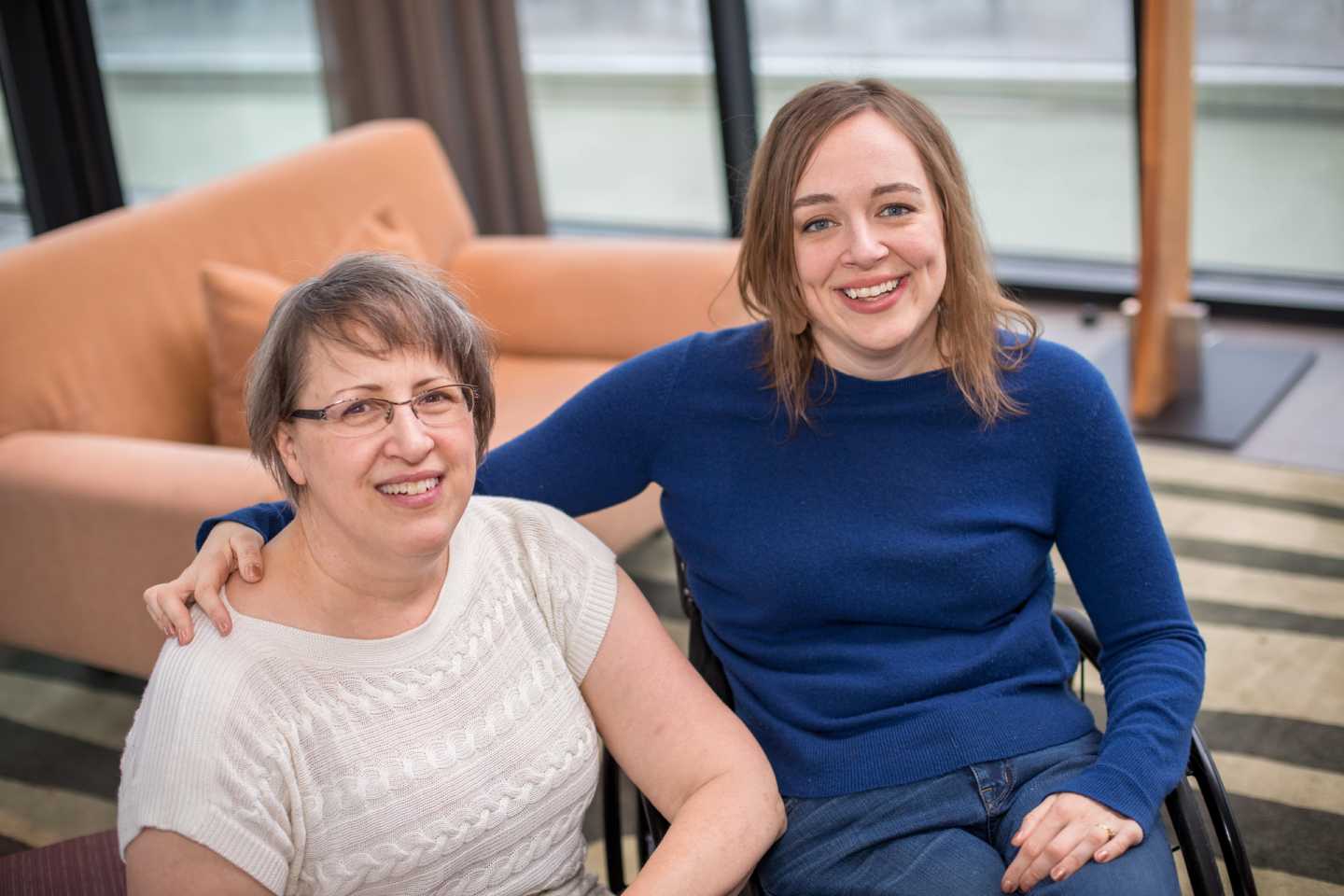
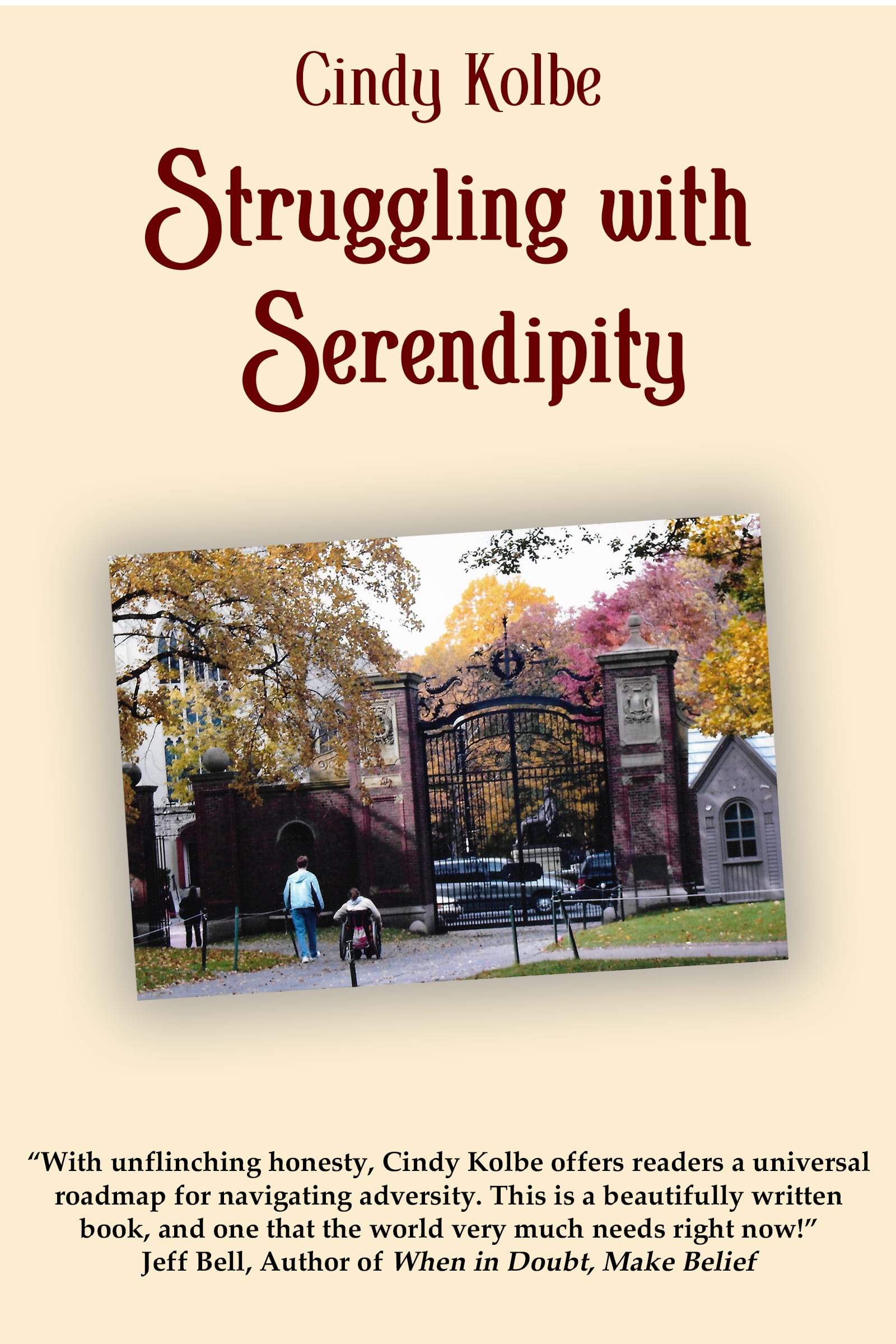
Cindy Kolbe is passionate about sharing the power of hope and loves to connect with others in the disability community. She authored a book which addresses her battle with depression and also her role as a caregiver to her daughter, Beth. Beth became paralyzed from a car accident injury (where Cindy was behind the wheel). In her own words, Cindy offers AmeriDisability the following insight into her personal story, including an excerpt from her book.
In one second, I went from having a daughter who could walk to one who couldn’t. And it was all my fault.
Near midnight, I drove the last stretch toward home after my son’s college concert on May 20, 2000. When I fell asleep at the wheel, my youngest daughter Beth was in the passenger seat. As the car flipped across a dark Ohio field, my daughter’s spinal cord ripped, along with my identity as a mom. When told of her paralysis from the chest down, fourteen-year-old Beth paused only a moment before simply responding, “Let’s talk about what I can do.”
My new memoir, Struggling with Serendipity, shares a mom’s crisis, a daughter’s paralysis, and a road of hope—from a small town in Ohio to Seattle, Harvard, Capitol Hill, and around the world. My struggles with guilt and depression are in direct contrast to my daughter’s, who challenges the physical limits of quadriplegia with tenacity and optimism. We become a team. I find support and inspiration from Beth, a stubborn teenager who refuses to let her new disability prevent her from enjoying all life has to offer.
Beth helps me find a new normal, with serendipity in the most unlikely of moments.
Not a swimmer before her injury, Beth learns all the strokes and swims on the U.S. Paralympic National Team for 5 years. She becomes the first with a visible disability on the Harvard Women’s Swimming and Diving Team. She set 14 American records, including one at the Beijing Paralympics.
Beth lends her voice to Struggling with Serendipity through her media quotes and writings. She is a health policy lawyer in Washington, DC. Her clients and pro bono work include companies and nonprofits in the disability community. She shares my passion for volunteering and her wedding last spring was featured in The New York Times.
“Becoming independent,” Beth said. “That is my greatest achievement.”
A lifelong disability advocate—even before Beth’s injury—I directed a nonprofit, managed group homes, and worked at an institution. I’m a writer with a blog and more than 52 articles since 2016 in various media outlets. I also am a peer mentor for the Reeve Foundation and a volunteer for other disability groups and mental health nonprofits. I live with my husband of 42 years in the Shenandoah Valley.
Struggling with Serendipity was published by a small press (not self-publishing) in April of 2019. It is available everywhere books are sold. Plus, I’ve embarked on a coast-to-coast book tour.
Here is an excerpt from Struggling with Serendipity:
College applications covered our kitchen table before Beth’s senior year of high school. She questioned the need for help during her freshman year and wondered if I could live off-campus instead of in the dorm with her. Separate housing for me for any amount of time would add significant costs on top of her out-of-state tuition, room, and board. High college expenses seemed certain, but John and I decided not to hold her back because of finances. We owned the Tiffin house and planned to borrow off it.
I watched Beth hold a pen awkwardly in her right fist, not hesitating as she wrote her motto on a Challenged Athletes application. ANYTHING IS POSSIBLE. I filed away a note I wrote to myself that said, “Anything is possible, except when it’s not.” It amazed me how she dismissed all she couldn’t do as irrelevant and wholeheartedly believed in the truth of the motto. And it really was true, but only for her and a small percentage of others with her priceless perspective. Those with and without a disability.
“I think walking is over-rated,” Beth said, with a smile.
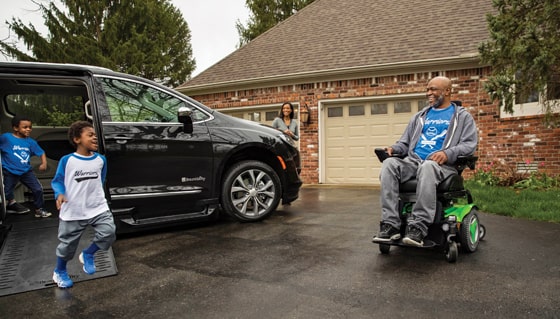
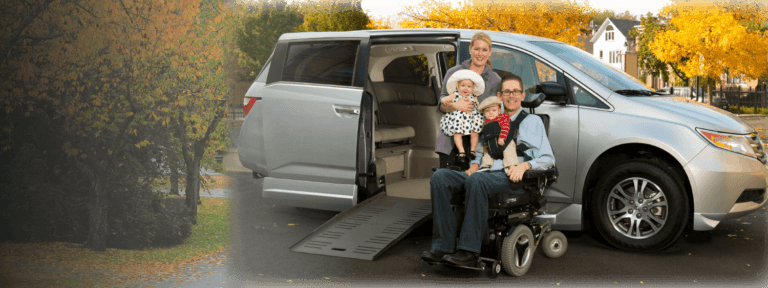
Mobility can be a major factor in a person’s independence. When illness or injury hinders free movement, even simple tasks can feel overwhelming. BraunAbility, a mobility vehicle company, compiled five ways to start an accessible lifestyle as shown in this video:
What are other ways that you have improved accessibility in your life? Share with us on Facebook, Twitter and Instagram.
Disasters such as hurricanes, floods, fires and other emergency situations are all too common these days. In fact, about 4-out-of-5 Americans live in counties hit by weather events since 2007, according to disaster declaration data from the Federal Emergency Management Agency (FEMA). That illustrates how these events can impact nearly everyone and the importance of having a plan.
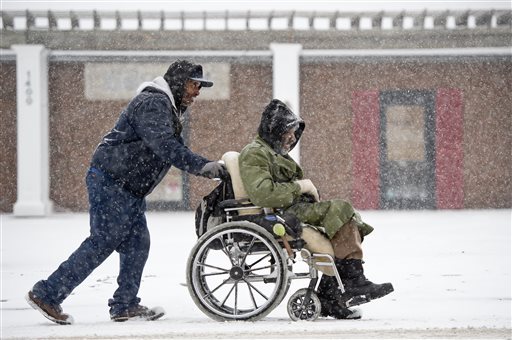
This is particularly true for older people and people with disabilities. Health issues, mobility concerns and use of assistive devices can create additional challenges during emergencies. However, there are steps everyone can take to prepare now for what may come later.
Discuss your emergency disaster plan.
Talk about preparedness with friends, neighbors and family members. Contact your city or county emergency management office as well as service providers, such as meals programs. Discussing the topic can help you create a support network, find local resources for preparation and identify contents for a custom emergency kit.
Create a contact list.
Make a list of people and places you can turn to for support in an emergency, including people you may need to help or notify of your safety. Include phone numbers, email addresses and physical addresses. Also include insurance providers, health care professionals and medical supply companies. Keep one copy on hand and put another copy in a watertight container in your emergency kit.
Prep for power outages.
Ask your healthcare providers about how to prepare for power outages, especially if you depend on medical devices that use electricity, such as oxygen, dialysis or a power wheelchair. Write down your plan, along with information about your devices, and keep a copy in your emergency kit.
photo credit: National Mobility Equipment Dealers Association
Make a list of all medications and medical supplies.
Keep a list of your medicines, including dosages and allergies, along with other essential supplies like extra eyeglasses, hearing-aid batteries and at least a week’s supply of all prescription medicines in your emergency kit.
Plan for transportation.
Have a plan in place in case you need to evacuate or get to health care services during an emergency. Know what equipment you need and how you will transport it. Perhaps a neighbor or family member can include you in their evacuation plans. Set this up beforehand and plan how to coordinate in the event of a disaster.
Plan for pets and service animals.
Include food, medications and other supplies your pets and/or service animals may need in your emergency kit, too.
Pack the essentials.
In addition to your medical information and needs, don’t forget essentials such as non-perishable food, water, a weather radio, a flashlight, extra batteries, blankets, cash, extra clothing and personal hygiene items. Keep your emergency kit in an easy-to-access location.
Learn more about preparedness at acl.gov/programs/emergency-preparedness.
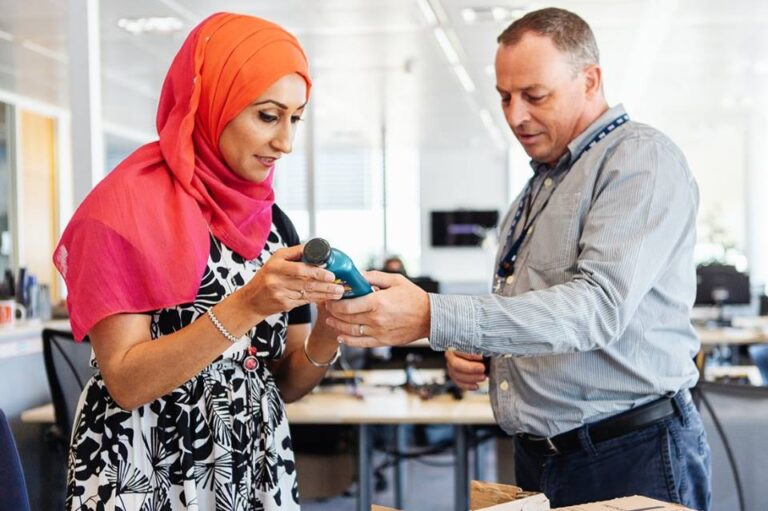
It’s been almost a year since P&G-owned Herbal Essences launched inclusive-designed shampoo and conditioner bottles (in October 2018). The first-ever mass hair care brand in North America to do so, the revamped packaging features raised symbols intended to help consumers with low to no vision distinguish products by touch.
So how have customers responded? Sam Latif, P&G’s Special Consultant for Inclusive Design, says inclusivity has been good for business. “We have gained new users based on the positive response we have got from the visually-impaired community and advocates,” she tells AmeriDisability. That’s not a small base of consumers ─ according to the World Health Organization, 253 million people worldwide are blind or visually impaired, including 23 million in the U.S. alone.
P&G is working to take accessibility beyond your shower with their own products and by generating awareness about prioritizing inclusion. “We [at P&G] are on a journey. We recognize that designing inclusive products and inclusive services means more people can use them, so we consider inclusive design a force for good and a force for growth,” Latif declares.
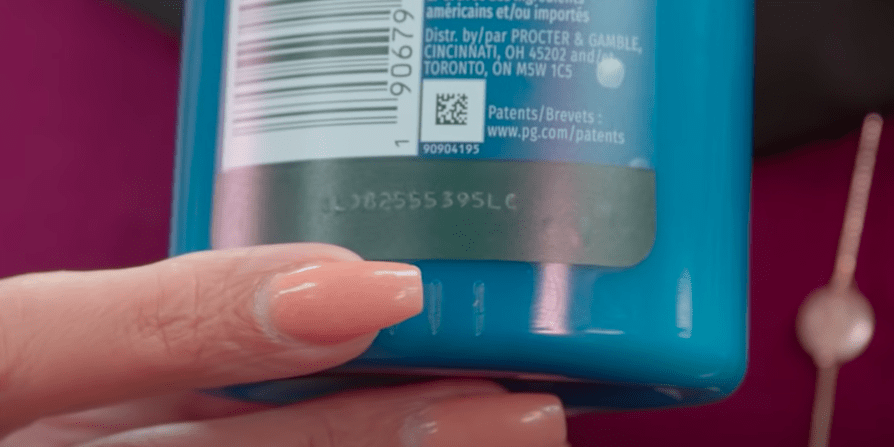
Bottles feature raised stripes (shampoo) and circles (conditioner).
A Clean Sweep Career Change
Latif is the brainchild behind Herbal Essences’ redesign but she hasn’t always tapped into her marketing mindset. She actually started her P&G career nearly two decades ago in the IT department. A blind mother of three, Latif explains that the motivation to shift jobs came about as she realized accessibility gaps at home and at the office. “The move to accessibility was something I felt I needed to do. I recognized that our company had the potential to better serve people with disabilities, and we needed to intentionally focus on this demographic. Being disabled myself and having a personal passion for accessibility, I felt this was my purpose,” she recalls.
Why start with shampoo and conditioner? Bathing is part one’s daily routine; making everyday tasks less challenging and more enjoyable can boost one’s independence and confidence. Latif used to create bottle distinction with rubber bands and tape. Now Herbal Essences has four raised stripes on the back of shampoos and eight raised circles on the back of conditioners. The decision to incorporate shapes versus braille was intentional. “I saw when conducting research that not everyone can read braille. I wanted the solution to be as inclusive as possible reaching as many people as possible,” she explains.
The hope is that customers connect ‘s’ to stripes=shampoo and ‘c’ to circles=conditioner.
Washing Away Barriers
Only 4% of businesses are actively creating products for people with disabilities, according a P&G statistic. Some companies are prioritizing inclusive design. For instance: Kellogg’s Rice Krispies Treats launched braille stickers and re-recordable audio boxes so parents “can share messages of love and encouragement with children who are blind or low-vision;” Microsoft developed the Xbox Adaptive Controller intended for gamers with limited limb mobility; and Target created a sensory-friendly clothing line. Obviously, just a few examples aren’t enough. However, Latif says additional corporations are soliciting insight from P&G which indicates more will follow suit. “We advocate that all companies think about inclusive product design and produce accessible services. We continue to be invited by many companies to share the work we are doing, and we’re constantly learning and collaborating with others,” she says.
Companies first should change perspective, advises Latif. “Business leaders, designers and marketers need to experience their products and services as people with disabilities experience them. Next, it is important to include accessibility into the criteria from the outset of any project,” she urges. Also, because “people with disabilities are great problem-solvers and have diverse thinking styles,” Latif suggests, “Recruiting people with disabilities to develop insights and test new solutions can be critical to ensure the right product or service is developed.” Latif believes consumers’ demands for inclusion will continue to increase. “I think my kids’ generation will expect products and services to meet their needs and not just ‘put up’ with less than satisfactory. I think this goes for disabled and non-disabled consumers from this generation,” she says. She hopes company culture as a whole will come to respect disability diversity with the same understanding as gender, race and sexual orientation diversity.
“There was a calling for me to help make the world more accessible and help design better workplaces, products and services for people like me (who have a disability). This sense of purpose encourages me to do what is right and bring insights of consumers like me into the design for everything we do for our workplace, products, packaging and advertising,” Latif says.
The Beauty of What’s To Come
The impact of accessible health and beauty products can be life-altering. For example, women with vision impairment find it impossible to read pregnancy and fertility test results. So P&G’s Clearblue partnered with Be My Eyes, a vision mobile app, so women can immediately know what is happening with their bodies. Herbal Essences and Be My Eyes offer similar support for customers seeking hair care advice.
Of the dozens of P&G brands, Latif admits, “I also love the Tide Pods. Being a mum of three, I have lots of laundry to do and have noticed such a significant improvement since I switched to using the pods – no dosing or spills to clean up.”
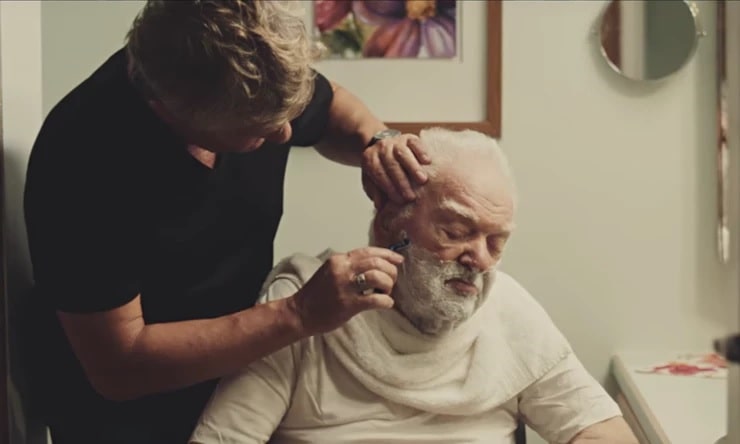
Gillette TREO simplifies caregiver-led shaving.
P&G most recently designed the Gillette TREO, the first assisted-shaving razor for caregivers grooming someone else (versus self-use razors). Think about how many people this benefits: mothers taking care of their sons, fathers taking care of their daughters, sons taking care of their elderly fathers and wives taking care of their husbands. “We’ve learned that caregivers like using TREO on both men and women, young and old, for those living with conditions ranging from Down syndrome to Alzheimer’s and much more,” Latif shares. [Check out the powerful product launch video here. Note: P&G includes audio description on all television/video advertising.]
Additionally, P&G has been a sponsor of the Paralympics since 2010 and has recommitted for Tokyo 2020; in addition to sponsoring the Special Olympics for more than 25 years.
Do you use another brand and/or product to meet your specific disability needs? Share with us on Facebook, Twitter and Instagram.
Nancy DeVault is an award-winning writer/editor contributing to local and national publications. Her storytelling spans a wide range of topics, including charity, disability, food, health, lifestyle, parenting, relationships and travel. Married with two kiddos, Nancy describes herself as a lover of the outdoors, fitness, news, traveling and binge reading magazines while sipping coffee.
An estimated 2.3% of adults are afflicted with Obsessive Compulsive Disorder (OCD), according to the National Institute of Mental Health. For many, the symptoms begin in childhood or adolescence. This anxiety disorder is a neurological malfunction that creates unrelenting, intrusive thoughts and extreme anguish for those affected. Obsessions range from unbearable worries about contamination to believing they have run over someone while driving. These fears can be alleviated only one way—by acting out compulsions, which become repetitive acts of checking and rechecking to ensure the fear is unfounded.
Although OCD was added to the American Psychiatric Association’s Diagnostic and Statistical Manual of Mental Disorders (DSM-III) in 1987, many people still live with its destruction unaware there’s help or even a name for their bizarre fears and behaviors. Add to that, “Families often don’t know that they have a sick child,” says Judith L. Rapoport, M.D., in The Boy Who Couldn’t Stop Washing. Children may keep their obsessions and compulsions a secret in order to avoid appearing crazy.
The devastation of OCD isn’t seen in just the adult or child with the disorder. OCD has a negative impact on the whole family. Families often destruct from the stress caused by the disorder. It’s not unusual for the OCD sufferer to rely on family members to help alleviate their fears. The sufferer may insist that a child, parent or spouse check electrical outlets or may badger loved ones with constant questions for reassurance.
In some homes where fear of contamination is the obsession, family members are banned from certain rooms or areas. This is an effort by the sick person to keep the home in order to prevent contaminating the areas. Family members may also be required to live up to unreasonable standards of cleanliness to satisfy the OCD person. In other homes, compulsions such as hoarding are so out of hand that the home literally becomes a maze. Family members must maneuver through narrow trails, dodge tall stacks of boxes, newspapers or whatever is hoarded.
What’s the cause?
To understand the OCD mind, many researchers explain the brain is stuck, in a sense. It replays a particular thought over and over again, like a broken record. In other words, it tricks the sufferer. They cannot trust their own judgment. Those who don’t understand OCD often ask the afflicted, ‘Why don’t you just stop?’
But it isn’t that simple. Researchers believe the disorder is neurobiological. Therefore, the obsessions are not a matter of choice. Differences have been found in the brain of OCD sufferers through brain imaging techniques. Some studies have found abnormalities in the neurotransmitters, such as serotonin. The occurrence of OCD is also higher in families with depressive and anxiety disorders. For most, there’s no known event that relates to their particular obsession(s). Still, researchers feel environmental stressors may play at least some role in the development of OCD for those who are biologically predisposed.
Is there help?
Although there’s no known cure for OCD, there’s a number of treatments available. Caution should be used in weighing out treatment options though. Some purported treatments are not supported by a preponderance of evidence. Questionable treatments for OCD include psychotherapy, hypnotherapy, psychosurgery and electro convulsive therapy (ECT).
The two most common, effective and proven forms of treatment available for OCD are psychotropic drugs and behavioral therapy. Many doctors suggest medication in combination with behavioral therapy. This way suffers can learn techniques to relieve or stop the intrusive thoughts and to control compulsive behaviors.
The severity of untreated OCD generally tends to worsen over time. It can become completely debilitating. If someone in your family has symptoms of OCD, contact your mental health provider for a confidential evaluation. With proper treatment, many OCD sufferers are able to lead normal and productive lives.
Common obsessions
● Fear of running over someone while driving
● Fear of contamination
● Fear of harming others
● Fear of blurting obscenities or insults
● Preoccupation with a part of the body
● Violent, horrific or disgusting images
● Superstitions or persistent thoughts of lucky/unlucky colors, etc.
● Extreme concern with religious issues, values or morals
Common compulsions
● Repeated checking of doors, ovens, locks, plugs, etc.
● Repeated rituals such as counting, going in and out doors a number of times, etc.
● Excessive arranging and rearranging
● Hoarding or collecting mail, newspapers, food, etc.
● Repeated confessions or asking repeated questions for reassurance
There’s more to having a set of wheels than getting from here to there. Jumping in a car can be a ticket to freedom, independence and adventure.
For people new to paralysis, driving is a sure way to get back into the swing of things. But can you do it? Can a paralyzed person get behind the wheel and handle the machine and the traffic?
Driving is quite possible for many people who are paralyzed, even those with very limited hand and arm function. A wide range of adaptive driving equipment and vehicle modifications are on the market today.
Driving with a disability often means relearning to drive. The rules of the road don’t change, but the controls do. Depending on one’s specific needs, an adapted vehicle may include the following:
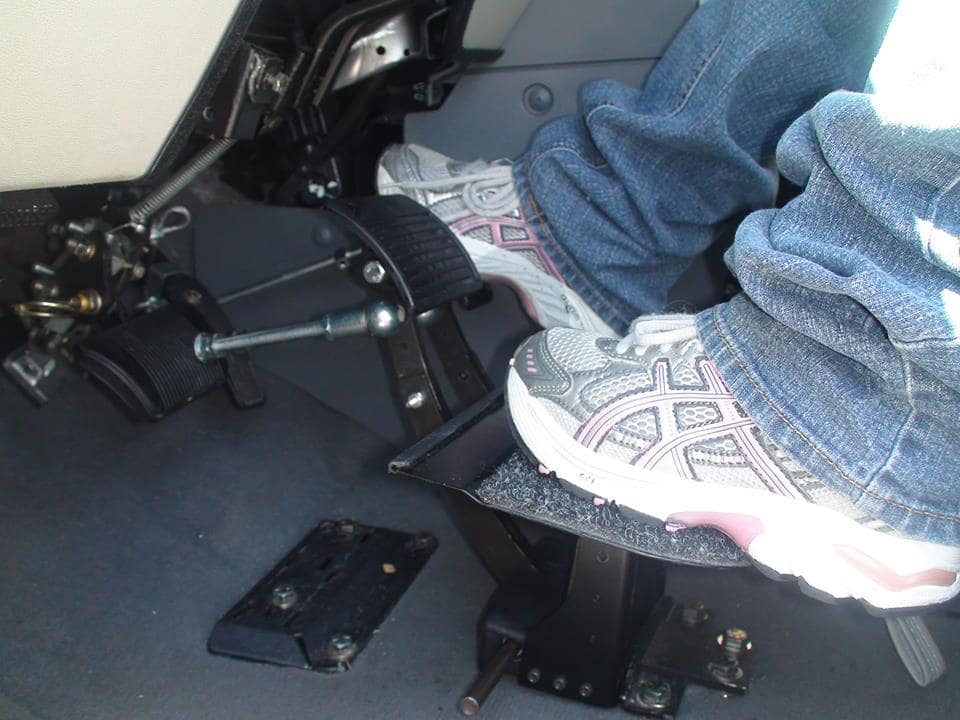
Hand controls for braking and accelerating
Power assist devices for easy steering
Touch ignition pads and gear shifts
Adjustable driver’s seats
Automatic door openers
Joysticks for people with extremely limited hand function
For a person who has had a stroke, a spinner knob might be attached to the steering wheel for one-hand steering. A left gas pedal may be adapted if the right foot can’t operate the gas.
credit: NMEDA
Driving evaluation
The first step in the process is to get an evaluation from a qualified driver trainer. This will determine your basic driving set up, specific modifications and driving equipment to match your needs.
An evaluator may also take into account medications a potential driver is taking.
To find a qualified evaluator, visit your local rehabilitation center or contact the Association for Driver Rehabilitation Specialists (ADED), which maintains a list of certified specialists throughout the country.
As for getting a new driver’s license, most states require a valid learner’s permit or driver’s license to receive an on-the-road evaluation. You cannot be denied the opportunity to apply for a permit or license because you have a disability, but you may receive a restricted license based on the adaptive devices you require.
Selecting a vehicle
Once you get the green light from the evaluation and your state’s motor vehicle department, it’s time to think about the vehicles that suit your abilities and needs.
Choosing the right car may lead you to more practical wheels than you might have chosen before paralysis. For example, two seater sports cars may fit the image you have of yourself but are pretty low on the practical scale. Minivans, those dreaded mom-wagons you swore to avoid, are of much higher utility.
It’s helpful to connect with other individuals with similar disabilities to see what they drive. Then be sure to collaborate with the evaluator and a qualified vehicle modification dealer.
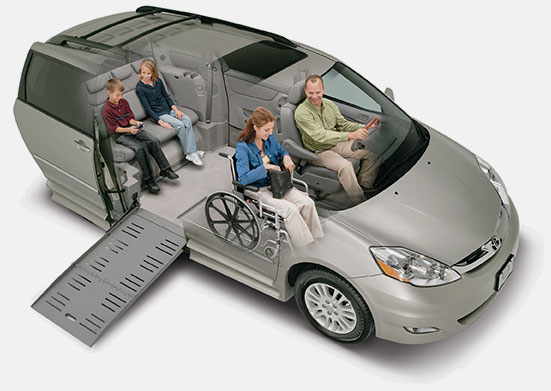
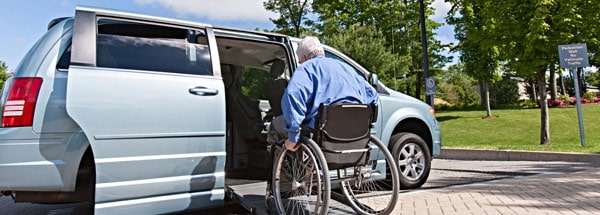
People who sit in their wheelchair while driving or riding in minivans or full-size vans need either a manual tie-down or power lockdowns for safety. The manual systems usually require help getting in and out. Power units allow for more independence — you just roll into place and the chair automatically locks down.
Because there is no way a person can operate a van from a scooter, users must be able to transfer to the vehicle seat to drive. Electronic seats are available to help with the transfer.
credit: The Association for Driver Rehabilitation Specialists
Tips to find the car that fits your needs
The following questions/tips can help with the vehicle selection process or adaptation of a car you already own:
Does the necessary adaptive equipment require a van, or will a smaller passenger car do? In other words, will you be driving from a wheelchair or can you transfer to the car seat? If you can transfer into a car, your choices are much wider.
Will you fit in a minivan? A person may sit taller in the chair and may not clear the ceiling.
Can the vehicle accommodate the hand controls or other needed driving equipment?
Will there be enough space to accommodate other passengers once the vehicle is modified?
Is there adequate parking space at home and at work for the vehicle and for loading/unloading a wheelchair or walker? Be aware that full-size vans might not fit in your garage or public garages or even in certain parking spaces.
If a third party is paying for the vehicle, adaptive devices or modifications, are there limitations or restrictions on what is covered? Get a written statement on what a funding agency will pay before making your purchase.
If you are adapting a used van or family vehicle, make sure the technician has lots of experience.
All lifts are not created equally, some just won’t fit. Also, some lifts are built for wheelchair users and scooter users may not be able to use them.
The cost of modifying a vehicle varies greatly. A new vehicle modified with adaptive equipment can cost anywhere from $20,000 to $80,000.
Be a savvy shopper; investigate public and private financial assistance. Contact your state’s department of vocational rehabilitation or another agency that provides vocational services and, if appropriate, the Department of Veterans Affairs.
Also, consider the following to help finance your new or adapted vehicle:
Some nonprofit groups that advocate for individuals with disabilities have grant programs that help with adaptive devices.
If you have private health insurance or workers’ compensation, you may be covered for adaptive devices and vehicle modification. Check with your insurance carrier.
Several auto manufacturers, including Toyota, Chrysler, Ford and General Motors, have rebate or reimbursement plans for vehicles that will be modified.
Some states waive the sales tax for adaptive devices if you have a doctor’s prescription for their use. You may also be eligible for medical expense-related savings on your federal income tax return; consult a tax specialist.
Find a qualified dealer to modify your vehicle. Ask questions, check credentials and references.
Do they work with evaluators?
Will they examine your vehicle before you purchase it?
Do they require a prescription from a physician or other driver evaluation specialist?
Do they provide training on how to use the equipment?
Do they provide service? What is the cost? How long will it take to do the work? What is the warranty?
credit: Wheelchair Getaways
Joystick motoring
The joystick has enabled individuals living with quadriplegia to hit the road. Joystick car systems have been around long enough to establish their safety, reliability and performance.
You may face a choice between a mechanical/hydraulic system (like an airplane) or electronic system (like a PlayStation). It may come down to your comfort level with electronics and any worries about a total power shutdown at 70 mph.
A California company called dSi custom fits its Scott mechanical system to each driver. The firm says mechanical is more reliable and more refined than electronic. They like to use big Ford vans and stay in touch with drivers (including some with spinal cord injury up to C4/C5) who’ve logged more than 300,000 miles on the system.
EMC offers an electronic solution called Aevit 2.0. A main advantage is that Aevit does not require modification of original equipment brakes, steering and airbag assemblies. This means you can resell the vehicle without the mods. Also, an Aevit system can be operated by a non-disabled driver. The Scott system, by contrast, is joystick only.
If you’re thinking about going joystick, you can’t get one without a referral from a driving instructor. Also, the importance of training cannot be overstated.
A joystick system will run upwards of $40,000 to $65,000, plus the cost of the van. Third parties, including private insurance, vocational rehab and the VA, have paid for these modifications, so investigate your options. Additionally, ask each manufacturer for user references and if at all possible, check out each system yourself.
Vehicle discounts
Ford Mobility Motoring offers up to $1,000 of assistance toward the cost of adaptive equipment on a new Ford, Lincoln or Mercury vehicle. Ford Mobility Motoring Customer Care Center.
GM Mobility Program with OnStar offers up to $1,000 reimbursement ($1,200 on Chevy Express/GMC Savana vans) plus two extra years of the OnStar safety and security service on any eligible new GM vehicle (except Cadillac).
Toyota Mobility Program provides cash reimbursement of up to $1,000 toward aftermarket adaptive equipment or conversion installed on any eligible purchased or leased new Toyota.
The Chrysler Automobility Program provides up to $1,000 in financial assistance toward the installation of adaptive equipment on new Chrysler, Jeep and Dodge vehicles.
Hyundai Mobility Program offers $1,000 toward the cost of adaptive equipment. See dealer for more.
Volvo Mobility Program reimburses up to $1,000 toward the cost of adaptive equipment added to a new Volvo. Mobility by Volvo Center.
Resources
If you are looking for more information on adaptive vehicles or have a specific question, information specialists are available business weekdays, Monday through Friday, toll-free at 800-539-7309 from 9:00 am to 5:00 pm ET.
Additionally, the Reeve Foundation maintains a fact sheet on driving with a disability with additional resources from trusted Reeve Foundation sources. Check out fact sheets on hundreds of topics ranging from state resources to secondary complications of paralysis.
Also, reach out to support groups and organizations, including:
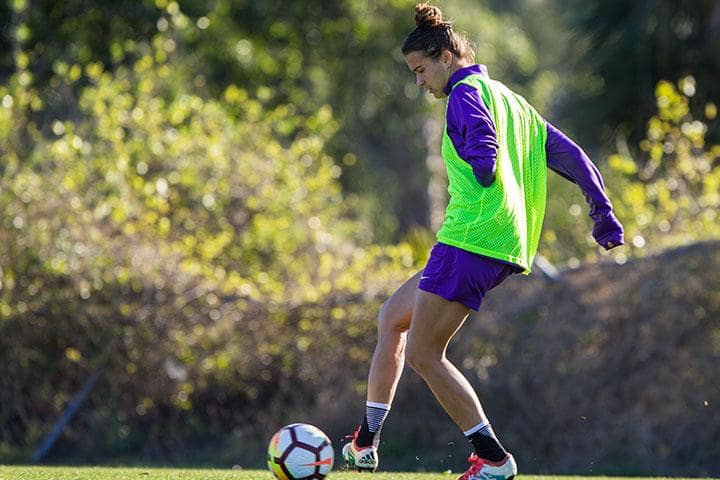
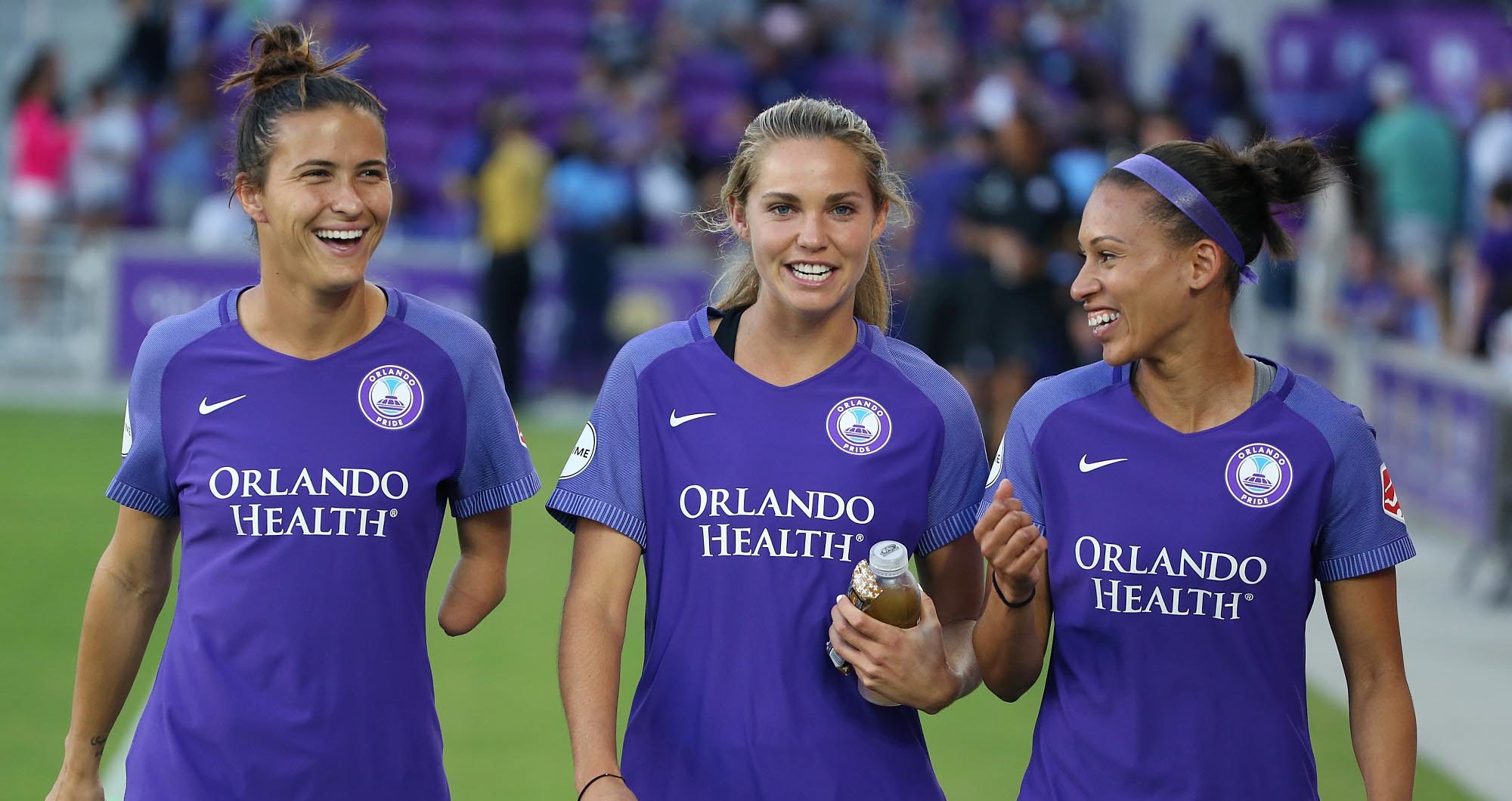
Wearing the #16 jersey, Carson Pickett pulls on her purple knee high socks and laces up her soccer cleats just like the rest of her Orlando Pride teammates. It’s a simple pre-game necessity, of course, and yet she often feels the stares of onlookers. Pickett was born without a left forearm and hand but that hasn’t stopped her from dominating on and off the field.
About 2,250 babies are born with limb defects in the United States each year, according to the Centers for Disease Control and Prevention. “Limb reduction,” as it is known, occurs when part of or the entire arm (upper limb) or leg (lower limb) of a baby fails to development in-utero.
Pickett grew up just outside of Jacksonville, Florida. Thanks to the influence of her athletic mother and father, Treasure and Mike, she started playing soccer at age five. “I was raised by two amazing parents who always told me that I could do anything that I dreamed of,” Pickett tells AmeriDisability. Now 25 years old, many of those aspirations have already come true. And her limb impairment never swayed her determination. However, because people often have misconceptions about physical disabilities, Pickett’s not a fan of the term ‘disability.’ She explains, “I prefer using the word ‘unique.’ Everyone is unique in their own way. Just because someone is missing an arm doesn’t mean she can’t do something that someone with two arms can do.”
credit: Orlando Pride
Pickett proved that playing four years at Florida State University. Then, in 2016, she was drafted into the National Women’s Soccer League (NWSL) by Seattle Reign, where she performed for two years alongside league icons, including Megan Rapinoe. In 2018, she returned home to the Sunshine State on a trade to the Orlando Pride. She quickly found her footing as a defender and has played in every game thus far in the current 2019 season.
Humor, especially surrounding her “uniqueness,” is a powerful asset that Pickett uses to connect with teammates, coaches and fans. There are lighthearted jokes about handballs and throw-ins, along with serious accolades about her superior skills. She’s been described as one of the smartest left-backs in the league because she has the ability to read the game differently and anticipate how to effectively “body up” to competitors.
Pickett believes participation in a collaborative environment has helped build her confidence. “If I was playing tennis or golf or another individualized sport, it would be harder [to combat diversity] because I’d be out there on my own. Being part of a team sport has allowed me to be with people who always had my back,” she says. “My teammates and coaches believe that I can be better and better each year and they push me to be that way… in all aspects of my life.”
The Power of Star Power
Fresh off the U.S.’s win of 2019 FIFA Women’s World Cup, NSWL players have become household names, including Pickett’s Orlando Pride teammates ─ Alex Morgan, Ali Krieger and Ashlyn Harris ─ who helped the U.S. break its own record for the most wins of any country with four. “It is unreal seeing them succeed and it just shows how amazing they are and how hard they’ve worked,” Pickett says, of her famed teammates she describes as persistent and level-headed.
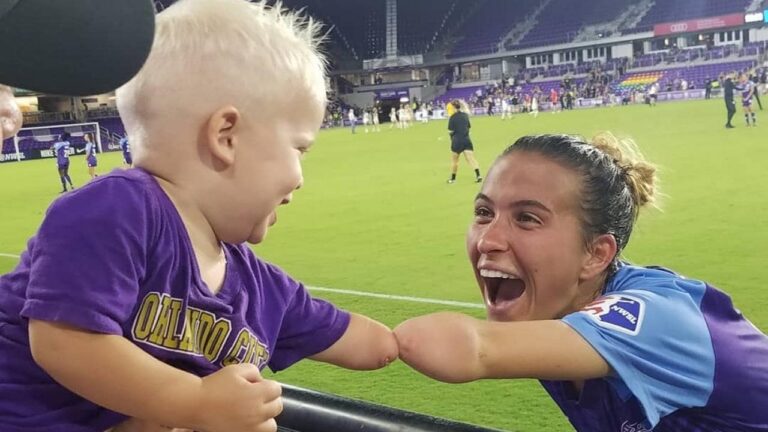
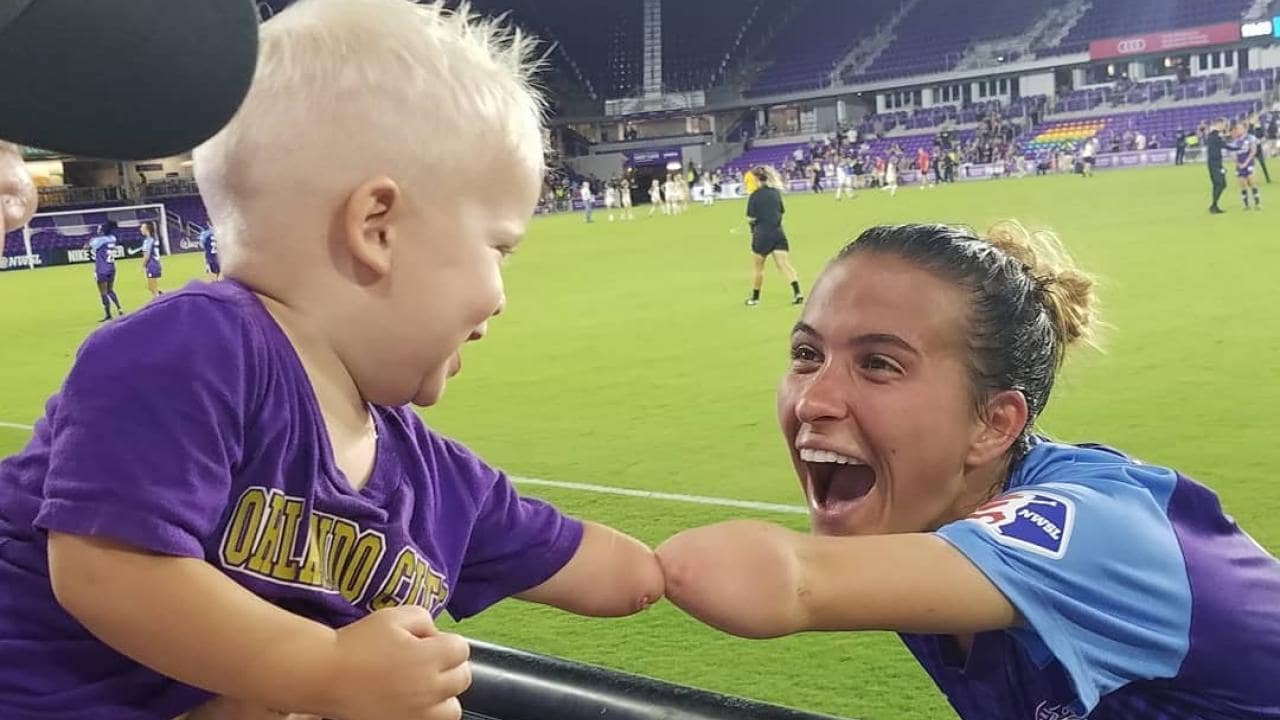
Amidst the World Cup media frenzy, Pickett also found herself in the throes of the spotlight after a post-game photo went viral. Following the Pride’s win over Sky Blue FC in June, Pickett ran over to the stands to greet her number one fan, 2-year-old Joseph, who also was born without his left forearm and hand. Joseph’s mom, Colleen Tidd, snapped a photo of the two “fist bumping.” She shared the touching image on Instagram and it quickly garnered more than 10K likes.
“The picture is authentic. It wasn’t a set-up photo opp. It was a moment when we saw each other and we had true emotions,” Pickett attests. “A lot of people do things for the attention and that is not who I am. The moment was pure joy between a 25- and 2-year-old. And despite our age difference, we have a connection and understanding that we’re so similar. It’s special!”
The pair first meet a few months prior and have built a sweet friendship. Both Pickett and her parents have offered the Tidd family guidance on how to support a child with a limb impairment. Tidd says the connection is truly empowering. “From the moment I found out Joseph was going to be my right-hand-man, I wanted the world to know he would be okay. I wanted my friends, family and even Joseph to understand that he will be able to accomplish anything he puts his mind to,” she tells AmeriDisability, adding, “Having Carson in our lives has helped prove that anything is possible. Joseph has never limited himself, and he never will, thanks to Carson. Since day one, she has demonstrated what an athlete and friend is all about: being supportive, encouraging all of us and inspiring thousands around the world… just by being her sweet self!”
Since the photo went viral, tons of other families have also solicited Pickett’s encouragement. “Parents have reached out to me for advice. They may ask me how I did something when I was younger,” she says. “I think it’s really cool that I can advise their child on how to succeed because, sometimes, parents with two hands can’t relate in the same way that I can with one arm. It’s been nice to help.”
While the public platform of inclusion came as a surprise, Pickett has fully embraced her newfound position as an inclusive role model and advocate. “I am here for a reason and it takes hard work. It’s tough to get stared at [at times] but I am lucky, and all the hard work is paying off,” she says. Pickett finds herself repeating her father’s favorite quote—one she lives by—to others: “Don’t let anyone turn your sky into a ceiling.” Bottom-line, she says, “Don’t let anyone tell you that you are not good enough, because you are able no matter what. I am good enough!”
Carson Pickett with teammates Dani Weatherholt and Kristen Edmonds; credit: prosoccerusa.com
Her Next Impressive Move
Pickett says she enjoys playing defense but she’s open to trying new positions on the soccer field. In the U.S. off-season, she’ll voyage down under to play in Australia’s W-League, something she loves as an avid traveler. Off the field, Pickett says she spends most of her spare time with family, visiting the beach and snacking on donuts (as chronicled on her social media feeds).
Pickett admits that she longs to represent the USA at the sport’s highest level. “The dream of every soccer player is to play on the national team,” she says. But she has other ambitions too, like being a sports reporter and launching a foundation that would “spread joy and love” hosting soccer camps in third-world countries.
Well, apparently, you only need one arm to steal the hearts of many! Keep it up Carson Pickett. You’re our MVP!
Nancy DeVault is an award-winning writer/editor contributing to local and national publications. Her storytelling spans a wide range of topics, including charity, disability, food, health, lifestyle, parenting, relationships and travel. Married with two kiddos, Nancy describes herself as a lover of the outdoors, fitness, news, traveling and binge reading magazines while sipping coffee.
If you’re a podcast junkie like me, you probably spend time searching out programs that entertain, inform and inspire. Whether you’re in the car running errands or curled up on the couch with a cup of tea, these five disability-focused podcasts are worth a listen.
1. AccessPoint with LisMalone
With a tagline of “where the dialogue between the mainstream and the disabled communities meet,” AccessPoint hopes to foster real conversations and bridge the gap between the two. Launched in 2015, AccessPoint aims to empower listeners to discover, learn and share opinions and ideas on accessibility, inclusion, acceptance and understanding.
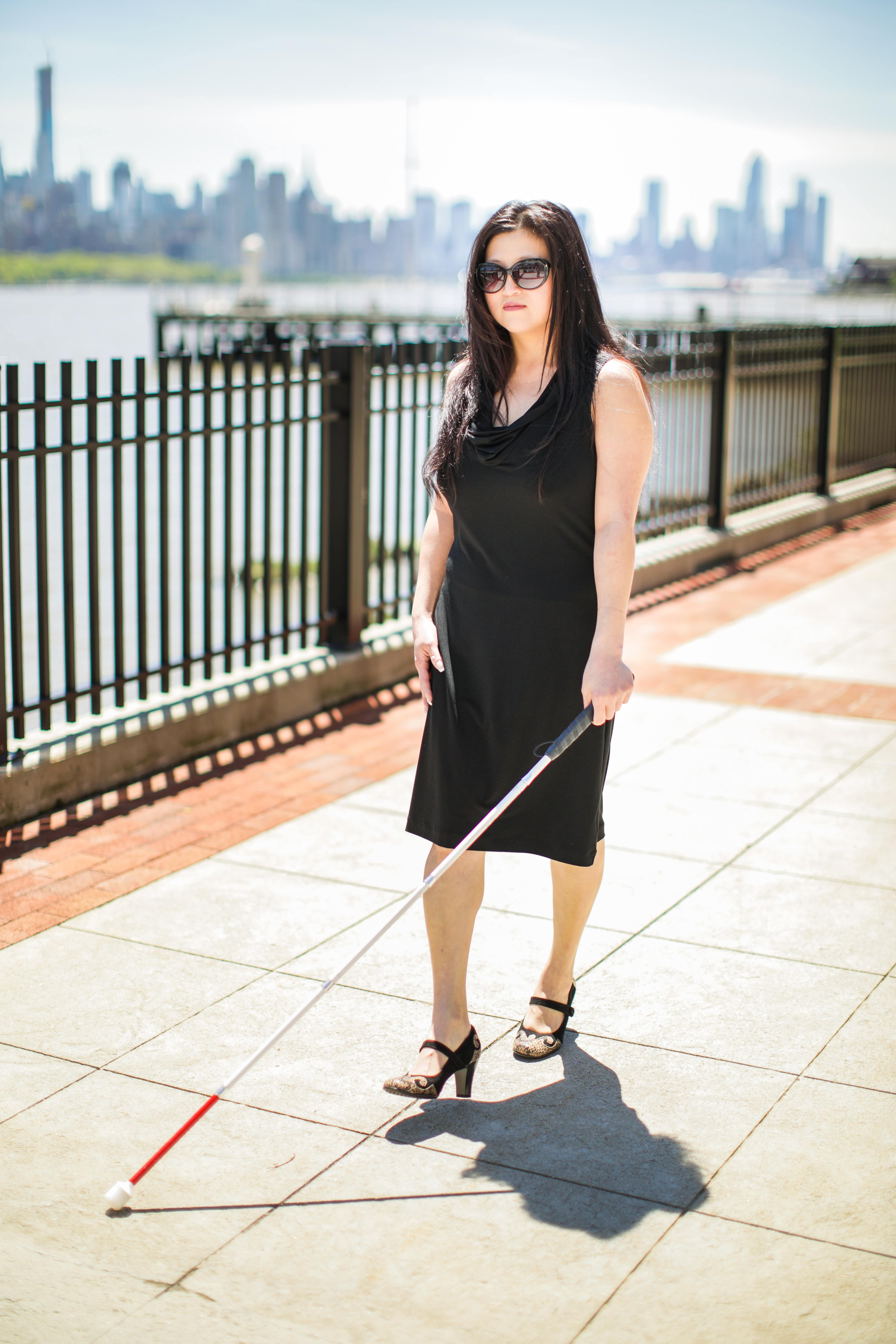
At the microphone is Lis Malone, who lives with a degenerative retinal disease called retinitis pigmentosa. Diagnosed at age 20 and declared legally blind by 30, Malone proudly serves as an advocate for the blind and visually impaired.
“When I started podcasting, I went into it without thinking about who I was trying to target, but rather what message I wanted to send,” explains Malone. I wanted to be able to discuss topics focusing on disability in a very open, honest way, which could appeal to just about anyone. In doing so, I’ve had listeners from around the world and of various demographics, which I found to be both surprising and promising.”
This eight-episode, interview-driven podcast showcases various representatives of the disabled community and discusses a range of topics. Past episodes include talking with kids about disability, inclusive product design, and tech and web accessibility.
“I often hear that my listeners are moved by the fact that my guests and I speak from the heart,” notes Malone. “Some podcasts provide entertainment while others provide education. My podcasts tend to leave the listener with a feeling.”
Although AccessPoint was a limited-run podcast, Malone launched a second podcast in May 2019 called Breaking Dishes with longer-term aspirations. (You can find Breaking Dishes on iTunes, Spotify, Google Podcasts, Stitcher and other podcast platforms.) Less interview-driven and more discussion-based, Breaking Dishes continues forward and covers a broader spectrum of topics where Malone not only includes disability themes, but also more diversity themes, as she’s a woman living with a disability, she’s a racial minority and she’s an interracial adoptee.
Showing both vulnerability and kick-ass attitude, Malone gets real in Breaking Dishes (Episode 1: New Beginnings), as she discusses dealing with vision loss. “It was definitely the most challenging experience of my life. There were times when I did not handle the vision loss very gracefully. It was a process. There was a mourning period. I had to let go of the woman that I used to be. I had to say goodbye to being a sighted person. But over time, with rehabilitation, counseling and mentorship, I had to accept my new identity and learn to thrive as a blind person. And that meant reinventing myself, tapping into talents and re-purposing them, reminding myself that I have worth, surrounding myself with people who were good for me and that I was good for them. It truly was the ultimate new beginning for me personally.”
Noting how podcasting has created a fantastic platform for all voices, Malone says she feels humbled to be in the company of other content creators with the goal of diversifying the landscape. “I wish creating a great podcast was enough,” she adds. “But we also need to build awareness within our communities that these topics are important, and we need to support one another’s work.”
Every Tuesday from 2:00 pm – 3:00 pm Eastern Time, you can listen to Joyce Bender and her expert guests talk about competitive employment and empowerment of people with disabilities. Technically a talk radio show (on VoiceAmerica.com) and not a podcast, it’s still worth tuning into every week. True to its mission and audience, Disability Matters is open-captioned for the deaf community.
Launched in 2004, Disability Matters has logged an amazing 700 episodes so far, featuring prominent disability leaders such as Congressman Tony Coelho (primary sponsor of the Americans with Disabilities Act), Governor Dick Thornburgh, and Andy Imparato (executive director of the Association of University Centers on Disabilities). Experts discuss how people with disabilities can secure meaningful employment, sustain a long-term career and make a positive impact. On the flipside, they also address how others (including employers) can benefit from hiring people with disabilities.
Bender herself is an expert, with 20 years of experience providing disability employment expertise as a consultant. She focuses on recruitment, workplace mentoring, strategic planning, training and digital accessibility, tapping into a network of thousands of disability and academic institution partners as well as a database of 27,000 qualified candidates with disabilities.
Although the show targets people with disabilities, businesses and Federal agencies, it also appeals to anyone interested in learning more about the disability rights community. Bender explains, “The goal of the show is to see an increase in the abysmal employment of people with disabilities, break down stigma and educate our communities.”
With hundreds of episodes, which ones rank high with listeners? “We have the top 10 shows data for every week and number one is Tony Coelho,” cites Bender. Other fan favorites include shows with CEOs, senators and celebrities, such as Jenny-Lay Flurrie from Microsoft.
While Disability Matters shares perspectives from business leaders, government officials and disability advocates on “how to move the needle on disability employment,” there’s still more work to be done. “I’m only surprised that after 15 years, the unemployment rate is still double that of people without disabilities—and next year is the 30th anniversary of the signing of the ADA,” Bender points out. As a long-time, on-air influencer, Bender understands how she’s helping to drive a movement of inclusive media and says she feels honored to host this show. “To have the opportunity to change lives and educate everyone about the disability community–I live with epilepsy–is so important,” she says.
Bender tips the hat to Highmark, the show’s lead sponsor for three years. “I think when a corporation sponsors the show for one year, it speaks volumes about the credibility.”
Dubbed “the resource podcast for parents of special needs children,” Special Parents Confidential launched in 2013, on a part-time basis, with John Pellegrini as the show host. The show targets parents of special needs kids—any special needs, as Pellegrini doesn’t focus on just one particular issue. Adopting a “we’re-all-in-this-together” approach, the show also appeals to family members, relatives, caregivers and anyone with any kind of connection to a person with special needs.
“I came about this because of our son, who has some special needs,” explains Pellegrini. “We couldn’t get a diagnosis that explained all his issues for the first few years, so we attended a number of different support group meetings in an effort to learn more. I realized that, for many parents, attending a support group meeting is nearly impossible.” With his 30-year background in radio and audio production, Pellegrini decided to do a podcast that would serve as a virtual support group meeting that parents could access any time they want. “My role is to be the support group’s facilitator,” he says. “I get in touch with experts on different subjects and ask the kinds of questions that I, as a parent, would want to know.”
With 70 episodes recorded already, the podcast aims to fill the airwaves with expert advice on a variety of issues that parents of kids with special needs face. The show covers common parenting concerns such as getting and coping with a diagnosis, assistive technology, medical issues, insurance, education and more. (He cites Episode 15: Applied Behavior Analysis (ABA) as the single most downloaded episode so far.) In particular, Pellegrini enjoys interviewing adults who have special needs and hearing them tell stories of what their lives were like growing up with their challenges. “The contrast of how we used to deal with special needs and special education in the past compared and how things are done today shows great improvements, but sometimes we’ve also taken some ridiculous steps backward,” he points out.
With the backdrop of his career in the mainstream media, Pellegrini says, “I think podcasting is a major shot of life and inspiration. The ‘mainstream media’ has become too corporatized and homogenized to the point where you hear nothing but the same thing over and over. Podcasting—when done well (and unfortunately some of it isn’t)—offers a greater variety of subjects that people should know about.”
One overarching theme that others should know about lies in the power of kids with special needs. “What I hear more often in different ways from everyone I’ve talked to is, ‘Never underestimate a child with a special need,’” Pellegrini points out. “Always assume competency, because, when given the right kinds of assistance, they are far more capable than you could imagine.”
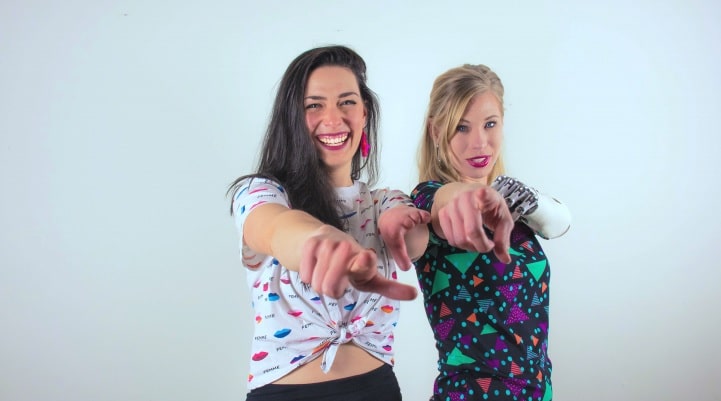
In 2014, Nicole and Sarah met at a camp for limb-different children called Camp Winning Hands in California and they’ve been friends ever since. They joined forces to create Disarming Disability.
Fairly new on the podcast scene, the show launched weekly on February 27, 2019. The hosts just completed their first season comprised of 13 episodes in three distinct chapters: Disability History, Disability in the Media and How to Be an Ally. They hope to attract listeners who want to learn more about disability and learn how to make a more inclusive society. “We do want emphasis on those living with a disability, that they are connected to their history, and feel empowered in their experience,” explains Kelly.
The show’s goal? To deconstruct the disability social construct by connecting with experts in the disability field. To accomplish that, they’ve covered a lot of ground in their first season. Early fan favorites include learning about the hosts’ history as well as the media chapters that have empowered listeners to tackle projects that increase the visibility of disability. The hosts were even a bit surprised by a few of topics that ranked high in popularity.
“I felt really struck by our media episode with Lawrence Carter-Long, who spoke of his ‘light bulb moment’ when he realized that the larger society did not think of him and his experience as an equal. That those with different bodies, those like us, were better off dead,” recalls Tuberty, noting how it stirred her anger. “Feeling that anger made me realize that we have to do something. We can do something. Disability is a social construct; it’s based on rules we as a society made up. This means we have the power to make new rules. I am using my heated energy in ways to build beauty in the world.”
Meanwhile, Kelly was really struck by their “How to be an Advocate: Mental Illness” episode with Patrick Corrigan, a professor who loves data and numbers. “He brought to the forefront that when connecting with people to change the conversation about stigma, it’s important we share our stories,” notes Kelly. “Data and numbers will never ‘change anyone’s mind’ about a topic, but the power of a personal story goes very far!”
Stressing the importance of inclusivity in media, Disarming Disability models how to do it right. The podcast team, nine-members strong, strives to make all content accessible. Besides giving a voice to the disability community through the show, their photos on social media include alt text options. Plus, they post transcriptions of every episode on their website. “We engage with the community and integrate feedback to make our podcast more accessible,” notes Kelly. “We believe we have the responsibility to show other media HOW to be inclusive and we take this job very seriously.”
Kelly shared one of her favorite quotes from the first season, which pretty much sum sup the show’s mission: “We need to create the space, look around and see who is at the table and who is not. Why are they not there and what do we need to do to get them there?”
Nicole Kelly and Sarah Tuberty
Author’s Bio: Lisa Beach is a freelance journalist and copywriter. Her work has been published in The New York Times, Good Housekeeping, Eating Well, USA Today Go Escape Florida & Caribbean, Parents and dozens more. Check out her work at www.LisaBeachWrites.com.
With unemployment rates at a nearly 50-year low, many businesses are struggling to find workers. This tight job market is opening doors for people with disabilities, as many companies are turning their attention to diversity and inclusion in the workplace.
Though more Americans with disabilities are working, their unemployment rate is still more than twice that of the overall workforce. An estimated 81% of adults (18+) with developmental disabilities do not have a paid job in the community.
Some companies view hiring people with disabilities as “the right thing to do,” but not as a strategy that will benefit business. A recent study by the National Organization on Disability found that only 13% of U.S. companies have reached the Department of Labor target of a 7% disability representation among their staff. Often companies don’t know where to find this untapped resource of talent.
Programs like Best Buddies Jobs can help. They match skilled and qualified individuals with intellectual and developmental disabilities (IDD) with businesses seeking enthusiastic and dedicated employees. Job coaches look beyond the typical positions that individuals with IDD might hold, to match job seekers based on their individual talents and interests. The program develops partnerships with employers, assists with the hiring process and provides ongoing support to the employee and employer.
“We started the program to help improve the quality of life for individuals with IDD, and what we found is that the employers also benefit by getting an extremely dedicated, well-prepared staff member, improved company morale, and a better bottom line,” explains Anthony Kennedy Shriver, Founder, Chairman & CEO of Best Buddies International. “The Jobs program is really a win for all of society since we end up creating employees who can support themselves and contribute to the economy, removing the need for government assistance or parental support.”
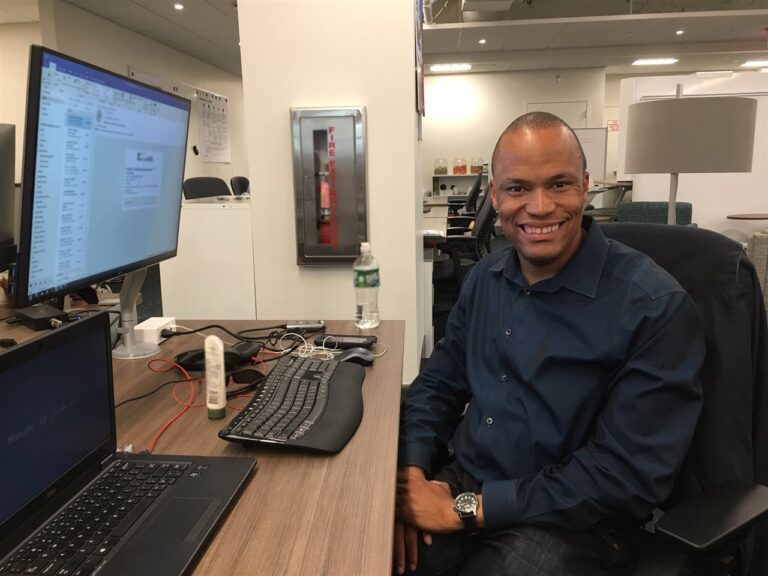
Dudley Williams III personifies the highly successful program participant. After graduating from Threshold, a Lesley University post-secondary program that prepares young adults who have diverse learning challenges for the world of work and independent living, Williams joined Best Buddies Jobs to work toward his professional goals. “I worked part-time jobs at first ranging from a hotel, to schools, and the Boston Minority Business Development Agency Center as an office assistant,” said Williams. “My ultimate goal was to find a full-time job.”
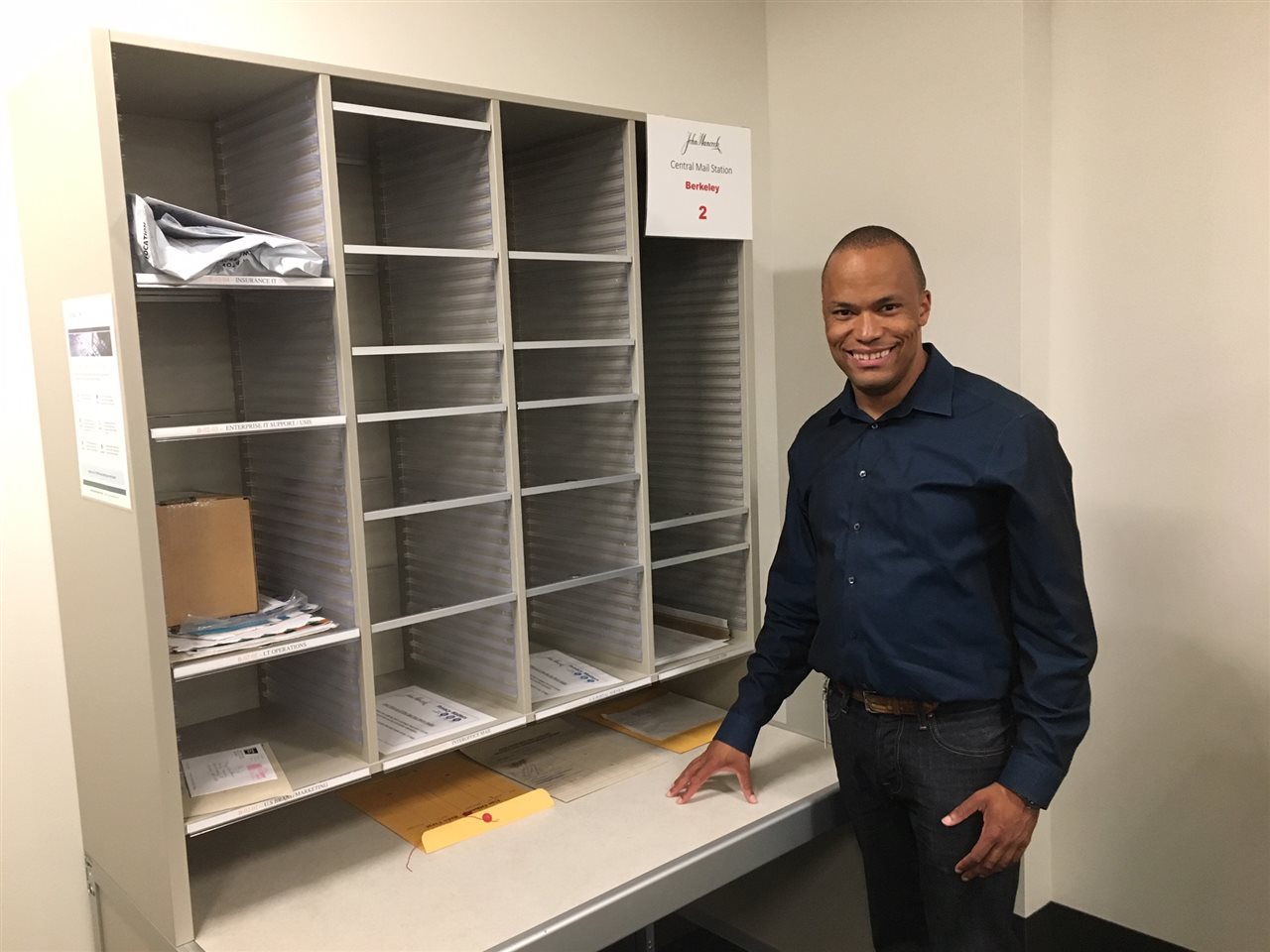
And he did. Williams is currently employed full-time as a marketing coordinator at John Hancock in Boston and has become a tireless advocate for employment for people with IDD. “My life has changed dramatically. I’m more confident in myself as a person and more independent at work. I’ve made new friendships as well.”
Rob Friedman, former assistant vice president of sponsorship and event marketing at John Hancock, says, “I think a program like Best Buddies Jobs is a terrific asset to John Hancock. It teaches our employees about diversity and working with different populations and certainly having someone like Dudley on staff has taught so many employees here so many great things.”
Dudley Williams III found employment thanks to Best Buddies Jobs.
As companies increase diversity and inclusion, they are discovering employee morale and fiscal performance improve. Harvard Business Review reports that diverse companies are 70% more likely to capture a new market. Research from renowned global human resources analyst Josh Bersin shows that more inclusive companies have a 2.3 times higher cash flow per employee over a three-year period and are 1.7 times more likely to be innovative leaders in their market.
Jobs programs for people with disabilities can provide a cost-effective solution to address the tight job market brought on by low unemployment rates and reduce recruitment and training costs associated with repeatedly filling high turnover positions. Hiring people with disabilities is a win for both employees and employers.
Food Allergy Research & Education (FARE), the largest private funder of food allergy research in the world, released the results (in early 2019) of a study on private insurance claim lines and food allergies. The study showed that claim lines with diagnoses of anaphylactic food reactions rose 377 percent from 2007 to 2016 and in every state, except Massachusetts, claim lines with anaphylactic food reactions and history of food allergy diagnoses represented an increasing share of all medical claim lines from 2009 to 2016. Anaphylaxis is a serious allergic reaction that can occur quickly and is potentially life-threatening.
The 10 states with the biggest increases are: Maine (391 percent), North Carolina (332 percent), California (316 percent), Delaware (314 percent), New Hampshire (282 percent), Kentucky (280 percent), Texas (259 percent), Oklahoma (215 percent), Pennsylvania (213 percent), and Connecticut (210 percent).
“A 377 percent increase is a staggering number, and the percentages are up in nearly every state across the country,” said Lisa Gable, CEO of FARE. “The data shows food allergies are having real consequences for families and individuals as they seek medical care for their disease, including management and emergency treatment. From Maine to California, the massive increase in food allergy medical claims reinforces the need for advances in treatments and diagnostic tools to save lives and improve the quality of life for the millions of people living with food allergies.
credit: American Peanut Council
“Despite this ever-growing public health concern, many Americans are not aware of the complexity of the disease, or that there is no cure. That’s why FARE recently launched the Contains: Courage™campaign, a five-year effort to drive awareness and raise a historic amount of funding for research, therapies and diagnostics to improve the quality of life of children and adults who are affected,” continued Gable.
Conducted by FAIR Health, a national, independent, nonprofit organization that collects and analyzes data on healthcare costs, the study found that peanuts were the most common specifically identified food causing anaphylaxis, accounting for 26 percent of claim lines with anaphylactic food reaction. Tree nuts and seeds followed at 18 percent. Also common were egg allergies, crustacean allergies (e.g., allergies to shrimp or lobster) and milk allergy, making up, respectively, seven percent, six percent and five percent of claim lines. The most common category, however, was “other specific foods” (33 percent), which includes foods that less commonly cause allergies and cases in which the actual food allergen is not known.
“Our data from the FAIR Health repository of billions of private healthcare claims contribute to understanding the state-by-state impact of food allergies. Though the specifics of food allergy diagnoses vary from state to state, it is clear that food allergies remain an important public health concern across the nation,” said FAIR Health President Robin Gelburd.
Additional details from the study, including geographic, age and gender patterns, as well as study methodology, can be found below.
Changing Geographics
In 2009, the states with the most food allergy claim lines as a percentage of medical claim lines were New York, Georgia, Colorado, North Dakota, and Ohio. The top five states in 2016 were North Carolina, North Dakota, New Jersey, Washington, DC, and Connecticut. Only North Dakota remained in the top five in both years. The increase in claim lines from 2007 to 2016 was greater in rural (110 percent) than urban (70 percent) areas, demonstrating the reach of this disease and showing that food allergy is not just an urban problem.
Age and Gender
Food allergies are commonly thought of as a childhood condition, but FAIR Health data show they are a broader issue impacting Americans of all ages. Two-thirds (66 percent) of all claim lines with diagnoses of history of food allergy from 2007 to 2016 were attributable to patients 18 years old and younger, but about a third (34 percent) were attributable to those over 18 years old. The finding is also supported by a recent study by Ruchi Gupta, MD, MPH, from Ann & Robert H. Lurie Children’s Hospital of Chicago and Northwestern University, and published in JAMA Network Open, that found that over 10 percent of adults in the U.S. – over 26 million – are estimated to have food allergy.
Different allergies were associated with different age groups. Children 6-10 years old made up 28 percent of all claim lines with peanut allergy diagnoses, but only nine percent of those with food additive allergy diagnoses. Conversely, adults 51-60 years old accounted for only one percent of claim lines with peanut allergy diagnoses, but 17 percent of those with food additive allergy diagnoses.
Prior to age 18, claim lines with food allergy diagnoses were associated with boys more than girls. However, for individuals older than 18 years, the reverse was true: food allergy claim lines were associated with women more than men.
Data Sources & Methodology
The study relied on an analysis of FAIR Health’s proprietary in-house FAIR Health National Private Insurance Claims (FH NPIC®) database. As the nation’s largest collection of private healthcare claims data, FH NPIC® contains over 27 billion billed medical and dental procedures in claim records contributed by payors and administrators who insure or process claims for private insurance plans covering more than 150 million individuals.
Each of the individual “claim lines” — corresponding to a single medical service billed to an insurer — was reviewed to determine whether it included a diagnosis of food allergy or anaphylaxis due to an adverse reaction to food. Trends in diagnoses over the 2009 to 2016 period were analyzed, both at the national level and for each US state.
You may also be interested in the following articles: