It’s that time of year again… the school year has begun. As a student or teacher, you’re prepared to do well in school, right? Also take some time to make sure your service dog is ready too.
Here are 5 tips for attending school with your service dog:
1. Be considerate of those you sit beside.
Before you sit down beside anyone in class, it’s considerate to ask the person beside you if it is OK. Of course it should be okay, but the reason to ask is simply out of consideration for those that might be scared or timid of dogs or who might have severe dog allergies. Although you are welcome in the class no matter what, showing people you are respectful of their needs too will, in most cases, garner you and your service dog respect in return.
2. Get in touch with your school’s disability services office.
Most schools, no matter what level, have a disability services office or a person dedicated to ensuring the needs of students with disabilities are met. Make an appointment with them as they will assist you in helping to navigate the school environment and can provide you with resources to make your school year as smooth as possible. In my personal experience, every year I am given letters of accommodation from my schools disability services office which I provide to my teachers on the first day of class. These letters basically state that I will have a service dog accompanying me and also make the teacher aware of the other supports I will need to assist me with my disabilities. This is a tip I feel to be essential, as making the disability services office aware of the fact that you have a service dog will provide you with allies should any problems arise.
credit: Anything Pawsable
3. Show up early on the first day of class.
Try to show up early to the first day of class. This will allow you time to give your teacher your letter of accommodation and will also give you free-range in terms of places to sit. In my experience, where you sit on the first day of class is where you will be sitting for the remainder of the course, so showing up early will allow you to pick a seat that you and your service dog are comfortable with. I personally like to sit at the end of the row as it gives Barkley more space to lie down and also makes it easier for me to leave should I need to take Barkley outside or if I need to take a break.
4. Be well-equipped.
Just like a long day at school can be taxing on you, it can also be demanding for your service dog. Make sure that you are well prepared for the day ahead by having a bowl of water, some treats and poo-bags with you. And make sure that you double-check everyday before you leave for school that you have your service dog vest and a leash.
5. Make sure you take breaks.
To ensure the well-being of your service dog, it is essential that you take breaks. Often, the best time to do this is in between class or when there is a gap in the action. Use this time to give your dog some fresh air and to stretch his or her legs. A good rule of thumb is to take breaks every 2-3 hours. You may also find this beneficial for yourself as it allows you to clear your mind before you get back to work.
Here’s to the best for the year ahead!
Originally published by Anything Pawsable; reprinted with permission.
If you have a mental health issue or unhealthy behavior you want to address, your doctor may recommend therapy. One of the most frequently used therapies is behavioral therapy.
Types of Behavioral Therapy
At their core, behavioral therapies are action-oriented interventions that help you change an unhelpful behavior and increase a helpful one. This happens through repetition and activities that replace the old learning of unhelpful behaviors with new learning.
Classical conditioning pairs something neutral with something that provokes a response. An example of this is with the famous research of Pavlov’s dogs, where dogs began associating a bell (something neutral) with food (something that provoked a response).
Classical conditioning can help treat phobias and anxiety through techniques such as flooding and systematic desensitization. By slowly exposing someone to something they fear, over and over and in a safe environment, the fear or anxiety is reduced as you “unlearn” the fear response. Classical conditioning can be used to treat substance abuse by prescribing medications that make you ill when you use an abused substance (usually Antabuse treatment for alcoholism), so you associate not feeling well with alcohol.
Operant conditioning uses a system of rewards and punishments to increase or decrease behaviors to teach what the desired behavior is. Operant conditioning is frequently used to treat behavioral problems in classrooms or homes. An example is when a child earns tokens to get rewards for good behaviors or loses tokens for bad behavior. Additional types of operant conditioning include behavior contracts, time-outs and learning desired behaviors by observing others demonstrating them and having positive outcomes.
Cognitive behavioral therapy (CBT) is the most common type of behavioral therapy, with many subtypes. In essence, with CBT, the idea is that if you have unhelpful automatic thoughts, these can negatively influence your emotions. Your emotions then drive behavior. Often those negative or automatic thoughts do not accurately present reality, so CBT interventions help you recognize or change those automatic thoughts and manage how you perceive, interpret and react to the world. CTB therapies are used widely, particularly for anxiety, depression, anger, trauma, substance abuse, phobias, panic disorders and eating disorders. CBT also may be used with varying success for ADHD and bipolar disorders.
Dialectical behavioral therapy (DBT) is a spinoff of CBT and used primarily to treat borderline personality disorder. It also has been used to treat substance abuse, eating disorders and self-harming behaviors. DBT is highly structured, with the majority of therapy taking place in the office. DBT therapy assumes that there is an inherent tension between opposites (i.e. self-acceptance versus recognizing the need to change), but that these opposites can be harmoniously integrated for a positive change.
DBT focuses on helping people develop four skills:
Mindfulness (being in the moment)
Distress tolerance (handling frustrating situations and uncomfortable emotions effectively)
Interpersonal effectiveness (social skills)
Emotional regulation (learning to cope with negative emotions and increase positive emotions by improving your relationship skills and self-management abilities)
Applied behavioral analysis (ABA) uses intensive and comprehensive observation of your behavior to determine specific interventions to help with behavior change. This extremely detailed observation helps the therapist clearly understand what conditions elicit or reinforce a negative behavior. Then, reward or punishment techniques can be systematically applied to move the behavior in the desired direction. The results of those interventions are then closely analyzed and adjusted to optimize the results. Ideally, ABA therapy is highly individualized. Although ABA is most commonly associated with autism spectrum disorders, it also has applications for adults and children with behavioral problems. ABA can even be used on a systems level to improve workplace efficiency.
Broad Applications of Behavioral Therapy
Behavioral therapy encompasses a much broader spectrum of therapies than most people realize. The underlying principles of behaviorism (which forms the foundation of behavioral therapy) inform many aspects of people’s lives, including organization workflows, classroom management and even architecture.
Who Needs Behavioral Therapy?
How do you know if you need behavioral therapy? When a behavior — such as acting out or rule-breaking — begins impairing your function in school, work or social areas, or you are having inappropriate behavior in social situations, behavioral therapy may help.
People with non-psychotic issues respond better to behavioral therapies. As with any therapeutic endeavor, being motivated greatly improves the likelihood of a positive outcome.
Even if behavioral therapy is not the best treatment for you, many other types of therapies exist that can help. Please seek help when you need it.
As increased awareness develops about the importance of mental health, the old stigma attached to obtaining care is changing. Talk with your doctor, counselor or advisor to find out the resources available to you.
Originally published by Orlando Health; reprinted with permission.
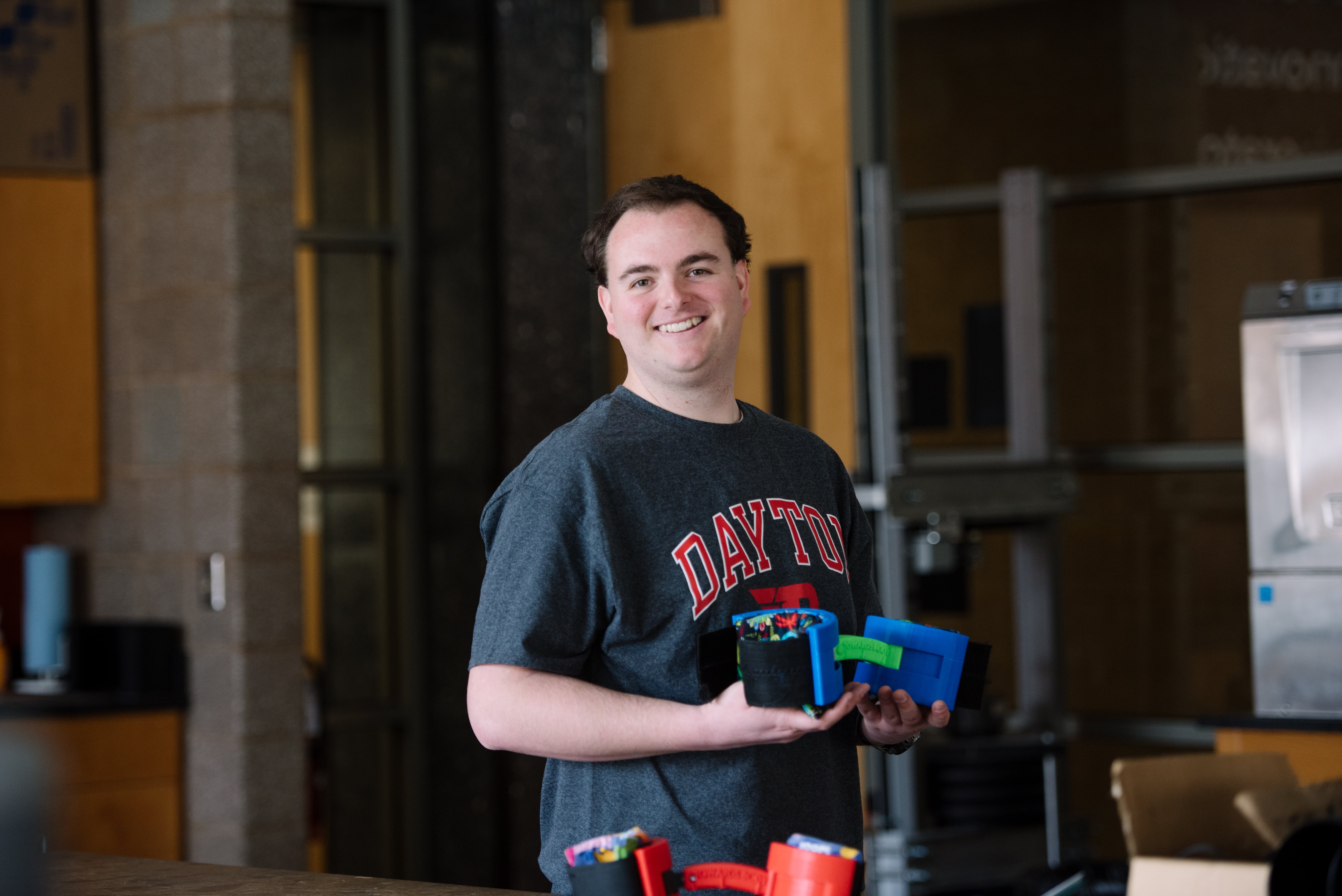
Most college students earn their degrees and hope all their hard academic work pays off after graduation. Perhaps Spencer Janning is an overachiever. He’s making a life-changing impact while in college as an entrepreneur. With a child’s mobility needs in mind, Spencer created a new support brace in his mechanical engineering class at the University of Dayton (UD).
It all started in 2016 when Utawna Leap walked in to Janning’s classroom with her daughter, Lianna Bryant, whose cerebral palsy impacted her sleep. The spastic movements of her legs made her limbs jump and cross over each other throughout the night, movement that could cause hip problems in the future. The brace she used at the time kept her legs apart, but proved to be too restrictive for rest. She desperately needed a more versatile option that granted safe, comfortable movement for her legs while apart. The UD teaching staff challenged the mechanical engineering students to develop product ideas with better functionality.
Janning’s concept came together within a week and Lianna declared to like his plan the most of all. From there, additional designs became a collaborative effort between him, Lianna, her mother and her physical therapist. The final product was named the Freedom Brace, a plastic hip abductor that lets a child’s legs move horizontally and vertically while the limbs stay apart on a bed. When Lianna tried the first prototype, she loved it so much that she’s refused to wear her old brace ever since! Check out this video to see Lianna in action:
Lianna’s new brace was made through 3D printing with the help of UD’s School of Engineering. Janning has continued development using printers from his own company, Freedom Brace LLC. He’s also worked to obtain a patent for the brace, register it with the FDA and use skills from business mentors through Leonardo Enterprises, a business incubator of the School of Engineering. When the brace succeeds on a larger scale, Janning plans to speed up production using injection molding, a process where a machine shoots liquid plastic into a metal mold of the device. Approximately 19 million people across the globe could benefit from this design.
The experience of directly changing someone’s life has helped Janning appreciate his education in a new way. “Before this class, I never knew that this was a problem people faced. Seeing how something I can create can benefit the lives of other people… it’s really made a difference. I never would have learned that in school if it weren’t for Lianna and her mother coming in and showing the problems they faced. I’m really glad I was able to help them,” he said.
Janning hasn’t decided what he’ll do after graduation, but he’s considering the medical and aerospace fields since his educational concentration is in aerospace engineering. Either way, he hopes to inspire others with the mindset his parents instilled in him: “Anyone can do this kind of thing—make something to help other people—you just have to keep working on it and not be afraid to make a mistake.”
The Freedom Brace is currently for sale on Amazon and freedombrace.com, where customers can customize the color and provide measurements for their brace.
Twelve-year-old Mallory Grossman of Rockaway Township, New Jersey, was a quiet girl, but popular among her close circle of friends. She was a good student and an athlete. She was also the victim of malicious bullying by a group of girls who tormented her at school and via texting and social media. Sadly, the bully girls even chided in a text, “Why don’t you kill yourself?” Tragically, on June 14, 2017, that’s exactly what happened. Mallory ended her torment by taking her own life.
According to the National Center for Education Statistics, approximately one in five kids ages 12 to 18 has experienced being bullied in a given year. And according to the National Bullying Prevention Center, the incidents are even greater among children with disabilities. One study shows that 60 percent of students with disabilities report being bullied regularly. Such bullying ranges from name calling and spreading rumors to destruction of property, threats, and violence.
Studies have found bullying has health and psychological repercussions – and the effects can last into adulthood. The victims of childhood bullying, as well as bully-victims (those who are both bullied and bully others), according to a 2013 report in Psychological Science journal, are “at increased risk of poor health, wealth, and social-relationship outcomes in adulthood.” Pure bullies (those who bully but are not victims), weren’t found to be at increased risk.
Bullying versus conflict
For parents and educators to effectively address bullying, we must first understand what constitutes bullying. When we see it, we often don’t recognize it because from the outside it looks like conflict. In fact, it often is nothing more than conflict. In the heat of the moment; kids, like adults, can say and do mean things to each other. That in and of itself doesn’t constitute bullying. Because parents and teachers are aware of this, it’s sometimes easy to dismiss a child’s complaints about being harassed as nothing more than a spat. So here are some questions to help determine which it is.
Do both children have equal power? If so, it’s conflict. In bullying, the bully has more power, or more perceived power.
Are both children able to express their concerns or views? Or is one child passive or unable to express her side for some reason?
Does the behavior stop when the antagonizing child recognizes he’s hurting another? Or does the aggressor continue while being fully aware of the effects of his behavior?
credit: education news
What is bullying?
Bullying is repeated acts by an individual or a group with the intent to scare, distress, or cause harm to another. It differs from simply disliking or rejecting another, experiencing mutual conflict, or a single-episode mean-spirited act.
Bullying behaviors include any of the following:
· Hostile or discriminatory behavior based on race, religion, gender, disability or sexual orientation
· Cyber bullying, which is the use of social media, websites, instant messaging, or texting via smartphones or computers to harass or harm another
· Causing physical harm by hitting, kicking, shoving or destroying property
· Social bullying such as spreading malicious rumors, damaging someone’s reputation, encouraging others to gang up on someone, or playing mean or embarrassing jokes
· Verbal bullying, which includes name calling, intimidating, or insulting another
Kids keep it a secret
Often, children don’t tell when they’re being bullied. As a result, the bullying persists for months or longer and becomes increasingly more damaging. There are multiple reasons kids might not tell an adult.
· Perhaps a child has been threatened with repercussions if they tell, or the child fears the threat will become greater if they tell.
· They don’t want to be a tattle tale, something kids have been taught not to do and don’t always understand the difference in tattling for unimportant matters versus more serious issues.
· Children often feel ashamed or embarrassed either about being a victim of bullying or about the reason they’re being bullied. This is often the case when the bully has used name-calling or character attacks.
· They feel they either won’t be believed or that adults won’t do anything about it.
credit: CDC
Signs of bullying
There are several signs to be aware of that might indicate your child is being bullied.
· Frequently tries to get out of going to school or declining grades
· Complaints of stomachaches and headaches
· Feeling sad or upset
· Social withdrawal
· Difficulty sleeping
· Asking whether something derogatory someone said about your child is true or other signs of decreased self-esteem
· Unexplained bruises or abrasions
· Clothing, electronics or other belongings missing or damaged
· Seeming anxious or sad after being on social media
· Changes in eating habits whether lack of appetite, binge eating, or not eating lunch at school
· Self-harming or talk of suicide
Signs that might indicate your child is a bully include:
· Hanging out with other kids who are aggressive or bully others
· Not taking responsibility for their own actions
· Excludes certain kids from activities
· Frequently getting into trouble at school
· Expresses intolerance toward kids who are different
· Makes fun of other kids
· Brings home items such as electronics, clothes, or money
· Hurts animals
· Has experienced or witnessed domestic violence
· Is overly concerned about being popular
How to prevent or put a stop to bullying
First and foremost, talk to your kids about bullying so they understand what it is and that it’s unacceptable. Make sure your kids understand it’s imperative they tell an adult if they or someone they know is being bullied. Rather than waiting for it to occur multiple times, your child should tell a teacher or parent immediately so the bully doesn’t have the opportunity to gain power.
Also look into your child’s school policies on bullying, and find out what kind of preventive measures the school takes and how it handles bullying when it occurs. If the school doesn’t have a bullying prevention program, ask it to develop and implement one.
Monitor your kids activity online including their social media. There are many reasons to do this for your child’s safety. To ensure your child is neither being bullied or acting as a bully is one more big reason.
Model the kind of behavior you expect from your kids. When kids overhear their parents talking negatively about people because of their weight or joking about someone who’s different or has a disability, kids tend to model this behavior and are more likely to take it to an extreme.
Take time every day to talk with your child and ask how their day was. Kids who bully are often not getting the attention they need at home. Children who are being bullied may feel they deserve the treatment or that their parents wouldn’t care or wouldn’t act on it.
Teach your kids to stand up for themselves. If your child remains passive, a bully will up the ante and gradually become more abusive. But if your child assertively and unemotionally stands up to the bully, the bully will realize he won’t get away with the behavior. On the other hand, if a bully knows he’s getting under your child’s skin, the bully will persist. Your child should maintain eye contact, stay calm, maintain appropriate distance, and use the bully’s name while addressing the bully.
Here are some examples of what your child can say:
· You’re being a bully, Kyle. Knock it off.
· Okay. Whatever, Sara.
· I’m sure you think you’re really funny, Joey, but really, you’re not.
· Amanda, do you really think I care?
· Nice try, Christa.
Notice all of these are simple, direct unemotional responses that let the bully know he isn’t getting under your child’s skin. Your child should practice one or two of these or come up with his or her own ideas that feel comfortable. The idea is to not say anything that gives the bully power such as a compliment or that indicates it bothers your child.
If your child is being bullied, also talk to your child’s teachers, school administrators, bus driver, and others who can help put a stop to the abusive behavior. Make certain your school has a plan in place to protect your child, and if it isn’t doing enough, contact the district superintendent. If your child has been threatened, contact the police immediately. Finally, if the bullying doesn’t cease, proceed by filing charges through your school board and local police department.
Resources for Bullying Impacting Youth with Disabilities
According to StopBullying.gov, children with disabilities—such as physical, developmental, intellectual, emotional, and sensory disabilities—are at an increased risk of being bullied. Read their article “Bullying and Youth with Disabilities and Special Health Needs” for detailed information.
Exercise is important for all. No matter how old or out of shape you think you are, it is never too late to add more physical activity to your life. Regular and consistent exercise can:
Help control your weight. Along with healthy diet, exercise plays an important role in preventing obesity.
Reduce risk of heart disease. Exercise strengthens the heart, improves circulation and can lower blood pressure.
Improve mental health and mood. During exercise, the body releases chemicals that can help you handle stress and reduce the risk of depression.
Strengthen bones and muscles. Weight-bearing activities can help increase and maintain muscle mass while slowing the loss of bone density that naturally comes with age.
Reduce risk of some cancers, including colon, breast, uterine and lung cancer.
Experts say these benefits apply regardless of ability or skill level and staying active can be even more critical for people with disabilities. Adaptive sports – activities modified for people with disabilities – provide improved physical and mental well-being, as well as increased independence, purpose and social interaction.
According to the Department of Veterans Affairs, “Recent studies indicate that disabled veterans who participate in adaptive sports report benefits such as: Less stress, reduced dependency on pain and depression medication, fewer secondary medical conditions, higher achievement in education and employment, and more independence.”
Paralyzed Veterans of America, a service organization that advocates for veterans who have experienced a spinal cord injury or disease such as MS or ALS, says adaptive sports are often game changers for their members, helping them through rehabilitation and improving their quality of life.
PVA and the Department of Veterans Affairs co-present the largest annual multi-sport wheelchair event in the world, the National Veterans Wheelchair Games. Held annually for four decades, the Wheelchair Games bring together hundreds of athletes to compete in 19 sporting events.
All participating athletes are U.S. military veterans who use wheelchairs due to spinal cord injuries, MS, ALS, certain neurological conditions, amputations or other mobility impairments. Kenneth Lee, M.D., director of the Milwaukee VA Spinal Cord Injury Center and a combat-injured Army veteran, is the medical director of the Wheelchair Games. Lee says adaptive bike riding was key to his own difficult recovery after being injured in Iraq in 2004. It took him years to overcome the effects of an open head wound and shrapnel injuries to his legs.
Lee explains that sports tap into the natural competitive spirit and speed healing, physically and mentally. “Participating in adaptive sports gives patients a feeling of inclusion. They compete in new ways and you can see their confidence come to life,” he says. “When athletes go to the Wheelchair Games, they go home different, feeling like they can work through other barriers in their everyday lives,” he adds.
Adaptive sports do not alter the sports that able-bodied athletes play but simply allow modifications to fit the needs of the athletes with disabilities. This ensures adapted athletes are playing and competing on par with able-bodied athletes.
Army veteran Jennifer Steele says, “Sports really made me feel alive again!” Steele, 38, served as a sergeant on a patriot missile crew for five months at the beginning of the Iraq War. During her service, she started having difficulty running and was eventually diagnosed with multiple sclerosis and given a medical discharge. It took years for her to work through the anger and depression that followed.
She still chokes up when she recalls the first time she played wheelchair softball. “It was like getting a part of myself back that I thought I had lost forever,” Steele says. This year, Steele competed in the National Veterans Wheelchair Games for the third time.
Paralyzed Veterans of America has year-round adaptive sporting events across the country for individuals with disabilities, including people with amputation, traumatic brain injury, post-traumatic stress disorder, and neurological disorders such as MS or ALS. Learn more at pva.org/sports.
The power of physical exercise can help us all overcome hardships and challenges to improve our lives. A few small changes to your daily habits to make exercise a part of your regular routine can bring all of these benefits into your life as well.
Shopping. Cooking. Cleaning. The burdens of living alone were taking a toll on Joyce who, at 89, was the oldest resident in her apartment building. Though she’d spent a lifetime saving money, Joyce wasn’t sure what she could afford. Her daughter Sandy knew it was time to talk about senior living.
“It took some convincing to help her understand this was what she had saved for,” said Sandy. “With the sale of her house and retirement savings, she could live comfortably in independent senior living. Plus, she would be around people her age, have plenty of activities and three nice meals a day.”
Joyce’s senior living journey isn’t unique. Most people are either not prepared for the potential costs of senior living, or think they’re not prepared. A survey of 2,000 Americans 18 to over 51 for Brookdale Senior Living revealed 65% aren’t saving money to pay for senior living, and 21% said they won’t be able to pay for it or don’t know how they’ll pay for it. Only half said they have a plan in place.
Mary Sue Patchett, Brookdale’s executive vice president of community and field operations, recommends avoiding sticker shock by assessing current expenses. You may find that freeing yourself of expenses tied to living in a house – mortgage, food, transportation, utilities, home maintenance and more – and incorporating these into one payment for a senior living community is more cost-effective than expected.
Patchett recommends seeking a flexible pricing structure at a senior living community, as one size does not fit all. Making a choice that fits your situation means you won’t be paying for unnecessary services. Sandy found two locations that fit her mom’s needs and compared costs of living alone to the cost of senior living. They landed on a Brookdale community near Sandy’s home.
“Adult children must understand their parent’s misgivings and help them decide what’s best,” said Sandy. “Considering my mom’s age, senior living was a smart move. The cost is comparable to living alone and provides peace of mind for everyone. We know she is eating, socializing and safe.”
How do people pay for senior living, and how can you keep costs affordable?
Current assets and income are what most people use to pay for senior living, just as they would pay for expenses staying in their current home: savings, pension or retirement plan funds, social security and annuities. Like Joyce, one big source of funds comes from the sale of their current home.
Long-term care insurance is a possible source for those with chronic disability or illness, if they have a policy. Rules regarding benefits and eligibility vary per state and policy. Veterans’ benefits, through the Veterans Aid and Attendance Pension, can help veterans and spouses offset costs of long-term care and/or assisted living at some communities.
Selling or cashing out a life insurance policy may be one route for those who no longer need life insurance. There are many options, so you should shop around. Consult your tax, financial and legal advisers to determine the implications of this option.
Medicaid options may provide some assistance for assisted living, depending on where you live and if you qualify. Do not confuse Medicaid with Medicare, which does not cover assisted living costs.
Family support is another source to consider for help with the cost of assisted living. In many families, children or other family members contribute to the cost of senior living. It’s best to discuss possible support with family before the need arises.
By selecting a senior living community that provides just the amount of care you need, you can keep costs low. Many communities offer options from apartments with kitchens and guest rooms to just a bedroom and bath. Opting for a roommate can save a lot. Senior living communities offering independent and assisted living or other care services on one campus helps couples stay together, even when they need different levels of care, and make it easier to move from one area to another if needs change.
Now is a good time to assess your situation and talk with your spouse or family about your needs and desires down the road. Planning ahead lets you tour communities and decide what services and amenities you want and need.
Within forty-eight hours of Joyce moving into her new senior living home, she was thrilled with her decision. And Sandy immediately noticed a change in her mom. She met a group of ladies she refers to as “the girls” and quickly found her purpose as the community librarian. She’s happier than she was in her apartment, and according to Sandy, and that’s priceless.
While you may routinely hear about medical errors, it’s less common to hear about a misdiagnosis.
Inaccurate or delayed medical diagnosis is a medical error many people rarely talk about.Yet research released by the Society to Improve Diagnosis in Medicine (SIDM) shows it remains the most common, costly and catastrophic of all medical errors.
Researchers at Johns Hopkins Medicine and CRICO Strategies found that 34% of malpractice cases resulting in death or permanent disability stem from an inaccurate or delayed diagnosis, making it the No. 1 cause of serious harm among medical errors.
This happens, in large part, because making and communicating a medical diagnosis is a complex and imperfect science. There are more than 10,000 known diseases and more than 5,000 laboratory tests, but only a limited number of symptoms to provide the clues necessary to make an accurate diagnosis.
However, there is a new sense of momentum in the healthcare community to raise awareness and reduce inaccurate and delayed diagnoses, including more funding from the federal government.
Even as researchers and experts continue to explore how best to address this costly, dangerous and sometimes deadly issue, it is important for patients to be aware of it. Everyone has a role to play in improving the diagnostic process, including physicians, nurses, radiologists, laboratory scientists, health system leaders and, perhaps most especially, patients.
It’s critically important that patients share information with their medical providers and know the right questions to ask in order to decrease the likelihood of misdiagnosis.
To help patients have conversations with their physicians about their diagnoses, SIDM’s patient toolkit offers a questions checklist, including these seven questions to ask:
1. What is my diagnosis? What else could it be?
2. Why do you think this is my diagnosis? From test results? From my physical exam?
3. Can you give me written information about my diagnosis? A pamphlet? A website?
4. Can you explain the test or treatment you want me to have?
5. What are the risks to the test or treatment you want me to have? What happens if I do nothing?
6. When do I need to follow up with you?
7. What should I do if my symptoms worsen or change, or if I don’t respond to treatment?
In addition to these questions, always ask when test results will be ready. Get a copy for your records and call your doctor’s office if you do not receive your test results.
By Harrison Youmans, MD, Sports Medicine Specialist at Orlando Health Orthopedic Institute
If you have osteoarthritis (OA), you are familiar with the pain, stiffness and swelling this chronic disease can bring, most often in hands, hips and knees. But, while there is currently no cure, there are a variety of ways to address your symptoms that can help enhance mobility and decrease discomfort and pain.
The disease occurs in joints when cartilage—the tissue that covers the ends of the bones inside the joints—is damaged, causing the bones to rub together. This creates pain, swelling and stiffness. In addition to this damage, bone spurs can grow at the end of the joints and bits can break off, causing additional pain.
Joint overuse from repetitive movement, increasing age, previous injuries and being obese can increase the risk of OA. Those who have family members with OA also are more likely to develop OA.
OA is a disease that develops over time and, at its most severe, can make it difficult to do daily tasks or work. OA is also often associated with other diseases such as depression, metabolic syndrome, cardiovascular disease and diabetes.
Minimize Symptoms of OA
Although OA doesn’t go away, there are steps you can take to reduce its impact on your life. These 10 tips can help minimize your symptoms and keep you as pain-free and active as possible.
photo credit: Orlando Health
Be active. It may seem counter-intuitive to move when you’re stiff and sore, but that’s exactly what the CDC recommends—150 minutes per week of moderate exercise that has moderate or low impact, such as swimming, biking or walking, or attending a physical activity program at a park district or community center. The lower the impact, the better, so pool exercise is best. Physical activity can reduce pain and stiffness.
Understand OA. Become educated on arthritis and how it may affect your life. The CDC recommends several educational programs that can help.
Lose weight. Obesity and being overweight put extra pressure on your joints. Every pound of excess weight puts 4 pounds of pressure on your knees. If you lose 10 pounds, you rid your knees of 40 pounds of pressure with every step, which can ease joint discomfort.
Stretch. Gentle and slow stretching improves flexibility and can decrease stiffness and pain. The Arthritis Foundation suggests yoga and tai chi as ways to manage stiffness.
Use medication. Pain and anti-inflammatory medicines, both over-the-counter and prescription, can help ease pain and improve movement. Medicines like aspirin, ibuprofen and naproxen can reduce inflammation. If you’re currently taking other medicines, or you have other health concerns, talk with your doctor about possible drug interactions before taking new medicines.
Go to physical and/or occupational therapy. Learn exercises to improve your flexibility and range of motion, and self-treatments that ease pain. Assistive devices also can help you manage daily living (jar openers, canes, steering wheel grips, etc.).
Get a massage. A gentle massage on the joints can increase blood flow. If your joints are painful, consider seeing a massage therapist who specializes in treating those with arthritis.
Use heat and ice. A warm bath or a cold compress can help relieve joint pain. Alternating heat and cold may bring additional relief.
Eat for joint health. Some foods fight inflammation, so eating them can help you feel better. Beans, flax seeds, omega-3 fatty acids (i.e. tuna and salmon), walnuts and green leafy vegetables are some that are particularly noted.
Consider joint surgery. Knees and hips that have been severely damaged by OA can be repaired or replaced surgically. New treatments include custom-designed implants to replace lost cartilage.
Studies show Americans have a 50 percent chance of developing OA. This makes it important to understand the disease and know different ways to treat its symptoms.
Originally published by Orlando Health; reprinted with permission.
If you’re exploring special education as your occupation, you may want to review the Online Schools Report which ranks the Best Online Special Education Degrees. Yes, a degree earned online.
OSR, the new student resource site, based their ranking strictly on data, prioritizing the school’s ability to deliver an online education comparable to an on-campus degree.
Every child deserves an education that best suits their needs. It takes a talented and compassionate teacher to help students whose disabilities hinder their education. The field has only improved since 1997’s Individuals with Disabilities Education Act. Special Education teachers are now developing Individual Education Plans for every student covered by IDEA. It’s a demanding profession, but based on the numbers, these are the programs to get you there.
OSR recently went through a complete revamp. Part of the upgrade includes a new and improved methodology. OSR uses six data points to determine the best programs in a given field. Three data points focus on the quality of the school, and three focus on the quality of the individual program under consideration. The introduction of program-specific data helps OSR dive deeper into each program and quantify how that program has helped its graduates.
Enhancing Online Education
Online education is getting bigger and better—and giving traditional college campuses a run for their money. Leading education researchers have predicted that online education will surpass traditional learning within a decade! Online Schools Report will aim to ensure that these programs are held to the same standard as traditional education, while exploring the unique benefits online programs can offer.
Here are all the schools with the Best Online Special Education Degrees:
Creating fun, wholesome life experiences and making memorable moments for your child is an important part of being a parent; but planning and enjoying a day out with your child with autism or sensory disorders can have unique challenges. Whether you want to take him/her to the park, to a restaurant or to a birthday party, these everyday experiences can be difficult for a child with special needs for many reasons.
Fortunately, many establishments recognize that not all children are alike and have prioritized inclusion to help all children have positive experiences. Here are some tips to plan ahead to help your child with special needs feel whole throughout their day.
Therapies to Improve Everyday Activities
Physical Therapy
Children with autism can have gross motor challenges which make meeting developmental milestones such as crawling, walking, and jumping difficult. Highly-trained physical therapists can help your child learn how to safely navigate their natural environment and can dramatically change their day-to-day experiences and increase their quality of life.
If your child has problems with balance or is toe walking, physical therapists can work on their fine motor deficits, so they don’t get tired or sore after walking for a few hours. These play-based exercises will not only correct your child’s gait but entertain them at the same time.
Occupational Therapy
Children with autism spectrum disorder commonly exhibit sensory difficulties and challenges that affect the activities of their daily lives such as dressing, bathing, and functional play skills. Occupational therapy can help promote self-regulation skills to further improve attention for them to interact appropriately in their community and in new environments.
photo credit: CDC
Food and Feeding Therapy
Children on the autism spectrum commonly experience feeding difficulties, such as an extreme or limited variety of foods they’ll eat, aversions to certain textures and tastes and other preferences that can make meal times very challenging. Feeding therapy can aid in advancing age appropriate food intake and variety for healthy growth and proper nutrition.
If your child is averse to eating certain foods, it can make it difficult to find foods they’re happy to eat when you’re out and about. Professionals can help expand your child’s food repertoire and make meal times easier when you’re on the road or at a restaurant.
Speech and Language Therapy
Children with sensory disorders or children on the autism spectrum commonly have communication deficits affecting their ability to communicate and interact with their family and environment. A speech therapy team can work to increase your child’s functional communication skills through a total communication approach. A team of specialists may utilize pictures, Augmentative and Alternative communication (AAC), as well as verbal communication to help your child learn to communicate more fluidly.
Tips to Prepare Your Child
Children on the autism spectrum or those with sensory disorders can struggle whenever their schedule changes. Talk with your child about their upcoming day out and get him/her ready by sharing what can be expected.
Make a Photobook of Activities to Enjoy Together
Print photos from the internet and staple pages together for an easy resource your child can look through before going out. You can take advantage of walk-through social stories available on sites like YouTube or make your own. These visual guides walk children through activities and environments to showcase what to expect once they get there.
Look at a Map Together and Plan the Day
Ask your child what places you should visit, what they’d like to do and plan the day’s schedule.
photo credit: Landscape Structures
Prepare a Well-Stocked Bag
Be sure to add sunblock, a hat, sunglasses, noise-cancelling headphones, a change of clothes, snacks and any other medical or support items your child may need.
Set Expectations With the Adults Joining You
Go over the plan with your partner, grandparents or any family members joining you on the trip. Be clear about what they can expect — from how long you may stay out and what activities you’ll enjoy, to how they can support you and your child, and whether you’ll need to do separate activities during your event.
Be thoughtful about what your child needs to create wonderful, happy memories. Focus on what works best for you to customize your experience, and to support both your child and the entire family.