Friday, February 20, 2026
spot_img
autism products
Html code here! Replace this with any non empty raw html code and that's it.
Home Blog Page 74

Seniors and Retirees Are Returning To College – Here’s How You Can Too

As many seniors and retirees today will attest, you’re never too old to go to college. Lifelong learning has become increasingly popular in recent years as baby boomers have reached the age of retirement. For some, the purpose in going back to school is to finish their studies and accomplish a degree. But for many more, it’s simply for fun and an opportunity to gain knowledge, discover new interests and keep their minds and bodies fit.

With the rising costs of college, you may see it as an unlikely endeavor. Not to mention, if you’re still in the workforce, how would you find time for the commute and classes let alone time to study? Fortunately, today there are many ways to overcome these obstacles.

Contemplating a Return to College

If you’d like to go to college, first, consider your purpose and what you hope to accomplish. Do you want to earn your degree? Are you primarily interested in broadening your knowledge? Are you in search of new interests and socializing opportunities? Your answer might be one or all of these. But knowing your purpose will give you direction.

Once you’ve determined what you hope to achieve, visit nearby colleges or explore the websites of colleges in the city or state where you’d like to settle for retirement, and see what they have to offer.

Non-traditional college credit

If earning your degree is important, today, more and more accredited colleges offer a variety of options for earning nontraditional course credit. Look into this first to save time and money.

At some colleges you can earn Self-Acquired Competency (SAC) credits. These may have different names at various institutions. But such credits are available for a wide range of skills and life experiences. This requires compiling a portfolio for faculty evaluation. Your portfolio will include on-the-job training, work and volunteer experience, workshops, seminars and more. If you served in the military, you may be eligible for Military Service Credit for education you gained through schools, experience or service.

You can also earn credits by examination. Some of these include:

  • Credits for College-Level Examination Programs (CLEP)
  • Advanced Placement Examinations (AP)
  • Defense Activity for Non-Traditional Education Support (DANTES)

Credit by examination can also save time and money if you have knowledge in a particular area or if you study and test well. But be sure to check with your institution before enrolling since credit may not be awarded following admission.

Another possibility for credits is if you’ve completed any noncollegiate or in-company sponsored programs or courses. Find out if those programs or courses are any of the thousands reviewed by the American Council on Education (ACE). If so, ask your academic institution if they award credits based on ACE recommendations.

Seniors can return to the classroom too.
photo credit: Getty

Correspondence and online courses

Independent study programs offer a couple options. Online courses can be taken in the convenience of your home. These usually require attendance (at your computer) at specific times. Correspondence courses are a good option also because there are no schedules. They usually allow six to eighteen months for completion with extensions up to one year. Evening and weekend courses as well as accelerated programs also offer some flexibility.

Some colleges offer independent study options too. Before enrolling, make sure credits are transferable and the institution is fully accredited. Examples of colleges with these programs include:

  • Indiana University’s School of Continuing Studies, Independent Study Program
  • Eastern Michigan University, Distance Education Program
  • Ohio University Lifelong Learning Programs, External Student Program
  • University of Colorado at Boulder Independent Learning Program
  • Upper Iowa University, External Degree Program
  • The University of Texas at Austin Continuing and Extended Education, Distance Education Center

How to pay for tuition and books

There are many options for financing your education. The Federal Pell Grant is available regardless of your age and is awarded based on financial need. The maximum award amount for the 2017-2018 school year, for example, was $5,920.

Several other options include:

  • The Federal Supplemental Education Opportunity Grant (FSEOG)
  • The Federal Work Study Program
  • The Federal Perkins Loan
  • Federal Subsidized Stafford Loan
  • Federal Unsubsidized Stafford Loan

Many scholarships are also available for seniors. So ask the academic institutions you’re considering what they offer.

If you’re still in the work force, ask your employer if it offers reimbursement for college courses. If the classes pertain to your job, your employer may cover the costs!

Finally, don’t forget the American Opportunity Tax Credit, which modifies the HOPE Credit, a tax credit available for eligible taxpayers, totaling up to a maximum of $2,500. There’s also the Lifetime Learning tax credit. Certain requirements and restrictions apply.

If you aren’t interested in pursuing a degree, but just want the opportunity to attend courses, many colleges also offer special rates to seniors to audit a class.

Here are some other resources for financial assistance:

  • Visit Fast Web for information on colleges and scholarship searches.
  • For federal grants and loans, request your Student Guide by calling (800) 433-3243 or visit https://studentaid.ed.gov/resources.
  • Visit the U.S. Department of Education for information on tax credits.

Online courses are an option for senior learning.

Coordinating multiple responsibilities

Like many older Americans, you may still be working. But with a little planning and finesse, you can develop workable solutions that’ll free-up time for your studies.

Start by making a list of all your responsibilities, then cross off anything unnecessary. Where else can you save time? Perhaps you could, for instance, do housecleaning every ten to fourteen days rather than weekly. And skip cleaning anything that isn’t in dire need until the next time. Straighten up only the main rooms on a daily basis. Others can wait.

Make a pact to limit volunteering your time until you’ve reached your educational goals. If ‘no’ isn’t in your vocabulary, create reminder cards. Then put them by the phone and in your purse, so you’ll be prepared to say ‘no’ at all times.

Discuss the importance of furthering your education with your partner. Ask which responsibilities your partner is willing to take over until you’ve accomplished your goals.

Ask your employer if you can take shorter lunch breaks and leave earlier. Another possibility is for your employer to allow you fewer but longer workdays for an extra day off to study each week.

Feature image credit: AARP

Women and ADD: The Hidden Disability–What You Need to Know About Attention Deficit Disorder

0

According to Sari Solden, in her book Women with Attention Deficit Disorder, “Almost all women find that life today is complex, upsetting or frustrating, but they are still able to meet most of [life’s] demands reasonably well… For women with untreated Attention Deficit Disorder (ADD), however, the demands of daily life can be crippling. It cripples their self-esteem, their families, their lives, their work and their relationships.”

ADD, also known as Attention-Deficit Hyperactivity Disorder (ADHD), affects between three and five percent of the population. However, adult ADD, especially as it appears in women, often goes unrecognized. [Symptoms outlined below.]

CHARACTERISTICS OF ADD IN WOMEN

The symptoms of ADD are many. Some are more commonly seen in women and opposite the more recognized symptoms seen in men. This makes detection unlikely and diagnosis difficult. Each person’s experience with ADD is unique. While there are a multitude of characteristics, most women with the disorder don’t have every symptom. Instead, each woman has a mixture severe enough to impair some areas of life.

Mental vs. physical disorganization

Disorganization is common and often a serious problem for women struggling with ADD. They may be unable to organize their homes, offices or lives. To outsiders, the disorganization isn’t always visible. That’s because women who lead professional lives may have assistants, secretaries and cleaning services to assist them. Some women with ADD have a partner who compensates for their organizational dysfunction as well.

Other women with ADD find clutter and disorganization an incredible distraction. These distractions, coupled with the responsibilities of everyday life, lead to mental disorganization. The disorganized brain struggles to store, weed out and organize in a logical fashion. For these women, being tidy and organized equals survival.

ADD can impact women in the workplace.

Hyperactivity vs. hypoactivity

Women with ADD can be at either end of the spectrum, either hyperactive or hypoactive (underactive). Hyperactive women may go at full speed until they crash from the overload.

Family life can also suffer with a hyperactive mother. She may be unable to sit and play games or read to her children unless she finds the activities stimulating.

Many women with ADD are at the other extreme. They’re hypoactive, unable to muster the energy to do much of anything. These women are often unable to keep up with life’s many demands. Maintaining a home, participating in family activities, staying in touch with friends, even holding down a job can be a major challenge.

Inattention vs. hyperfocusing

The problem is women with ADD struggle with the inability to regulate attention. So it doesn’t mean they can never maintain attention. Rather, the ability to focus for most women with ADD is based on interest and whether the activity is stimulating. Many women daydreamed through school when they were younger. Yet the subjects or activities they found fun, interesting or exciting didn’t pose such a problem. Adult life for these women is often the same.

Hyperfocusing, the opposite of inattention, also poses problems and can coexist with symptoms of inattention. While it may be difficult to focus on some things, a woman may hyperfocus on that which interests her and be unable to shift her attention. Hyperfocusing can last for hours, days and longer and makes it difficult to break for important matters. Meals are forgotten. Family members may carry on conversations and not be heard. Hyperfocusing puts a strain on the family. If a hyperfocused woman does manage to break away from what she’s engrossed in, she may wander aimlessly and forget what she’s doing.

Impatience and impulsivity

Standing in lines, sitting in waiting rooms and being placed on hold for lengthy waits drives some women with ADD to the brink. So they may avoid these situations altogether. These women may be impatient either visibly or internally or act impulsively. Minor nuisances can cause major agitation. Other women with this disorder are able to maintain their composure yet still feel anxious and annoyed.

Women with ADD may also be impatient about life and events. A woman may plan her whole education or life in one day and need for it to happen immediately. She goes into things full swing rather than step-by-step. This can result in a change of heart after much investment of time or money or feeling spread too thin with too many goals to achieve.

Impulsiveness is seen when women with the disorder act or speak without thinking. This often leads to trouble by spending impulsively or jumping into relationships and even marriage. Some struggle socially and interrupt conversations or blurt things out they later regret.

ADD is often misdiagnosed.
photo credit: CDC

Mood

Mood swings, being overemotional or easily frustrated is another problem. For some women, having ADD is like being on an emotional roller coaster. Extreme shifts in mood sometimes lead to a misdiagnosis of bipolar disorder, though the two can coexist.

Women with ADD are frustrated by the slightest aggravations. A simple mistake seems a major ordeal and may result in anger, storming off and dropping a task altogether. If interrupted in the midst of something, a woman may become irritable and annoyed.

Depression, although not a symptom of ADD, often coexists or is a result of the debilitating disorder. Depression in the ADD woman may stem from lack of self worth because she’s unable to hold down a job or adequately care for her family. It may also result from not achieving up to her potential because of attention problems in school or an inability to stick with anything. It also sometimes comes from feeling overwhelmed. This feeling can dominate the life of a woman with this disorder.

THE CAUSE OF ADD

Research indicates ADD is a neurobiological disorder with a strong genetic link. According to the nonprofit organization Children and Adults with Attention Deficit-Hyperactivity Disorder (CHADD), complications during pregnancy, labor and delivery, exposure to nicotine or alcohol during fetal development, or a number of other environmental factors may also play a role in the development of ADD.

MISDIAGNOSIS

Studies show the incidence of ADD in men and women is nearly identical, says Kathleen Nadeau, Ph.D., co-author of Understanding Women with AD/HD. There are several common reasons women with ADD often don’t receive the diagnosis.

Doctors often diagnose the depression that accompanies ADD, but miss the ADD itself. Women, more often than men, have coexisting anxiety and depression which must be treated as well.

Also, women who are more hyperactive, hypertalkative and impulsive are sometimes misdiagnosed with bipolar disorder.

Many doctors still look for signs of ADD more typical of boys. Many doctors fail to understand that ADD symptoms in females often don’t appear until puberty or later because of hormonal fluctuations. When girls enter puberty, during PMS and as estrogen levels drop in perimenopause and menopause, the symptoms of ADD often worsen.

In addition, girls tend to try harder in school, so their ADD patterns are often masked or overlooked by teachers.

TREATMENT OPTIONS

Several treatments are available for ADD. The most effective is prescription medication. There’s a multitude of stimulant and nonstimulant medications available for treatment.

Behavioral therapy is also beneficial both for coming to terms with the lifelong disorder and to relieve negative coping behaviors. Coaching is also useful for learning new skills and strategies for structuring life. Because ADD is neurobiological, therapy and coaching work best in conjunction with medication.

Several ineffective treatments are being marketed as well. Treatments that are suspect, according to CHADD, include dietary plans such as the Feingold Diet, vitamin and mineral supplements, antimotion-sickness medication, Candida yeast, EEG Biofeedback, Applied Kinesiology also known as Neural Organization Technique, and Optometric Vision Training, to name a few. Often, excessive claims are made about these treatments, citing a few favorable responses or studies that don’t hold up to scrutiny.

ADD can be treated.
photo credit: CDC

WHERE TO FIND HELP

An accurate diagnosis and appropriate treatment is essential. Finding a qualified provider isn’t always easy because adult ADD, especially as it affects women, isn’t always recognized. Before seeking a diagnosis, read some recommended books (see below) for a better understanding of the disorder and the diagnosis and treatment process. Also, compile a list of questions to ask your provider to ensure he/she has a clear understanding of the disorder and appropriate treatments. If you don’t feel comfortable with a physician’s responses, seek help elsewhere.

Symptoms of ADD

Some of the symptoms commonly seen in women, partially taken from Attention Deficit Disorder in Adults by Dr. Lynn Weiss, are as follows:

●      Difficulty completing tasks or following through on plans

●      Difficulty shifting attention

●      Excessively shifting from one activity to another

●      Difficulty concentrating on reading

●      Impatience

●      Frequent preoccupation in thoughts and not hearing when spoken to

●      Difficulty sitting still or excessive fidgeting

●      Sudden and unexpected mood swings

●      Interrupting in conversations, speaking without considering consequences

●      Hot tempered

●      Need for high stimulus

●      Forgetfulness

●      Low tolerance for frustration

●      Tendency toward substance abuse

RESOURCES ON ADD Books

  • Women with Attention Deficit Disorder: Embrace Your Differences and Transform Your Life (2012) by Sari Solden, MS, MFCC
  • Help for Women with ADHD: My Simple Strategies for Conquering Chaos (2017) by Joan Wilder
  • Journeys Through ADDulthood: Discover a New Sense of Identity and Meaning While Living with Attention Deficit Disorder (2004) by Sari Solden, MS, MFCC
  • Driven to Distraction: Recognizing and Coping with Attention Deficit Disorder (2011) by Edward M. Hallowell, M.D. and John J. Ratey, M.D.
  • Delivered from Distraction : Getting the Most out of Life with Attention Deficit Disorder (2009) by Edward M. Hallowell, M.D. and John J. Ratey, M.D.
  • Attention Deficit Disorder in Adults 4th edition: A Different Way of Thinking (2005) by Lynn Weiss, Ph.D.
  • The New Attention Deficit Disorder in Adults Workbook (2012) by Lynn Weiss, Ph. D.
  • You Mean I’m Not Lazy, Stupid or Crazy?! The Classic Self-Help Book for Adults with Attention Deficit Disorder (2009) by Kate Kelly and Peggy Ramundo
  • The Queen of Distraction: How Women with ADHD Can Conquer Chaos, Find Focus, and Get More Done (2014) by Terry Matlen M.S.W.

Car Seat Accessories to Keep Kids with Special Needs Safe and Comfortable

0

Traveling with children requires planning, preparation and plenty of patience. When your child has special needs, the groundwork can become even more intense. Give yourself and your child a generous dose of grace, along with these tips, tricks and products to help ease family travels and, thus, allow for more bonding moments on the go.

Starting off with a comfortable space is the first place to begin for both short and long car rides. As adults, we can get irritable when uncomfortable; children are no different. Ensuring the seat is accommodating no matter one’s disability is the foundation for an enjoyable stent in a vehicle. Keeping your child’s specific disability in mind, here are a few general options:

RideSafer Travel Vest

The RideSafer Travel Vest is a car seat solution for many disabilities. Created by a father, firefighter, paramedic and child passenger safety technician (CPST), the RideSafer vest allows children to sit comfortably in the vehicle without any extra seats by bringing the seat belt to the correct level for little ones. This vest solves a wide range of issues, whether the child has a physical or behavioral condition. The vest is padded and made from soft fabric allowing it to be comfortable and flexible around casts or other devices that may need extra pelvic room. The vest feels weighted, like a comforting hug, for those with sensory disabilities. It comes with a tether to help children with poor motor control to sit and stay seated properly. The RideSafer Delight has a “Houdini-proof” buckle to keep even the most advanced escape artists from fleeing. As if those features weren’t enough, it is compact to save room in your vehicle while easily transferring to any form of transportation –perfect for traveling!

The vest is approved for ages three and beyond with a weight limit of 80 pounds. It has been crash tested and meets or exceeds all of the standard requirements. This link is a crash test video of a conventional booster seat and the video below is the RideSafer crash test demo. The vest retails for $159.

Churchill Backless Booster

Made by Merritt Manufacturing, the Churchill Backless Booster seat allows for proper head control with a Velcro and head cap system. For proper pelvic alignment, users can upgrade to a hip inflection wedge or stay-put pommel. The torso is supported with a full vest and Velcro system in combination with the vehicle’s seat belt. This seating system is for forward-facing occupants weighing up to 175 pounds, making this a good option for bigger kiddos. While it comes standard with many features, there are upgrade options to make this seat even more customizable and, therefore, more comfortable for your youngster.

Pricing ranges are based on features selected but start at $895.95. Check out this link for an informative tutorial.

Specialty boosters may be an option for your child with special needs.
Churchill Backless Booster

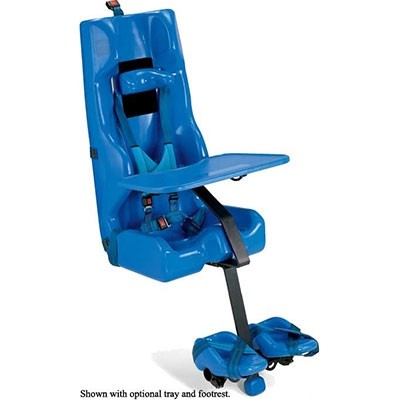
Tumble Forms 2 Carrie Seating System

This seat is not solely a car seat but can also be used as a multipurpose seat to assist with daily living routines. The Tumble Forms 2 Carrie Seating system comes with the car seat, tray and footrest. The seat is seamless in a smooth foam making it easily cleanable for messes of any kind. The included tray is perfect to use for snacks, creative activities or to rest electronic devices. The tether strap can be used in vehicles, airplanes or while at home sitting on a couch or in a chair. The headrest and footrest are adjustable for maximum comfort.

Because this seating system is so versatile and easily manageable, it comes with a higher price tag at $1,850.95. An activity base and soft cover are available for additional costs.

This car seat is easy to clean.
Tumble Forms 2 Carrie Seating System 

Bellt Alert Covers

Born from a mother’s desire to keep her deaf child safe, Nat created Bellt Alert Covers. These covers not only attach to seat belts but pretty much anything that has a strap. Have you ever wondered what might happen in an emergency situation where you were unable to tell medical personnel about your child’s disability? These personalized covers notify anyone who may assist in an emergency with the information they need to know! They can be tailored to convey any special need.

The covers are $16 and take 2-4 weeks for delivery due to high demand.

Specialized gear for children with disabilities ensures safe car rides.
photo credit: Bellt Alert Covers are customizable

Car Seat Key

How many times have you hurt your finger or broken a nail trying to unbuckle your child’s car seat? For me, it’s been too many times to count! I am thankful for the peace of mind of safety that comes with the difficulty, but do get frustrated at how hard buckles can be to undo when in a rush. The Car Seat Key is a simple solution. This nifty U-shaped utensil comes on a keychain so it is handy. The key is placed on top of the buckle release button and pressed down with slight pressure, releasing the harness.

It retails for $14.99 on their official website. However, if you are an Amazon junkie and Prime member (like me), you get free shipping and an extra 20% off. Who doesn’t love a good deal and saving money?!

BuckleRoo Seat Belt Buckle Guard

Children typically don’t understand that the rules placed on them are meant to keep them safe and out of harm’s way. Admit that we, as adults and caregivers, can be that way too. Rules were meant to be broken, right? In all seriousness, though, being restrained can be especially difficult for children who are autistic or have ADHD. The BuckleRoo ensures safety for the entire trip. Simply slide the BuckleRoo onto the buckle and latch the belt. When you’ve reached your destination, use a car key to insert into the slender slot and push down. The belt is released from the buckle. Don’t have a car key handy? That’s okay! The BuckleRoo comes with an emergency key attached so your darling doesn’t get stuck.

The BuckleRoo can be purchased online for $9.95.

BuckleRoo adds safety for children with special needs.
BuckleRoo

SentioCHEWS

For children that want a soothing sensory item during car rides, try the SentioCHEWS wearable sensory chews.These chews are made from a pliable material that is FDA approved and free of latex, BPA and metal. They were designed to hold up to aggressive chewing. Each pendant has a rubber feel and comes with a paracord lanyard breakaway necklace. There are four pendant designs to choose from in either red or blue. They can be purchased individually, in a double pack or four pack.

The chews are $9.03 individually and make for the perfect item to place in a travel kit to help calm and comfort your anxious cargo.

More Travel Tips…

If you’ll be traveling for an extended period of time, there are some things you can do to ease the journey for everyone involved.

  • Travel at night when possible. This will require a little more planning and effort on your behalf but nighttime travel allows the other passengers to spend a good amount of the trip sleeping which will reduce fussing and the need for extra stops.
  • Take a test drive. Before hitting the road for a long trip, try a day trip first. This is the perfect opportunity to prepare for any possible hiccups or gaps in planning.
  • Let your child assist in trip planning. Yes, really! Not only will this give him/her a sense of ownership and responsibility for the drive, but you’ll be sneaking in fun learning through map reading and life-skills like packing essentials.
  • If you have a hyperactive child, plan stops that allow your munchkin to move and release some of that energy. This could be a grassy area at a rest stop, a park or a restaurant with a play area.
  • Help your child visualize the progression of the trip. Thanks to Traveling Mom, taking a few minutes to create this simple DIY project could potentially end the dreaded, “Are we there yet?” String ribbon, yarn or wire from one side of  the inside roof to the other side (think from window to window). Draw or print a picture of a car for your child to color and decorate. Punch two holes into the top of the car and string it onto the ribbon. As you drive along the road, move the car along the ribbon to coincide with your drive. Everyone in the car will be able to visually see how much distance is remaining. You could also mark the ribbon with any planned stops along the way for even more visual markers.

No matter how much you plan and prepare, there are bound to be unexpected bumps in the road. Remember to breathe through them because you will get through it. After all, the most important thing is you’re together making priceless memories and strengthening your relationship.

Feature image credit: AAA

How to Exercise Your Service Dog Indoors During Inclement Weather

0

by Kea Grace

For dogs, a huge part of remaining physically and mentally sound involves exercise and lots of it. Just like people, right? When the weather goes wild, so can an understimulated, bored, pent up dog. Yup, just like people too! Inclement weather often causes major issues with getting enough activity to keep a service dog focused, relaxed and happy. That’s why people with disabilities that rely on service dogs should learn about indoor energy burners and some easy alternatives anyone can use.

Service dog trainers and handlers everywhere know that top performance from a canine partner requires careful balancing of work, play and learning. Any deficits in a dog’s care can cause an avalanche of issues with a dog’s training or work, especially if the lapse involves nutrition, rest or exercise. Exercise in particular, experts say, has the biggest ripple effect on a dog’s behavior. “A tired dog is a happy dog,” canine behaviorists often joke. However, a lack of activity is no laughing matter, as it can disrupt even the most well-trained dog’s ability to focus and function.

Unfortunately for dog lovers everywhere, though, Mother Nature doesn’t consider your service dog’s exercise needs. Endless rain, gray skies and chilly temperatures often make going outside to exercise your service dog a real challenge. When inclement weather continues for days or even weeks on end during rainy season, it can get increasingly more difficult to meet your service dog’s need for a solid workout. Fortunately, though, there are tons of easy ways to exercise a dog indoors, some of which you may not have considered.

Service animals enjoy outdoor time.
photo credit: Anything Pawsable

Use Your Dog’s Natural Play Style to Exercise Indoors

To discover ideas that might work for you and your dog, begin by examining your dog’s play style. Different breeds tend towards distinct categories of play, but every dog remains an individual. As an example, lots of herding dogs play chase games. Many bully breed dogs, however, prefer body slamming and full contact wrestling. What types of games and activities does your service partner enjoy?

Many play styles readily adapt to indoor activities. Pups who enjoy tugging, contact and wrestling games, or softer / solo play types entertain easily indoors. Think creatively and use items lying around the house. Maybe dining room chairs magically morph part of a maze or a blanket becomes a hideout for a chase game.

Full Body Motions Burn Lots of Energy (and Yeah, a Bit of Equipment Helps)

For dogs with more active play styles or those with higher energy, working on jumps, send outs or highly physical tricks offer plenty of opportunities to burn energy. Select activities that require your dog to use large muscle groups repeatedly. Some skills to teach that don’t require much space include high jumping through a hoop (adults dogs only), jumping rope, sitting pretty / begging, army crawling and standing on hind legs and turning in a circle (adult dogs only).

You’ll get the best results from full-body movements requiring balance and strength. Don’t expect perfection from the start. These tricks are like everything else in dog training — they take time and practice to master.

Consider buying a dog-safe exercise ball and learning some of the drills and activities designed to build power and stability while also increasing your service dog’s body awareness. Many of the stability-based movement drills for dogs require only the space for the ball (or disc, etc.) itself, plus room for the handler to sit or stand close by. If you really want to dig into this type of canine conditioning, then FitPaws USA sets the industry standard, especially for working and performance dogs.

Use indoor exercise equipment for service dogs.
photo credit: FitPaws

Finally, don’t rule out treadmill training for your service dog. Especially for those critters who can just go and go and go, nothing beats a treadmill for quality indoor exercise. Dog treadmills exist, but they’re pricey. Human treadmills can work; make sure any human treadmill you use is long enough for your dog to take a full stride and has safety shut offs. Introduce the treadmill slowly and keep things upbeat and positive. Never tie your dog to the treadmill or leave a dog to workout alone.

Brain Games Offer a Great Workout

After exhausting more active options, enhance your service dog’s indoor exercise routine with plenty of mental stimulation. Scientists say mental stimulation is more fatiguing than physical, so bring on the problem-solving. Work on some tricky task training behavior chains like retrieves or message delivery. For dogs who are clicker trained, bad weather is a great time to break out shaping games, like the Box Game.

If you’ve never played the Box Game with your service dog, there’s no time like the present to introduce this wild and wacky free shaping exercise. The Box Game is specifically designed to build creativity and analytical thinking skills. It also aids dogs in learning to enjoy trying and offering new behaviors without getting “stuck” on defaulting to known skills.

Additionally, this simple and fun dog training exercise improves the dog’s focus, frustration tolerance and decision-making ability. Service dogs routinely utilize all of the skills taught with the Box Game. For many trainers around the world, the Box Game is a reliable favorite for engaging a dog’s mind and body in equal amounts. To play, you’ll need a box big enough for your dog to get in, a clicker, high value treats and an excited dog. Many dogs get quite inventive while playing the Box Game, so be prepared for your partner to offer unique solutions you never thought possible!

Puzzle Toys and Scent Work Can Help With Your Service Dog Tasks

You can easily harness a dog’s food drive or powerful scenting abilities outside of free shaping exercises. Play indoor hide and seek or start learning some nose games. Both activities can help with task training, especially for delivery, messenger or odor alert tasks. Stuff puzzle toys like KONGs or Tricky Treat balls. For an extra challenge, use one of the various puzzle toy recipes available online and freeze the toy before handing it to your dog. Peanut butter or mixes of kibble and canned food always work well. You can also stuff a toy with cheese and nuke it for a few seconds in the microwave. Let it cool before giving it to your service dog.

Toys for service dogs.
photo credit: Omega Paw

Use maze bowls or snuffle mats at mealtimes. It’s easy to make your own snuffle mat, but purchasing fully made snuffle mats is also an option. To increase the challenge offered by a maze bowl, use several smaller bowls instead of one large one. Pour water over your service dog’s kibble and freeze the bowl before serving.

If you have several KONGs or food dispensing toys, prepare several all at once so your dog can work for their entire meal. If special toys aren’t in your budget (or even if they are), two liter soda bottles, gallon jugs and PVC pipe with holes in it make great alternatives. Repurpose simple household items like empty paper towel rolls and small cardboard boxes. Anything you can safely hide kibble in that requires your dog to work to access it is fair game.

Chews and Other Forms of Enrichment

Puzzling through an entire meal’s worth of kibble is a great way to give your service dog a great mental workout. Once feeding time is over, don’t forget about bones and long-lasting chews. Stock up before inclement weather strikes. That way, you’ll not only have a handy source of entertainment, but you’ll also save yourself a trip out in the elements to purchase them.

Raw bones, Himalayan chews and smoked natural bones supply the safest past times for most dogs. Most vets advise avoiding rawhide for safety and health reasons, but if you opt to give your service dog rawhide, try to ensure the chew was made in the United States. If you do a bit of searching locally or purchase online, rawhide alternatives are easy to find.

If you need some additional entertainment or exercise options for your service dog, there’s an excellent group on Facebook called “Canine Enrichment” that’s dedicated to creative ways to work a dog’s mind. Their library of enrichment and mental stimulation ideas is second to none.

Fun, interactive food bowls for service dog.
photo credit: Amazon

Originally published by Anything Pawsable, United States Service Dog Registry; reprinted with permission. | Feature photo credit: Dogspring Training

5 Steps that Determine Whether You Qualify for SSA Disability

0

In order to obtain Social Security Disability benefits, you must qualify under the specific guidelines the Social Security Administration has put forth.

The good news is that the process has improved over time and you can more easily navigate through it to better understand your qualifications even before you apply.

The Social Security Administration requires you to meet the specific qualifications and requirements under law, not necessarily if you believe you are disabled or even if your doctor labels you as disabled.

The following are the five things the Social Security Administration takes to determine if you should receive Social Security Disability Insurance.

1: Are You Working While Applying for Social Security Disability?

Social Security Disability is meant specifically for those people who are unable to work. It provides payments to those who are otherwise unable to fulfill their work duties due to their disability.

Therefore, if you are currently working and earning enough to support yourself, you will probably not qualify for disability. The SSA does not consider those who are able to work as “disabled.”

Though the income threshold may change from year to year, in 2019, if you earn more than $1,220 a month, you cannot qualify for disability. If you earn less than this, you may qualify under the program and can move on to the next step.

Will you qualify for disability benefits?
photo credit: CDC

2: How Severe Is Your Disabling Condition?

In order to qualify for Social Security Disability, your condition must be severe enough to restrict you from working. It must “interfere with basic work related activities,” according to the SSA.

Disabled individuals are usually unable to work, or they are unable to complete the tasks they normally would have prior to their disability. If your condition is severe and you are unable to do your job, the Social Security Administration may label you as disabled, and you may qualify for disability.

3: Is Your Condition Recognized By The Social Security Administration?

You may find it a bit shocking but, the fact is, not all medical conditions qualify for disability insurance, even if they seem severe enough to you. The Social Security Administration has a Listing of Impairments resource that lists all of the major body systems that the Administration recognizes as being disabling.

If your condition is listed in the SSA’s Listing of Impairments, then you can get disability benefits. You will, however, need to meet the specific requirements of the condition required by the SSA. For example, you may need to have the symptoms listed or the limitations of your condition outlined by your doctor.

If your condition falls under one of the disabling conditions which automatically qualify for disability, you do not have to go on to the fourth or fifth step.

The Social Security Administration then determines if your case is a “compassionate allowance” case, in which certain cases are qualified as soon as diagnosis is confirmed or if your case is a quick disability determination case, where a computer program screens the information provided and makes a decision of its accuracy.

4: Are You Able To Do The Work You Used To Do?

If your condition does not fall under one of the Listing of Impairments specifically, you need to work through the final two steps to get disability benefits.

In this case, you need to show that the condition you have is severe enough to limit your ability to work. The Social Security Administration is trying to determine if you qualify for disability insurance based on your ability to work.

If your condition is severe enough that it interferes with your ability to do the type of work you did previously, then you can move on. If not, then you are not disabled in the eyes of the SSA.

SSA outlines qualifying disabilities.
photo credit: CDC

5: Can You Do Other Work?

The final qualification for receiving Social Security Disability Insurance is to document your ability to do other types of work. If you are unable to do the work you used to do, the Administration wants to learn if you can do any other type of work, such as with changes made to the way you work.

In this area, the Administration looks at a variety of factors to determine if you may qualify including:

  • Your medical condition
  • Your age
  • Your education
  • The type of past work experience you have
  • Any type of transferable skills that could follow you to a new position

If you are able to do other types of work, taking these things into consideration, you may not qualify for disability.

Speak with a Lawyer

Qualifying for Social Security Disability can be a long process. The process can feel very limiting especially to someone who simply cannot go to work. It is recommended that you get additional advice from a Social Security lawyer to determine if you qualify or help you to fight a denial you may have received.

If you meet the criteria listed in the criteria above, you will likely receive the disability benefits you need.

Originally published by Disability Benefits Help; reprinted with permission.

6 Tips to Reduce Out-of-Pocket Medication Costs

When you’re sick or navigating a debilitating issue, the last thing that you want to worry about is how you’re going to pay for your critical medical treatment. Even if you have health insurance, you may find that the prescription drugs you need the most are out of reach due to high out-of-pocket costs — the deductibles, copays or coinsurance that are not reimbursed by insurance. Sadly, many people find themselves choosing between paying bills and buying essential prescription medications.

Nonprofit organizations like the Patient Access Network (PAN) Foundation, an independent charitable organization dedicated to helping people with the out-of-pocket costs for their prescribed medications, can help alleviate some of that pressure. Dan Klein, president and CEO of the PAN Foundation, offers the following tips for relieving some of the stress and financial burden for people struggling to afford their prescription medications.

1. Talk to your doctor or pharmacist.

Your healthcare team can help you find ways to manage your out-of-pocket costs. Skipping doses of medication or failing to fill prescriptions because they’re too expensive can make your treatment less effective. Doctors, pharmacists and other healthcare providers often have access to drug samples, coupons and information about organizations that can help you get the medication that you need at a price you can afford. While it can be hard to discuss your finances with your healthcare team, being clear about what you can afford can help them tailor your treatment plan effectively.

2. Ask your doctor to prescribe generic drugs.

Generic drugs can be a great way to reduce your out-of-pocket prescription costs. Many name-brand drugs that are used to treat common conditions have a generic equivalent that is significantly cheaper, especially if the name-brand medication is an older drug. Generic drugs are safe and effective and are rigorously tested by the FDA to ensure that they are just as good as the brand-name versions.

Could you improve your medication costs?
photo credit: hrps.org

3. Start using FundFinder.

Sign up for FundFinder. This free web-based app developed by the PAN Foundation connects you with a charitable patient assistance foundation that can help pay the out-of-pocket costs for your prescription medications. Rather than having to monitor multiple charitable patient assistance foundations to see if they’re offering funding, the app checks for you and alerts you through email or text when the financial help that you need is available at PAN or another charitable foundation.

4. Shop around and use coupons.

If your medication is more than you can afford at your usual pharmacy, check with other pharmacies in your area to compare out-of-pocket costs. For those with commercial insurance, don’t forget to ask your doctor or pharmacist if there are any coupons or money-saving offers available for your prescription.

5. Learn more about assistance from your state.

Many states offer pharmaceutical assistance programs or other health programs to help pay for the out-of-pocket costs of prescription medications. Contact your state’s department of health to find out about any assistance programs that are available and if you qualify. Your state’s health department can also guide you to other state and charitable resources that can help you access your medication.

6. Review your Medicare coverage options.

If you have health coverage through Medicare, make sure that your plan meets your health and financial needs. There may be other options that will help you better manage your out-of-pocket drug costs. Find out from an expert if your current plan includes the prescription drug coverage that you need and how to search for a new drug plan if it doesn’t. You may also be eligible for other Medicare programs — like a Low-Income Subsidy or Extra Help — that can lower your out-of-pocket costs.

Living with an illness is stressful enough without the added worries about how to afford the out-of-pocket costs for your medication. Learn more about patient assistance charities like PAN and the ways you can get help paying for your prescription medical treatments at panfoundation.org.

[BPT]

What are Cleft and Craniofacial Conditions?

0

Cleft lip and cleft palate are common birth defects in the United States. One of every 600 newborns is affected by cleft lip and/or cleft palate.

A cleft lip is a separation of the two sides of the lip. The separation often includes the bones of the upper jaw and/or upper gum. A cleft palate is an opening in the roof of the mouth in which the two sides of the palate did not fuse, or join together, as the unborn baby was developing. Cleft lip and cleft palate can occur on one side (unilateral cleft lip and/or palate) or on both sides (bilateral cleft lip and/or palate). Because the lip and the palate develop separately, it is possible for the child to have a cleft lip, a cleft palate, or both cleft lip and cleft palate.

Cleft lip and cleft palate occur very early in pregnancy. The majority of clefts appear to be due to genetic or environmental factors, though there is no known cause in many cases. The risks of recurrence of a cleft condition are dependent upon many factors, including the number of affected persons in the family, the closeness of affected relatives, the race and sex of all affected persons, and the severity of the clefts.

cleft palate

A child born with a cleft or other craniofacial condition often requires specialized healthcare from infancy to young adulthood. ACPA supports an interdisciplinary team approach for all patients, with teams comprised of professionals from a variety of healthcare disciplines who work with the family on an individual treatment plan.

Cleft-craniofacial treatment teams are made up of specialists who coordinate to offer multiple types of health care, addressing cleft and craniofacial needs throughout a person’s life. ACPA encourages individuals and families to work with a cleft-craniofacial treatmentACPA Family Services team whenever possible.

Copy originally published by ACPA Family Services; reprinted with permission. | Images courtesy of CDC

21 Ways to Beautify Mobility Aids with Wheelchair Accessories

A wheelchair is defined as a chair mounted on wheels that is used by persons who have impaired mobility, often caused by disability, illness or injury. There are many different types of wheelchairs, such as manual, electric, transport, sport, airplane, beach, ergonomic, bariatric, pediatric, reclining, reclining or tint, standing, etc.

Disability etiquette, per the Office of Disability Rights, notes that assistive devices, including wheelchairs, should be respected as personal property and, unless given permission by the user, not moved or touched. Many wheelchair users consider their assistive device as an extension of themselves. However, wheelchairs can look like basic medical equipment and, thus, not exude the users’ unique personality. That’s why many wheelchair users choose to accessorize and beautify their assistive device.

National Wheelchair Beautification Month

July is National Wheelchair Beautification Month! This annual observance was established by author and illustrator Horace Knowles. He thought simple decorations could have a significant impact. So, using Velcro, Knowles attached a florist’s water tube to the top of his wheelchair to display colorful flowers. He also encouraged fellow wheelchair users to follow suit, explaining, “It brightens the day not only for the wheelchair occupant, but for everyone they pass.”

You can add personal flair to your wheelchair using with stickers, patterned duct tape, ribbons, fabric and other crafting materials. Plus, the retail market for wheelchair accessories has greatly expanded.

Here are 21 products to beautify your wheelchair:

1. Izzy Wheels

Izzy Keane, who was born with spina bifida, founded Izzy Wheels with her sister Ailbhe to help wheelchair users transform their medical devices into pieces of fashion and self-expression. Offering a wide range of stylish, vibrant wheel covers made in collaboration with artists, the motto of this Dublin-based company is “If you can’t stand up, stand out.” Retails for $155 [featured in this article’s header image]

2. Wheelchair Safety Belt

This thick, cushioned belt provides added safety, and may be especially ideal for people impacted by spasticity or seizures. The belt comes in blue, green and red but the Burberry-inspired plaid is a classy choice. Retails for 14.99

wheelchair accessory
photo credit: Amazon

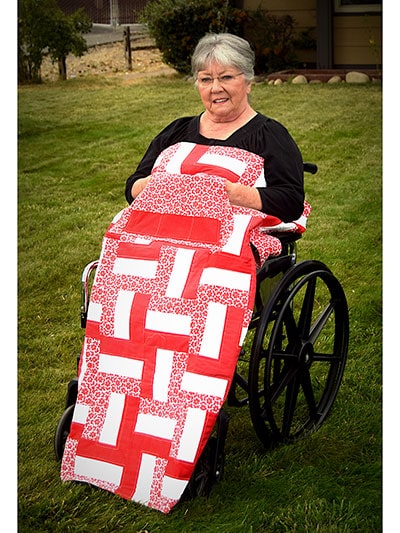
3. Wheelchair Quilt

Attention quilters: This downloadable quilt design features pockets for hand-warming and storage of personal items. Download the DIY instructions and choose your own pattern. Download for $12.99

Wheelchair quilt
photo credit: Annie’s Craft Store

4. Ultra-Grrrip Pushrim Covers

RehaDesign, a European company, has been creating wheelchair accessories for over a decade, including these pushrim covers. Available in every color of the rainbow and in three sizes, the covers are easy to apply and allow for more comfort to the touch compared to hard metal rims. Retails for $61

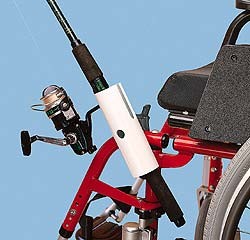
5. Fishing Pole Holder

If you’re an outdoor enthusiast who loves fishing, this pole holder by Maddak is the “reel” deal! The movable attachment can be adjusted to fit various chair bars. And, if you’d like to honor Mr. Knowles, perhaps place an artificial flower in the holder when not reeling in the catch of the day. Retails for $56.95

This adaptive gear is great for fisherman.
photo credit: mobility-aid.com

6. Fleximug Hands-Free Drinking Mug

Suitable for individuals who can move their head freely to one side, and who have good lip control and suction, this hands-free insulated 20-ounce cup has a sleek stainless steel design. It is dishwasher safe and available with five different straw lengths. Retails for $64.95

Wheelchair gear.
photo credit: Fleximug

7. Trabasack Lap Tray Bag

Invented by a wheelchair user, Trabasack makes multi-functional accessories. Use this item as both a storage bag and a lap tray to work, play, eat, etc. Trabasack offers several bag styles. Retails for $30 and up 

wheelcha gear
photo credit: Trabasack

8. Posey Comfy-Seat

These plush cushions provided added comfort, plus protection for sensitive skin. The cushions are machine-washable, have reinforced slits to allow use of a positioning belt and have a detail tie. Retails for $107.70

Wheelchair cushions add comfort.
photo credit: Devine Medical

9. Total Chair Cushion

Total Chair Cushion by Ceilblue also makes decorative cushions, in six colors: brown, burgundy, butterfly patterned, geometric burgundy, navy and blue/green plaid. These pressure reducing cushions help reduce numbness, soreness and discomfort caused from long periods of sitting. Retails $22.99-$29.69

Wheelchair cushions help with comfort.
photo credit: Amazon

10. Tank Carrying Bag

This durable backpack-style bag by Vive can accommodate various tank sizes. The bag is water-resistant and includes six hose outlets. Available in three colors – purple, black and gray. Retails for $22.99

Wheelchair bag with tank storage.
photo credit: Amazon

11. Wheelchair Umbrella

The wheelchair umbrella stand by Wanrane is ideal for rain or shine. Stay dry during an afternoon drizzle, or shielded from the sun on a bright day. It has an adjustable stem to custom fit height and positioning. Add your umbrella of choice. Retails for $25  

12. Soft Pouch and Bottle Holder

This soft cup holder easily attaches with Velro to hold drink containers. But users call it the “everything pocket” because it can also hold keys, glasses or any small essential. This Think King wheelchair accessory offers a playful pop of color. Amazon sells two option, silver/black and gold/black, for $14.99; 1800Wheelchair.com sells a brown/orange holder for $22.50

Wheelchair accessories.
photo credit: 1800Wheelchair

13. Pirate on Wheels Sticker

Arrrr you into pirates? This inexpensive decal sticker can easily adhere to the back of a wheelchair or scooter. Retails for $2.99

Wheelchair accessories.
photo credit: Amazon

14. Sherpa Wheelchair Footrest Cover

If you’re a fan of super fuzzy things, the Sherpa wheelchair footrest covers are for you. So cozy! The company also makes matching armrests and foot/calf cushions. Retails for $16.99

Wheelchair accessories
photo credit: Easy Comforts

15. Armrest Hanging Cell Phone Holder

If you’re not fond of lugging around bulky or larger bags, this compact storage sack may be all you need. Available in a variety of fun fabric choices, WarriorAngelCreation on Etsy hand makes these bags with a hoop-and-loop fasten. Retails for $9.75 and up

wheelchair accessories
photo credit: Etsy

16. Big Volcanic Jumbo Wheels

For something a bit flashy (literally), check out these multi-colored LED wheels that illuminate hues of red, blue and green. Retails for $29.50 per wheel

wheelchair accessories
photo credit: Pimp My Chair

17. Easy Comforts Wheelchair Bag

Available in five chic patterns, this wheelchair bag has four outside pockets for convenience, in addition to an interior zip pocket. Easily attaches to the back of chair with two hook-and-loop straps. Retails for $19.99

wheelchair accessories
photo credit: Easy Comforts

18. Under Seat Bag

HelenBudniatsky on Etsy makes several wheelchair bag styles, including hang options and under the seat. Aside from handy accessibility, the under seat option helps prevent unfortunate theft and pick-pocketing. Retails for $86.73 and up

This wheelchair under the seat bag is available on Etsy.
photo credit: Helen Budniatsky via Etsy

19. Wheelchair Afghans and Bags

Do you crochet? If so, take a peek at this downloadable afghan and bag set. The crochet skill level is intermediate. Download for $3.95

wheelchair accessories
photo credit epatternscentral

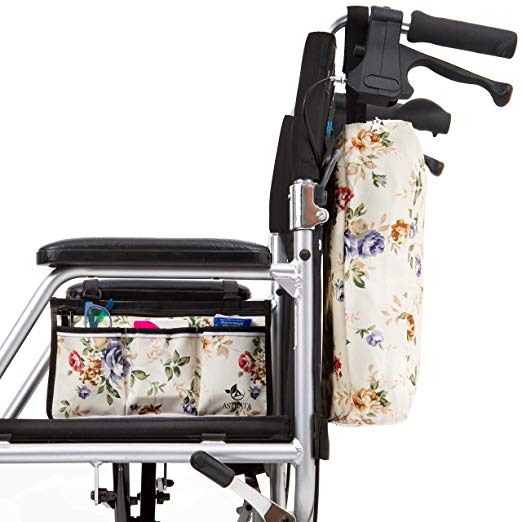
20. Matching Bag Set

Sometimes less is more… but sometimes more is more! Astrata Health Solutions makes a matching set with both a backpack storage bag and an armrest organizer. The armrest bag has six multi-pockets and, aside from ample storage space, the backpack includes a slim cooler pouch on the inside. The design of this set is a beautiful floral print on a white background. Retails for $32.95

wheelchair accessories
photo credit: Amazon

21. Quilted Wheel Pouch

The blue-colored quilted fabric not only serves as a bright wheel cover, but it’s also functional. This machine-washable product includes two storage pouches, one of which has a zipper. Retails for $25.95

wheelchair accessory
photo credit: Amazon

Keeping Your Wheelchair Beautiful

For the most part, wheelchair accessories can be either machine washed or hand washed. But what about the wheelchair itself? Check out cleaning tips from spinalpedia.com, wheelchairpride.com and caregiver-aid.com.

Have you ever beautified your wheelchair? Share with us on FacebookTwitter and Instagram

AmeriDisability does not guarantee listed price; please check retailer.

Feature image credit: Izzy Wheels

How to Detect Juvenile Arthritis: Early Signs and Symptoms

0

By Susan Bernstein

Young children often are sidelined by illness or fatigue – the flu-like bug picked up from playmates at daycare, or the sore arm caused by a tumble on the playground. When symptoms like pain, stiffness or fevers occur at odd times, without obvious cause, could this mean juvenile arthritis (JA)? How can you tell the difference?

Traditionally, a child complaining of occasional achy joints was dismissed as having “growing pains,” a vague phenomenon believed to be the result of the natural growth process. Now, we know that symptoms of joint pain, swelling, stiffness, fatigue or illness may be early signals of a serious, inflammatory rheumatic disease that requires immediate medical treatment.

Several rheumatic diseases affect children, often those who are too young to speak about what’s bothering them. In such cases, it’s important not to assume these symptoms are temporary, and to get a proper diagnosis from your child’s pediatrician. Early drug treatment can prevent serious, permanent damage to your child’s joints and enable to him/her to live an active, full childhood despite juvenile arthritis.

Common Signs of Juvenile Arthritis

The most common type of juvenile arthritis is juvenile idiopathic arthritis, formerly known as juvenile rheumatoid arthritis. Children as young as two may be affected. Other rheumatic diseases affecting children include juvenile dermatomyositis, juvenile psoriatic arthritis, systemic lupus erythematosus and systemic arthritis, or Still’s disease. In these diseases, a child’s immune system malfunctions for some reason, attacking her body instead, especially her joints. Here are the common symptoms of juvenile arthritis, and why they are different from symptoms caused by other illnesses or injury.

  • Pain: Kids complain of pain in joints or muscles at times, particularly after a long day of strenuous activity. But a child with juvenile arthritis may complain of pain right after she wakes up in the morning or after a nap. Her knees, hands, feet, neck or jaw joints may be painful. Her pain may lessen as she starts moving for the day. Over-the-counter pain relief drugs like acetaminophen or ibuprofen may not help. Unlike pain caused by an injury or other illnesses, JA-related pain may develop slowly, and in joints on both sides of the body (both knees or both feet), rather than one single joint.
  • Stiffness: A child with JA may have stiff joints, particularly in the morning. He may hold his arm or leg in the same position, or limp. A very young child may struggle to perform normal movements or activities he recently learned, like holding a spoon. JA-related stiffness may be worse right after he wakes up and improve as he starts moving.
  • Swelling: Swelling or redness on the skin around painful joints is a sign of inflammation. A child may complain that a joint feels hot, or it may even feel warm to the touch. A child’s swelling may persist for several days, or come and go, and may affect her knees, hands and feet. Unlike swelling that happens right after a fall or injury during play, this symptom is a strong sign that she has juvenile arthritis.
  • Fevers: While children commonly have fevers caused by ordinary infectious diseases like the flu, a child with JA may have frequent fevers accompanied by malaise or fatigue. These fevers don’t seem to happen along with the symptoms of respiratory or stomach infections. Fevers may come on suddenly, even at the same time of day, and then disappear after a short time.
  • Rashes: Many forms of juvenile arthritis cause rashes on the skin. Many kids develop rashes and causes can range from poison ivy to eczema or even an allergic reaction to a drug. But faint, pink rashes that develop over knuckles, across the cheeks and bridge of the nose, or on the trunk, arms and legs, may signal a serious rheumatic disease. These rashes may not be itchy or oozing, and they may persist for days or weeks.
  • Weight loss: Healthy, active children may be finicky about eating, refusing to eat because they say they’re not hungry or because they don’t like the food offered. Other children may overeat and gain weight. But if a child seems fatigued, lacks an appetite and is losing rather than gaining weight, it’s a sign that her problem could be juvenile arthritis.
  • Eye problems: Eye infections like conjunctivitis (pinkeye) are relatively common in children, as they easily pass bacterial infections to each other during play or at school. But persistent eye redness, pain or blurred vision may be a sign of something more serious. Some forms of juvenile arthritis cause serious eye-related complications such as iritis, or inflammation of the  iris and uveitis, inflammation of the eye’s middle layer.
Tell your doctor if you suspect juvenile arthritis.
photo credit: CDC

Juvenile arthritis includes many different diseases, but one common thread between them is that they can have serious, even life-threatening impacts on a young child. Diagnosis by a physician can determine the cause of the symptoms, rule out injuries or other diseases, and suggest treatments that will ease symptoms and allow your child to return to school and resume playing with friends and enjoying childhood.

Originally published by the Arthritis Foundation; reprinted with permission. | Image credit: UCLA

How to Create a Lifelong Plan for Your Adult Child with Special Needs

0

How can you plan ahead for the needs of your adult children with disabilities? While this might be a burning question for aging or ill parents and caregivers of these adults, it should really be a priority for all parents raising and caring for children with disabilities. Regardless of the health or age of the parent or child, Special Needs Planning expert Phillip Clark says it’s never too late or too early to plan for your child’s future.

Clark, co-founder and President of ENABLE Special Needs Planning, deals with this question all the time: When is the best time to start planning for the future of a child with disabilities?

“Start a searly as possible,” says Clark, who runs ENABLE with his wife Chelsea Clark, PhD, co-founder and Vice President/Chief Operating Officer. “Nobody is given tomorrow, even for younger parents. Don’t wait until there’s a crisis or until you’re older,” he warns.

Clark’s personal family experience with his younger sister, Sarah, motivated him to launch ENABLE four years ago. He watched his parents navigate Sarah’s life, with doctors and other professionals repeatedly warned of the limited expectations for her life, now and in the future. “She may never learn to read… ride a bike… be in a mainstream classroom… live independently,” they’d tell the family. The negative predictions shattered the dream his parents held for Sarah’s future—but only for a little while. Instead, they believed Sarah could live an impactful, purposeful life, and took every step they could to make it happen. [With sweet irony, Sarah now works in preschool and second grade classrooms tutoring students in reading, among other duties.]

Clark is a special needs planning expert.
Phillip Clark is a special needs planning expert.

Clark feels the traditional special needs industry often fails families. He’s watched them being guided through a cookie-cutter process to planning for the future. This process focuses more on what would happen to the child when parents are no longer here to support their child but didn’t do anything to help them feel secure in their ability to plan for and create a great life for their child today.

Enter ENABLE, which focuses on a comprehensive planning approach that helps parents design a focused plan with their child’s interests, passions and dreams at the heart of it all.

“While we still have to address that ‘what if,’ as that’s a reality every family faces, comprehensive planning looks at so much more,” explains Clark, adding, “We look at the vision for what a great life is for each child and how to accomplish that.” He talks about the people, organizations and services families need to surround themselves with to create a team approach to their child’s future. In doing so, this comprehensive approach ensures their son or daughter can thrive—both today and down the road.

5 Keys Elements to Comprehensive Special Needs Planning

Clark talks about the five key elements of comprehensive special needs planning. And it all starts with a deep dive into the short-term and long-term vision for the child, which lays the foundation for everything else.

1.   Vision: This helps families understand their why for planning. What does a great life for their child look like in two to three years,10 years and beyond? “Parents need a mindset of abundance,” says Clark. “They need to look at the hopes, dreams and natural abilities of the child, and then figure out how to plan around that.” This vision will serve as the backbone of every decision. Include children in this process if and when it’s appropriate, as they should have a say in the plan for their future. He notes that this vision will change over time so, every year, they should adjust the vision plan.

Experts can help with special needs planning.
Phillip and Sarah

2.   Life: Caring for a child with disabilities often means dealing with a lot of issues that affect daily routines. This part of the planning process helps families document every piece of information about their child that likely only the parents/caregivers know. For example, what supplements does the child take? Why? Who is the child’s doctor? When and where does the child go for therapy? Does the child have any allergies? What are his likes/dislikes? “This gives parents the peace of mind knowing that if they were away temporarily or had to make a permanent transition, a caregiver would be able to step in and use this guidebook to care for them,” explains Clark. Parents who work with ENABLE use its online planning tool, which walks customers through a guided questionnaire to document the details of their child’s life. Rather than getting overwhelmed with the process, the parents often work on it in spurts, perhaps taking three to four hours over several days. By the time they’re finished, they’ve created a 60-80-page customized guidebook specific to their child’s needs.

3.   Resource: The team approach kicks in at this point, where the planning process identifies who and what the child and family will need. What services, individuals and organizations do they need to surround their child with to help this vision of a great life become reality? Clark advises thinking outside the box in this area—beyond just typical services such as speech, occupational and physical therapy—as their child’s abilities continue to develop and grow. “Think creatively, such as pairing them with the right job coaches,” says Clark. Part of this process involves making sure government benefits are in place so the child continues to get the support and services they need. “A lot of this is so confusing, with various forms and wait lists and requirements,” Clark points out. “Our team helps take the confusion off their plate. We work with families across the country, and so we dive into their state’s programs.”

4.   Financial: Parents still need to have that uncomfortable conversation of planning for “what if we’re gone tomorrow.” But when parents start the vision planning process with a focus on what a great life the child can have today, the financial planning becomes so much bigger. Now it becomes, “what are we doing today and how are we being efficient with the opportunities” that will continue to allow that child to live a life of purpose and impact. “We have a team of Certified Financial Planners that come alongside families to look at their entire financial picture to ensure this is efficient,” says Clark. He finds, for example, that many parents say they can’t ever retire because they’re putting all their focus on their child and his/her future stability. But for a family to be successful, everything needs to work efficiently, including the parents needing to be successful and having improved cash flow so they can provide that security to their child ─ today and tomorrow.

5.   Legal: This last element really ties the whole process together, ensuring the entire plan continues to happen regardless of what happens in the parents’ lives. This includes a guardianship conversation and a special needs trust to protect assets for the child while still allowing the child to get the government benefits he/she is entitled to. “It’s so important to work with an attorney who knows the specifics of what special needs planning is from a legal standpoint,” notes Clark, whose team helps families prepare for that legal meeting. ENABLE taps into its network of attorneys throughout the country and introduces families to lawyers in their state to collaborate with. “Part of ENABLE’s legal plan involves sitting in on the first one or two meetings to ensure everything is implemented and drafted as we discussed as a team—including the parents,” assures Clark.

Navigating support systems for individuals with disabilities can be overwhelming, frustrating and confusing—especially since programs vary per state. While parents can tackle this “future planning” themselves to createt heir own plan (see free resource, below), many of them find it helpful to work with the ENABLE team. “Some families do that, while others don’t have the time or motivation and need some guidance and accountability to get through process,” notes Clark. “That’s where we step in. We take the heavy lifting off their plate and help align strategies.” It typically takes about 12 weeks to complete the entire planning process with ENABLE, with families generally working one to two hours a week on the plan. Clark says that breaking it down really benefits families, who often feel overwhelmed and don’t even know where to begin.

Florida mom Erin, for example, decided to work with ENABLE to help plan for her 17-year-old son Trevor’s future. “Meeting with ENABLE inspired us to help Trevor tap into his passion and potential, as he is officially now an employee at our local IMAX theater,” she says. “I honestly don’t know if I have ever felt this proud of him throughout the whole process of applying, interviewing, communicating with the managers and showing up for his first day of work yesterday, walking in with confidence and excitement. His confidence has skyrocketed!”

ENABLE is based out of Indianapolis, IN, with a secondary office in Tampa, FL, but serves families across the country through its interactive, online planning portal. For a free copy of ENABLE’s eBook titled “The Ultimate Guide to Special Needs Planning,” visit ENABLE online to request a downloadable copy. This 80-page guide walks you step-by-step through the five elements described above in more detail and includes helpful checklists and resources, too.

Author’s Bio: Lisa Beach is a freelance journalist and copywriter. Her work has been published in The New York Times, Good Housekeeping, Eating Well, USA Today GoEscape Florida & Caribbean, Parents, and dozens more. Check out her writer’s website at www.LisaBeachWrites.com.

Photos courtesy of ENABLE