A recent study finds that 52 percent of American households are at risk of not being able to carry their current lifestyle into retirement. This is an increase from an estimated 45 percent of households in a 2004 study. The estimated retirement savings shortfall amounts to roughly $6.4 trillion.
In many cases, this dramatic number is the result of a lack of financial education. Many adults today know little about retirement planning because they weren’t educated on the topic during high school or college. For example, many people don’t realize that an individual retirement account, continuously funded at $3,000 per year – starting at age 20 and based on an estimated rate of return of 8 percent – will yield $1.16 million when they retire at age 65. That same account – started at age 30 instead – will only yield $517,000 at age 65.
All of this underscores the importance of being smart with your retirement planning and adjusting your strategy based on your age. A good financial planner can help you do all of that. To find the right financial planner to help you prepare for retirement, the National Association of Personal Financial Advisors (NAPFA) offers these tips:
1. Look for a planner who is a fiduciary.
Planners who are fiduciaries have a duty of loyalty to their clients and a duty of care. The duty of loyalty means they must always consider their clients’ interests above their own, even if that negatively impacts their own income. The duty of care means an advisor must care for clients as though they were loved ones and provide them with prudent advice. Look for a planner who is a fiduciary and put that duty of care to work for you. You can learn more about how to find a fiduciary advisor at napfa.org/financial-planning/fiduciary-101.
2. Focus on experience.
Your retirement future isn’t something you want to leave to someone without the proper credentials. There are more than 100 professional designations in the financial services industry, but only a few of them truly indicate a professional’s ability to do holistic financial planning. Look for planners with the CFP(R) certification. This certification means a financial planner has met rigorous professional standards and has agreed to adhere to the principles of integrity, objectivity, fairness, confidentiality, professionalism and diligence.
3. Focus on financial planning.
Your financial future will be dependent on a sound financial plan, so look for a professional who focuses on true financial planning. Ask your planner if they have ever written a financial plan and what the plan might look like for you. Holistic financial planning includes tax planning, education planning, estate planning, retirement advice and more.
4. Ask how your planner will minimize and disclose conflicts.
Your planner is not just a professional entity, but also a person with personal interests and business dealings. This means that no matter which planner you select, there is a chance that your planner’s personal dealings could create a conflict with your financial decisions. That’s OK and normal. The key is to find a planner that will minimize conflicts and disclose any conflicts to you ahead of time. Ask potential planners how they will handle such a situation and don’t take “It won’t happen” for an answer.
5. Are they compatible with you?
This last quality is certainly one of the most important. How comfortable does the planner make you feel? As you speak, do you feel the planner understands your goals and is a person you could trust long-term? Over the course of your relationship you will share plenty of personal information with your planner, and entrust them with your financial future. Listen to your gut and choose a planner you feel comfortable with.
Start your planner search today.
Living the life you want in retirement is possible if you start planning for it now. The right financial planner can help you realize your goals, so don’t delay in finding the right planner for you. Visit NAFPA for more consumer resources on how to find the right planner for you today.
How impactful can a bouquet of flowers or a box of chocolates be? Well, 1-800-FLOWERS.COM, Inc. recently unveiled a special collection of eight seasonal gifts to benefit Smile Farms®, a nonprofit organization dedicated to creating meaningful jobs in agricultural settings for individuals with developmental disabilities. Now through December 24, 2019, 1-800-FLOWERS.COM, Inc., which owns several gift companies, will donate 20 percent of the net proceeds from purchases made from this collection to Smile Farms, the company’s signature philanthropic partner. This marks the second year the company has curated a selection of gifts from across its family of brands to raise funds and awareness for Smile Farms.
“It’s estimated that 80% of adults in the United States with a developmental disability are unemployed, making the work of Smile Farms more important than ever,” said Chris McCann, Chief Executive Officer, 1-800-FLOWERS.COM, Inc. “Through this special holiday gift collection, we invite our customers to help us support Smile Farms in expanding on its mission to generate job opportunities for people who are differently-abled and provide them with a way to contribute impactfully to their local communities.”
Smile Farms strives to create work opportunities for individuals with developmental disabilities. Through their employment at Smile Farms, adults and young adults can master new skills, experience teamwork, give back to their communities and take home a paycheck. Smile Farms supports this underserved population through its eight locations throughout the U.S. – and counting.
“We’re so appreciative of all the support 1-800-FLOWERS.COM, Inc. and its talented team provide to Smile Farms year-round – through volunteering their time and resources, and being proud brand ambassadors who stand behind our mission,” said Jennifer Low, Vice President, Smile Farms Inc. “This holiday initiative is a wonderful example of all they do for us. Donations are essential to growing Smile Farms, and the funds raised from this special collection will go a long way in helping us create more jobs for individuals with differing abilities.”
Items featured in the 2019 holiday gift collection to benefit Smile Farms are:
1-800-Flowers.com® Very Merry Christmas ($49.99): This hand-gathered arrangement of red and white roses, carnations, mini carnations and spider mums delivers joyful cheer for the most wonderful time of the year.
Harry & David® Snack Basket ($39.99): This Snack Basket comes brimming with the most popular snack mixes, caramel Moose Munch Premium Popcorn, gourmet dried fruits and tasty mixed nuts to share and enjoy. Everything arrives in a reusable basket finished with a beautiful blue bow.
Simply Chocolate® Divine Distinction Tower ($89.99): This tempting tower will amaze and delight any chocolate lover. The distinctive black and gold boxes hold cravings like almond bark, dessert truffles, butter almond toffee squares, dark chocolate caramel pretzel clusters, Tuxedo Decadence nut mix and chocolate-covered grahams.
1-800-Baskets.com® Premier Favorites Sweets & Treats Gift Basket ($69.99): This stylish basket is brimming with favorites like Totally Caramel Popcorn, Frosted Buttercream and Snickerdoodle Cookies, Dark Chocolate Truffles, Kettle Corn Clusters and much more.
Cheryl’s Cookies® Merry Christmas Gift Tin ($46.99): This tasty assortment of individually-wrapped Buttercream Frosted Cut-out Cookies is delivered in a cheerful Merry Christmas gift tin.
Wolferman’s BakerySM English Muffin Sampler Basket ($29.99): This gourmet gift, presented in a chipwood basket, features the Wolferman’s Bakery famous Super-Thick English muffins, a dark chocolate chunk scone, tangy fruit preserves, robust premium roast coffee and a signature spreader.
The Popcorn Factory® A Magical Holiday Tin (3.5 Gallons) ($48.99): This popcorn tin, featuring a whimsical, snow-filled holiday scene, is filled with 56 cups of delicious Butter, Cheese, Caramel and White Cheddar Popcorn.
Moose Munch® Premium Popcorn Classic Tin ($44.99): Moose Munch Premium Popcorn is crafted in the Pacific Northwest using only the finest ingredients. Recipients can indulge in several delicious flavors, including Classic Caramel, S’mores, Milk Chocolate and Dark Chocolate.
The holidays are celebrated as a festive and joyful time, but they also can trigger depression.
For some, seeing distant relatives and feeling that everything must be perfect can cause stress and anxiety. Others may see the holidays as a time that they are without loved ones. Financial concerns also may surface as individuals feel pressure to participate in costly gift giving and decorating.
Try to set modest expectations for the holidays. Keep a log of your spending and have a range you would like to stay within. This may help prevent feelings of disappointment, being let down or letting others down.
Know that it is okay to feel sad or lonely – it happens to all of us.
Spend time with friends and other people you enjoy, if spending time with relatives is a source of depression.
Do some things you want to do, not just the things you have to do because it is the holiday season. It’s fine to say no sometimes.
Exercise to keep the body and mind healthy when the weather is nice and if you like being outdoors.
Understand that the holidays will be a difficult time if you have lost a loved one, but know that it’s okay to enjoy the festivities and the company of others. Try to remember your loved one in a way that brings you joy and focus on the times that you shared.
Is It Seasonal Blues?
Those with a diagnosed history of depression or a mood disorder also can be affected by the physical change from summer to winter. Seasonal Affective Disorder (SAD), often associated with lower levels of sunlight, is most common in the fall and winter months and then subsides in the spring.
For those with SAD, bright light therapy has been shown to sustain mood and promote higher energy levels. Keep in mind that this therapy should be under the supervision of a healthcare provider.
If you find your depression symptoms worsening and strategies such as these are not helping, set up an appointment with your primary care physician. Your doctor is a great resource to help get symptoms under control.
This blog was written in conjunction with Florida State University College of Medicine students. | Originally published by Orlando Health; reprinted with permission.
“At least 100 million people currently living in the United States will, at some time in their lives, experience problems in relationships, become depressed or develop anxiety so serious that they will merit psychiatric diagnosis and would benefit from the services of a mental health care professional,” reveals Larry E. Beautler, Bruce Bongar and Joel N. Shurkin in A Consumer’s Guide to Psychotherapy: A Complete Guide to Choosing the Therapist and Treatment That’s Right for You.
Unfortunately, countless mental health care professionals lose their licenses each year as a result of patient abuse, sexual misconduct, fraud, substance abuse, unlicensed practice, medication violations and more.
Should you be faced with a crisis, know how to find a reputable mental health care provider with the expertise you need and that you can trust.
Finding a trustworthy, reputable therapist
Most mental health care professionals adhere to ethical guidelines. But, as with any field, there are (sadly) always exceptions. So know how to screen:
Begin your search by asking family or friends for recommendations or obtain a referral from your primary care doctor. You can also contact area clinics for recommendations or consult your yellow pages or online directory. Phone three or four therapists and ask about their credentials, policies and treatment methods; and/or find this information on their website. The following are good questions to ask:
What are your areas of expertise?
How much experience do you have with my particular issues?
Are you licensed or certified by the state?
Has your license ever been suspended or revoked? If so, can you tell me about the situation?
What are your professional affiliations?
What forms of treatment and therapy do you provide? What evidence is there to support its effectiveness? Is there controversy among mental health care professionals regarding this treatment?
What are your fees? Do you accept my insurance or work on a sliding scale?
If you can’t get answers to these basic questions over the phone, look elsewhere!
If you’re satisfied with the therapist’s responses, check with your state-licensing department to verify the license status and to make sure no actions have been taken against the therapist.
Evidence-based practice
Once you begin therapy, complications could still arise. According to Beautler, Bongar and Shurkin, therapists who base their beliefs on personal experiences often reject scientific findings that don’t coincide with their beliefs.
As a consumer, do your research to assure the validity of your diagnosis or form of therapy/treatment. If you discover contradictions from reputable sources, discuss it with your therapist. It may be a simple misunderstanding or data of which your therapist was unaware. If your therapist rejects the information, ask why and determine if the reason is valid or is based on personal opinion. If it’s preventing you from obtaining a proper diagnosis and/or treatment, find a therapist that recognizes those findings.
Though rare, unethical therapists have been known to misdiagnose for financial gain. More common, those with questionable practices may recommend unnecessary, inappropriate, outdated or unproven treatments. That said, “Your therapist is obligated not to take advantage of you, either intentionally or unintentionally through negligence or ignorance, and to act only in your best interests,” explain Jack Engler, Ph.D. and Daniel Goleman, Ph.D. in The Consumer’s Guide to Psychotherapy:The Authoritative Guide for Making Informed Choices About All Types of Psychotherapy.
Mental health care ethics
There are certain rules set by state licensing divisions as well as the American Psychological Association and other mental health associations providers must follow. Be aware that mental health care providers may not:
disclose information about you without prior written consent or even verify that you are being seen by the therapist except under certain situations, such as when child abuse is reported.
suggest that you do something that is undeniably harmful, immoral or illegal.
treat you for or offer services that are outside his/her area of expertise.
offer experimental or unproven therapies without informing you of such.
make sexual advances whether you approve of them or not.
treat you if you have any kind of relationship with the therapist outside of therapy.
degrade you because of your values or problems or pressure you to change them.
These are only some of the ethics therapists must uphold.
photo credit: PAN Foundation
Handling ethics violations and negligence
If you feel your rights have been violated or your therapist has treated you with negligence, there are several options according to Engler and Goleman. If the violations are minor, you might want to discuss the problem with your therapist. You can also seek a second opinion to determine whether it’s a misunderstanding or a valid complaint.
If your complaint seems valid and is serious enough, you can file a formal complaint with the appropriate ethics committee or with the state licensing or certification board. This is an important step if there’s concern that someone else might be harmed by the therapist’s practices.
Finally, if your therapist acted negligently, rather than just unethically, a civil malpractice suit may be in order.
Remember though, most people have positive experiences with their therapist. By being aware of unforeseen problems and taking precautionary steps, you’ll reduce the risk of a negative experience.
For some voters with disabilities, the voting process can be challenging. For example, those with mobility issues may struggle to access polling sites, those with autism spectrum disorder may feel overstimulated at polling sites and those with impaired vision may feel that privacy is compromised when asking for assistance at polling sites. A new voting option developed by Tusk Philanthropies (TP) may help solve all of these issues and more.
“We have an effort through the Philanthropies to make it easier for people to vote but we wanted to start with specific groups that could really benefit from this technology,” Sheila Nix, President of Tusk Philanthropies, told AmeriDisability.
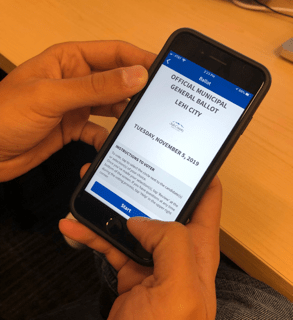
TP announced it will extend a mobile voting pilot in Utah County for the upcoming November general elections. Utah County will broaden eligibility in the upcoming election to include the disabled community, marking the first time mobile voting will be offered to U.S. citizens other than military and overseas voters. TP also announced that the National Cybersecurity Center (NCC) successfully completed a third-party audit of Utah County’s August mobile voting pilot.
“The thing that is great about Utah County is that election officials there are trying something new. Sometimes it just takes one jurisdiction to try the new thing and show that it works, and then others are interested in doing it. So we’re really happy that they saw the benefit and were looking out for their voters with disabilities to have an easier way to vote,” Nix said.
Preparing the Process
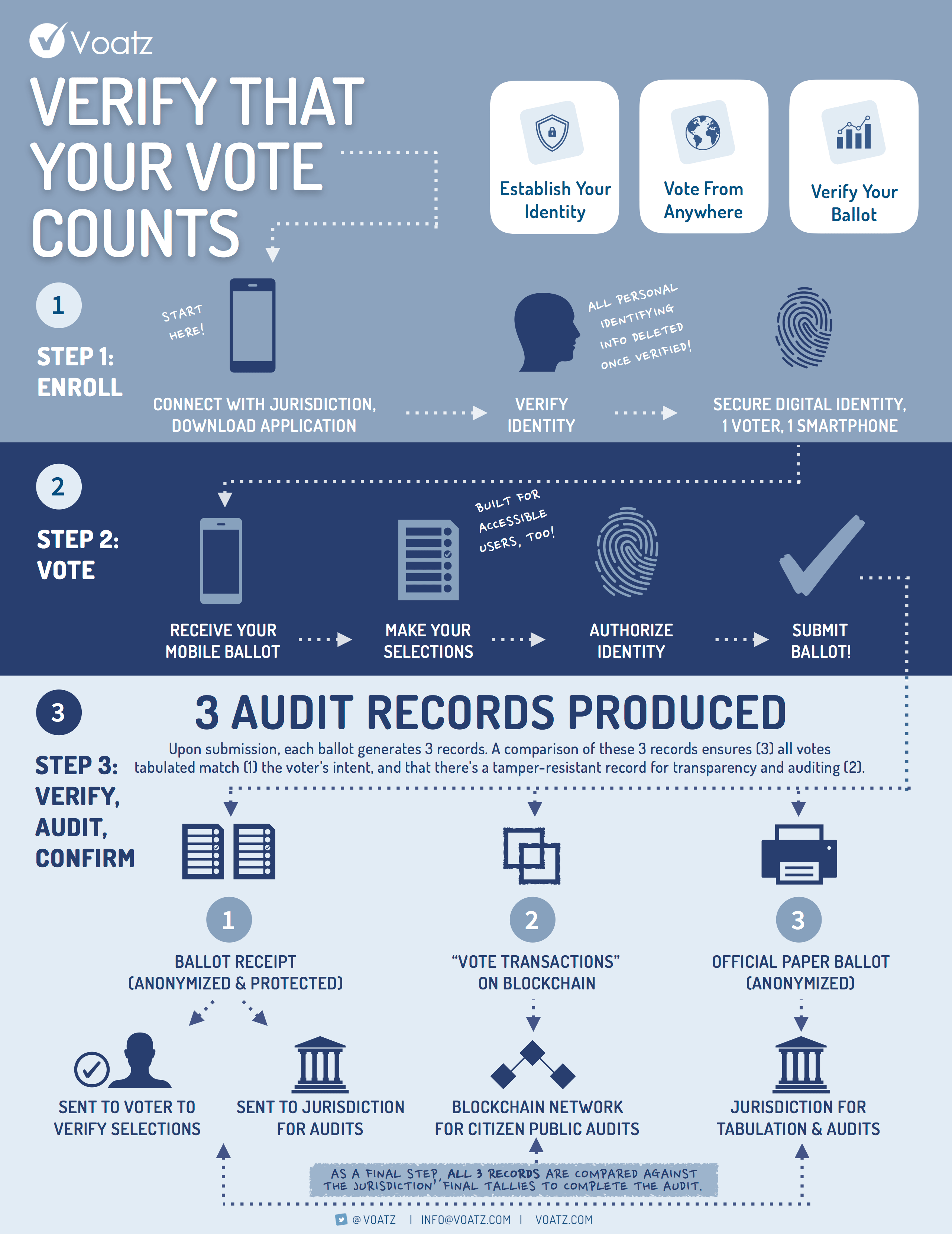
The NCC election audit for Utah County’s August municipal primary election showed that votes cast over the blockchain were recorded and tabulated accurately. The audit was for NCC and members of the public to conduct an independent, third-party audit of the Voatz election results. NCC worked with Voatz to develop a web-based tool that displays the voter-verified receipt, the tabulated ballot image and the blockchain transaction.
Utah County invited members of the public to participate in the auditing process and hosted more than ten volunteers from a diverse set of backgrounds. These community members used their expertise and knowledge to verify the election and offer feedback on the technology used in the primary elections. After completing the audit process, none of the auditors flagged the integrity of the election, nor suggested any errors in the submitted ballots or tabulation data. Given the success of the August pilot, Utah County decided to extend the pilot for the general elections in November 2019 and expand the option to voters with disabilities.
This is the first election where we are expanding mobile voting for the disability community and providing them the option to vote from their mobile device,” said Bradley Tusk, founder and CEO of Tusk Philanthropies. “We are making voting accessible to new communities, increasing voter turnout, conducting new pilots and auditing that each election to ensure that votes cast over the blockchain are recorded accurately.”
“We commend election officials, like those in Utah County, who are providing options to voters with diverse needs with this exciting pilot project. We regularly hear from voters with disabilities who need accommodations in order to vote privately and independently that they value their civic right and duty to vote,” said Sherri Newton, Voting Advocate at the Disability Law Center. “However, the barriers involved with traveling to a polling place make it difficult to vote, which can require them to miss work or can be a threat to their health and safety. These voters are excited about the availability of new, developing technologies that allow them to securely vote at home from their own device, just like many other Utahns have seen with the option of voting by mail.”
The November mobile voting is a continued collaboration between the Utah County Elections Division, Voatz, Tusk Philanthropies and the National Cybersecurity Center. Eligible voters will be able to participate in the upcoming election by opting in to vote electronically on their smartphones. Voters will fill out an absentee ballot request, complete their identity authentication and verification on the Voatz application, and submit their ballot for the election. Voting began September 20, 2019 and continues through 8:00 pm on Election Day, November 5, 2019.
“By including the disability community in the expansion of mobile voting in Utah County, we are enabling an entire community to vote anonymously, privately and securely from the comfort of their own home using their own accessible device,” said Forrest Senti, Director of Business and Government Initiatives of the National Cybersecurity Center.”We look forward to collaborating with Utah County and the disability community to conduct the post-election audit to ensure votes cast over the blockchain are recorded accurately.”
“Election officials in Utah County are leading the way when it comes to improving absentee voting methods for citizens with disabilities, deployed military personnel and citizens living overseas,” said Nimit Sawhney, CEO and co-founder of Voatz.”Getting to polling locations, marking a paper ballot and communicating with election officials are just a few of the challenges that citizens with disabilities face with the traditional voting process. By taking advantage of the various accessibility features available on modern smartphones and tablets, mobile voting provides a safe, private and convenient channel for citizens with disabilities to play a more active role in our democratic process.”
Background
Proof of Concept The pilot will offer blockchain-based mobile voting to active-duty military and their eligible dependents, overseas voters and voters with disabilities registered in Utah County for the municipal general elections in November 2019. This mobile voting option will be offered in addition to the absentee ballot option. The overseas military community currently relies on absentee ballots and is allowed to vote in their home state regardless of where they are deployed (even if deployed domestically). In addition to having the option to cast their ballot via the blockchain-based mobile application, eligible military voters in Utah County can choose to cast their vote through the standard electronic remote absentee ballot system. The electronic remote absentee ballot system currently offered to overseas military voters doesn’t ensure anonymity and relies on email or postal mail for ballot return. Registered voters with disabilities can participate in the November pilot by contacting the elections office and requesting an application to opt-in to the pilot. Utah County complies with all federal law requirements and provides absentee ballots and accessible voting systems at polling places for anyone who self-identifies as being disabled to ensure they are provided the same opportunity for access and participation, including privacy and independence.
Voatz is the technical provider designing the system. With this pilot, they will have launched the third pilot blockchain-based mobile voting solution for a municipal election. They are experienced in the field of voting technology and have run a number of elections for state party caucuses, conventions, union votes and university elections using an app for phones and tablets. Voatz conducted the first blockchain-based mobile voting pilot for a federal election in West Virginia during the 2018 midterms. This pilot conforms with the Uniformed and Overseas Citizens Absentee Voting Act (UOCAVA) and the Military and Overseas Voter Empowerment (MOVE) Act, two federal laws enacted to protect the rights of United States citizens to vote in federal elections while they are serving in the uniformed services or residing overseas.
To Be Eligible to Vote Using This Solution, An Individual Must Be:
1. Deployed and overseas military personnel and their families, other qualified overseas voters (as applicable under the UOCAVA), a voter with a mobility disability and 2. Eligible to vote in Utah County.
Expanding Mobile Voting
Nix says the ultimate goal is to make voting easier for all communities because there are so many who could truly benefit from mobile voting. For example, aside from disability-related challenges, hurdles exist for voters who are hospitalized, away for college, reside in remote locations far from polling sites and so on.
What can you do to help expand mobile voting to your area and in general? Nix encourages voters to inform state-elected officials and county-elected officials of the need for mobile voting.
The Christopher & Dana Reeve Foundation Paralysis Resource Center (PRC) will host a FREE webinar on traveling by road or on a train for individuals living with paralysis. The webinar will be held on Wednesday, October 30, 2019.
The Americans with Disabilities Act guarantees that travelers with disabilities receive equal treatment under the law. While this is true, wheelchair users have to consider their travel options carefully before making the trip depending on their situation. Traveling by plane may be the quickest source of transportation, but it’s not always the most efficient way to travel when considering all factors as a wheelchair user. This presentation will stress the importance and available options for traveling by car or train, as there are aspects people living with paralysis should consider before taking a trip. This includes the advantages and disadvantages of both modes of travel, and amenities travelers are entitled too as they embark to their desired destination.
“There are several individuals in our community who are not able to travel by plane due to cost or health conditions,” said Angela Cantillon, Director of Operations for the Paralysis Resource Center. “With this webinar, the audience can gain access to tools for accessible, cost-efficient ways of traveling to see their families and help combat the feeling of isolation.”
The webinar will be hosted by John Morris, a field expert and an advocate for accessible travel. Included in the webinar will be topics such as destinations available through railways and roadways, Road Trips with a Vehicle, Intercity Bus Services, and Train Travel in the USA.
The hour-long webinar will be held on at 2:00pm EST. Registry for the webinar can be found on the Reeve Foundation’s events page.
What’s your preferred mode of travel transportation? Share with us!
A diagnosis of a chronic condition such as Crohn’s disease, ulcerative colitis, cancer or diabetes can bring a swirl of thoughts and emotions. There may be relief at finding an explanation for bothersome symptoms, but that relief is often quickly overshadowed by insurance issues, financial concerns and worry about the future.
If you’ve recently received a chronic diagnosis, take it one step at a time to navigate the road ahead. Here are some tips:
Understand Your Condition
Arming yourself with information is critical when you receive a life-altering diagnosis. It’s important to understand everything you can about the condition, including known causes, symptoms you may experience, what you can expect as the disease progresses and more.
Identify Treatment Options
A big part of your research will likely involve your treatment options. If your doctor has outlined multiple options for treatment, you’ll want to investigate each one thoroughly so you can understand the benefits and risks, as well as deciding which option is the best fit for your particular circumstances. You’ll also want to confirm that your treatment is covered by your health insurance and at what level.
Handle Insurance Issues
Most people assume that if they have health coverage, they can count on at least a portion of the treatments and medications their doctor recommends being covered. In many cases, that’s true, although the exact coverages depend on variables like your plan, deductible and more.
However, there are also some circumstances in which you may experience a delay before you’re able to follow your doctor’s treatment orders. One example is step therapy – a protocol sometimes used by health insurance companies that requires patients to try and fail on one or more lower cost medications before they will provide coverage for the medication originally prescribed by the patient’s provider.
photo credit: CDC
Step therapy is also known as “fail first” because it requires a patient to fail on an insurer-preferred drug first. Unfortunately, for patients with inflammatory bowel diseases (IBD), like Crohn’s disease and ulcerative colitis, this protocol may result in worsened health outcomes. A survey by the Crohn’s & Colitis Foundation found that as many as 40 percent of IBD patients had been subject to step therapy, and 58 percent of those patients were required to fail two or more drugs before being granted access to the drug their doctor originally prescribed.
“During these delays in optimal treatment, patients are at risk, not only for their physical well-being, but also for their quality of life,” said Dr. Ross Maltz, co-chair of the Government and Industry Affairs Committee of the Crohn’s & Colitis Foundation’s National Scientific Advisory Committee.
“In some instances, insurance policies can impede patient access to the care they need and affect the patient and provider decision-making process.”
Groups are working to change this process through legislative reform but, in the meantime, if you are subject to a step therapy requirement by your insurance provider, you can appeal. The best approach is to work with your doctor to prepare a written letter that contains:
· A clear statement that you are appealing a denial of coverage for your prescribed medication
· The name of the medication that was denied
· A detailed explanation of previous treatments or factors that led your doctor to prescribe the denied medication
· Any studies or evidence that support the use of the prescribed medication
· The specific health risks you experience now or may in the future without the medication that was originally prescribed
· A clearly stated request for approval of the specific prescription, including the medication name and dosage
Becoming a dog trainer (or service dog trainer) can be very rewarding, but it is also a lot of work. Having a love of animals is just the beginning — the most experienced dog trainers understand that often the most difficult part of the gig is working with people!
You may be surprised to learn that there are no legally-mandated standards or certifications for service dog trainers — or pet dog trainers. Anyone can decide to train dogs and start their own business or training organization. Most trainers are self-taught or have learned techniques through other trainers, books, online courses, videos or short seminars. Some of the best trainers do not have formal training themselves. That being said, if you are interested in becoming a trainer we highly suggest some kind of formal training.
There are a few dozen schools around the country that train service dog trainers. Most are small and began with experienced dog trainers (some began with training military working dogs, police dogs or other working dogs) who moved into training service dogs for disabled individuals and then decided to help train trainers too. One of the best places to learn how to become a service dog trainer in the country (and possibly the world) is Bergin University. If you’re really looking for the finest service dog training education possible, Bergin is the hands-down go-to school.
The ADA is written to allow disabled individuals to use their service dogs in public with as few barriers as possible. If access were not as open, every building, restaurant and dry cleaner in the country could stop disabled individuals with their service dogs and demand proof of training. The ADA specifically states that if someone says their dog is a service dog they are to be taken at their word, regardless if it has been certified by a state or other authority. See below:
The ADA states in section § 35.136 service animals part (f): “A public entity shall not require documentation, such as proof that the animal has been certified, trained, or licensed as a service animal.” You can view the full ADA law here: https://www.ada.gov/regs2010/titleII_2010/titleII_2010_withbold.htm
The ADA is also designed so that disabled individuals may train their own service dogs. Program-trained service dogs can be very expensive and out of budget for many disabled individuals. Some service dogs may cost upwards of $10,000.
About USSDR
With the input from over 100 service dog handlers in America, the United States Service Dog Registry (USSDR) represents the most democratic realization of an assistance animal registry and training and behavior standards agreement to-date. The results are a registry with completely free and voluntary online self-registration hosted by an independent, non-governmental, privacy-conscious and secure service.
USSDR is designed with input from experienced trainers and service dog owners who believe there should be an opportunity for those who wish to voluntarily and knowingly comply with not only the ADA law, but also an additional and specific set of community-defined training and behavior standards. These training and behavior standards go above and beyond the ADA and the basic foundations of a Public Access Test.
A Higher Standard for Service Dogs and their Handlers
USSDR’s purpose is to allow someone the opportunity to voluntarily hold themselves and their animal accountable to a higher standard by publicly signing a specific set of training and behavior standards that goes above and beyond the law. Simply registering with with USSDR or any state does not qualify an animal or an individual as a service dog Ttam or provide any special rights, legal or otherwise. If someone is found not to comply with USSDR’s training or behavior standards their registration can be removed or suspended.
What does Registration with USSDR mean?
USSDR is an extra step that goes above and beyond the law. Under the law it is not required that service and assistance dog teams show or have identification in the form of a vest, special harness, training certificate or registration. Nor is it required that animals are officially trained, certified or registered with any state, federal or independent organization.
USSDR hopes to help reduce the number of people abusing the ADA by requiring registrants to understand that intentionally misrepresenting an animal as service or assistance animal for any reason is not only unethical, it is also illegal. All registrants are required to understand and accept the following:
What is involved with training and using a service or assistance animal
How important their behavior, and that of their service or assistance dog, is to the general public and other service and assistance animal teams
The definition of a service or assistance animal
The minimum training standards for a service or assistance animal
What is involved with a Public Access Test
Originally published by AnythingPawsable; reprinted with permission.
Epilepsy is brain disorder that causes repeated seizures. About 3 million U.S. adults aged 18 years or older have active epilepsy. Nearly 1 million of those adults are aged 55 or older. As our population ages, there will be even more older people with epilepsy in the coming years.
Epilepsy is more likely to develop in older adults because some risk factors for epilepsy are more common in older adults, such as:
Diseases that affect brain function (such as Alzheimer’s disease)
Brain tumors
About half of older adults who are told they have epilepsy do not know the cause.
Epilepsy can affect people at any age, but it’s more likely to develop in older adults.
photo credit: AARP
How Do I Know If It’s Epilepsy?
It isn’t always easy to tell when you or someone you care for develops epilepsy later in life. That’s because seizures may be hard to recognize in older adults and may go unnoticed. For example, memory problems, confusion, falls, dizziness or sensory changes (like numbness) are often blamed on “getting older.” However, these can actually be signs of seizures.
There are many different signs of seizures because there are many types of seizures. In the movies and on TV, a person is often shown falling to the ground, shaking and becoming unaware of what’s going on around them. That’s one kind of seizure, but it’s not the most common. More often, a person having a seizure may:
Seem confused
Stare into space
Wander
Make unusual movements
Can’t answer questions or talk
When these signs occur more than once and often in the same pattern, they could be signs of seizures.
If an older adult is showing these signs, it is important for them to talk to a health care provider. Most adults with epilepsy have good seizure control with medicines. Epilepsy specialists can help older adults find the right treatment. Find an epilepsy specialist near you through the Epilepsy Foundation.
How Is Epilepsy Challenging for Older Adults?
Adults who develop epilepsy later in life may have a hard time managing the disorder. Eight in 10 adults aged 65 or older have more than one chronic health condition. It can be hard to balance epilepsy treatment when taking medicines for other health problems. Many epilepsy medicines also have side effects such as bone loss or dizziness, which can make someone more likely to fall and become injured.
Epilepsy can also affect a person’s daily life if seizures limit their ability to drive or if they live alone. After a lifetime of being independent, losing the ability to drive or take care of themselves can be especially hard for older adults.
Caregivers should learn how to recognize seizures in older adults.
How Can You Help?
Seizure first aid is easy to give and involves keeping the person safe until the seizure stops on its own and knowing when to call 911 for emergency help.
If you work at an adult day care center, senior center, long-term care facility, nursing home, in home health care or another senior-serving organization, there is special training available. Seniors & Seizures is a free online or in-person course offered by the Epilepsy Foundation. You can get free continuing education credits for participating.
Do I Call 911?
Seizures do not usually require emergency medical attention. Only call 911 if one or more of these are true:
The person has never had a seizure before.
The person has difficulty breathing or waking after the seizure.
The seizure lasts longer than 5 minutes.
The person has another seizure soon after the first one.
The person is hurt during the seizure.
The seizure happens in water.
The person has a health condition like diabetes, heart disease or is pregnant.
Recently, at the start of the 2019 hurricane season, the National Council on Disability (NCD)—an independent federal agency—released its latest report, titled, Preserving Our Freedom: Ending Institutionalization of People with Disabilities During and After Disasters.
NCD, which advises the President and Congress, examined available data from several major storms and disasters and found that people with disabilities are frequently institutionalized during and after disasters due to conflicting federal guidance; a lack of equal access to emergency and disaster-related programs and services; and a lack of compliance with federal law.
Over 47 million people were impacted by Hurricanes Harvey, Irma and Maria, and based on disability prevalence statistics, as many as nearly 12 million of them may have been people with disabilities.
The report, which focused on the reasons people with disabilities experience involuntary institutionalization as a result of disasters, found that the Federal Government offers conflicting guidance on the topic. For example, Department of Justice (DOJ) guidance states that “people should receive services in the most integrated setting appropriate to the needs of the person, and only persons who require the type and level of medical care that would ordinarily be provided by trained medical personnel in a nursing home or hospital” should be placed in those more restrictive settings. In contrast, the Department of Health and Human Services (HHS) Centers for Medicare and Medicaid Services (CMS) repeatedly issues waivers to their institutional placement rules during disasters, allowing states to place disaster-impacted people with disabilities in nursing homes and other institutional settings.
The report also found that recipients of federal funds do not have training for how to comply with federal requirements to provide equal access to emergency and disaster-related programs and services when using federal dollars, nor do they have the cultural competence to interact with people with disabilities and often adhere to stereotypes and myths about disability that results in institutional placement. As a result of unnecessary institutionalizations of people with disabilities during and after disasters, people with disabilities often go unaccounted for, families are separated from loved ones, working individuals with disabilities often become unemployed, and students with disabilities are often excluded from returning to school with their peers.
NCD’s recommendations to policymakers include the following:
Congress should require CMS to establish a process for Medicaid portability among states and territories during disasters to ensure uninterrupted health maintenance and medical care in the least restrictive environment for Medicaid recipients.
Congress should appropriate funds for FEMA, HHS, and HUD to fund Independent Living Center staff and other affordable and accessible housing experts to provide individual and household disaster case management focused on the transition and permanent housing needs of disaster-impacted people with disabilities.
Congress should require that HHS establish a data collection system and that data collection begins immediately after the next federally declared disaster. The system must identify impacted individuals moved to an institutional setting and quantify movement and displacement of all impacted people in the aggregate.
The U.S. Department of Education (ED) should issue a policy directive to require school systems to include an individualized emergency plan for uninterrupted delivery in every student’s IEP or 504 plan to comply with the Free and Appropriate Public Education requirement in IDEA and in the Rehabilitation Act.
People with disabilities have a right to equal access to emergency services. Registries have both impeded equal access solutions and established inadequate alternatives for using federal funds. NCD recommends that no federal funds, including but not limited to federal funds from the U.S. Department of Homeland Security (DHS) and HHS, be used in development, deployment, and maintenance of emergency ‘special needs’ registries intended to include people with disabilities.
Read the full report at https://ncd.gov/publications/2019/preserving-our-freedom.