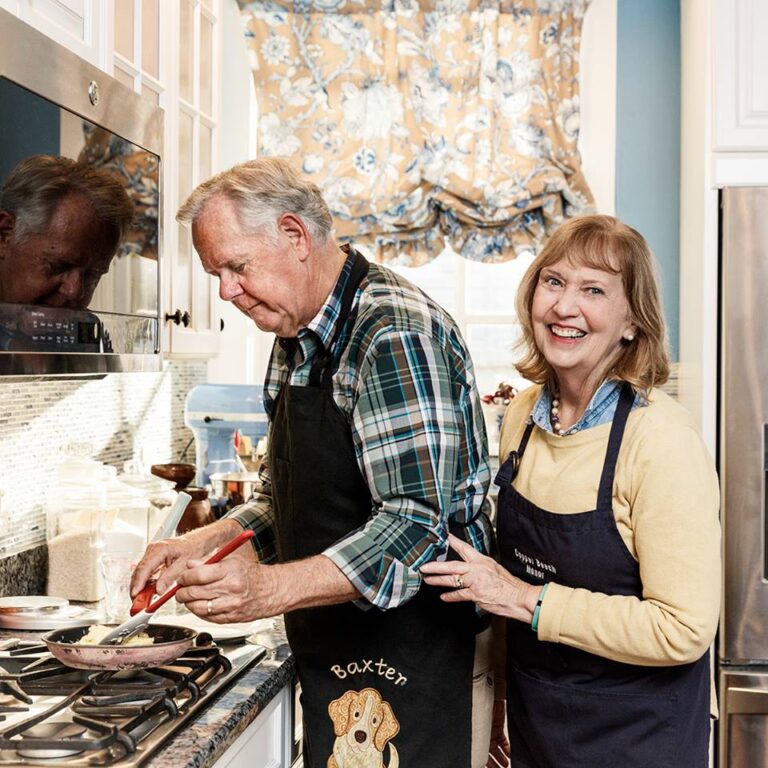
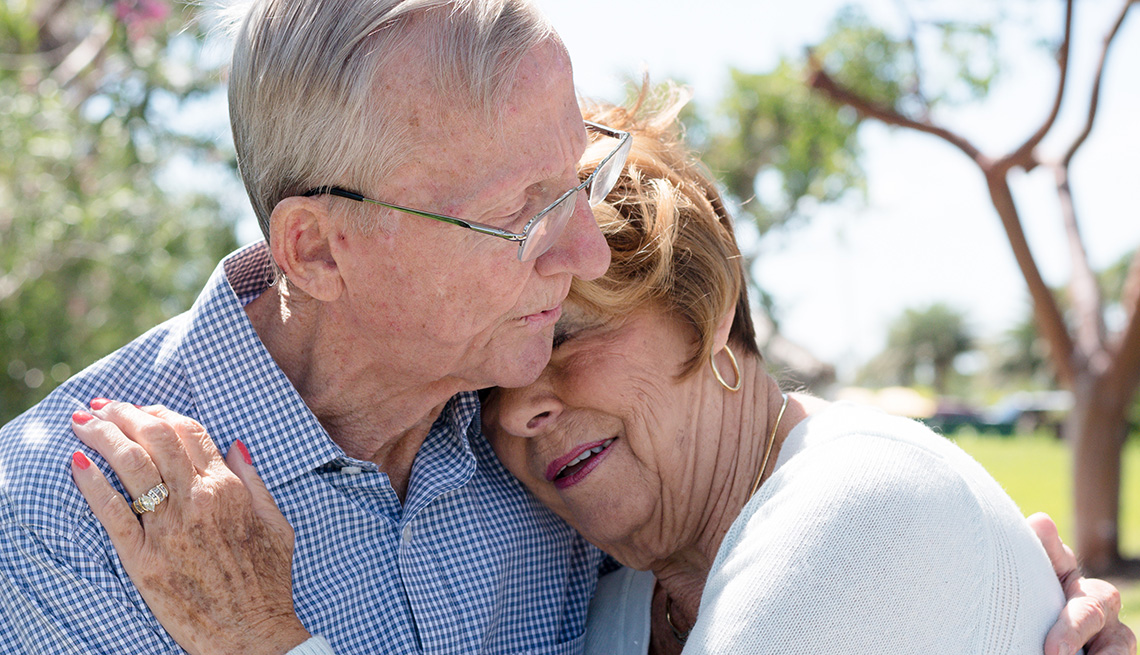
More people are seeing a lift in their mood as the coronavirus pandemic wanes, with higher numbers of people saying they feel joy and hope and fewer feeling fatigue or fear, according to a recent survey by AdventHealth.
That’s a welcome change as COVID-19 cases are leveling off, but not everyone will see an improvement in their mental wellness at the same rate, said Dr. Luis Allen, psychiatrist and medical director of the Center for Behavioral Health at AdventHealth Orlando, at a press briefing at the end of June 2021.
“Definitely you are seeing more optimism,” Allen said. “We have a group of patients still experiencing symptoms of depression; in fact, it’s becoming even more pronounced now. We want to make sure they can reach out and get help, and not feel that they are strange or something is odd for them.”
A survey of respondents across AdventHealth markets in seven states showed people are feeling more positive emotions and fewer negative emotions in recent weeks for the first time since the pandemic began. But “fatigue” remains the dominant emotion among respondents.
Neuropsychologist Michael Westerveld, Ph.D., said he’s noticed children are experiencing more “every day” worries that were common before the pandemic, though the last year of disruptions to school and daily life have exacerbated those in some cases.
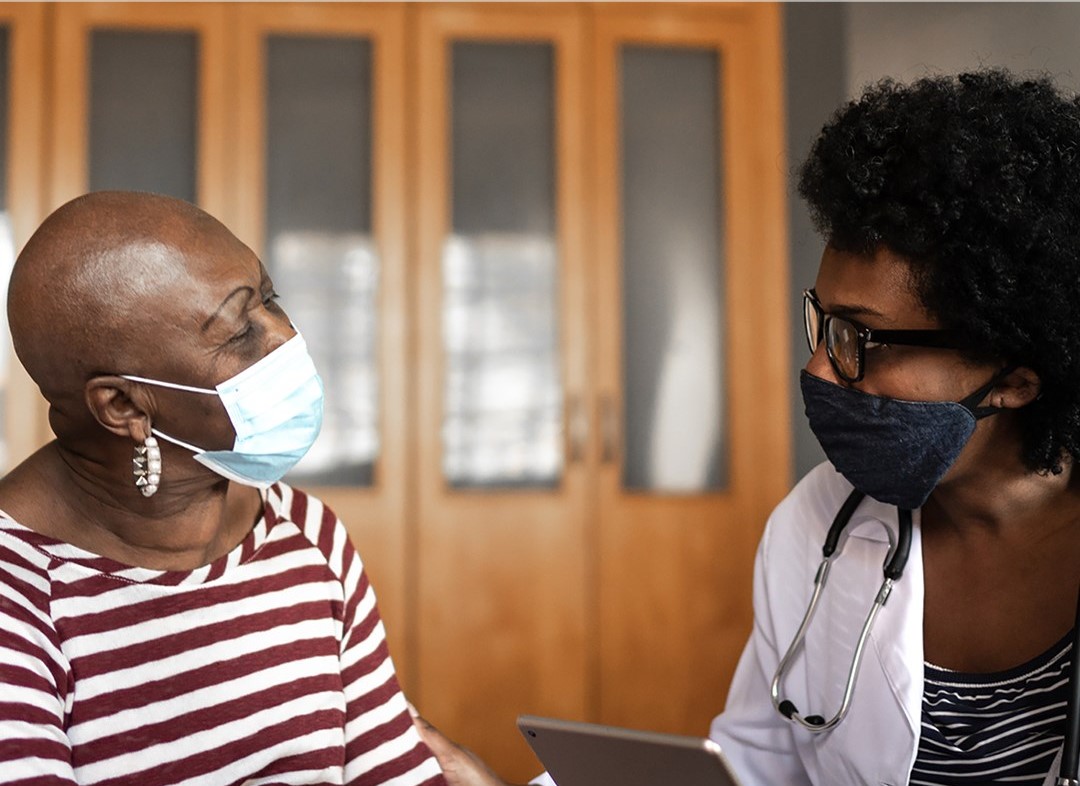
The survey also showed 60% of respondents said they are wearing masks whenever they can’t social distance, the lowest rate since the start of the pandemic. The drop isn’t unexpected given that the Centers for Disease Control issued less stringent guidance for people who are fully vaccinated.
Allen and Westerveld noted, however, that it’s normal for some people to want to continue wearing masks, possibly for a long time to come. Mask wearing proved effective in helping reduce the spread of illness and allowed people to have some control over their exposure to the virus.
“Any time something becomes so pervasive, any shift is awkward at first,” Westerveld said. “It’s going to take a while to get used to and some people will continue to wear masks going forward for a long time.”
July 7th is World Chocolate Day! Yes, that absolutely grants you permission to enjoy some chocolate. Of course, many of us (self-included) celebrate the awesomeness of chocolate year-round. And, if enjoyed in moderation as part of a well-balanced, heart-healthy diet, a chocolate treat is most likely fine.
Benefits of Chocolate Types
According to the American Heart Association, most chocolate falls into one of three categories: milk chocolate, dark chocolate and white chocolate. Chocolate’s darkness is determined by the proportion of cocoa solids made from cocoa beans, mixed with cocoa butter and sugar.
Milk chocolate, the most popular type in America, typically contains about 10 percent cocoa liquor – the paste made from ground, roasted, shelled and fermented cocoa beans that contains both nonfat cocoa solids and cocoa butter – compared with a minimum of 35 percent found in dark chocolate. Consumers can tell how much cocoa liquor is in a dark chocolate bar by looking for the “percent cacao” figure on the label. Cacao is the raw form of chocolate, while cocoa is the heated version of cacao.
White chocolate, however, contains only cocoa butter – no cocoa solids – combined with sugar and other ingredients. (And for many people, it’s not really considered a chocolate at all.)
A standard bar of dark chocolate with 70 percent to 85 percent cacao contains about 600 calories and 24 grams of sugar, according to the U.S. Department of Agriculture’s nutrient database. Milk chocolate contains roughly the same number of calories but twice the sugar.
The amount of cocoa solids in dark chocolate is important because it can be an indicator of the amount of dietary flavonoids, which are antioxidants found in fruits, vegetables and certain drinks. Research suggests consuming more dietary flavonoids is linked to a lower risk of coronary heart disease.
Most dark chocolate is high in flavonoids, particularly a subtype called flavanols that is associated with a lower risk of heart disease. Some studies suggest chocolate or cocoa consumption is associated with a lower risk of insulin resistance and high blood pressure in adults.
Chocolate Recipes
Check out our picks for the best chocolate-themed recipes. We’ve got you covered for breakfast, lunch and dinner!
1. Avocado-Dark Chocolate Glazed Doughnuts
Move over avocado toast… there’s a new, sweeter breakfast choice! Avocado adds richness to these chocolaty doughnuts (and is a surprise ingredient in the dark chocolate glaze).
In a large mixing bowl, stir together the flour, cocoa powder, baking powder, baking soda, and salt.
In a separate large mixing bowl, using an electric mixer, beat together 1/2 cup avocado and the egg until smooth. Add the sugar substitute. Beat until the mixture is smooth and fluffy.
Whisk in 1 cup milk, the oil, and vanilla until incorporated.
Pour the avocado mixture into the flour mixture. Beat on low speed for 1 minute. Increase the speed to medium and beat until the ingredients are well combined. Use a spatula to stir in any of the dry mixture that remains on the sides or bottom of the bowl.
Lightly spray a 12-cavity doughnut pan with cooking spray. Pour the batter into the wells, filling each three-fourths full (about 1/4 cup in each). Don’t cover the center hole.
Bake for 13 to 16 minutes, or until a wooden toothpick inserted in the center comes out clean. Remove from the oven. Let cool slightly.
Place a large wire rack on a large baking sheet. Turn out the doughnuts onto the rack.
In a small bowl, microwave the cacao on 100 percent power (high) for 30 seconds. Remove from the microwave. Stir until fully melted.
Using an electric mixer, beat the remaining 1/4 cup avocado into the cacao until very smooth. Beat in the remaining 2 tablespoons milk.
Spread 1 tablespoon of glaze over the top of each doughnut. Sprinkle with the pistachios.
If you enjoy a good “concoction,” which is what the Nahuatl (language of the Aztecs) word molli means, you’ll enjoy this dish. Many traditional Mexican dishes use mole (MOH-lay), a rich, dark sauce that usually includes chocolate. To reduce the saturated fat, this recipe uses cocoa powder instead.
Ingredients
1 teaspoon canola or corn oil and 1 teaspoon canola or corn oil, divided use
2 pounds boneless, skinless turkey breast (all visible fat discarded)
1 cup water
1 medium chopped onion
1 garlic clove (minced)
1 cup fat-free, low-sodium chicken broth
2 tablespoons unsweetened cocoa powder
2 tablespoons shelled, unsalted sunflower seeds
2 tablespoons shelled, unsalted pumpkin seeds
1 tablespoon chili powder
1/2 teaspoon sugar
1/4 teaspoon ground cumin
1/4 teaspoon salt
1/4 teaspoon ground cinnamon
1/8 teaspoon ground cloves
Directions
In a large skillet, heat 1 teaspoon oil over medium heat, swirling to coat the bottom. Cook the turkey breast for 2 to 3 minutes on each side, or until browned. Pour in the water and bring to a boil. Reduce the heat and simmer, covered, for 1 hour, or until the turkey registers 165°F on an instant-read thermometer. Transfer the turkey to an ungreased 1-quart baking dish, discarding the cooking liquid. Set aside the turkey.
Preheat the oven to 350°F.
Meanwhile, in a small skillet, heat the remaining 1 teaspoon oil over medium-high heat, swirling to coat the bottom. Cook the onion and garlic for 3 minutes, or until the onion is soft, stirring occasionally.
In a food processor or blender, process the onion mixture and the remaining ingredients until smooth. Pour the mixture over the turkey. Bake for 30 minutes. Serve warm.
This healthier version of these French cookies gets their traditional nutty flavor from almond flour and their sweetness from stevia rather than sugar. The tart smooth filling is the perfect complement to the sweet, chewy cookies.
1 cup raspberries OR 1 cup unsweetened, frozen raspberries
1/2 cup fat-free, plain Greek yogurt
½ teaspoon stevia sweetener or 1 packet stevia sweetener
Directions
Preheat the oven to 325˚F. Line a large baking sheet with parchment paper.
In a food processor, process the stevia sugar blend and cornstarch for 40 to 50 seconds, or until the mixture has a powdery texture (like confectioners’ sugar).
Place the egg whites in a medium bowl. With an electric or hand mixer on medium-high speed, beat the egg whites for 1 minute, or until frothy. Add the cream of tartar. Beat for 2 to 3 minutes. or until soft peaks form. Gradually add the stevia sugar blend mixture, beating for one minute, or until stiff peaks form (the peaks don’t fall when the beaters are lifted).
In a second medium bowl, sift together the flour and cocoa powder. Sift again. Pour the flour mixture into the egg whites. Add the liquid stevia sweetener. With a rubber spatula, gently fold the flour mixture into the egg whites, using about 30 strokes, or until no flour is visible.
Spoon the mixture into a piping bag fitted with a round tip (between ¼-inch and ½-inch wide), or if using a disposable piping bag, cut a ½-inch hole at the pointed tip. Pipe the batter on the parchment paper into 1-tablespoon round portions (about 1-inch in diameter), leaving 2 inches between each, piping a total of 20 macarons.
Lift the baking sheet about two inches from the counter and drop it. Repeat four times. (This will help release any air bubbles that may be in the batter.) Let stand at room temperature for 15 to 30 minutes (depending on the humidity of the room). The batter should form a thin skin and feel slightly tacky.
Bake for 25 to 30 minutes, or until the tops are set. Let the macarons cool thoroughly (about 1 hour).
Meanwhile, in a small bowl, mash the raspberries with a fork. Stir in the yogurt and stevia sweetener.
Once the macarons have cooled, place ten of them flat-side up on a cutting board or sheet of wax paper. Spread 1 tablespoon of the filling on each. Top with the remaining macarons.
The National Heart, Lung, and Blood Institute (NHLBI) of the National Institutes of Health recently updated national guidelines for the diagnosis, treatment and management of asthma. Asthma is a chronic lung condition affecting about 25 million Americans, 5.5 million of whom are children.
The 2020 Focused Updates to the Asthma Management Guidelines aim to improve the care of people living with asthma. Together, people with asthma, their caregivers and health care providers can make informed decisions about asthma management based on this new guidance.
The guidelines contain 19 new recommendations in six key areas of asthma diagnosis, management and treatment. For example, they suggest that people ages 4 and up with moderate to severe persistent asthma use a single inhaler that contains an inhaled corticosteroid and the bronchodilator formoterol. The guidance recommends this treatment both as a daily asthma controller and as a quick-relief therapy. Inhaled corticosteroids are medicines that help control inflammation in your airways over time, and bronchodilators help keep your airway muscles relaxed. The guidelines also suggest that people ages 12 and up with mild persistent asthma may do well with inhaled corticosteroids along with a type of medication called a short-acting bronchodilator for quick relief.
People who are sensitive and exposed to indoor allergy triggers, such as dust or animal dander, may find that these allergens affect their asthma. A few different strategies, used together, can help reduce symptoms. Using only one strategy often does not improve asthma outcomes. For example, using a high-efficiency particulate air (HEPA) filtration vacuum cleaner along with pillow and mattress covers that prevent dust mites from going through them could benefit those sensitive to dust. Using an integrated pest management plan may be helpful if you are allergic and exposed to cockroaches, mice or rats.
Photo source: CDC
Talking with your health care provider about these and other updates to the asthma management guidelines is an important part of your asthma care and can help you make informed decisions about your treatment. Asthma is a serious condition but, with the right treatment, it can be controlled. Work with your health care provider to develop a comprehensive prevention and treatment plan that includes:
Learning skills to manage your asthma on your own (such as with an asthma action plan)
Monitoring your care to assess how well it’s working and how to adjust, if needed
If you have asthma and are concerned about COVID-19, talk to your health care provider. People with moderate to severe asthma may be more likely to get severely ill with COVID-19. COVID-19 can affect the respiratory tract (nose, throat, lungs), cause an asthma attack and possibly lead to pneumonia and acute respiratory disease. For more information on COVID-19, visit CDC.gov.
Read more about the updated guidelines and find asthma resources and information from NHLBI’s Learn More Breathe Better program at www.nhlbi.nih.gov/LMBBasthma.
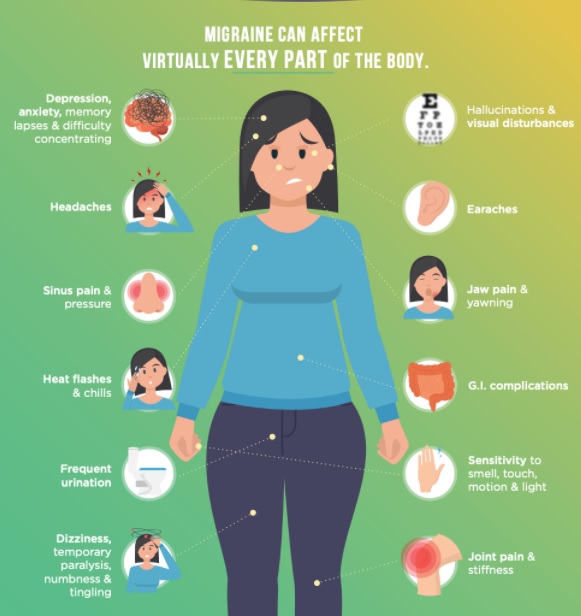
June is National Migraine and Headache Awareness Month (MHAM), which presents an opportunity to raise awareness about migraine and other headache diseases. Migraine impacts forty million people in the United States, one billion people across the globe, and is recognized as the #2 cause of disability worldwide. Currently, about 16 million people with migraine in the U.S. are undiagnosed. Approximately 400,000 Americans experience cluster headaches, recognized as one of the most painful diseases a person can have, according to the Coalition for Headache and Migraine Patients.
This year, MHAM is focused on ‘A New Era of Care’ and the impact of COVID-19 on individuals with migraine and other headache diseases.
“There is currently no cure for migraine, but we are in a renaissance of new treatments, therapies, and approaches to managing the disease,” explained Wendy Bohmfalk, Chairperson of the MHAM Committee. “If you have been struggling in silence, now is the time to speak up, educate yourself, and seek care. You might just change your life.”
A New Era of Care & COVID-19 Impact
During the pandemic there has been a significant rise in telemedicine. According to a survey by the Headache and Migraine Policy Forum and Migraine Again, 78% of migraine and headache patients used telemedicine after the start of the pandemic, in comparison to just 22% before the pandemic. This trend is ushering in a new era of care, where patients can interact with health professionals from the convenience and comfort of their homes. The survey also revealed that there has been a nearly 70% rise in the number of migraine attacks during the pandemic and 84% of people have more stress managing their disease.
On the treatment front, there are new options for patients to explore. “Migraine and headache patients now have more options due to a wave of innovation in acute and preventive care,” noted Dr. William Young, Professor of Neurology, Thomas Jefferson University and Medical Advisor for the Coalition for Headache and Migraine Patients. “These include CGRP monoclonal antibodies, gepants, lasmiditan, and several neuromodulation devices.”
Advocacy Events
“Migraine and headache diseases are invisible illnesses, but our community includes more than 40 million Americans that are standing up, fighting stigma, and demanding to be seen, treated effectively, and respected,” explained Kevin Lenaburg, Executive Director CHAMP (Coalition for Headache and Migraine Patients).
MHAM events are updated online on a regular basis and can be accessed by clicking HERE.
To learn more about the differing types of headaches, click HERE.
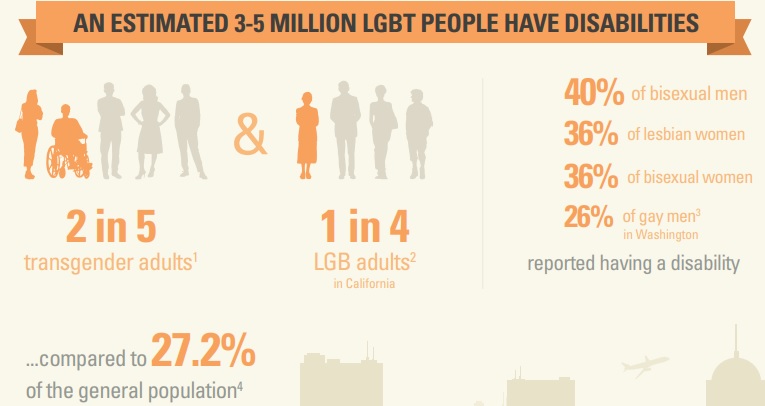
This year marks the 52nd anniversary of the 1969 Stonewall Inn riots when New York City police raided a gay club in Greenwich Village, causing protests in the days that followed. Since that historic conflict, June has been recognized as Pride Month, a time to celebrate resilience, perseverance and unity of the LGBTQ community. And this includes persons with disabilities because the disability community intersects with every other minority group – and, thus, the LGBTQ community is no exception.
The Movement Advancement Project (MAP), a nonprofit think tank that provides research, insight and communications that help speed equality and opportunity for all, recently explored alarming disability-related statistics. Their research reveals that LGBT people are more likely than the general population to have a disability and face systemic challenges finding employment, community and more. For example, MAP declares that in a survey of more than 26,000 transgender people, 39% report having a disability; and one-in-three lesbians and one-in-three bisexual women report having a disability in a population-based survey in Washington. Comparatively, these percentages are higher than the Centers for Disease Control and Prevention’s demographic breakdown that one-in-four U.S. adults (presumably the general population) – equating to 61 million Americans – have a disability that impacts major life activities.
“Across the board, people with marginalized identities are more likely to experience health challenges, which can include or result in disabilities. The reality is that discrimination takes a toll on our well-being, and this is especially true for people with multiple marginalized identities,” Naomi Goldberg, LGBTQ Policy Director at MAP, explains to AmeriDisability.
MAP’s report highlighted several unique challenges for LGBT people with disabilities, including:
Limited access to LGBT-inclusive and fully accessible services: Accessing affordable, accessible and inclusive health care, community services and more is challenging for LGBT people with disabilities; and especially so in rural communities.
Bullying and exclusion for LGBTQ youth with disabilities: LGBTQ youth with disabilities report high rates of harassment and are more likely to be bullied or harassed than students without disabilities.
Overrepresented in the juvenile and criminal justice systems: Research finds that LGBTQ and gender nonconforming youth and LGBT people are greatly overrepresented in the criminal and juvenile justice systems, as are people with disabilities and people of color.
Invisibility within both communities: LGBT people with disabilities often report that it is challenging to have their identities fully recognized.
LGBT people are more likely to experience mental health conditions that can impact daily life:Mental health conditions can potentially impact a person’s daily life to such an extent that it is a disability in the eyes of the law, medical professionals and/or the individual living with that condition.
To examine the full details of each of these six bulleted topics, please review the complete report here.
Source: MAP
With these findings and other similar reports, it’s evident that much work needs to be done to ensure that people with disabilities, including LGBT people with disabilities, have full and equal accessibility within every realm of society. Unfortunately during Pride Month, when inclusion is revered with the utmost of importance, people with disabilities are often still left out – physically and figuratively – of sexual and gender diversity. You see, per the ‘invisibility’ notation above, MAP cites that in LGBT spaces, services and facilities may not be inclusive or accessible, including having accessible buildings or restrooms, ASL interpretation and/or CART captioning for deaf or hard of hearing people, and more.
In fact, many advocates are vocalizing that the LGBTQ community isn’t totally unified within its own community. Earlier this month LGBTQIA+ race and ethnicity psychotherapist Zayna Ratty stated in a HelloGiggles article: “Discrimination within the community is also as big as it is outside; just because you’re part of a marginalized community doesn’t mean you are free from discrimination within it.” She continued, “Pride should be somewhere where everybody can feel safe. The only way forward is for people to admit there’s a problem.”
But organizers of some Pride Month events haven’t recognized this or prioritized accessibility. For instance, some gatherings failed to provide accessibility routes, adequate wheelchair spectator space, handicapped toilets and other necessary concerns. Here’s the bottom-line: The fundamental intent of Pride Month is for everyone to proudly celebrate their body, gender, sexuality and physical appearances – all the differences and similarities. Perhaps we should all work together to ensure that everyone encompasses, well, actually everyone, including LGBTQ+ individuals with disabilities.
Goldberg alludes that she’s witnessed positive steps in recent years. “There is continued visibility of LGBTQ people with disabilities within LGBTQ communities and disability communities. This visibility is critical to driving not only policy advances but also increasing understanding about the challenges LGBTQ people with disabilities experience,” she says.
LGBTQ advocates remain focused on advancing the Equality Act through the Senate, as it passed the House earlier this year, Goldberg says; adding that President Biden has said he would sign it. According to Goldberg, this bill is critically important to ensure that LGBTQ people with disabilities are explicitly protected under federal civil rights laws both as people with disabilities and as LGBTQ people in key areas of life including employment, housing, in public places, health care and beyond. MAP’s recent report, “Why We All Need the Equality Act Now,” outlines this information.
Goldberg further explains, “The Equality Act remains a key legislative priority to update our civil rights laws to explicitly prohibit discrimination based on sexual orientation and gender identity, including in federally funded programs, which many people with disabilities utilize. That said, the Biden Administration has made clear that its various agencies are investigating and enforcing federal laws that prohibit discrimination based on sex, which the U.S. Supreme Court has held are inclusive of LGBTQ people. This includes, importantly for LGBTQ people with disabilities, the Office of Civil Rights in the Department of Health and Human Services.” [See the MAP’s report on the Equality Act for more information about this.]
If you’re participating in this month’s Pride festivities, we hope you have an enjoyable and inclusive experience. And although Pride Month is about to wrap at the end of June, the effort to understand and support LGBTQ+ people with disabilities should be continuous.
This article include facts, in addition to opinions of the author.
Nancy DeVault is an award-winning writer/editor contributing to local and national publications. Her storytelling spans a wide range of topics, including charity, disability, food, health, lifestyle, parenting, relationships and travel. Married with two kiddos, Nancy describes herself as a lover of the outdoors, fitness, news, traveling and binge reading magazines while sipping coffee.
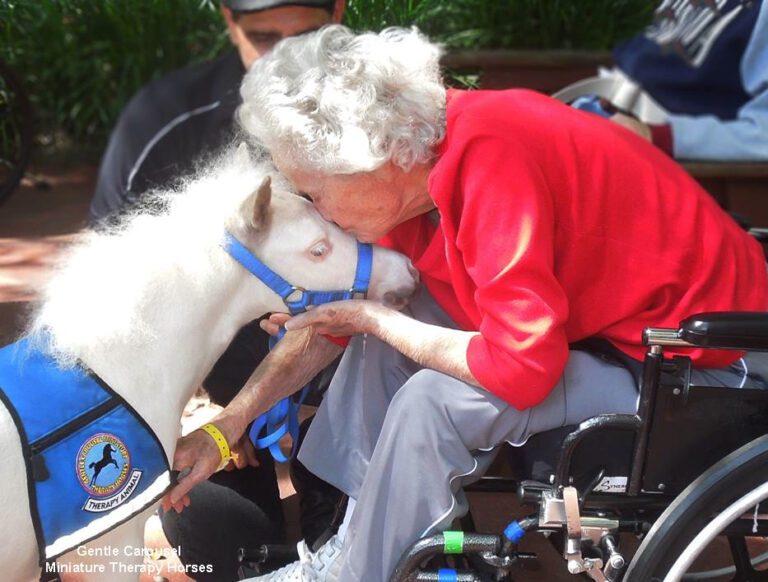
Hospital patients don’t expect to see small stallions strutting the hallways; but that’s becoming the norm thanks to Gentle Carousel Miniature Therapy Horses. This North Central Florida based organization visits 25,000 people each year at medical treatment sites, hospice centers, assisted living communities, veteran and first responder facilities and even personal homes.
Now one of the largest equine therapy programs in the world, Debbie Garcia-Bengochea co-founded Gentle Carousel in Ocala more than two decades ago. At the time, therapeutic riding options were available at area farms, but the former school principal identified an accessibility gap.
“There were (and are) a lot of people who can’t get out to the horses, so we bring the horses to them,” she explains. While maintaining a strong local presence, Gentle Carousel now has a secondary farm in Tennessee, an affiliate site in Greece and also conducts visitations nationwide. “When the elevator door opens and mini horses walk out, no one is thinking about cancer or disease for a while,” she says. But creating such memorable distractions takes hard work.
Photo: Gentle Carousel visits patients at Haven Hospital in Gainesville.
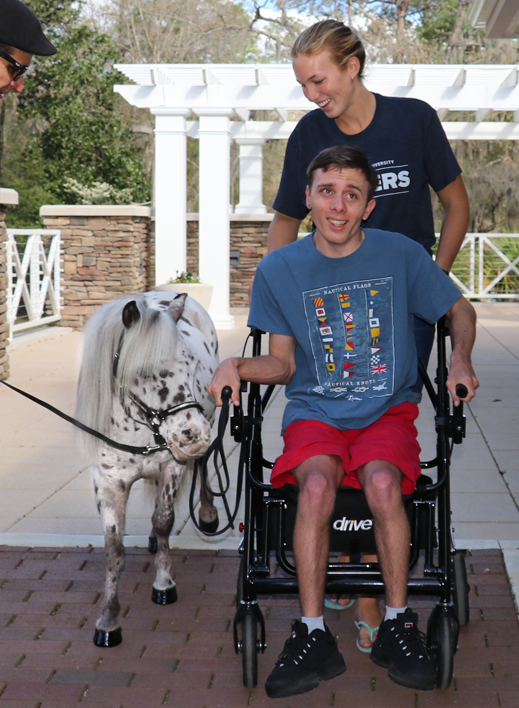
Through an intensive two-year preparation program, the tiny house-trained team learns how to navigate stairs, ride elevators, tolerate sounds (i.e. ambulance sirens, helicopters), maneuver tight spaces, interact with people with differing abilities and many more impressive tasks. The horses collaborate with doctors, therapists and other professionals to support survivors of stroke, traumatic brain and spinal cord injuries, amputations, burns and other conditions requiring physical and emotional rehabilitation.
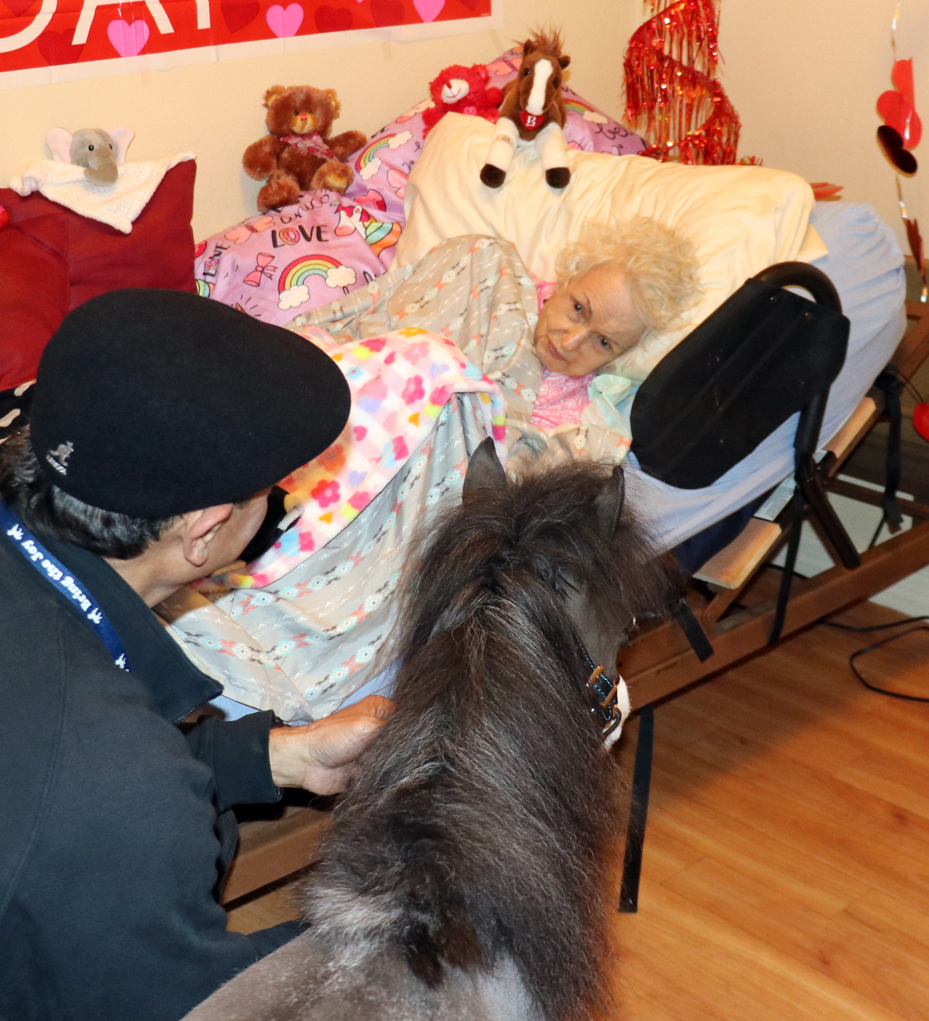
The horses have a way of easing tension in times of stress. “The horses don’t just visit people; they become a part of the treatment team,” asserts Garcia-Bengochea. For example, a person learning to walk again may feel less apprehensive when using a miniature horse as a crutch; and a patient healing from burns may not notice their pain as much when focused on combing a beautiful mane.
In other environments, the goal is purely horse play! The Ronald McDonald House Charities of North Central Florida serves as a comfortable home away from home for families with children receiving care at medical facilities. On a weekly basis for the past 15 years, Gentle Carousel’s horses have stomped through the house to the delight of residents and staff alike.
Photo: Mr. Jorge and Moonshadow visit Brookdale Chambrel Pinecastle in Marion County, Florida.
“For one moment in time, our families can think about something other than their child being in the hospital, and feel happiness and hope,” says Sherry Houston, Ronald McDonald’s executive director. “The horses are very intuitive, so they can engage with patients at their level.” Kiddos take the reins to guide horses around the butterfly garden. And playful ponies also gallop from room to room to hug those on bed rest.
These therapeutic interactions are much different than that of therapy dogs or companion animals. “A miniature horse uniquely brings joy and awe,” Houston says. A full-size horse can be intimidating, but the small statute of miniatures is welcoming for all.
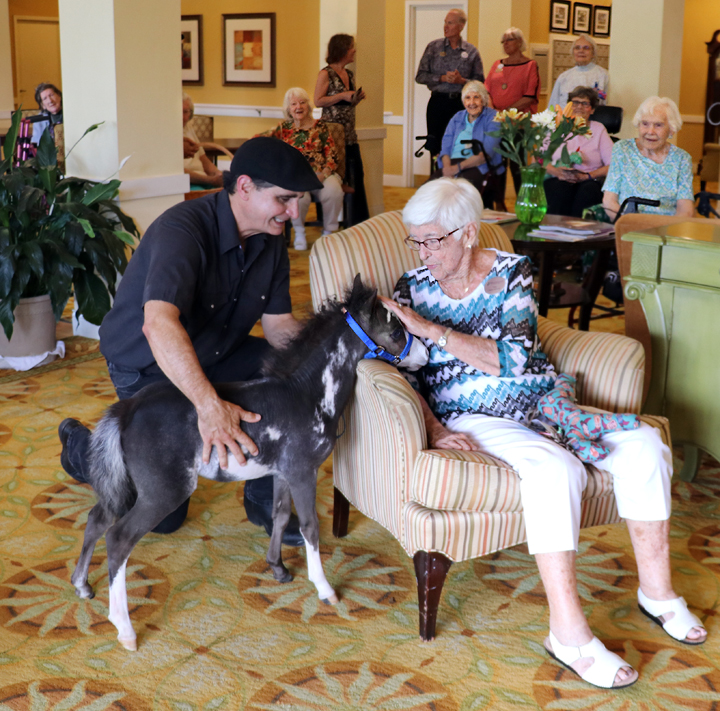
On the other end of the age spectrum, the tiny team has tall orders at assisted living facilities and senior centers. Garcia-Bengochea says horse visits are especially blissful for elders who either grew up in or worked in Ocala’s large equine community. [Ocala, Florida is known as the “Horse Capital of the World.”] Some seniors simply appreciate the wow factor of the costuming, props and music.
Photo: Gentle Carousel Miniature Therapy Horses stop by HarborChase of Villages Crossing in The Villages.
The petite squad currently includes 19 horses, most of which have striking blue eyes. Perhaps the most well-known of the herd, a horse named ‘Magic’ has proven that the blue ribbon isn’t the only equine distinction. Magic was inducted into the hall of fame of both the Florida Veterinary Medical Association and the United States Equestrian Federation/Equus Foundation. Producing a truly magical moment, Magic was the guest of honor at a tea party honoring a terminally ill 5-year-old girl. “Magic and two of equine friends arrived in their tuxedos, and the little girl’s cousins wore princess dresses,” recalls Garcia-Bengochea. “It was a chance to create a lasting happy memory for her and her family.”
Gentle Carousel also serves those affected by trauma. “The first time the [surviving] children from Sandy Hook Elementary saw each other after the shooting, Magic was there at the Newtown Public Library,” Garcia-Bengochea shares. “It was the beginning of their healing.” Gentle Carousel likewise helped after the shootings at Emanuel African Methodist Episcopal Church in Charleston, SC and Pulse Nightclub in Orlando, FL; the tornadoes in Moore, OK; the fires in Gatlinburg, TN; and child trafficking incidents in Washington, D.C.
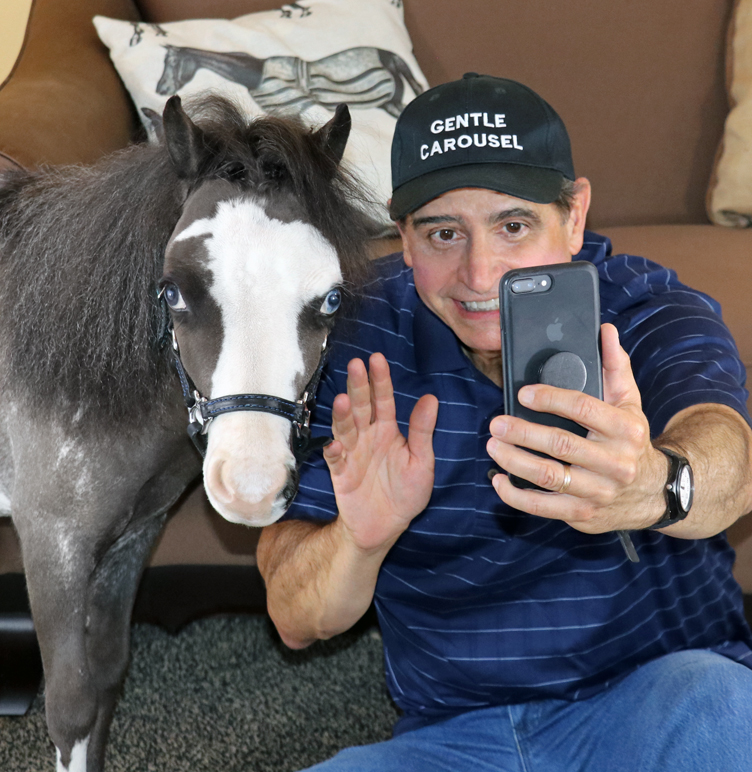
Photo: Mr. Jorge leads a FaceTime visit during coronavirus pandemic.
Additionally, Gentle Carousel is active in the community through literacy and kindness programs held at local libraries, schools and youth centers. When the coronavirus pandemic hit, however, Gentle Carousel transitioned to FaceTime chats and social media connections. More than half a million Facebook followers can watch “Story Time on the Farm with Mr. Jorge,” led by Jorge Garcia-Bengochea, co-founder and head trainer, alongside a horse. And like so many other businesses and organization well over a year into pandemic life, Gentle Carousel is working to find a new normal as coronavirus cases trend downward.
“We are doing face-to-face [encounters] and tele-visits right now, depending on the situation,” Garcia-Bengochea cautions. “The horses visited with an assisted living program in-person yesterday… but outdoors instead of indoors. Today, we are doing a reading program with the horses at a library, on the front lawn. There are many things that we learned from the tele-visits and will continue using in the future. FaceTime is fun for young patients! Everyone wants to hear ‘There is a pony on the phone for you.'”
Gentle Carousel encounters are free of charge but, because of the pandemic, the organization’s annual fundraiser was canceled. Thus, to support the mission, donors can contribute monetary gifts and/or items listed on the charity’s Amazon Wish List. For more information, visit GentleCarouselTherapyHorses.com.
All photos courtesy of Gentle Carousel Miniature Therapy Horses.
A version of this article originally ran in Natural Awakenings, a sister publication to AmeriDisability.
Nancy DeVault is an award-winning writer/editor contributing to local and national publications. Her storytelling spans a wide range of topics, including charity, disability, food, health, lifestyle, parenting, relationships and travel. Married with two kiddos, Nancy describes herself as a lover of the outdoors, fitness, news, traveling and binge reading magazines while sipping coffee.
The Braille Institute is pleased to offer more than 110 courses this spring/summer 2021 that are available for free to anyone (worldwide) who is blind or visually impaired. During the coronavirus pandemic, many of those with disabilities have felt especially isolated and have found it difficult to socialize and connect with others. Individuals who are blind or have limited vision and utilize tactile cues, such as touch, have found it particularly challenging.
“We are thrilled to offer courses in technology, cooking, art, music, exercise and even peer support groups for anyone who is visually impaired. Individuals can call-in to classes from their home using a computer, smartphone or even a traditional phone,” said Lisa Jimenez, Vice President of Programs and Services. Presently, more than 1,500 people are participating in classes and workshops remotely from all over the U.S. and even from as far away as England and Australia.
Classes and workshops are “live classes” allowing for students to speak with the instructor and socialize with fellow classmates. For certain classes, activity kits are mailed to students in advance so they can work on specific skills to keep them active and independent. Ron P., a Braille Institute student from San Diego, has been attending remote classes for more than a year. He shared, “I really enjoy the online experience. For me it has probably been as good as face to face. All the instructors have been wonderful. It has been a huge help to me especially during the pandemic.”
Class offerings range from mindful courses such as Laughing Yoga, to technology classes on helpful apps like Instacart for grocery delivery, to outside speakers discussing timely topics like COVID-19 scams. Select classes and workshops are also offered in Spanish.
This spring/summer semester runs from May 3 to August 13, 2021. Participants can join anytime throughout the semester. Call 1-800-BRAILLE (272-4553) to receive a free class catalog or visit brailleinstitute.org/classes-events for a full listing of available workshops.
Check out what Braille Institute students have to say about their online class experience:
People who are younger than 50 and who don’t fit the typical profile of those at high risk of stroke are experiencing blood blockages in the brain when they are infected with COVID-19.
The link between COVID-19 and strokes is related to inflammation caused by the virus that makes people more likely to develop potentially brain-damaging blood clots, according to Dr. Indrani Acosta, a vascular neurologist and medical director for stroke care at AdventHealth’s Central Florida Division in Orlando.
Photo: Dr. Indrani Acosta
“Right now, in clinical practice, if a patient is admitted with acute ischemic stroke and that patient has a large vessel stroke, is under the age of 50 and has no traditional risk factors for stroke, we are thinking the No. 1 cause is an active infection of COVID-19,” Acosta said on today’s AdventHealth Morning Briefing.
Acosta said the number of patients at AdventHealth’s Central Florida hospitals continued to trend down this last week of May 2021 to about 280 from 300 the previous week. The “steady decline” is the result of more people being protected by the vaccine, she said.
“Less hospitalizations usually means less deaths from the disease, so that is encouraging,” Acosta explained.
But those who have not been vaccinated and become infected continue to experience devastating consequences such as strokes, which can cause speech impairment, paralysis and other neurological deficits. Acosta emphasized the need for everyone to pay attention to their own risk factors for strokes, such as high blood pressure, high cholesterol, diabetes and smoking.
Symptoms of a stroke include:
drooping on one side of the face
weakness on one side of the body
speech impairment
vision changes
If you or a loved one are experiencing those symptoms call 9-1-1 immediately because strokes must be treated right away.
This article was published on May 27, 2021. Information about the coronavirus pandemic continues to evolve, and information may have changed by the time you read this.
With travel restrictions related to the coronavirus pandemic starting to lift, many people — with and without disabilities — want to get away and get outside. And, in an effort to encourage accessibility, Airbnb is highlighting ways to get closer to nature through their ‘Experiences’ designed by hosts with accessibility in mind and, also, places to stay with accessibility features.
Experiences
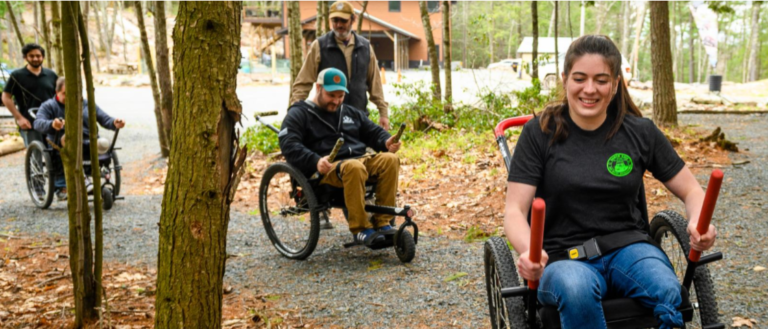
From adaptive hiking with off-road wheelchairs and therapeutic surfing designed for neurodiverse guests, to serene sound healing in Sedona, Airbnb Experiences that consider a variety of interests and needs are more readily available to book. Plus, for those who want to explore the world from home, Online Experiences like this virtual farm visit with therapy animals can transport guests.
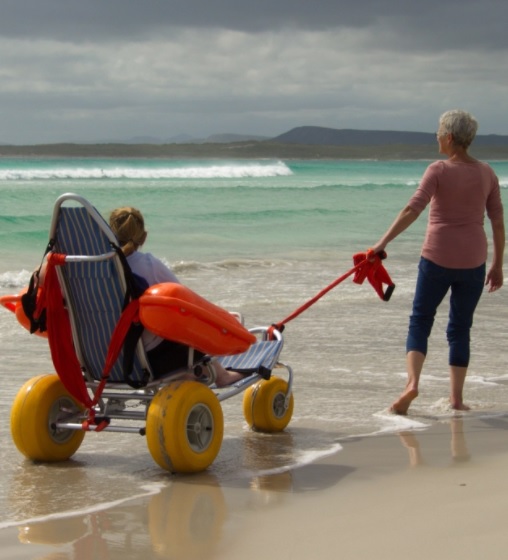
Photo: Wheelchair adventures in the Overberg
Stays
From a cabin overlooking a picturesque lake and to a luxury yurt with a deck to relax on, Airbnb has many unique rentals inclusive of an array of accessibility features.
Prioritizing Accessible Travel
To celebrate Global Accessibility Awareness Day, Airbnb partnered with No Barriers, a non-profit organization dedicated to empowering people of all backgrounds and abilities to get some of their members out and exploring the great outdoors.
“More than 90 percent of No Barriers community members say they are ready to explore the world this summer, with nearly 90 percent planning visits to natural areas and 53 percent to urban centers. Yet, people with disabilities need more accessible options when it comes to planning travel and activities. We are glad to see Airbnb is working to help fill that need and we are honored to be partnering with Airbnb to help make more accessible adventures possible for our community this summer,” said Erik Weihenmayer, co-founder of No Barriers, bestselling author and blind adventurer
“As part of our mission of belonging, we continue working to grow the number of stays and Experiences for guests with accessibility needs. With guests starting to embrace the great outdoors again, I’m delighted to highlight adventurous Experiences, from a beginner’s horseback ride designed for neurodiverse guests to an adaptive canoe excursion. As a full time wheelchair user, I’ve also been inspired by Hosts’ stylish rural homes with accessibility features,” said Suzanne Edwards, Airbnb Head of Accessibility Standards.
Photo: Explore in-person or virtual farm experiences and stays.
Are you traveling this summer? Share your pictures with AmeriDisability via Facebook, Twitter and Instagram. For more inspiration, check out more experiences and stays by AirBnB.
For more travel ideas, read more AmeriDisability articles:
Despite increased focus on the importance of mental health, many myths still exist about what mental illness is and what it looks like.
Some of the biggest misconceptions about mental health are:
1. MYTH: You’re either mentally ill or mentally healthy.
TRUTH: Just like any illness, a mental disorder can affect you in different degrees of severity.
2. MYTH: Mental illness is a sign of weakness.
TRUTH: Whether an illness is physical or mental, it is not a sign of weakness, but rather the result of genes, physical illness, injury, brain chemistry, family history and/or life experiences.
3. MYTH: You can’t prevent mental health problems.
TRUTH: Not all mental health problems are preventable, but early recognition and treatment can help diminish symptoms significantly.
4. MYTH: People with mental illness are violent.
TRUTH: Most people with mental health problems are nonviolent. Only 3% to 5% of violent acts are attributed to mental health disorders.
5. MYTH: Mental health problems last forever.
TRUTH: Although not all mental health conditions are curable, most are treatable with an array of approaches, and many people with mental health conditions recover completely.
photo credit: CDC
What is a Mental Health Disorder?
Now that we know some of what isn’t true about mental health, let’s talk about what is. A mental health disorder is a behavioral or mental pattern that causes significant distress or impairment of personal functioning. This can be persistent, relapsing and remitting, or occur as a single episode.
Mental disorders are common. In the U.S., 46 percent of the population qualifies for a mental illness at some point. The most common disorders seen in the U.S. are anxiety disorder (28.8 percent), impulse-control disorder (24.8 percent), mood disorder (20.8%) and substance use disorder (14.6%). While rates of psychological disorders are often the same for women and men, women tend to have a higher rate of depression, with 73 million women affected by major depression each year, and suicide ranked 7th as the cause of death for women aged 20 – 59.
Almost everyone has anxiety, impulsiveness or mood swings or may overindulge in alcohol occasionally. The difference lies in the degree these feelings interrupt a person’s life. To be classified as a mental disorder, the psychological syndrome or pattern is associated with distress, disability, increasing risk of death or causing a significant loss of autonomy.
photo credit: National Institute of Mental Health
What are Signs of a Mental Disorder?
The signs of mental disorder can vary, but because mental illness affects thoughts, feelings, behaviors and general interactions with the world, it can cause life to spiral out of control.
Some symptoms to look for include:
A drastic change to the sense of self; a fundamental change in a person’s identity.
Psychosomatic troubles, which are physical symptoms caused by mental conflict and stress, such as difficulty concentrating and learning. A person may feel disoriented, have mental fogginess, increased anger and irritability.
Changes in eating and sleeping patterns.
Avoiding activities that used to bring joy. A person may shut down and withdraw from society and life in general, and focus on negative feelings.
Suicidal feelings and thoughts can occur when a person has difficulty coping with problems in a healthy way and can’t see a healthy resolution. (Comments about not going on with life or that the world would be better off without them or giving away favorite personal belongings are red flags that help is needed.)
Substance abuse
photo credit: Harvard University
When to Get Help
If you or someone you know is experiencing the symptoms above, or the ones listed below, it is important to get help.
Experiencing severe mood swings that cause problems in relationships.
Having persistent thoughts and memories you can’t get out of your head.
Feeling unusually confused, forgetful, on edge, angry, worried or scared.
Feeling helpless or hopeless.
Having low or no energy.
Having unexplained aches and pains.
Yelling or fighting with family and friends.
Hearing voices or believing things that are not true.
Thinking of harming yourself or others.
Inability to perform daily tasks like taking care of your children or getting to work or school.
How to Help a Friend or Family Member
Expressing your concern to a friend or family member who seems to be having a difficult time can be tricky and, because of that, we often don’t say anything. But it is important to make this connection, so instead of avoiding the awkwardness, try leading with these tips and make sure to actively listen to your friend’s or family member’s response.
Consider starting with “I’ve been worried about you. Can we talk about what you’re experiencing? If not, who are you comfortable talking to?”
Communicate in a straightforward manner and speak at a level appropriate to the person’s age and developmental level.
Discuss the topic when and where the person feels safe and comfortable. Ask them who or what has helped you deal with similar issues in the past? Ask how you can help them find help?
In addition to this conversation, continue including your friend or family member in your plans so they don’t feel isolated.
Educate other people so they understand the truth about mental health problems and do not discriminate. Most importantly, treat people with mental health problems with compassion and empathy.
photo credit: AARP
Mental Health Resources
If you or someone you know has a mental health problem, get immediate help by talking with your primary care physician. If the situation is potentially life-threatening, get emergency assistance by calling 9-1-1. For more help, call the National Suicide Prevention Lifeline at (800) 273-8255 or chat online at SuicidePreventionLifeline.org.
The Substance Abuse and Mental Health Services Administration provides the SAMHSA Treatment Referral Helpline via (877) 726-4727, and has resources available Monday – Friday, 8 am – 8 pm EST.