Runway of Dreams, a nonprofit organization working towards a future of inclusion, acceptance, and opportunity in the fashion industry for people with disabilities, hosted A Fashion Revolution in mid-March 2022 with a record-breaking attendance event that spotlighted the latest in adaptive fashion. Hosted by award-winning actor Jamie Chung, the event took place at The Majestic Downtown, Los Angeles.
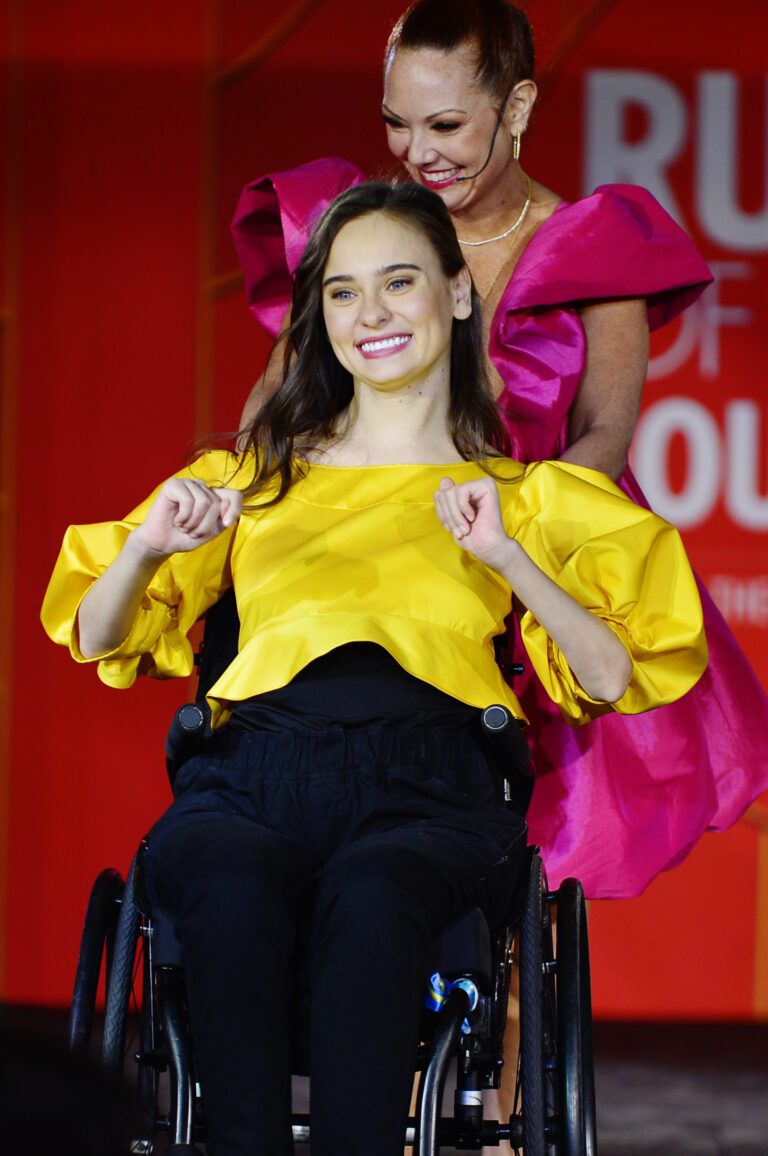
LOS ANGELES, CALIFORNIA – MARCH 08: A model, Justin Bishop, is seen onstage during A Fashion Revolution by Runway of Dreams at The Majestic Downtown on March 08, 2022 in Los Angeles, California. (Photo by Jerod Harris/Getty Images)
Founder and CEO of Runway of Dreams, Mindy Scheier, spoke about the momentous night and the growing movement in adaptive fashion. She said, “We are thrilled to have a record-breaking crowd and our largest event yet. This shows the power of adaptive fashion, and inclusion. We are changing the fashion industry.”
More than 70 models with varying disabilities and differences, ethnicities, ages, and backgrounds rocked the runway.
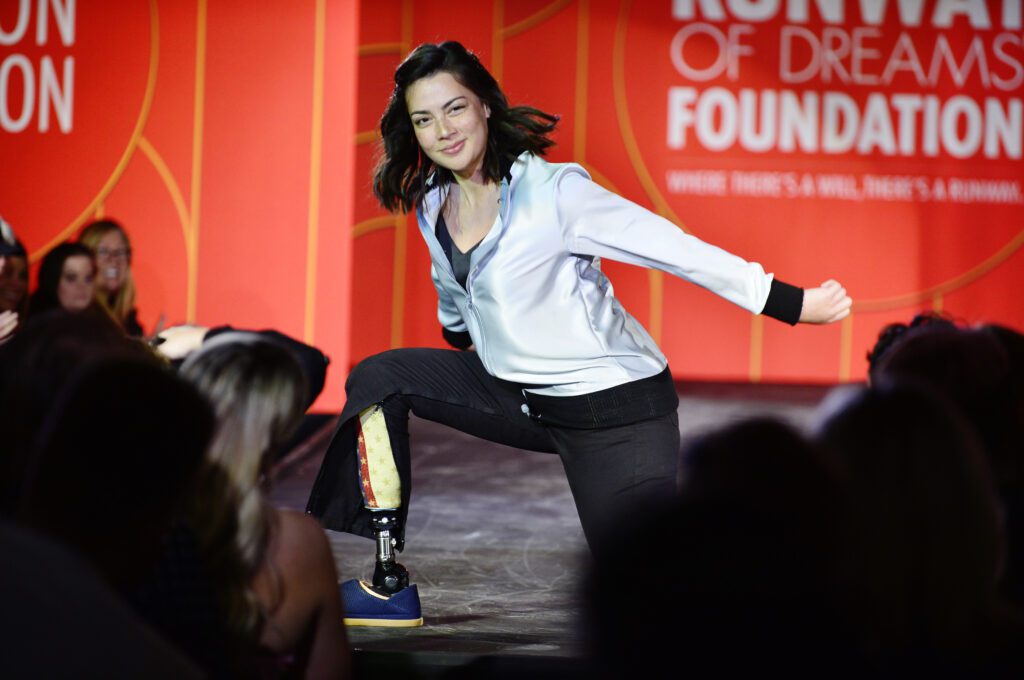
LOS ANGELES, CALIFORNIA – MARCH 08: A model, Annika Hutsler, is seen onstage during A Fashion Revolution by Runway of Dreams at The Majestic Downtown on March 08, 2022 in Los Angeles, California. (Photo by Jerod Harris/Getty Images)
The Runway of Dreams: A Fashion Revolution focused on fashion and function, spotlighting both mainstream and up-and-coming brands’ adaptive fashion designs from Presenting Sponsors: Kohl’s, Target, Zappos.com, JCPenney, Tommy Hilfiger Adaptive, Stride Rite, No Limbits, Wyatt Wear, Minor Details, and befree. LVMH was a platinum sponsor.
A highlight of the evening was Ukrainian model, Oksana Kononets, who took the harrowing and dangerous journey with her mother from their home in Lviv, Ukraine through Poland, and then to Los Angeles. She arrived just two days prior to the Runway of Dreams event. “It was important to me to be here, because people with disabilities want to love what we wear just like everyone else,” she said.
LOS ANGELES, CALIFORNIA – MARCH 08: Liv Stone attends A Fashion Revolution by Runway of Dreams at The Majestic Downtown on March 08, 2022 in Los Angeles, California. (Photo by Jerod Harris/Getty Images)
The red carpet buzzed with stars, influencers, fashion executives, and designers in celebration of the industry’s commitment to adaptive fashion and footwear. Gamut Management’s models were featured throughout the show. Notable red-carpet attendees included: Charlie Rocket and the Dream Team (influencer), Jennifer Stehlin (actor), Ben Giroux (actor), Alina Starr Morse (entrepreneur), Conner Lundius (The Rollettes), Abimbola Bim Fernandez(Nigerian Princess), Pride House LA (TikTok stars), Kelsi Davies (actress/creator), and Brooklynne Webb (influencer).
You can watch the show again via the Runway of Dreams YouTube page.
[Feature image: Runway of Dreams 3/8/22 Mindy Scheier, Founder and CEO of Runway of Dreams and Oksana Kononets]
Throughout his career, Rod Stephenson, 73, of Savannah, Georgia, wore many hats. He worked in television broadcasting, the retail pizza industry, in manufacturing and quality assurance; and, most recently, he was ordained as a pastor. But after Stephenson decided to retire from his eventful and successful career, his wife Deb started to notice some changes.
For their family, the turning point was a simple one – a conversation about a family vacation they had taken the previous summer. Rod could not recall the trip.
“I felt like I had holes in my memory,” Rod said. “My wife, Deb, made a reference to a family vacation from the previous summer, but I could not recall the trip. I looked through photos and recognized people in the photos, but I had no recollection of being there.”
In addition to memory issues, Rod became less aware of his surroundings and often had the sensation of being lost. During his career, which took him to five states, Rod was always able to navigate his surroundings with ease, but that was starting to change.
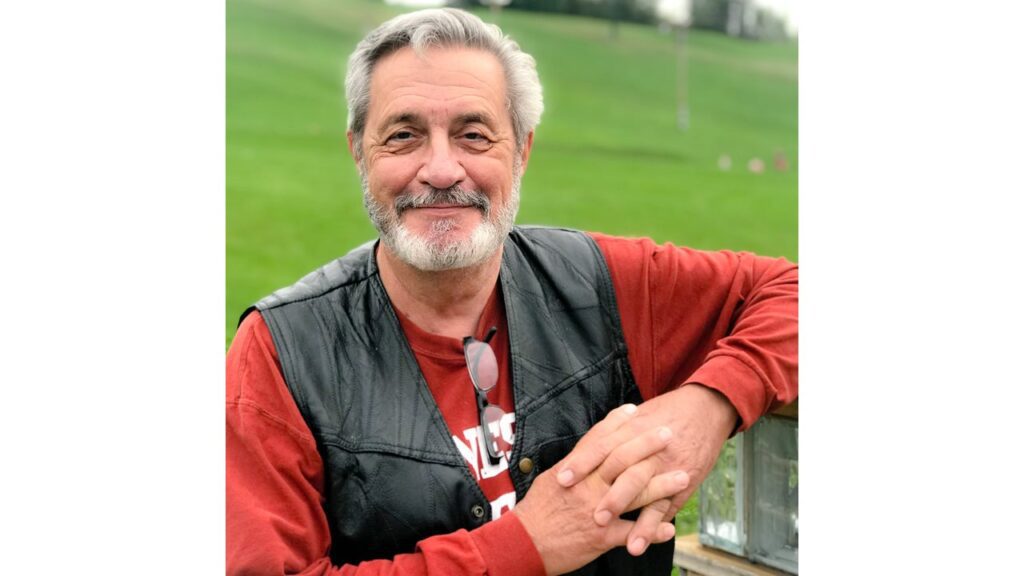
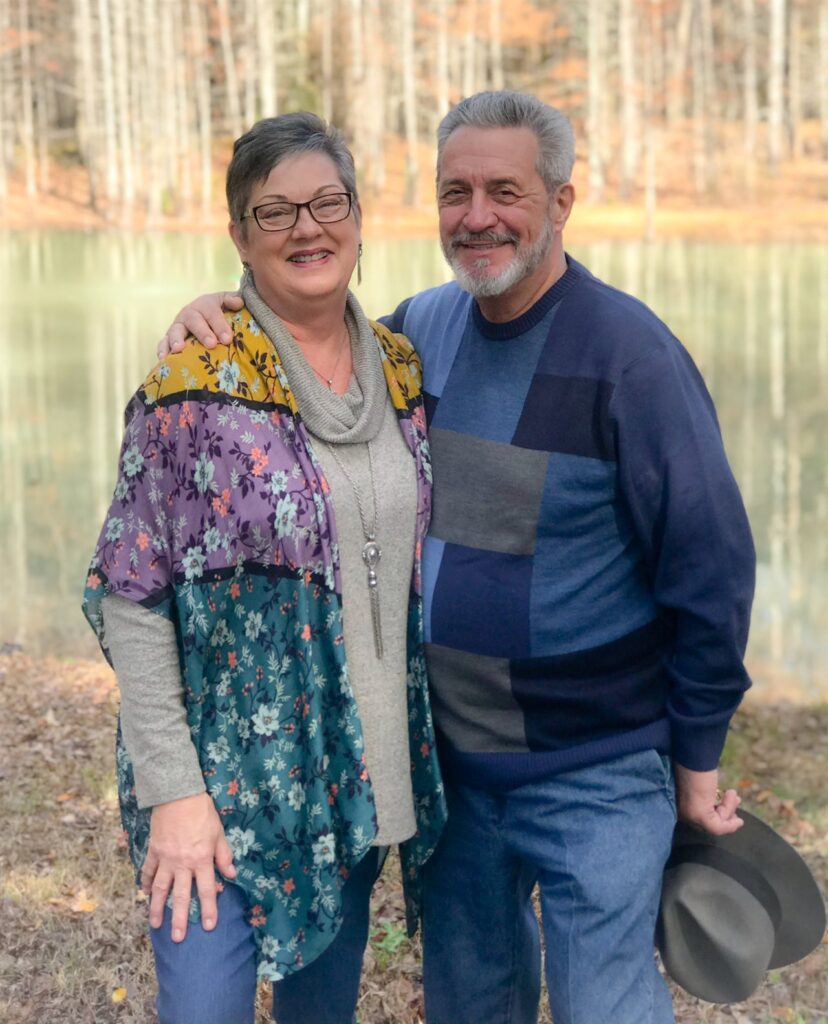
Rod Stephenson
“If I had been anywhere once, I could return without directions, maps or GPS,” he recalled. “But I was becoming more confused and found myself getting lost easily.”
Deb then took an often overlooked, but all too important first step. She immediately expressed her concerns about the changes she was seeing to Rod himself. A new Alzheimer’s Association/Ad Council omnibus survey finds that only 44% of Americans would talk to a loved one right away about seeing a doctor if they noticed signs of cognitive decline.
Together, Deb and Rod decided he should get a cognitive evaluation. Initially, doctors told Rod the changes were most likely age-related. Not satisfied with this answer, Rod eventually visited a local neurologist for more cognitive testing. He was diagnosed initially with early-stage Alzheimer’s, but the diagnosis was later changed to mild cognitive impairment (MCI), a common precursor to Alzheimer’s.
The Stephenson couple struggled with this diagnosis and realized they needed help. They connected with the Alzheimer’s Association 24-7 Helpline and his local Georgia Alzheimer’s Association, which provided disease information as well as care and support resources available through their state.
“Calling the Helpline was the best thing I could have done,” Rod said. “It not only provided us with important information, but it connected us with other individuals and families who share our journey and understand the range of emotions and challenges accompanying the disease. We have met some delightful people who have become friends.”
Deb and Rod Stephenson
Today, Rod is focusing on taking the lessons he has learned since his diagnosis to offer help to individuals and families impacted by Alzheimer’s and other dementias. He feels grateful for the support of his wife Deb for starting the conversation with him that she was seeing changes. That conversation, together with her continued support, has made his early Alzheimer’s diagnosis easier to manage.
“Isolation is a huge problem in our community,” he says. “People experience stigma, so they are afraid to share what’s going on with them and to get the help they need. I am fortunate to have the blessing of support from my family, but others feel so alone.”
To learn more about how to facilitate these difficult conversations, visit the “Hopeful Together” campaign website. The website offers tools and resources to help families recognize early warning signs of Alzheimer’s, tips for facilitating conversations about cognition, benefits of early detection and diagnosis, a discussion guide for use with doctors and health providers and other disease-related information.
Early detection can have significant benefits, including eliminating uncertainty, giving diagnosed individuals a voice in their future care and providing individuals and families an opportunity to find support groups. Early detection is the first step towards creating a plan of action.
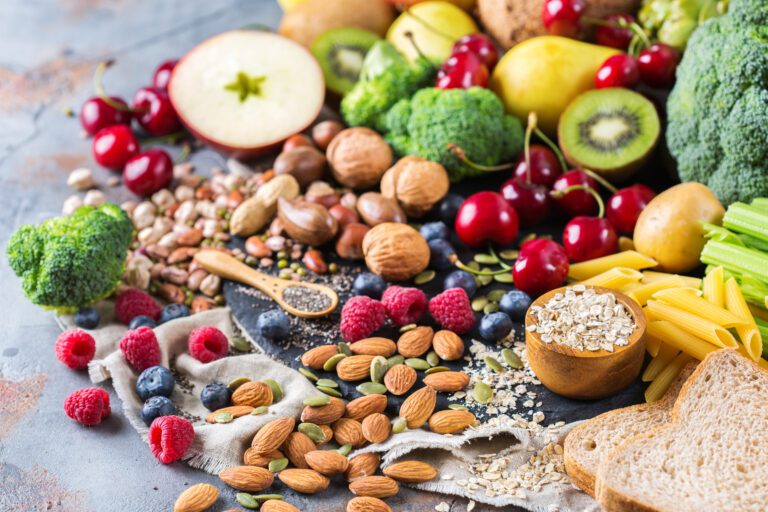
Nutrient-rich superfoods are considered to be particularly beneficial to enhance health and wellbeing. Plant-based eats dominate the subjective list of edible powerhouses and, according to the American Heart Association—in addition to essential vitamins and minerals —fruits, vegetables, nuts and seeds provide phytochemicals, compounds found in plants that fight illness and disease.
Superfoods are highly effective but not exactly a quick fix. They should consistently be incorporated into a healthy routine of well-balanced nutrition and exercise. Those who integrate superfoods and healthy nourishment on a regular basis may lower risk of diabetes, high cholesterol and hypertension.
While superfoods may be beneficial for all, superfood consumption may be especially important for people with disabilities, chronic conditions and certain health ailments. That’s because statistics show that people with disabilities are less likely to be of healthy weight and more likely to be obese than people without disabilities. Plus, heart disease, which is greatly impacted by food choices, is the leading cause of death in the United States and a leading cause of disability.
photo: shutterstock
Chew on These Superfoods
If you’ve conquered leafy greens and are ready to expand your superfood menu with interesting additions, check out these lesser-known superfoods:
Açai berries are richer in antioxidants than commonly eaten berries. This small tart fruit bursts big anti-cancer and anti-inflammatory activity, and aids against arthritis, weight gain, high cholesterol and erectile dysfunction.
Adzuki beans can be used in both savory and sweet dishes. This fiber-dense ingredient is known for stimulating the digestive tract and regulating insulin receptors for diabetes prevention. Also try mung beans.
Almond flour is a gluten-free alternative with vitamin E to support immune function. Compared to other nuts, almonds provide the most calcium and are valuable for both bone and cardiovascular health.
Aloe juice extracted from the aloe plant can help treat psoriasis and other skin ailments, as well as constipation and diabetes.
Birch water is a rehydrator full of electrolytes and potassium. It has xylitol, a natural sugar alcohol that fights tooth decay. Sip on maple or bamboo water too.
Bone broth is loaded with collagen and gelatin, ideal for gut, hair, nail and joint support. Plus, it works as a detox elixir.
Broccoli sprouts contain up to 100 times higher levels of sulforaphane − a cancer reducing component − than the mature cruciferous vegetable. Bonus: Sprout form is easier to digest!
Camu powder is a supplement derived from a berry containing 60 times more vitamin C than an orange. It can help maintain the health of gums and eyes, and aid with viral infections, like cold sores and the common cold.
Ezekiel bread contains high-quality protein (comprised of sprouted grains and legumes), fiber and vitamins B & C. Sprouted grains can lower the risk of high blood pressure and heart disease, and help protect against liver disease.
Farro is a nutty-flavored ancient grain with twice the fiber and protein content of wheat, and more calcium than quinoa. It helps to fuels brain function, energy and metabolism.
Hemp seeds offer essential fatty acids (omega-3 & omega-6) to promote cardiovascular health and balance PMS and menopause hormones.
Kefir is a milky drink with more probiotics than yogurt to influence digestion, weight and mental health. Its calcium and vitamin K content lowers the risk of osteoporosis and suppresses allergies and asthma.
Kimchi is fermented Korean spiced cabbage. Its antioxidants can help slow aging and may treat dermatitis, yeast infections and gastrointestinal issues.
photo: shutterstock
Serve Up a Superfood Menu
Consider a superfood diet centered on three macronutrients − protein, healthy fat and complex carbohydrates – which are the main components needed for the body. Here is a sample superfood menu:
Breakfast: Ezekiel bread topped with mashed avocado and chopped hard-boiled egg
Lunch: Farro with sprouts, collard greens, walnuts and cilantro; drizzled with avocado + EVOO purée
Dinner: Wild-caught salmon, kimchi, adzuki beans and spinach
Post-Workout Snack: Icelandic yogurt, birch water, almonds and berries
Superfood Champ or Chump?
Black pudding, Scotland’s hearty breakfast staple, may be an ideal protein, according to bodybuilding authorities, because it contains iron, zinc and vitamins B12 & D to impact calcium absorption, blood cells and the immune system. Conversely, other health experts suggest a leaner morning meal like amaranth, a protein-packed supergrain. So, because everyone is different, it’s always wise to consult your doctor before beginning any kind of health regimen.
For more food-based content like this, please read:
March is Chronic Fatigue Syndrome Awareness Month.
Myalgic encephalomyelitis/chronic fatigue syndrome (ME/CFS) is a disabling and complex illness.
According to the Centers for Disease Control and Prevention (CDC), people with ME/CFS are often not able to do their usual activities. At times, ME/CFS may confine them to bed. People with ME/CFS have overwhelming fatigue that is not improved by rest. ME/CFS may get worse after any activity, whether it’s physical or mental. This symptom is known as post-exertional malaise (PEM). Other symptoms can include problems with sleep, thinking and concentrating, pain, and dizziness.
One Patient’s ME/CFS Journey
The following is Andrew’s story about myalgic encephalomyelitis/chronic fatigue syndrome (ME/CFS), courtesy of the CDC.
“I am a physician and had not heard of ME/CFS before I got it. I can’t tell you the specific day in August 1986 but many people with abrupt onset can. I didn’t know what hit me – it was awful. It was like a severe flu. In addition, I could not tolerate loud sounds, bright lights, and my large leg muscles felt like jelly. I had no energy, no stability, and started to have sleep problems.
The symptoms did not go away after a few weeks so I went to an internist who I did not know. He sent me to a “shrink.” I saw a few internists and one psychiatrist who all said I was anxious and depressed. I felt demeaned by the doctors I saw.
photo credit: Orlando Health
After about a year of my symptoms during which I had to reduce my practice, a friend recommended a clinician at a medical school in Massachusetts who was familiar with ME/CFS. That is when I received my diagnosis. Just knowing that I had something that was recognizable and that other people had the same thing was a relief. After about 6 months from receiving the diagnosis, I began to feel better and my brain began to function better.
During this time I was still in medical practice seeing patients. I learned that I had to cut down on my practice hours in order to manage my own illness better and I never again was able to practice full time. I learned that post-exertional malaise (PEM) required me to pace myself. I would see patients for 3 hours in the morning and then rest, and see patients again for 3 hours in the afternoon.
What do I want people to know about this illness? I think there is a spectrum of ME/CFS. I have read that some people (25%) have a very severe form and are bed-bound or house-bound, but more people (75%) may have a mild to moderate form of it. Some of us with a less severe form of ME/CFS can still work and participate in selected activities. One needs to learn to live with ME/CFS. Pacing is essential – you have to take stock of yourself and recognize patterns. You have to see what makes things worse and what helps.
photo credit: shutterstock
I am lucky because my family was mostly supportive but some friends and colleagues were skeptical. Some people wanted more proof. I feel badly for the people who do not have family support and it is ridiculous that people with ME/CFS are thought to be crazy.
Those of us that have had ME/CFS for a long time remember that the attitude among healthcare providers used to be belittling and ignorant. Thankfully, the attitude is shifting a bit but we still have much work to do. I would tell healthcare providers that making a diagnosis is not difficult. A proper medical history is very important but it takes time. It is impossible to make a diagnosis in just 15 or 30 minutes. Most important is to look at the level of function before and after the illness began.”
[Disclaimer: The opinions and conclusions stated above are those of the patients and other contributors, and do not necessarily represent the official position of the Centers for Disease Control and Prevention (CDC), which originally published this content. The names of some contributors have been changed to protect their privacy.]
More About ME/CFS
While people with ME/CFS may not look ill, the following may apply:
People with ME/CFS are not able to function the same way they did before they became ill.
ME/CFS changes people’s ability to do daily tasks, like taking a shower or preparing a meal.
ME/CFS often makes it hard to keep a job, go to school, and take part in family and social life.
ME/CFS can last for years and sometimes leads to serious disability.
At least one in four ME/CFS patients is bed- or house-bound for long periods during their illness.
photo credit: shutterstock
Anyone can get ME/CFS. While most common in people between 40 and 60 years old, the illness affects children, adolescents, and adults of all ages. Among adults, women are affected more often than men. White people are diagnosed more than other races and ethnicities. But many people with ME/CFS have not been diagnosed, especially among minorities.
As noted in the Institute of Medicine report:
An estimated 836,000 to 2.5 million Americans suffer from ME/CFS.
About 90 percent of people with ME/CFS have not been diagnosed.
ME/CFS costs the U.S. economy about $17 to $24 billion annually in medical bills and lost incomes.
Some of the reasons that people with ME/CFS have not been diagnosed include limited access to healthcare and a lack of education about ME/CFS among healthcare providers.
Most medical schools in the United States do not have ME/CFS as part of their physician training.
The illness is often misunderstood and might not be taken seriously by some healthcare providers.
More education for doctors and nurses is urgently needed so they are prepared to provide timely diagnosis and appropriate care for patients.
Researchers have not yet found what causes ME/CFS, and there are no specific laboratory tests to diagnose ME/CFS directly. Therefore, doctors need to consider the diagnosis of ME/CFS based on in-depth evaluation of a person’s symptoms and medical history. It is also important that doctors diagnose and treat any other conditions that can cause similar symptoms. Even though there is no cure for ME/CFS, some symptoms can be treated or managed.
Alport Syndrome Foundation (ASF) has partnered with the National Kidney Foundation (NKF) to create a new registry for Alport patients: NKF Patient Network – Alport Syndrome.
What is the NKF Patient Network – Alport Syndrome?
Over the last several years, NKF has been investing in and building a platform to create the United States’ first-ever interactive kidney disease patient registry. The overall registry is called the NKF Patient Network, which launched in 2021. This national patient registry is intended for all kinds of kidney patients at all stages of kidney disease. The partnership has led to the development of the NKF Patient Network – Alport Syndrome, which is part of the overall NKF Patient Network. The NKF Patient Network – Alport Syndrome will capture data that’s specifically relevant to Alport syndrome, including currently understudied aspects of the disease and quality of life information.
The NKF Patient Network – Alport Syndrome will offer a secure portal for U.S. patients ages 18+ to contribute their health information and experiences, join a community of other patients dealing with kidney disease, and find out about the latest clinical trials, treatments, education, and tips for good health. Patients can choose to manually enter information or link it, with permission, to an electronic health record (EHR). Digital files, such as genetic testing results and audiograms, can also be directly uploaded to the platform. The NKF Patient Network – Alport Syndrome will provide a community platform for patients to manage this disease while also gathering comprehensive data for scientists working on cutting-edge treatments and maybe even a cure.
credit: Alport Syndrome Foundation
The architecture of the registry platform also has the capacity to grow to become an international registry, which is the goal of both NKF and ASF. This is particularly important because Alport Syndrome Foundation has patient members from 70+ countries, has built relationships with Alport researchers globally, and several current clinical trials include clinical trial sites and Alport patients in countries outside the U.S.
Fast Facts about Alport syndrome
1. There are tens of thousands of people all over the world living satisfying, productive lives with Alport syndrome. While it’s estimated that less than 200,000 people in the U.S. have Alport syndrome, recent research suggests it’s likely that more people have the condition than previously thought.
2. Alport syndrome causes a decline in kidney function and can cause hearing loss and
eye abnormalities. While rare, some patients may experience diffuse leiomyomatosis,
which causes noncancerous tumors found in smooth muscle tissue, including the
esophagus. There are also clinical reports and increasing patient reports of instances of
aortic and abdominal aneurysms in Alport families, especially in those with a history of cardiac complications.
3. Alport syndrome is caused by genetic mutations that affect the type IV collagen found in
the kidneys, ears, and eyes. It is passed down genetically in families and sometimes
occurs spontaneously, meaning you might be the first in your family to have it. The three
commonly studied types of Alport syndrome are X-linked (the most documented),
autosomal recessive, and autosomal dominant.
photo: CDC
4. Both males and females are affected by Alport syndrome. While many females may
initially have milder symptoms and experience a later onset of disease progression, it is
not accurate to think of them as genetic “carriers.” Seeing a nephrologist regularly and
following recommended treatment guidelines for Alport syndrome patients is important for
both females and males.
5. The current standard of treatment is ACE/ARB medications, which research shows can
delay decline of renal function. These medications are prescribed to Alport patients as
young as 12 to 24 months of age to slow the spilling of protein from the kidneys, which
causes scarring and a decline in kidney function. Although this class of medications is
widely used to treat high blood pressure, they are recommended as standard treatment for
Alport syndrome whether patients have high blood pressure or not.
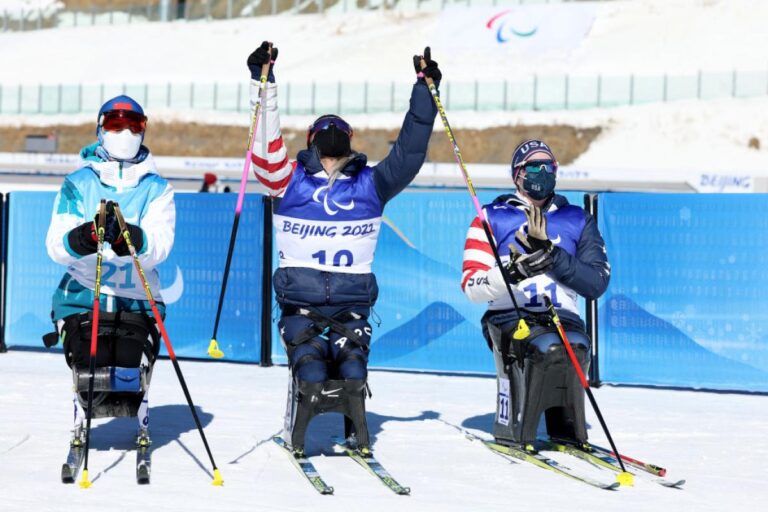
Oksana Masters started her Beijing 2022 Paralympic Winter Games campaign on a high with victory in the women’s Biathlon Sitting sprint. She immediately dedicated her success to the people of Ukraine and Team USA.
“I owe a lot to my mom and then it is for Team Ukraine and Ukrainian people. It is as much for Team USA as is for Ukraine. I’m so proud to be Ukrainian, to be American and represent both and that’s the power of sports that you can represent so much more than just one thing,” said a thrilled 32-year-old, who finished the 6km course in 20 minutes and 51.2 seconds with a 100 percent accuracy in two prone shootings.
With her fifth career gold, Masters also swelled her medal tally to 11 overall between Summer and Winter Games. Masters and her fellow American Kendall Gretsch were split on the podium by China’s 20-year-old Shah Yilin. While it was the first-ever Paralympic medal in the event for China, all through defending champion Gretsch skied faster than Yilin, she missed one shot and suffered a one-minute penalty.
Masters, who may take part in up to seven races over nine days of medal competition in the ongoing Games, had never won the title in Biathlon and hence the victory was all the more special.
“Yes, my first Biathlon gold medal and I never thought I will ever, ever achieve this and hence it is so special. This was my third time around, I played in Sochi and I played PyeongChang and to finally get it in Beijing was special. To share that podium, I think from day one is great, incredible things are coming for U.S.,” said Masters, adding that, the “monkey” is definitely off her back but she wants to go ahead and make sure that this success was no fluke.
“As far as Biathlon is concerned, I just want to shoot well again. It is doesn’t matter about the result but I would like to know that this wasn’t an accident and I can do it again. I’m just so excited,” said Masters, who went on to reveal that her confidence wasn’t that high coming into this event and a lot of that had to do with the way she shot at the Worlds in Lillehammer, Norway.
“My shooting was not good at Lillehammer and I was so nervous coming here because Biathlon is all about confidence in shooting and I think I miss more than I hit. My coaches told me to trust and take the good shot and not think about it. I think that’s exactly what I need to do,” revealed Masters, who was also feeling for the fellow competitors from Russia and Belarus who were forced to withdraw just before the Games due to the ongoing conflict between Russia Ukraine.
“It is sad and my heart goes out for the Russian and Belarusian athletes. Honestly, I was at the dining hall and one of them came and hugged me and was crying because they wanted to compete,” she said.
“I wish that we are living in a world where every single athlete from every country could represent every part of the world. Come together and brace each other together and participate not against each other but with each other. I wish they were here and I hope for peace really really soon. I can’t wait to race with the Russian athletes and the Belarusian athletes,” she said.
The International Paralympic Committee (IPC) announced (on March 8, 2022) the three outstanding winners of the 2022 International Women’s Day Recognition Awards.
Zimbabwe’s coach Oripa Mubika (Leadership), Singapore’s Paralympic champion Yip Pin Xiu (Emerging Leadership), and Paralympics New Zealand (National Paralympic Committee and International Federation) have each received the 2022 International Women’s Day Award.
The awards primarily recognize women in the paralympic movement who inspire and emulate the paralympic ideals and serve as positive role models, with the winners being decided by the IPC’s Women in Sport Committee, which is chaired by Rita van Driel.
“I want to congratulate the winners on their well-deserved recognition and on opening up new opportunities for women across the whole paralympic spectrum; you are an inspiration to us all,” said van Driel.
“We had so many strong applications from across the world, which is testament of the increase in number of women leading our movement, and I want to thank everyone who entered,” she said.
“It is very important for the IPC Women in Sport Committee to have strong female representation in leadership positions across the paralympic movement to get more women involved and, therefore, make it more diverse and inclusive,” she said.
LEADERSHIP
This category recognizes sustained and consistent leadership over a period of time, advocacy, overall contributions and impact promoting and supporting women in sport. Candidates considered included coaches, current or former athletes, administrators and officials.
Oripa Mubika – Zimbabwe
Oripa Mubika was one of the few female para sport coaches in Zimbabwe before the country joined the IPC. As NPC Zimbabwe Secretary General, she has facilitated the introduction of sitting volleyball in 2016, increased female representation on the board to 50 percent, and ensured that at the Tokyo 2020 Paralympic Games, NPC Zimbabwe had its first female coach.
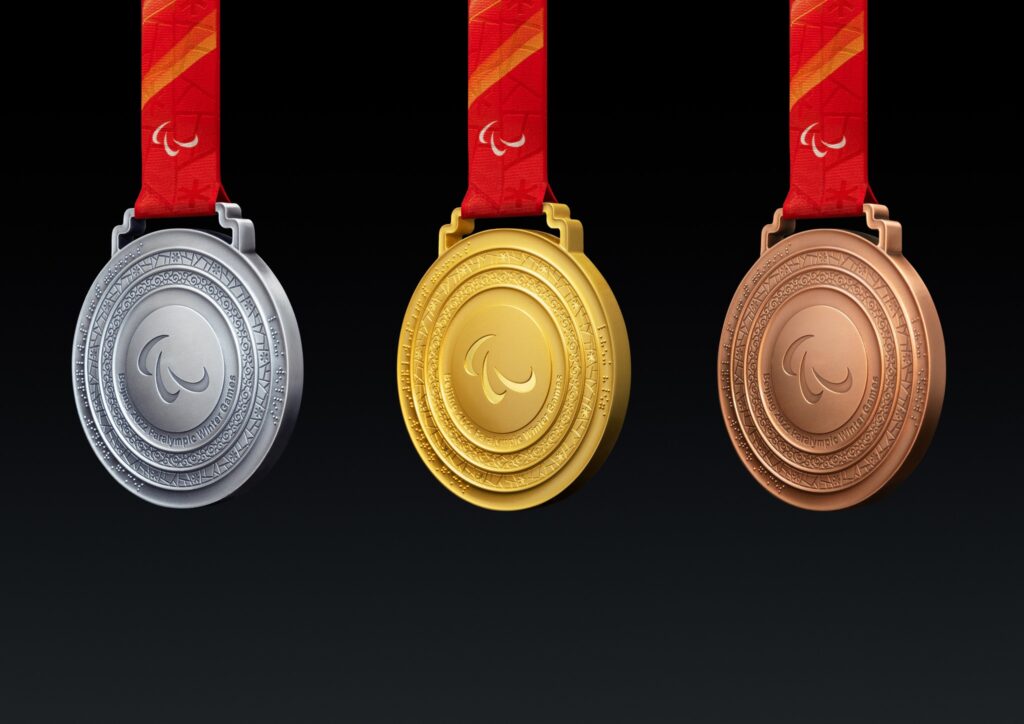
Paralympics medals. Credit: Paralympic Games
EMERGING LEADERSHIP
This category recognizes early-stage career leadership, advocacy, overall contributions and impact promoting and supporting women in sport. Candidates considered included coaches, current and former athletes, administrators and elected officials.
Yip Pin Xiu – Singapore
A multi-gold medalist across three paralympics, Pin Xiu has led an era of change for Singapore. An outspoken advocate, Pin Xiu was the first para athlete elected as a Nominated Member of Parliament and has challenged the government to cultivate inclusive national sport associations. Recognizing her impact on pushing forward the inclusion agenda, in 2021 she was the first recipient of a new national award, the President’s Award for Inspiring Achievement.
NPC/IF
This category recognizes the leadership, impact and effective change initiated by National Paralympic Committees (NPCs) and International Federations (IFs) who promote and support equality and inclusion of women in sport.
Paralympics New Zealand
It is clear Paralympics New Zealand is an equal opportunities employer: their Chief Executive and Board Chair are both female; 57 percent of their Board and 82% of their staff, 80 percent of their senior leadership team and 82 percent of their classifiers are female also. Their Chef and Deputy Chef de Mission for the New Zealand Paralympic Teams for Tokyo 2020 and Beijing 2022 are all female, while 88% of the 12 medals won at the Tokyo 2020 were won by women.
Chief Executive Fiona Allan was delighted that the award recognized Paralympics New Zealand’s (PNZ) commitment to gaining equality for women in Paralympic sport.
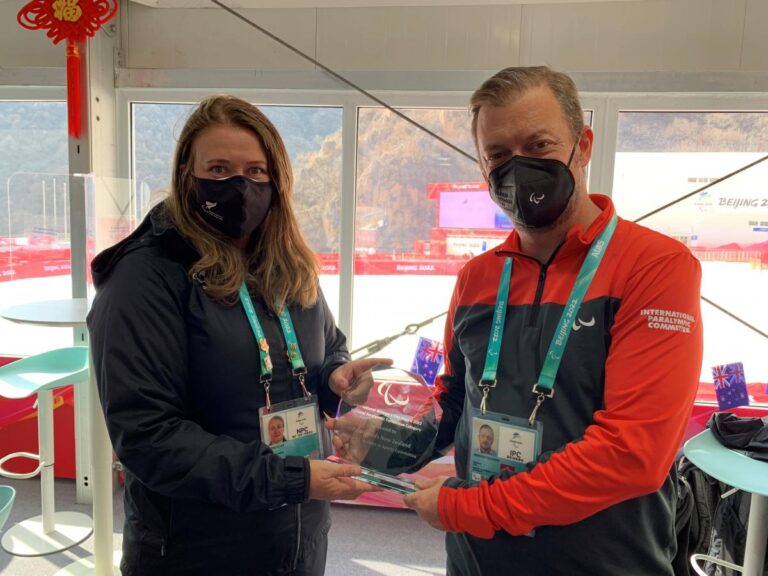
“On behalf of PNZ I am incredibly proud that our organization has been recognized with this award. Our female Paralympians and Para athletes continue to inspire future generations of girls and women in Para sport. We endeavor to ensure female representation across all aspects of our organization, from our Board, our staff and support staff,” said Allen, who was presented with PNZ’s award in Beijing by Rita van Driel and IPC President Andrew Parsons.
“Here in Beijing our Chef de Mission and Deputy Chef de Mission are both women, further demonstrating our commitment to enable women to have the opportunity in leadership positions. I wish to thank IPC and the IPC Women in Sport Committee for showcasing through these awards the contribution of organizations and individuals as we collectively work together to build a diverse and truly inclusive society,” she added.
PREVIOUS WINNERS
2021 – Kate Caithness (Leadership), Zahra Nemati (Emerging Leadership) and World Para Powerlifting (National Paralympic Committee/International Federation) 2020 – Paulina Malinowska-Kowalczyk (Builder), Maha Bargouthi (Next Generation) and Paralympics Australia (NPC/IF) 2019 – Deepa Malik 2018 – Dr. Hayat Khattab 2017 – Dr. Cheri Blauwet 2016 – Carla Qualtrough 2015 – Chantal Petitclerc 2014 – Rima Batalova 2013 – Sylvana Mestre
Feature image credit: Paralympics New Zealand Chief Executive Fiona Allan was presented with the Award by IPC President Andrew Parsons ⒸParalympics New Zealand
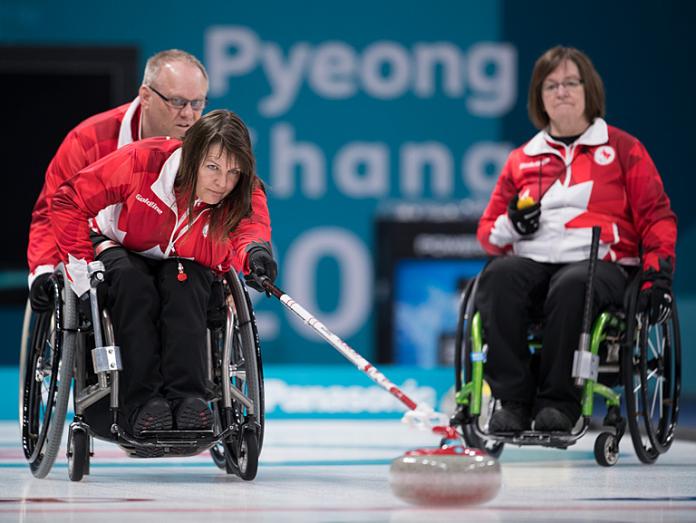
The mesmerizing and intriguing sport of Wheelchair Curling returns to the Winter Paralympics at Beijing 2022. Discover what you might not know about this fascinating game…
1. Curling has been described as the “Roarin’ Game,” with the ‘roar’ coming from the noise of a granite stone as it travels over the ice.
2. Its origins can be dated back to paintings from the 16th century. Flemish artist, Pieter Bruegel, portrayed an activity similar to curling being played on frozen ponds.
Ⓒ OIS Photos
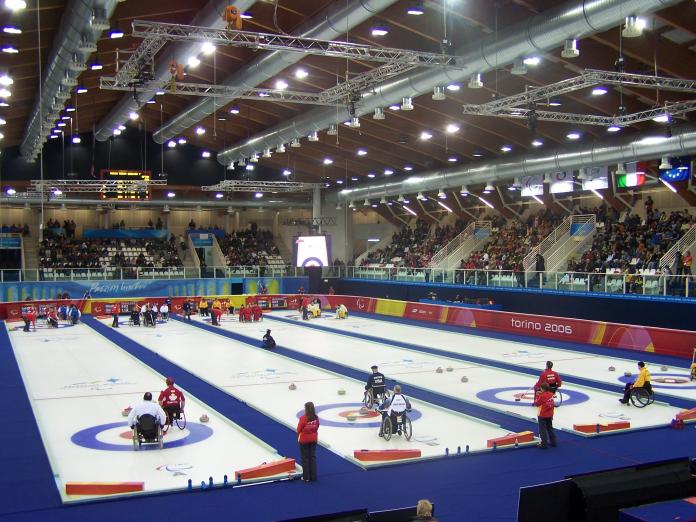
3. Wheelchair Curling was developed in the 1990s and was added to the Paralympic Winter Games at Torino 2006.
4. At the Paralympics, players have just one chance to get a gold medal. Athletes go for the single title on offer in a mixed-gender team event.
5. Wheelchair Curling is the biggest team sport at the Games, featuring 12 countries!
Ⓒ Tom Rowland/World Curling
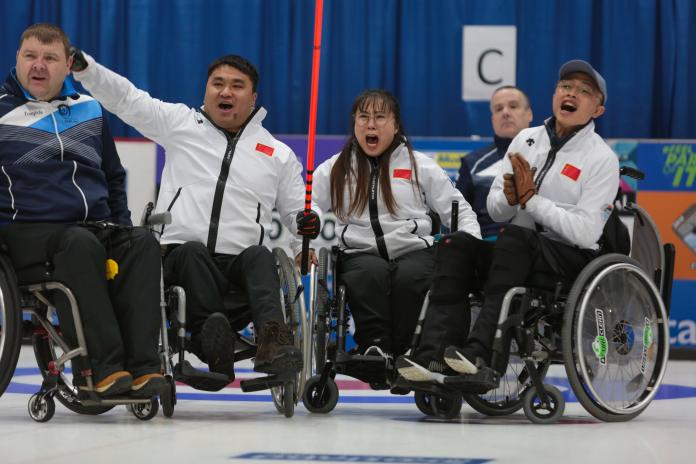
6. China emerged as the new kids on the block at the PyeongChang 2018 Paralympic Winter Games, breaking the dominance of Canada who had won at all previous editions. The Chinese claimed the win just four years before their home Paralympics at Beijing 2022.
7. In Wheelchair Curling, athletes do not sweep the ice to maneuver the stone to its final position. This means the throw must be very precise.
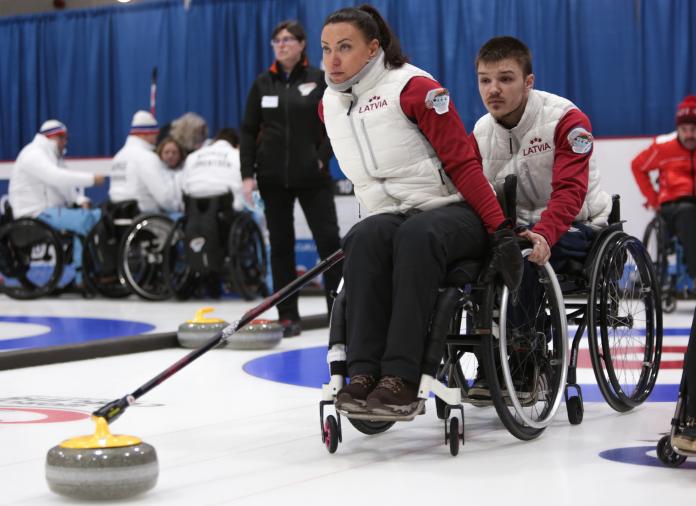
8. The stones must be delivered from a stationary wheelchair, the athletes’ feet must not touch the ice and the wheels of the chair must be in contact with the ice. The stone can be delivered by either a conventional arm/hand release or by using a delivery stick (a stick with a bracket that fits over the handle on the stone).
Ⓒ World Curling
9. Wheelchair Curling is open to athletes who have a physical impairment in the lower half of their body, including spinal cord injuries, cerebral palsy, multiple sclerosis and double-leg amputation.
10. At Beijing 2022 it will be frozen water rather than a swimming pool which will be the focus of everyone’s attention, in contrast to the Summer Paralympics in 2008, as Wheelchair Curling heads to the Water Cube which staged Para-swimming 13 years ago.
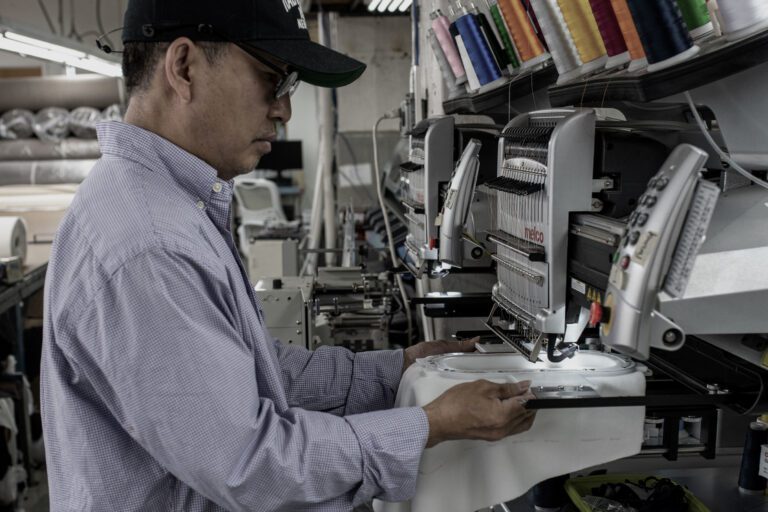
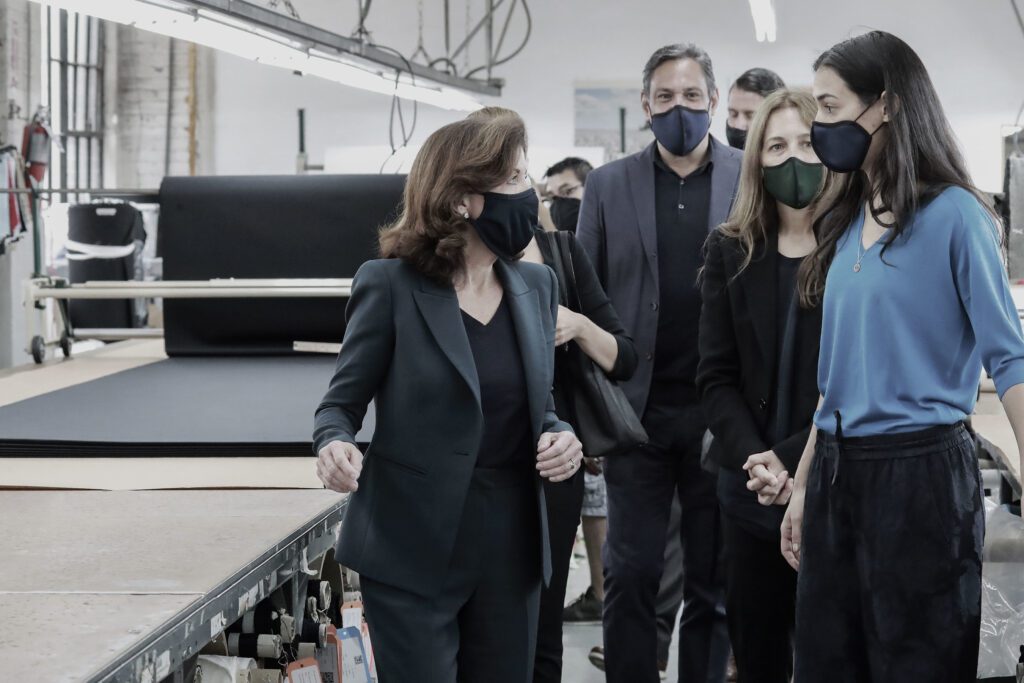
Ferrara Manufacturing, a family-owned apparel manufacturer that partnered with Ralph Lauren to create the U.S. Olympic and Paralympics uniforms from 2014 – 2022, recently announced the launch of Ferrara Uniform. Ferrara Manufacturing produces garments worn on the runways of New York and Paris – as well as by American Olympians and the U.S. military. Located in Manhattan’s Garment District, Ferrara Uniform is a new division of the company focusing specifically on uniforms made in the USA.
The members of Team USA competing at the Winter Games are wearing jackets and bottoms in the Closing Ceremony manufactured in New York by Ferrara Uniform. The creation of Ferrara Uniform highlights the 35-year-old company’s commitment to expanding its uniform tailoring and manufacturing services. In its state-of-the-art facility in New York City, Ferrara also produces for the Ralph Lauren Purple Label, The Durst Organization, United States Airforce, United States Navy, and United States Coast Guard.
Founded in 1987, Ferrara Manufacturing is a union, family-owned and operated business with a highly skilled workforce that produces everything domestically. With the addition of Ferrara Uniform, the company is now made up of three specialized divisions serving diverse markets – tailoring, uniforms, and protective garments. Ferrara Supply Company was one of the first federal partners to provide domestically made Personal Protective Equipment (PPE) as part of the 2021 American Rescue Plan, and has made millions of gowns and masks in the U.S. during the pandemic for the U.S. government. The company spent months exploring product development for masks and eventually created a high filtration product that President Biden wore during the 2021 inauguration.
Ferrara Uniform is led by Gabrielle Ferrara, the Chief Operating Officer at Ferrara Manufacturing and daughter of founders Carolyn and Joseph Ferrara. The mother-daughter team of Gabrielle and Carolyn are an innovative force in the industry, including in the development of a proprietary custom fit technology designed to dress women of all shapes and sizes. The company continues to grow, and with its recent expansion to a facility in Long Island City, Ferrara Manufacturing plans to continue to increase capacity and hire more employees.
In 2019, Gabrielle led the launch of Ferrara Supply, the special business unit created to produce domestic PPE. In 2021, the Manufacturing Institute honored Gabrielle in Washington, D.C. for Leadership Excellence in American Manufacturing. She is a board member of both the NYC Manufacturing and Industrial Innovation Council (MAIIC) and the Athena Center at Barnard College, where she attended.
Baidu AI Cloud, a leading AI cloud provider, launched an AI sign language platform able to generate digital avatars for sign language translation and live interpretation within minutes. Released as a new offering of Baidu AI Cloud’s digital avatar platform XiLing, this platform aims to help break down communication barriers for the deaf and hard-of-hearing (DHH) community by boosting the accessibility of automated sign language translation.
An AI sign language interpreter developed using the platform is performing its duties during the Beijing 2022 Winter Paralympics Games.
Also released along with the platform are two all-in-one AI sign language translators, providing one-stop solutions with a streamlined set-up process and plug-and-use features. By enabling public service deployment in scale, the translators have been designed for a wide range of use scenarios such as hospitals, banks, airports, bus stations and other public areas.
With the technology enablement brought by AI, the production and operational costs of digital avatars have been reduced to a significant degree, making it possible for AI sign language to go scale and serve more deaf and hard-of-hearing individuals, said Tian Wu, Baidu Corporate Vice President.
Baidu XiLing All-in-one AI Sign Language Translators; credit: PR newswire
Today, China is home to 27.8 million deaf and hard-of-hearing (DHH) individuals but is faced with a massive shortage of qualified professionals to serve their needs, with no more than 10,000 sign language translators, a gap especially felt in medical and legal settings.
The XiLing AI sign language platform and the all-in-one sign language translators are designed to fill this significant gap and address the communication difficulties facing the DHH community in both online and offline settings. For DHH individuals who want to study or socialize online without barriers, the platform can be quickly integrated into commonly used mobile applications, websites, and mini programs within a few hours, performing functions like sign language video synthesis and livestream synthesis, text-to-sign language translation, and audio-to-sign language translations.
The all-in-one translators are tailored for offline scenarios to improve the accessibility of public services. Baidu’s translators come with two models, a full offline version V3, and a cloud-connected version P3. Both are embedded with core functions of the AI sign-language platform, able to realize ASR speech recognition, speech translation, and portrait rendering. This full range of functions offers incredible potential for empowering the DHH. For instance, DHH individuals will be able to visit the hospital and manage the complicated process of registration, consultation, payment, and medicine collection without further assistance. Additional applications hold the potential to allow the DHH community to travel, dine, and even work independently.
Technical Deep Dive
Compared to translations between spoken languages, the sign language translation is more complicated mainly because it is not translated word by word from verbal speech. Instead, the language refinement and word order must be adjusted in order to show the actual meaning of the sentence. As a relatively rarely-used language, a very limited amount of data on sign language is available for machine learning. It also requires lip language and facial expressions to assist understanding. In real-world settings, solutions are often faced with complex environmental factors making them difficult to deploy. All these practical barriers have posed numerous challenges to the development of AI sign language.
To make AI sign language comprehendible, Baidu scientists had to resolve three key challenges: the clarity of speech recognition, the accuracy of sign language translation, and the fluency of sign language movements.
To address speech recognition clarity, the XiLing AI sign language platform uses Baidu’s home-grown SMLTA speech recognition model to achieve end-to-end modeling speech recognition through integrating acoustics and language. Based on Baidu’s self-developed deep learning algorithm, targeted training can enable word accuracy in a wide range of fields such as tourism, medical care, and legal proceedings.
In terms of the accuracy and refinement of sign language translation, Baidu has built the first neural network-based sign language translation model with a controllable degree of refinement, which can automatically learn sign language translation knowledge from real data such as word order adjustment, word mapping and length control to generate natural sign language that conforms to the habits of hard-of-hearing people.
To ensure the accuracy of the sign language translation, Baidu has invited over 500 scholars and students with hearing loss in China to help enlarge and vet the sign language corpus, with many joining the project as volunteers. Tiantian Yuan, associate dean of Technical College for the Deaf, Tianjin University of Technology, said she and her students feel incredibly honored to have contributed their parts in collaborating with Baidu to fill in this gap for the community.
To ensure the fluency of sign language actions, the AI sign language platform has sorted nearly 11,000 actions based on the National Universal Sign Language Dictionary with its “action fusion algorithm,” so that all digital sign language gestures have the degree of coherency and expression as human sign language. In addition, with the help of 4D scanning technology, the accuracy of mouth shape generation has been optimized up to 98.5%.