Saturday, February 21, 2026
spot_img
autism products
Html code here! Replace this with any non empty raw html code and that's it.
Home Blog Page 60

Digital Events “Shaping the MS Experience” to be Held During MS Awareness Month

The Multiple Sclerosis Association of America (MSAA) recognizes March as Multiple Sclerosis (MS) Awareness Month. MSAA recently announced its 2022 awareness campaign theme — Shaping the MS Experience — with specific programs addressing the many facets of the clinical approach to MS, such as how to choose an MS therapy, the science behind MS, and MS progression.

What is Multiple Sclerosis (MS)?

According to MSAA, MS is a disease of the central nervous system (CNS), which consists of the brain, optic nerves, and spinal cord. MS damages or destroys the protective covering (known as myelin) surrounding the nerves of the CNS, and can potentially injure the nerves as well. This damage causes reduced communication between the brain and nerve pathways.

Common MS symptoms include visual problems, overwhelming fatigue, difficulty with balance and coordination, depression and cognitive issues, and various levels of impaired mobility. The prevalence of multiple sclerosis is estimated at nearly one million people nationwide and most people with MS are diagnosed between the ages of 15 and 50. MS is not contagious and researchers continue to look for both a cause and a cure.

MS Awareness Month icon
photo: Multiple Sclerosis Association of America

MSAA Events Slated for Multiple Sclerosis Awareness Month

MSAA invites the MS community to participate in various digital educational activities throughout the month of March 2022, including:

  • The Science Behind MS” Webinar on Thursday, March 17, 2022 from 8:00 PM – 9:00 PM Eastern: During this one-hour webinar, Esther Melamed, MD, PhD will dive into neuroimmunology, what happens to the body with MS, and the science behind MS therapeutics. Dr. Esther Melamed, neurologist at the Multiple Sclerosis and Neuroimmunology Center, Mulva Clinic for the Neurosciences, is a physician-scientist with a special interest in understanding environmental risk factors and underlying disease mechanisms in MS.
  • Understanding Progression in MS” Webinar on Monday, March 28, 2022 from 8:00 PM – 9:00 PM Eastern: This webinar will provide viewers with a deeper understanding of the markers of progression and the effects of progression in people living with MS. Join us as Dr. Carrie Hersh, neurologist at the Cleveland Clinic, Lou Ruvo Center for Brain Health and Chairperson of MSAA’s Healthcare Advisory Council, discusses the importance of early treatment and adherence to delay MS progression; factors that can affect the progression of MS; and how to have conversations with your healthcare team to ensure that these issues are addressed promptly and efficiently.
  • Choosing the Right MS Therapy” Podcast Episode: With so many MS disease-modifying therapies to consider, it can be overwhelming to choose what might be the best therapy for one’s specific MS disease course. In this podcast episode, we will chat with MS specialist Dr. Barry Singer, Director and Founder of The MS Center for Innovations in Care and MSAA Board Member, about key considerations healthcare providers make in consultation with their patients to determine the best possible treatment course. Stay tuned for the release of this podcast episode in March!
  • 3 M’s of MS Podcast EpisodeDr. Andrew Woo, a private practice neurologist at Santa Monica Neurological Consultants and MSAA Board Member, shares his thoughts on the “3 M’s of MS: Mangia, Microbiome, and Molecules” by discussing supplements and diets that have been studied or claimed to help MS, as well as other related autoimmune conditions. Stay tuned for the release of this podcast episode in March!
woman walking with a three-wheeled walker
photo: shutterstock

To access information and resources provided by MSAA during MS Awareness Month, please visit the MS Awareness Month hub page at https://mymsaa.org/awarenessmonth/. To learn more about MS Awareness Month and MSAA’s scheduled digital activities, please contact Kaitlyn Gallagher, Manager of Public Relations & Marketing at(800) 532-7667, ext. 122 or via email at kgallagher@mymsaa.org.

‘#StrongWheeled Together’ Campaign to Showcase Impact of People with Disabilities on Advancing Diversity and Inclusion

United Spinal Association announced the launch of its #StrongWheeled Together campaign, which will run throughout 2022, highlighting the spinal cord injury and disorder (SCI/D) community’s contributions to American society and struggle for equality.

“#StrongWheeled Together is based on our vision of diversity and inclusion and fueled by people power: when our members and partners join forces, we are unstoppable,” said Vincenzo Piscopo, United Spinal President and CEO. “Together, we can achieve greater equality. We want all people with disabilities and United Spinal stakeholders to join us in amplifying this message of unity.”

#StrongWheeled Together will drive community engagement through educational and outreach initiatives around mental health and wellness, fitness and athletics, and emergency preparedness. The initiatives will be supported by the organization’s programs and marketing channels, as well as special events.

StongWheeled Together Logo
Learn more about United Spinal’s #StrongWheeled Together Campaign, visit www.unitedspinal.org/strong-wheeled-together

United Spinal aims to bring the professional and volunteer expertise of its staff and membership to a new audience drawn from the over 1 million Americans impacted by SCI/D.

The campaign will spotlight grassroots connections and personal stories that center on the journey from injury to rehabilitation and independence. In particular, #StrongWheeled Together will chronicle United Spinal member Adam Lane’s handcycling expedition across the United States, and the community support he receives on his trek.

United Spinal will also run a #StrongWheeled Showcase over the course of the year, highlighting previously untold stories about children, parents, couples, and veterans with SCI/D, as well as parents and caregivers of people with SCI/D and service dogs.

To learn more about #StrongWheeled Together, visit www.unitedspinal.org/strong-wheeled-together.

Study Finds AI Technology Breakthrough for Rare Disease Identification

0
FDNA, a leader for the early detection of rare genetic diseases, announced that its breakthrough study findings were published in the esteemed peer-reviewed journal Nature Genetics, in a paper titled “GestaltMatcher facilitates rare disease matching using facial phenotype descriptors.” In collaboration with a team of influential scientists and researchers, the study on the use of facial analysis as a tool to help detect rare genetic disorders found that FDNA’s technology could accelerate the clinical diagnosis by medical professionals of patients with ultra-rare disorders and facial dysmorphism, as well as enable the definition of new syndromes.

Nearly 30-40% of children with disabilities in the U.S. have an underlying undiagnosed condition. With 95% of rare diseases lacking an FDA-approved treatment, there is an urgent medical need to achieve early diagnosis in children to help promote a better quality of life.

The deep learning technology matches rare disease patients’ photos with other patients’ photos around the world instantaneously; thus, helping medical professionals diagnose children at an earlier stage. The proprietary technology strengthens next-generation phenotyping (NGP) — the capture, structuring and analysis of complex human physiological data — by allowing medical professionals to identify hundreds of additional disorders just with facial analysis.

FDNA

“This is a long-awaited innovation in medical genetics that has finally come to fruition,” said Aviram Bar-Haim, CTO at FDNA and first co-author of the paper. “Overcoming the limitations of needing a minimal number of photos per disorder is a breakthrough allowing us to now identify ultra-rare diseases. Moreover, by analyzing similarities among patients with previously unknown diseases, new genotype/phenotype correlations can be detected.”

“GestaltMatcher goes where previous technology has never gone before,” said Dr. Peter Krawitz, CSO at FDNA. “With this study, we transitioned from classification to clustering. By that means we can now compute the syndromic similarity in between any two individuals in our database.”

Key findings from the study include:

  • GestaltMatcher is an AI technology that is used to identify the facial representations of more than 1,000 rare genetic diseases and distills facial features into a multi-dimensional space, which helps medical professionals to accelerate the matching and diagnosing of ultra-rare disorders.
  • Adds significant value to phenotypic evaluations in clinical genetics, research and genetic testing (NGS).
  • GestaltMatcher achieves a comparable top-10-accuracy on all previously supported disorders and matches one-third of cases with an ultra-rare or novel disorder. The study was conducted on 17,560 portrait photos from patients with 1,115 rare disorders.

“For years, we’ve relied solely on the ability of expert geneticists to identify these ultra-rare disorders. We’ve finally reached a reality where this work is augmented by AI, and we’re on track to help diagnose patients earlier and shorten the diagnostic odyssey. FDNA is thrilled to be a pioneer of this rare technology and help aid children and the medical community worldwide,” said Moti Shniberg, co-founder of FDNA.

FDNA is used by 70% of the world’s clinicians and researchers in human genetics, representing more than 2,000 clinical sites from over 130 countries around the world.

CDC Promotes How to Be a Disability A.L.L.Y. and Help Promote Inclusion for All

0

Disability affects nearly 1 in 4 (26%) adults in the United States. Including people with disabilities in everyday activities and creating accessible environments and equitable opportunities that support people with disabilities in holding roles that are the same and/or similar to their peers who do not have a disability is disability inclusion, according to the Centers for Disease Control (CDC).

Understanding Disability Inclusion

This involves more than simply encouraging people to participate in activities. It requires making sure that adequate policies, accessible programs, and inclusive practices are in effect in a community or organization. Disability inclusion means understanding the relationship between the way people function, how they can participate in society, and making sure everybody has the same opportunities to participate in every aspect of life to the best of their abilities and desires.

Disability inclusion entails identifying barriers that potentially impact people with disabilities to independently live and be fully engaged in their communities. Every community member can make a difference and play a part in addressing those barriers. For example, healthcare professionals and administrators can create more inclusive health care for patients with disabilities. Take steps to learn how you can increase disability inclusion and accessibility for all to improve the health, well-being, and participation of people with disabilities in your community.

“Health equity means optimal health and well-being for all people. Each of us has a role to play in promoting health and achieving health equity for people with disabilities. Please join us and become an ALLY.”

~ Dr. Karen Remley, CDC’s Director for the National Center on Birth Defects and Developmental Disabilities

CDC’s Call to Action on Promoting Disability Inclusion

Join the CDC in promoting disability inclusion and accessibility for all by sharing resources and information on your social media channels, blogs, podcasts, and more. Use the resources posted online, share the sample social media posts below, and/or contact CDC to interview a subject matter expert.

The following social media posts are examples you can use as-is or modify to align with your personal or your organization’s mission or preferences. Consider using #DisabilityALLY, #Diversability, and/or #Inclusion4Health in your social media posts

Sample Social Media Posts 

Facebook

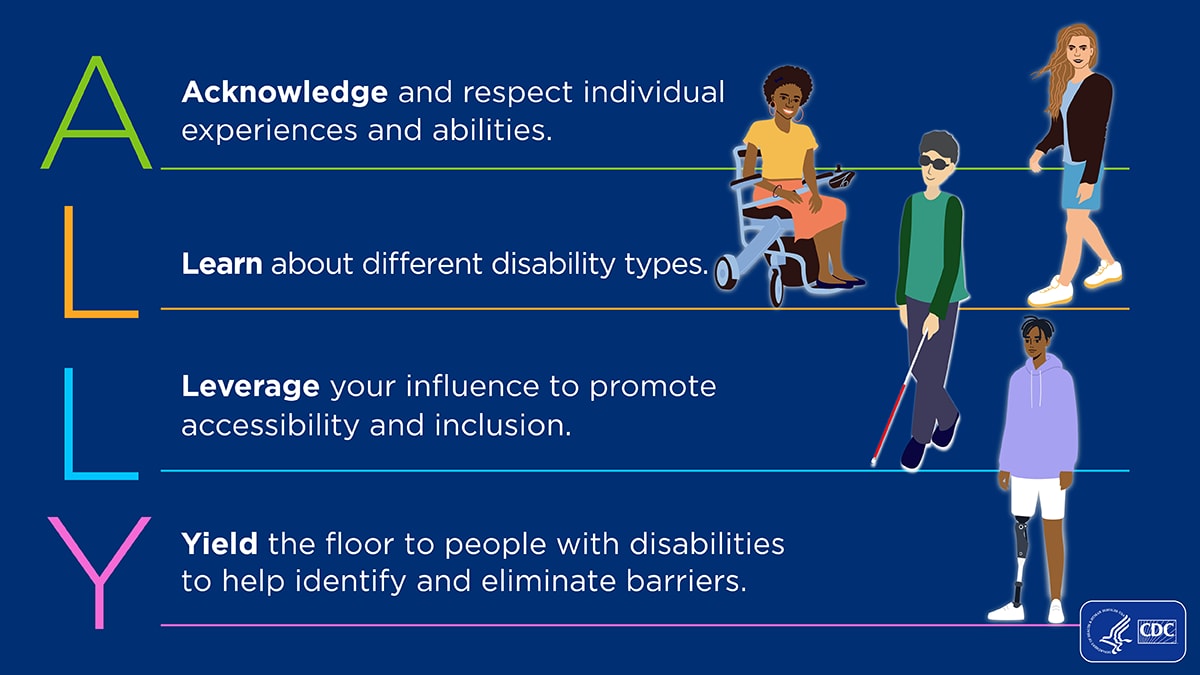
ALLY:
Acknowledge and respect individual experiences and abilities.
Learn about different disability types.
Leverage your influence to promote accessibility and inclusion.
Yield the floor to people with disabilities to help identify and eliminate barriers.

#DisabilityALLY #Diversability #Inclusion4Health

Illustration of a Black person in a wheel chair, a White person, a vision-impaired Asian person with a walking stick, and a Black person with a prosthetic leg. CDC logo

Twitter 

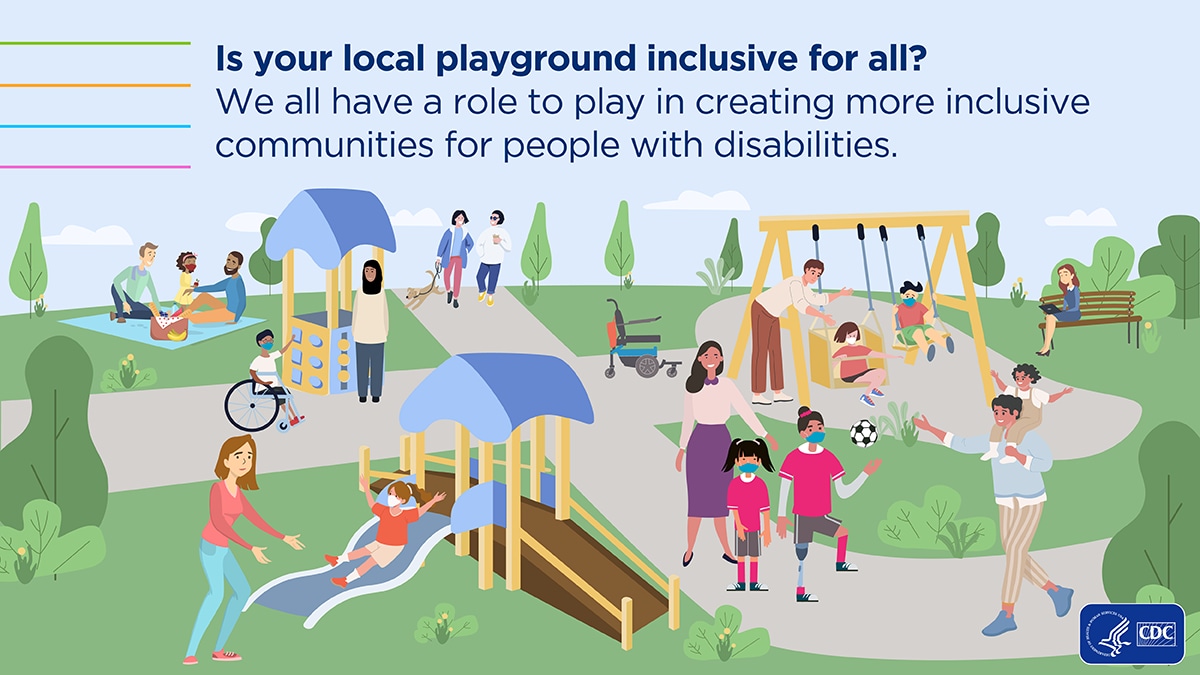
Is your local playground inclusive for all? We all have a role to play in creating more inclusive communities for people with disabilities.

#DisabilityALLY #Diversability #Inclusion4Health

Illustration of a playground with various equipment that is accessible for all, and several people and children enjoying the space. The graphic shows two dads having a picnic with their daughter, a boy in a wheelchair playing at a sensory station, two women walking a dog, children swinging, a woman working on her laptop on a bench, a father with his child on his shoulders, a mother catching her child coming down the slide, and a mother taking her two daughters to a soccer game, one daughter has a prosthetic leg. CDC logo

Instagram

Add hashtags: #DisabilityALLY #Diversability #Inclusion4Health

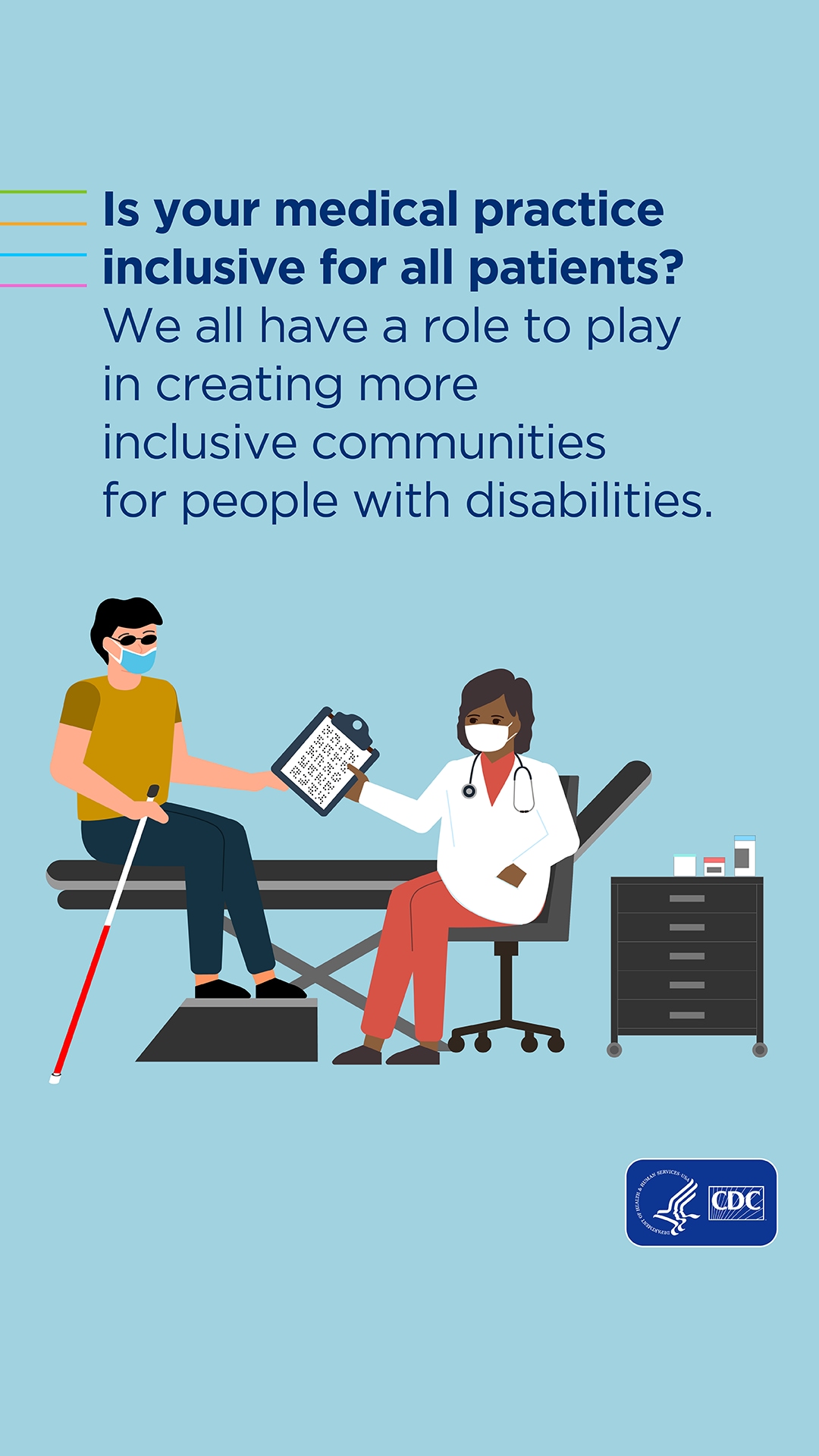
Illustration of a medical exam room with a Black female doctor handing a clipboard with paperwork in braille to a White, vision-impaired male patient who is sitting on the exam table. CDC logo

Add these buttons to your website, email signature, or newsletters!

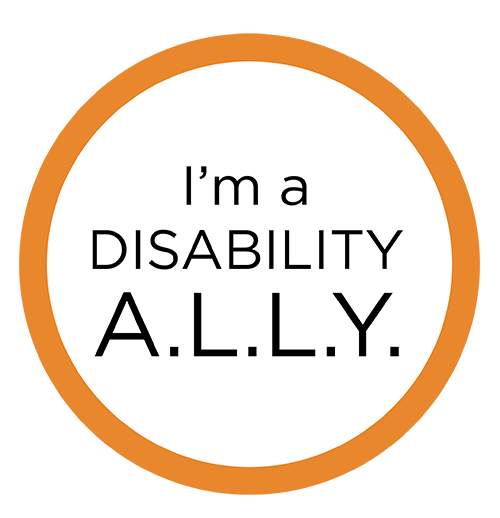
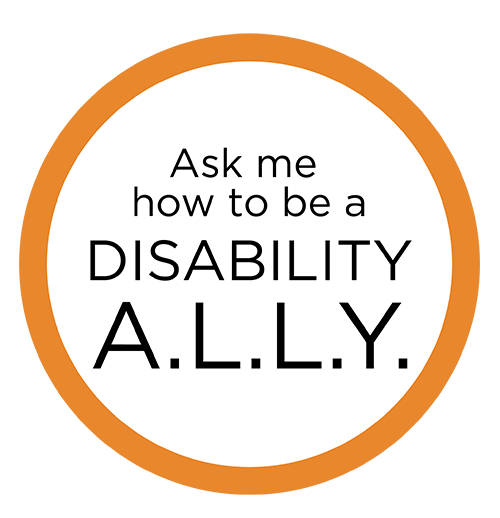
Let your networks know you’re a Disability A.L.L.Y. by displaying the buttons below! Whether you add them to your website or email signature or include them in your distribution materials, these buttons let others know you’re committed to health equity and inclusion.

Button & Accompanying Text

I'm a Disability A.L.L.Y.

Be an A.L.L.Y.

*Acknowledge and respect individual experiences and abilities.

*Learn about different disability types.

*Leverage your influence to promote accessibility and inclusion.

*Yield the floor to people with disabilities to help identify and eliminate barriers.


Ask me how to be a Disability A.L.L.Y.

Be a Disability A.L.L.Y. and promote inclusion for all.

Acknowledge * Learn * Leverage * Yield *

Source: CDC

TikTok Star Catieosaurus Brings Neurodiversity and Gaming Issues to the Forefront

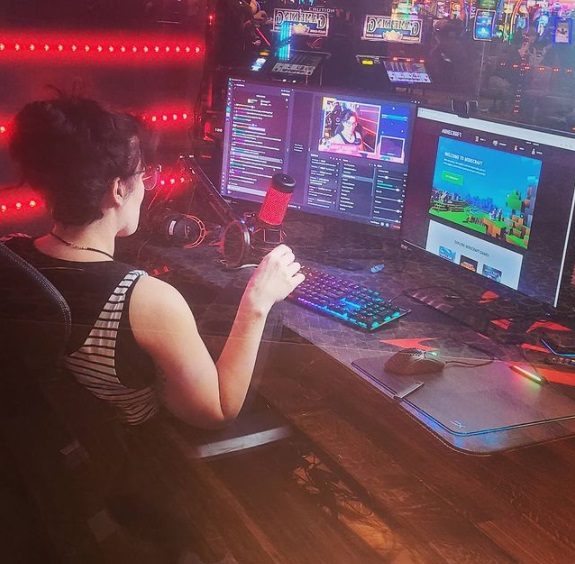
Cate Osborn never dreamed before COVID hit that she’d be the creator of a thriving social media community of more than two million people in just one year. Known as @catieosaurus online, Cate, who is a mental health advocate, full-time content creator and co-host of the Infinite Quest Podcast, is speaking out about an unusual but important topic: neurodiversity, disability and the gaming community.

From undiagnosed adult ADHD to neurodiversity and sexuality (Osborn is also a Certified Sex Educator) to the lesser-known symptoms of ADHD, Osborn explores topics that don’t usually make it into mainstream discussions around neurodiversity. One particular topic garnered a swell of interest from followers: neurodiversity and accessibility in the gaming community.
An avid Dungeons and Dragons player and co-host of the Infinite Quest Podcast (a top 50 mental health podcast), Osborn’s two passions collided with the topic of neurodiversity and gaming.

“There is a shocking lack of accessibility in gaming,” explains Osborn. “Especially tabletop role-playing games (TTRPG) like Dungeons and Dragons. The more I explored the issue and interacted with players who struggle to feel welcome, the more I realized how vital the discussion is. Everyone should be welcome at the gaming table.”

Osborn speaks out about obstacles for TTRPG players, which can pose challenges to people with physical or mental disabilities. Many organizers may not realize they are leaving players out. Crowded, loud game nights can be difficult for people with sensory issues or auditory processing disorders to participate, for example. Traditional game nights can last between 3-6 hours, which can easily overwhelm or overstimulate a neurodivergent person. In-person game nights can be difficult for some people with disabilities to physically access or keep immunocompromised people away due to COVID concerns.

The challenges extend to PC/console gaming as well, where Osborn is working to encourage developers to consider accessibility when creating their platforms and games. “There is a shocking lack of accessibility in video games,” Osborn explains. Challenges can include lack of captions, fonts that are not dyslexia-friendly or graphics that make it hard for colorblind people or those with visual impairments to play the game. “Of course, individual needs vary from person to person but there are a lot of common issues that arise,” Osborn explains.

TikTok Star Catieosaurus

Osborn and her Infinite Quest co-host, Erik Gude, just wrapped up a national tour of gaming and comic conventions, including DragonCon, GenCon, Pax Unplugged, GameHoleCon and more, where they conducted workshops and sat on panels about neurodiversity as well as disability and adaptability in gaming, as well as performing their interactive D&D show “ADHDnD Live!”

Osborn is encouraged by the interest she’s seeing from gamers and developers alike for changing the industry to give everyone the opportunity to be a full part of the community and play the games they enjoy — without obstacles.

“Of course, there is no way that a company can make a game 100% accessible for every single person, but our goal at Infinite Quest is to just simply start the conversation, and talk openly about the struggles and challenges that often leave players feeling like they aren’t welcome at the table.”

Images courtesy of Catieosaurus via Instagram. 

Blind Institute of Technology Partners with Be My Eyes to Assist Professionals with Disabilities

0

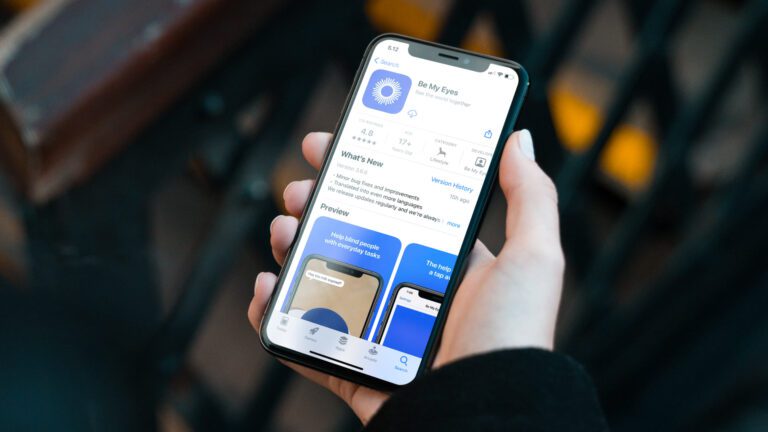
The Blind Institute of Technology (BIT) announced its partnership with Be My Eyes, an innovative app that provides real-time video assistance for individuals who are blind and visually impaired. Starting on February 2, 2022, the Blind Institute of Technology team will be able to field calls from the Specialized Help section of the app.

“For too long blind and visually impaired (BVI) professionals settled for positions much lower than their education and skills due to the lack of understanding of our capabilities. BIT works with talented disabled technology professionals and corporations to make sure this does not continue. A major component of this is technology,” says BIT’s Director of Talent, Kristy Schenderlein. “The partnership with Be My Eyes provides BVI professionals with a valuable tool to be successful in their chosen careers.”

At a time when technology is making it possible for everyone around the world to connect, BIT will be able to provide remote guidance and consultation to the disabled for employment opportunities. BIT is leading the way for technology companies to connect with potential employment candidates and deliver services in a whole new way.

“BIT has a very specific, important role in our community,” said Will Butler, VP of Community at Be My Eyes. “They recruit, train and place talented blind and low vision professionals for careers in all aspects of business, including IT, and they educate corporate America about the meaning of accessibility. We’re thrilled to see them joining Be My Eyes as our latest partner and can’t wait to see how they use the platform.”

Now with more than 5.5 million users and a growing family of company partners, Be My Eyes is one of the largest “micro-volunteering” platforms in the world – with its more than 5 million people on call at all times to assist those who need an extra pair of eyes at short notice.

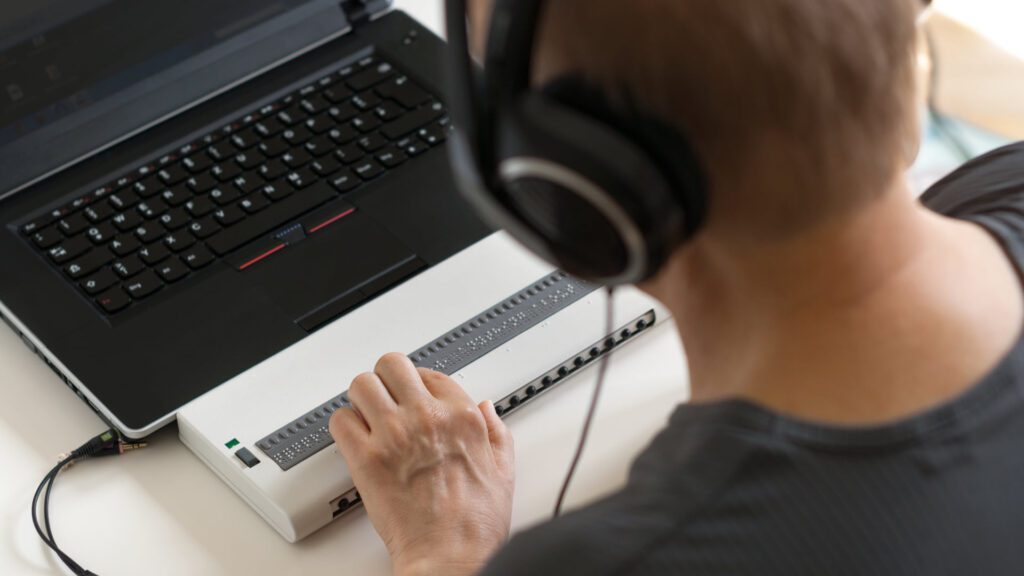
person using a braille keyboard

For similar content, read:

Photos courtesy of Be Me Eyes.

30 Self-Care Rituals for Able-bodied, Interabled or Disabled Couples

0

Life can be busy with tons of priorities… work, kids, friends, school, medical/healthcare needs, caregiving, volunteering, advocating, oh and your relationship too. Sometimes we’re so scheduled with demands that we fail to include time for much-needed self-care. It’s often undervalued but self-care benefits the mind, body and soul. Interestingly enough, the same concept of self-care can apply to our relationships. Just as we care for ourselves, couples who commit to some TLC may boast individual and collective benefits that’ll help to keep (or improve) a healthy connection and, ultimately, enhance the minds, bodies and souls of both partners in the relationship.

There are so many facets of relationship building. You’re familiar with common self-care practices for personal gain, so simply shift those ideas to a twosome approach.

Here are 30 self-care rituals for all couples – able-bodied, interabled and disabled:

For Your Minds

1. Get Back to Nature.
Countless studies have concluded that nature is good for overall health. There are plenty of couple activities to enjoy outdoors. Think about energetic options, like adventuring within an accessible state or national park, and also more calming options, like picnicking. To explore a new self-care ritual together, try earthing (also known as grounding — a word that perfectively describes this literal practice of using the ground to figuratively stay grounded). On your next romantic picnic, kick off your shoes and let your bare feet stabilize on the electron-enriched earth. Feel the breeze on your bodies and gaze up to peacefully cloud-watch. Scientists believe that earthing reduces chronic pain, inflammation and blood pressure, while increasing energy levels and sleep quality.

FYI, the National Parks Service (NPS) has several pass programs that grant access to more than 2,000 federal recreation sites across the nation. Check out the Access Pass, a FREE, lifetime pass available to U.S. citizens or permanent residents that have a permanent disability.

2. Try Tandem Meditation.
Meditation tops self-care lists for many. It’s an excellent exercise centered on relaxing the mind and finding clarity. Perhaps you perceive meditation to be a solo thing, but it doesn’t have to be. Try sitting in a traditional lotus position in alignment with your partner by facing each other with your knees touching, sitting side-by-side, sitting back-to-back or any position to feels comfortable to your bodies. Maybe hold hands or position your hands over each other’s heart to feel the beat and breath. There’s actually a guided practice called Love-Kind Meditation, by The University of California Berkeley, which works really well for couples. It includes suggested phrases to recite to one another, such as “May you live with ease, may you be happy, may you be free from pain.”

3. Unplug to Plug In.
Reboot yourself and your relationship by powering down! We’re all guilty of allowing mobile devices to distract our attention. A Time magazine article titled “How Your Smartphone is Ruining Your Relationship” addressed how smartphones can be a romance killer. It stated, in part, that people who were more dependent on their smartphones reported being less certain about their partnerships; and people who felt that their partners were overly dependent on their devices said they were less satisfied in their relationship. Yikes! Make an effort to be present with your partner and not focused on a cell screen. Whether at the dinner table, on the couch or on date night, try switching your phone to airplane mode or turn it off altogether to avoid disruptive notifications of social media and email.

couple-interabled

4. Stretch Beyond Your Comforts.
Routine can be good, and necessary in some aspects, but too much consistency can put us in a rut. To keep your relationship fresh, be open-minded to trying new things. For instance, stray from the typical date night dinner-and-a-movie combo. By holding off on your stall go-to, you’ll get a taste of new experiences and eat up fresh connective opportunities. Here is an idea: Make a date night jar inclusive of ideas that stretch beyond your comfort zone.

5. Minimize Your (Online) Social Circle.
It’s wonderful to have a large circle of friends. However, thanks to social media, we stay connected to people who, unfortunately, bring negativity into our lives. Think about it: How many times have you read a post – political, religious, disability-focused, etc. – that rubbed you the wrong way and, thus, shifted your mood or mindset? That’s happened to me and I ended up talking in a less than positive light to my partner. Ugh, why waste a conversation on negativity? Encourage one another to limit that negative energy by ‘unfollowing’ certain people on social media. When you do this, you’ll remain ‘friends’ on the platform but won’t see their posts. Additionally, plenty of articles (see Psychology Today) outline how social media can hurt a relationship.

6. Read a Book.
Personally, the perfect self-care afternoon is curling up on the couch with a good book, a fuzzy blanket and a hot cup of coffee. I can easily integrate my partner. We could read a book aloud to each other, perhaps relationship-focused, romantic poetry or some random fiction just for fun. Or, we could listen to a book on tape or a podcast.

7. Set Goals.
Self-care isn’t just about manicures and bubble baths. Challenging yourself and challenging your partner is definitely a form of self-care! Studies show that we’re more likely to achieve goals when aided by the help of another. That doesn’t just apply to a workout buddy… that supportive approach can apply to any goal, whether personal or collaborative. And isn’t your partner your best support person? When one partner sets a goal, be mindful to encourage his/her/their efforts. That can mean participating or just offering reassuring words. Also, consider establishing couple-specific goals to achieve together. You’ll be able to work as a team and experience a shared self of accomplishment. Talk about relationship building!

8. Take Your Time.
Grant yourselves permission to slow down, enjoy the simple things and, in turn, enjoy each other’s company. With the hustle and bustle of life, we tend to look for shortcuts but, sometimes, the long and slow road is better. How about this… On your next couple’s road trip, take a beautiful scenic road rather than the congested highways which can put you in a bad mood. Back roads have a way of bringing couples back to meaningful conversation too.

Mental-Health

9. Conquer the To-Do List
Set yourselves up for success through organization and honesty! There are personal to-do lists and shared to-do lists. For personal efforts, I’ve learned that I respond better to old-school written checklists. When I just set a Google calendar appointment for myself with time blocked for a to-do item (like call the doctor’s office to book an appointment or something), I tend to easily hit snooze or push back the date. Once I physically write out a list and leave it on the counter, the in-your-face visual reminder is effective and I get it done. It feels good to literally cross something off my list with a pen. I have started making written lists with reminders for my husband too and, funny enough, he also gets more done this way. So simple, yet effective! Regarding implementing this further in our relationship, there have been times when I’ve felt that I’ve asked my husband to do something (insert any chore) a million times and he puts it off. That creates negative energy between us because I get annoyed. He starts to feel that I am nagging and I start to feel resentful that I have to nag him. To avoid this, I strive to be direct and sometimes share with him why I think something is a priority and help him set a timeline. Once I’ve expressed myself clearly, he has a better understanding of the reasoning behind my ask and understands that I’m not just nagging. We’ve better communicated, appreciated each other’s perspectives and conquered the to-do list.

10. Clean House.
Freshen things up as it can do much more than tidy up your physical space. Decluttering can help you improve organization and, thus, improve functionality within your home. Plus, a clean space makes you happier. Seriously! Sure, nobody is thrilled to tackle chores but nobody likes a huge pile of clothes wasting space in the closet or a stockpile of expired cans in the pantry either. Cleaning, of course, helps to eliminate germs. Wouldn’t you rather use your bed together for something else rather than be in bed with a germy cold? You can make cleaning fun if you do it together, I swear. Crank the tunes and have mini-dance parties or singing sessions in between sweeps and wipes.

For Your Bodies

1. Pamper Together.
Perhaps your daily cleansing regimen is just washing your face, but self-care of one’s body can and should go way beyond that. Ladies, if you think your guy won’t be up for pampering, you may be wrong. Think of the laughs you’ll have as you paint goopy facial masks on each other. And pedicures are lovely for everyone’s tootsies. Run a warm bath for a rejuvenating soak. Incorporate salt rubs, oils and body lotions. Your bodies will get clean and silky smooth which is an invitation for lovey-dovey time.

2. Support Personal Self-Care Pampering Too.
Sometimes the best way to treat your partner is to allow him/her to indulge in whatever self-care ritual brings him/her joy. We’re talking basics here. For example, I love to stand in a hot shower for a long time. I mean practically scorching, room completely filled with steam and so long that the water heater runs out. Yup, I have some sensory quirks. My husband knows that those ten minutes are my feel-good escape (especially since we have young children with special needs and I am likely covered in some sort of kid-caused yuckiness). He splurges a bit on hair care. I think he overpays for haircuts and styling products but, alas, it’s his favorite self-care thing so I just offer compliments of his well-groomed locks.

3. Be Workout Buddies.
Physical fitness is an essential part of healthy living and, if applicable, adaptive equipment and gyms are available. Since you’ve committed to a life together, collaborate on exercise-focused self-care to achieve optimal health. This is important as some people with disabilities can find it more difficult to eat healthily, control their weight and be physically active. Your partner makes your heart skip a beat and, so, incorporate cardiovascular exercises to work your hearts! These things can make for great dates, such as dancing, biking or however you like to get your sweat on. On the flip side, since healthy relationships are all about balance, don’t forget to explore yoga, stretching and relaxing practices.

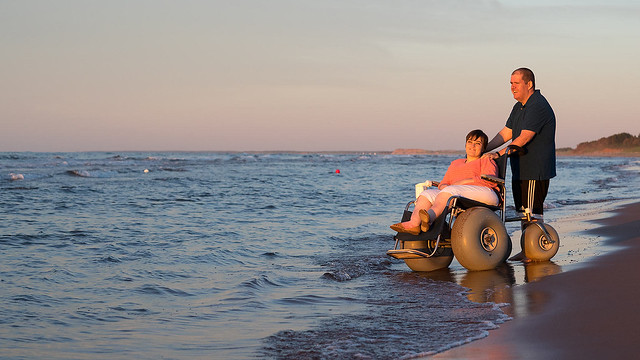
Beach Wheelchair user at Stanhope Beach

4. Add Color to Your Life (and Plate).
How we choose to fuel our bodies is another self-care consideration. Isn’t it beautiful to see a rainbow in the sky while cloud-watching with your love? Well, strive to “eat the rainbow” with your partner too. That means a bright meal featuring diverse hues, rather than a bland brown and white dish (yup, meat and potatoes won’t cut it). Different nutrients are found in different colored vegetables and fruits. For example, orange/red (i.e. sweet potatoes, carrots) provides beta-carotene which is converted into vitamin A; and green (i.e. broccoli, spinach) delivers fiber and vitamin C. And in an effort to stay hydrated, use the same approach with water consumption by infusing H2O with berries, cucumber and citrus fruits.

5. Inhale a Soothing Scent.
Aromatherapy uses essential oils distilled from various plants. According to the Mayo Clinic, it stimulates “smell receptors in the nose, which then send messages through the nervous system to the limbic system ─ the part of the brain that controls emotions.” Studies have shown that aromatherapy might reduce anxiety, depression, headaches, pain (especially for people with kidney stones or osteoarthritis), and also improve sleep and quality of life. Vanilla is believed to be arousing, lavender is soothing and peppermint can stimulate. Use candles or an essential oil diffuser to let aromatherapy naturally put you in great moods.

6. Be Intimate.
During sex, oxytocin is released which promotes more restful sleep. Science aside, I can attest that my husband can achieve snore status pretty quickly post-rendezvous! Sex can boost positive emotions because, well, it feels good to be desired. Some couples, able-bodied and interabled alike, even schedule sex to ensure that this self-care ritual happens often. This can be helpful for partners that have a catheter (or prefer extra prep time).

7. Sleep Together.
OK, this time we’re talking about actually snoozing. Sleep… seems like such a simple thing but most Americans aren’t catching enough zzz’s. There are tons of benefits to being well-rested, such as increased productivity and a stronger immune system. Instead of staying up for another episode during a Netflix binge, crawl into bed together and sleep.

8. Have a Cup (or Two).
Coffee makes couples happy… literally. Forgo decaf because caffeine has been shown to trigger the production of dopamine in the brain and, thus, trigger cheeriness — a lovely ingredient indeed. Plus, café dates are easy and delish.

ential20oil20blend20for20ho

9. Give (and Receive) a Massage.
Finding time to unwind with your partner without worries flooding your mind is tricky. Schedule a couple’s spa day to indulge in professional massages, which usually come with other amenities like access to a sauna, steam room and lounge. This type of TLC is amazing, right? In between spa splurges, give each other massages at home to work out kinks and strive for chill status.

10. Be Gentle.
Gentle touches are ways to offer love and show that you care. Intimate embraces don’t have to be reserved for the bedroom. I’m not talking major PDA, but rather subtle touches of affection. Hold hands, hug, give sweet kisses on the cheek or forehead, caress his/her/their arm, etc.

For Your Souls

1. Laugh Together.
Laughing stimulates hormones called catecholamines which in turn release endorphins that positively aid happiness and relaxation. Laughter really could be the best medicine! And benefits include stress reduction, muscle relaxation, lowered blood pressure and strengthened immune system. Find ways to laugh when alone and when together. Comedic entertainment is an option but go further by talking about funny memories you’ve made together.

2. Write it Out.
The practice of releasing and recording feelings, memories and the likes can be fulfilling and helpful in many ways. For example, the trend of ‘gratitude journaling’ helps users realize and appreciate life’s gifts that might otherwise be taken for granted. Journaling is often a solo practice, yet couples journaling is a way for partners to document their love stories and deepen their relationship in the process.

3. Go Solo.
Being a part of a loving duo is wonderful, but it’s totally fine (and maybe even crucial) to snag solo time now and again. Schedule something that makes you feel happy and nourishes your soul. Read a book in the park, spend the day focused on your hobby, stroll a museum, etc. Connecting with your partner is one priority, but so is reconnecting with yourself. When you reunite, you’ll be in a great mood which, of course, is contagious.

4. Cuddle.
Researchers say cuddling is highly beneficial. Snuggling up will again release oxytocin and promote overall happiness. For personal care, you can wrap yourself in a cozy blanket and nap. I love my weighted blanket! Therapeutic weighted blankets, wraps and lap pads may especially benefit people with autism, sensory processing disorder, ADHD, hyperactivity and other disabilities. They provide gentle pressure to produce a calming and relaxing effect. And cuddling with your loved one can improve your connection through non-verbal communication and intimacy. So assume the spooning position!

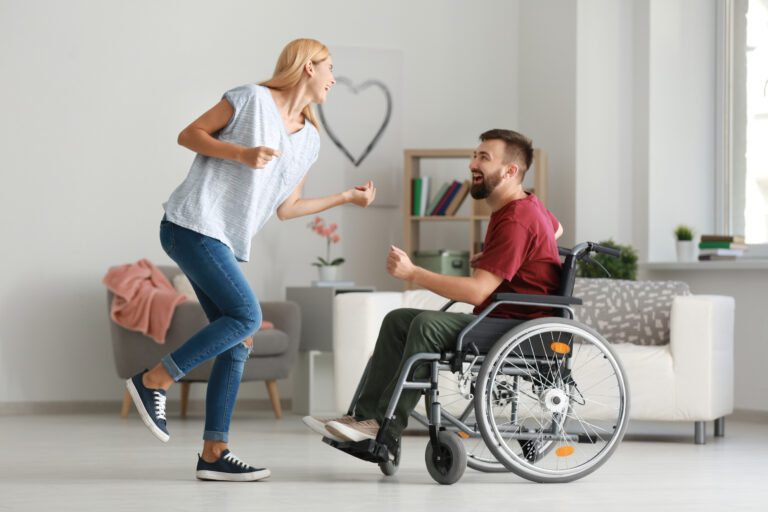
able-bodied woman holding cup while kissing man in a wheelchair

5. Do Good to Feel Good.
Volunteerism, activism or the act of doing something good makes us feel good and improves our mental state. How cool is it that a selfless act can be a self-care opportunity?! Spend time with the person you love doing do-good and feel-good date activities. There are countless ways to make a difference within the disability community and beyond.

6. Check In On Emotions.
You likely ask your partner simple questions, like “How was your day?” Take your interest further and allow each other to express emotions without judgment. Author and mindfulness coach Kristen Manieri shares how two questions make all the difference in her relationship: What would you like to be acknowledged for? What would you like me to know about your life? And for some couples, attending counseling sessions is a way to stay in a positive state before problems arise.

7. Ask for Help.
Some perceive asking for help as a sign of weakness but it’s really a sign of strength. It’s great to push aside the fear of judgment and involve others when you need a hand. Cut yourself some slack! No one is perfect and everyone has different strengths so another person may be better suited to advise on the issue at hand. Plus, healthy relationships are all about the balance of give and take. Sometimes needs are met via 50-50 participation and other times one steps up a bit more, especially if caregiving is a factor. Your partner is the person you trust most so feel comfortable asking for help when needed. I’ve learned that if I want it done “right” (aka the way I would do it), I need to be direct and specific with my husband. He approaches things differently than me and he certainly can’t read my neurodiverse mind so asking for help and effectively communicating go hand-in-hand. People like feeling useful and your partner will likely not reject your request.

8. Be Adventurous and/or Travel.
Self-care is about finding ways to take care of yourself and that includes identifying what makes you happy. New adventures and exciting life experiences are just that. Odds are you aren’t going to achieve your bucket list if you’re living a couch-potato existence. Allow your mind (or minds to include your partner) to grow through travel, for instance. The wonders of our world are sure to impact your mind, body and soul. On vacation, incorporate downtime into your agenda. I have a tendency to overschedule which increases my stress and, thus, defeats the goal of a relaxing trip. FYI, AirBnB recently improved its accessibility search features.

9. Pray.
Opening one’s heart to a higher power through prayer or spirituality can be powerful. Have you heard the statement “couples who pray together stay together?” A study conducted by the National Survey of Religion found that people in same-faith relationships and partners who attended services regularly were more satisfied with their relationship, according to HuffingtonPost.

10. Make Date Night a Routine!
You may already consider your relationship to be happy and loving, but there’s always room for improvement. Funny enough, your date night can work as a self-care ritual. Countless studies have proclaimed date night as beneficial, like the Date Night Opportunity report published by the National Marriage Project at the University of Virginia. It found that regular date nights add value to relationships by generating “higher levels of communication, sexual satisfaction and commitment” among couples.

Did we leave out a ritual that works for you and your partner? Tell us what other self-care rituals are on your list!

Want similar content? Read: 

A portion of this article originally appeared on DateNightGuide.com. 

“America’s Stroke Coach” Pens Fourth Book Promoting Stroke Recovery and Secondary Prevention

0

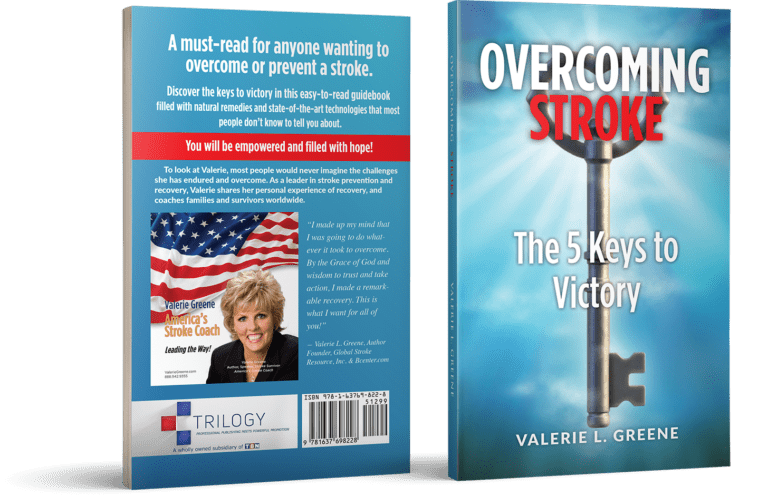
Stroke survivors and caregivers can now access a user-friendly guidebook featuring diverse approaches that aid stroke recovery. The new 124-page publication, titled Overcoming Stroke: The 5 Keys to Victory, is the fourth book written by world-renowned stroke recovery advocate Valerie L. Greene.

Greene personally overcame grim odds in the aftermath of two debilitating strokes that nearly took her life at just 31 years old. Acknowledging that her miraculous survival and recovery could impact others afflicted by stroke or any disability, Greene crusaded for years to support healthcare advocacy, programs and education.

The lifelong Greater Orlando resident eventually turned her vocation of sharing hopeful insight into an avocation, with the launch of two recovery-focused companies: Global Stroke Resource and Bcenter. Through Global Stroke Resource, Greene earned the distinction of “America’s Stroke Coach,” as she traveled the country to provide personalized guidance to stroke survivors, their loved ones and the disability community-at-large. Through Bcenter, Greene established a digital resource hub and also facilitated stroke survivor support group events.

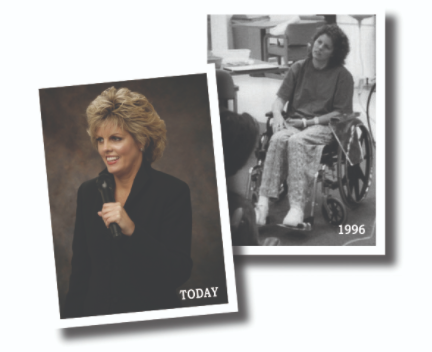
Valerie Greene - pictured after speaking after stroke, and before seated in a wheelchair


“I made up my mind that I was going to do whatever it took to overcome. By the Grace of God and wisdom to trust and take action, I made a remarkable recovery. This is what I want for all of you,” Greene, now 58, declares to survivors of all abilities.

In 2004, Greene published her first book, a memoir titled The Fire Within: True Story Of Triumph Over Tragedy. In 2008, her second book, Conquering Stroke: How I Fought My Way Back and How You Can Too, further documented Greene’s mission to empower survivors and instill hope to all. Then, in 2012, she co-wrote her third book, The Missing Link in Health, with globally-acclaimed holistic practitioner Mojka Renaud, about misconceptions surrounding proper hydration. Greene’s most recent work, just released in early 2022, titled Overcoming Stroke: The 5 Keys to Victory, is an easy-to-read book that simplifies the complex navigation of resources, remedies and more.

Because of safety precautions associated with the coronavirus pandemic, many face-to-face interactions, including Greene’s stroke coaching services and support group meetings, came to an abrupt halt. Greene wanted to ensure that survivors seeking direction could continue to easily access her time-tested methods regardless of present-day hurdles.

“This book is basically like receiving stroke coaching sessions, but in a convenient format that engages aspects of the mind, body and soul,” Greene describes. She believes the condensed written form will also grant access to a larger, more diverse audience. “I feel like everyone deserves to know life-changing answers, regardless of one’s financial means to hire a private coach,” she says.

Overcoming Stroke highlights an array of both traditional and non-traditional remedies and state-of-the-art technologies, all presented with Greene’s uplifting storytelling along with compelling images. “It’s not just one pill or one rehabilitation stint… it’s a comprehensive combination of things,” Greene tells AmeriDisability of Overcoming Stroke’s celebration of natural remedies specially geared toward healing at the cellular level. “These keys also help with secondary prevention because they drill down to the root cause,” she says.

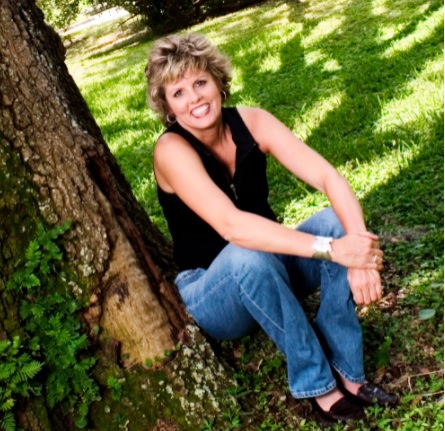
stroke survivor Valerie Greene seating by a tree and smiling

Stroke is a leading cause of death in the U.S. and is a major cause of serious disability. More than 795,000 people in the U.S. have a stroke each year, according to the Centers for Disease Control. Sadly, someone in the U.S. has a stroke every 40 seconds, and someone dies of a stroke every four minutes.

Overcoming Stroke: The 5 Keys to Victory is written with all survivors in mind, regardless of whether their stroke event occurred recently or decades prior. To order a Kindle or paperback copy, head over to Amazon. Lastly, Greene says her future aspirations include launching online stroke recovery workshops.

For similar content from AmeriDisability, read these:

Eddie Bauer Launches Ski Industry’s First Outerwear Kit Designed for Adaptive Skiers

Building on its mission to offer gear and apparel to all people seeking outdoor adventure, Eddie Bauer is excited to introduce the BC Flyline Kit. The first outerwear kit of its kind to be available to consumers, the BC Flyline Kit is specifically designed to meet the needs of adaptive skiers who use a mono or bi-ski to participate in alpine skiing.
Alpine sit skiers require a molded plastic bucket mounted to one or two skis with handheld outriggers for stability, allowing people with disabilities to ski. Eddie Bauer worked closely with Trevor Kennison, one of today’s most influential alpine sit ski athletes, to design and test the jacket and bibs at every stage of the development process. The BC Flyline Kit is available at eddiebauer.com.

“Designing technical gear and apparel for all adventure seekers is a pledge we take seriously and is what drove us to fill the hole in the market facing sit skiers. Lack of access to adequate gear should never prevent someone from getting outside,” said Damien Huang, Eddie Bauer CEO. “We were lucky to have Trevor as a partner throughout the development process. His expertise and feedback were invaluable to the design team.”

The BC Flyline Kit is a waterproof, insulated ski jacket and bib designed to meet the unique needs of sit skiers. It uses the highest quality materials and construction techniques. Features like extra insulation in the legs, articulated knees, full-range sleeves, and a high back on the bibs were incorporated based on the feedback and direction provided by Trevor.

“After years of skiing in traditional jackets and bibs, it became apparent that ski outerwear was not built for someone to use them in a sit ski like I was,” said Trevor. “Working with the design team at Eddie Bauer allowed me to make sure this kit had all the features I had ever wanted. There were numerous rounds of testing and fine-tuning. I would take the kit into the field for a couple of days, then provide photos and notes on small adjustments for the designers to make until it was the perfect kit for a sit skier.”

In addition to being available at eddiebauer.com, the BC Flyline Kit will be promoted across Eddie Bauer’s social channels and with special video footage playing in-stores.

Feature image: Trevor Kennison in the Eddie Bauer BC Flyline Kit he helped design to meet the needs of adaptive skiers who use a mono or bi-ski to participate in alpine skiing.

11 Ways to Keep Your Marriage Healthy While Caregiving

By Marlo Sollitto

Caring for an aging parent can be stressful beyond belief. According to an article published in the American Journal of Nursing, “Caregiving has all the features of a chronic stress experience: It creates physical and psychological strain over extended periods of time, is accompanied by high levels of unpredictability and uncontrollability, has the capacity to create secondary stress in multiple life domains such as work and family relationships, and frequently requires high levels of vigilance.”

It only makes sense that this strain can take a serious toll on caregivers’ relationships with their significant others. Understanding the impact this role has on you and your spouse is the first step in ensuring your marriage remains a top priority even in the most challenging of times.

How Caregiving Affects Marriage

Countless members of the Caregiver Forum on Agingcare.com have asked questions and participated in discussions about balancing marriage, stress, caring for aging parents and caring for themselves. Money, time, energy and patience are typically in short supply for these hardworking folks. After providing quality care for their loved ones, there is often little left over to “give” to other important people in their lives. In fact, family caregivers are stretched so thin that self-care is frequently put on the back burner.

This extended absence of physical and emotional self-care is a recipe for caregiver burnout. Common signs of caregiver burnout include depression, anxiety, mood swings, withdrawal and physical health issues like fatigue, headaches and compromised immune function. Burnout not only harms caregivers but also impacts their relationships with immediate family members like spouses and even children.

When a family caregiver’s own well-being is prioritized behind everyone else’s, resentment is bound to set in. On the other hand, spouses often feel that caregiving has come to dominate day-to-day life, upending long-standing routines and dynamics. If both spouses are involved in providing care, both can wind up neglecting themselves and their relationship with each other. Likewise, if one spouse is primary caregiver for an aging parent and feeling unsupported by their partner, resentment may build from both parties.

man yelling at woman who is holding her head. They are arguing.
credit: AgingCare.com

As caregiver stress increases, tension mounts and healthy communication dwindles. New or longstanding weaknesses in a marriage may emerge under these difficult circumstances. A couple may feel they are arguing more, emotionally distant, physically disconnected, and struggling to cope with everyday decisions as well as those related to a parent’s care needs. It’s best to act on these warning signs early on before both spouses wind up feeling like they’re being shortchanged.

Addressing and solving marital problems can be a considerable undertaking, even for those who aren’t already overwhelmed with caregiving responsibilities. It is crucial for you and your spouse to examine the current situation and the extent to which your wants and needs are being met in your marriage and life as a whole. The next step is to recognize where you both can make changes to better accommodate these goals.

Tips for Balancing Marriage and Caring for Aging Parents

While the things necessary for maintaining a strong marriage may seem obvious, it is easy for them to fall by the wayside when life gets too hectic. This is normal to an extent, but neglecting a relationship over the long term often results in irreparable damage and can lead to divorce. Every couple could use a refresher from time to time, especially those who are also juggling caring for aging parents. Use these tips to keep your marriage strong and prevent caregiver burnout from overwhelming both of you.

  1. Don’t procrastinate.
    When you are stressed, it can seem like there is never time to talk about your feelings, so you keep them bottled up inside. But, when things go overlooked for too long, they tend to explode. Timing is important when tackling prickly subjects, but avoid putting off discussions. You might have too many doctor’s appointments to accompany your parent to this week, but next week the kids might get sick. Before you know it, “next week” never comes. If you struggle with finding the right time to have conversations, make a standing appointment for you and your significant other to check in with each other. It sounds silly, but it will help ensure you communicate regularly and avoid blow-ups.
  2. No topic is off-limits.
    Married couples must be able to talk about everything. Trust each other. Talk about whatever is on your mind and allow your spouse do the same without judgment. All subjects are fair game—the good, the bad and the ugly.
  3. Remember to listen.
    When you’re having a conversation, make sure you aren’t the one doing all the talking and avoid interrupting your spouse. Be sure to really listen to what they are saying. Sometimes it’s helpful to repeat back what they say in your own words to ensure there is no confusion or misinterpretation.

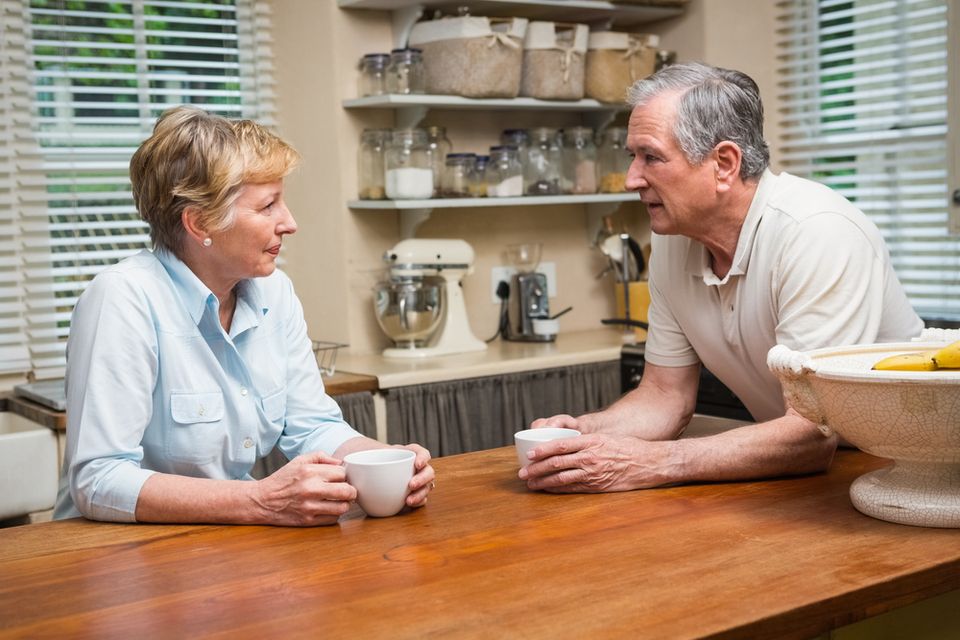
    senior aged couple having coffee at a table
    credit: AgingCare.com
  4. Don’t wallow in self-pity.
    No problem has ever been solved by feeling sorry for yourself or your situation. The old saying rings true: happiness comes from looking at the glass half full, rather than half empty. In reality, this is easy to say, but much harder to put into practice. It takes a conscious effort to examine your thoughts and turn negative voices into positive ones. Constant negativity can sap the energy and lightheartedness out of any relationship, even the most important one: the relationship you have with yourself. Mindfulness exercises, self-help books and therapy can help you practice gratitude and learn to view life through a more positive lens.
  5. Don’t cast blame.
    The blame game is very destructive. There is a natural tendency to place blame on those closest to you during trying times, but truthfully there is usually no one person to blame for this situation. When it comes to caregiving, someone has to take care of aging parents. Out of all the options available for elder care, the job fell to you. Rather than casting blame, find ways to work as a team with your spouse and others to improve your predicament.
  6. Practice teamwork.
    When you first fell in love, you felt it was the two of you against the world. You had each other’s back. Remember your vows to support each other through thick and thin, through tough times and uncertainty. This teamwork concept holds true now more than ever and applies to the rest of the family as well. If you have kids and they are old enough to do chores, make sure they get done. Everyone should contribute and help pick up slack that occurs from time to time. If your spouse feels that you two rarely get quality time together anymore, clarify that their assistance with a few tasks would free up some time for you to reconnect. Making a family work is difficult even in the best circumstances, and it becomes more challenging when caregiving is thrown into the mix. Remember, many hands make light work. The more help you have, the easier it will be to ensure the household is running smoothly and the more likely you are to have free time for other tasks.
  7. Give each other space.
    Everyone needs some alone time. Allocate some time in your schedule to be alone with your thoughts and refresh your spirit—and allow your spouse to do the same. If you aren’t able to leave the house for your “me time,” find your own solitary space within the home. “Man caves” and “she sheds” have become popular for a reason. Use the office, the den, the back porch, your bathtub, even the basement and turn it into your own personal retreat. You must take care of yourself before you can take care of others. This applies in marriage, parenting and caregiving.
  8. Keep the flame alive.
    Make time for fun and romance together, and make it a top priority. Couples should be able to share the burden of tough times together, but it is equally important to spend some carefree time enjoying each other’s company. Carve out time for a date night, a long walk together or just a few extra minutes of snuggling in bed in the morning. If your parent’s care needs make such an arrangement seem impossible, then bring in back-up. If friends or family can’t or won’t help, seek respite from professional caregivers—even if it’s just for a couple of hours here and there. In-home care and adult day care services are both viable options. While it may be difficult to pay for respite, the money is well spent if it allows you to nurture your marriage.
  9. Keep up the simple things.
    Simple, loving gestures matter a great deal in a marriage. Try to do a small act of kindness or love every day. Cook your spouse’s favorite dinner, acknowledge them for something they’ve done, or compliment them to let them know how much you care. Yes, it takes some effort to establish the habit, but the payoff is worth it.

    senior couple driving toward sunset
    credit: AgingCare.com
  10. Build a support network.
    You and your spouse do not have to tackle caregiving on your own. Ask for support from family and friends. Seek help from your neighbors. Consider hiring professional assistance. Don’t be shy about requesting help; you can’t do it alone.
  11. Stay healthy.
    Taking steps to maintain your mental and physical health is crucial for caregivers. Exercise as often as you can, eat healthy, keep your stress levels in check and don’t forget your annual doctor’s appointments. Ideally, your spouse should support you in this endeavor and make their own health a priority as well. Being proactive about your health will ensure you feel your best and are prepared to withstand all the challenges that life and caregiving may throw your way.

Keep in mind that any disruption in a longstanding family pattern can be difficult for everyone to adjust to. It will take time to settle into the new normal and make changes to get it “right.” Patience and understanding are crucial for working through this difficult situation together. Just remember to make yourself, your spouse and your children a priority while caregiving. If you need help communicating and keeping these priorities straight, professional counseling—individually and/or as a couple—can be incredibly beneficial.

The article, 11 Ways to Keep Your Marriage Healthy While Caregiving by Marlo Sollitto originally appeared on AgingCare.com. AgingCare.com is an online resource that connects family caregivers, shares informative articles, provides answers and support through an interactive Caregiver Forum, and offers search capabilities for senior living options for elderly loved ones.