AmeriDisability joins the disability community and the community at large in mourning the loss of Lois Curtis, who won a landmark civil rights case for people with disabilities. Curtis, a Georgia native, passed away on November 3, 2022. Yet, her legacy of disability advocacy will live on.
Why Lois Curtis was Institutionalized
During Curtis’ childhood, her family struggled to find sufficient support and care. Diagnosed with cognitive disabilities in addition to schizophrenia, a mental disorder in which people interpret reality abnormally, Curtis was in and out of hospitals during her youth. Eventually, she was living full-time in an institutional setting.
By the end of her teenage years, Curtis began to advocate for herself (and others) and, more specifically, vocalize her desire to exit the institution. The staff that operated that specific facility failed to manage her dual diagnoses as she wanted (meaning that Curtis was likely solely treated for her mental health condition without factoring in her developmental disabilities). So, Curtis sought assistance to find alternative living options that would effectively meet her needs. However, such options were undoubtedly limited at the time.
Landmark Disability Case Involving Lois Curtis
In 1995, the Atlanta Legal Aid Society, on behalf of Curtis and Elaine Wilson, another person with cognitive disabilities and mental illness seeking release from an institution, filed a lawsuit against the state of Georgia. The case (Olmstead v. L.C), which claimed discrimination under the Americans with Disabilities Act of 1990, named Tommy Olmstead, then Commissioner of the Georgia Department of Human Resources, as the defendant. Serving as the women’s legal representative, attorney Sue Jamieson argued that individuals with disabilities, such as Curtis and Wilson, could not be forced to live in an institutional setting if they could be cared for in a more integrated environment in the community.
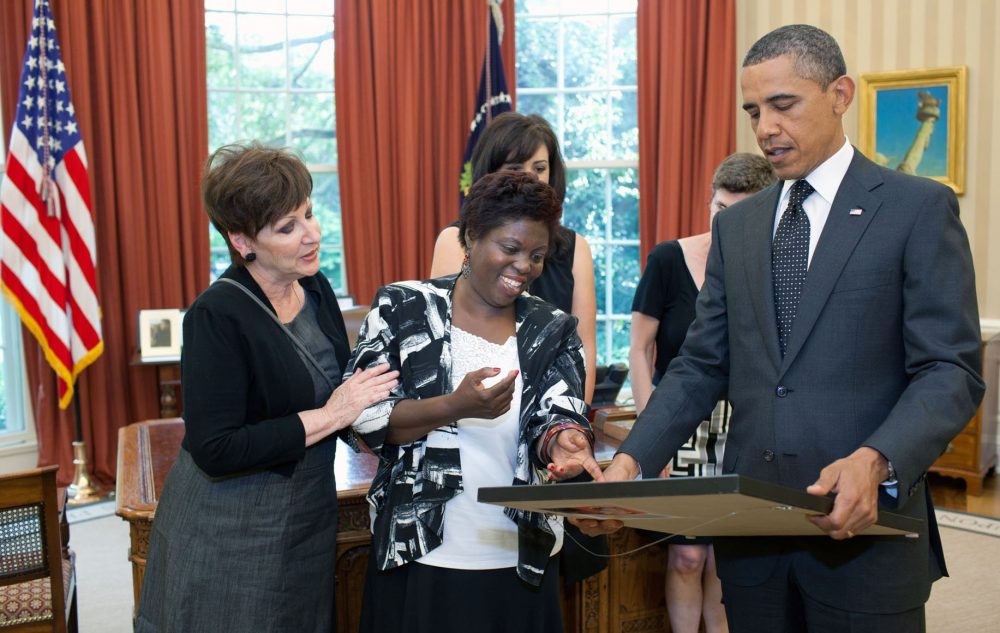
(Lois Curtis in Oval Office with President Obama.)
After winning the case and a subsequent appeal, Justice Ruth Bader Ginsburg ruled in favor of Curtis and Wilson with a Supreme Court decision in 1999. Ginsburg wrote that institutionalizing people who are capable of living in community settings reinforces assumptions that they are “incapable or unworthy of participating in community life.” Because of this ruling, both local and state governments went on to develop much-needed services and opportunities to better serve the disabled community. It is believed that expansions to community support systems, like counseling, inclusive employment services and daily tasks management programs, are also connected to this landmark case.
“Lois Curtis truly changed history,” said Samuel Bagenstos, General Counsel for the United States Department of Health and Human Services, in a press statement. “By fighting for her right to live in her own home, she established a precedent that has improved the lives of thousands of other people with all types of disabilities–and that precedent continues to underpin the fundamental principle that disabled people have a right to the services they need to live flourishing lives alongside their fellow members of the community.”
Creating a Masterpiece Legacy
Curtis went on to reside in an apartment and gained access to proper support systems. She worked as an artist and exhibited at Atlanta-area galleries. Excelling in portraits, Curtis was invited to the White House in 2011 to present President Barack Obama with an original piece.
Sadly, Curtis died of pancreatic cancer at the age of 55. According to the American Cancer Society (ACS), pancreatic cancer accounts for about 3% of all cancers in the U.S. and about 7% of all cancer deaths. The ACS’s estimates for pancreatic cancer in the U.S. for 2022 are:
about 62,210 people (32,970 men and 29,240 women) will be diagnosed with pancreatic cancer; and,
about 49,830 people (25,970 men and 23,860 women) will die of pancreatic cancer.
Curtis had a joyful smile that could light up a room. It is because of her determination and fearless advocacy that millions of people with disabilities can reside in their own homes and participate in their communities while accessing necessary disability support services. Of course, many people remain in institutional settings because of a lack of access to home and/or community-based services. That’s why it’s important to highlight the leadership of Curtis and, more importantly, continue to address the injustice of segregating people with disabilities.
Autism research just got a big boost! In September 2022, the National Institutes of Health awarded a total of $100 million over the next five years to support nine Autism Centers of Excellence (ACEs). This endeavor funds large research projects to understand and develop interventions for autism spectrum disorder (ASD).
According to the NIH, ASD is a complex developmental disorder affecting how a person behaves, interacts with others, communicates and learns.
Created in 2007, the ACE program is renewed every five years. The ACE program supports research on the diagnosis, causes of and interventions for ASD. It also seeks to facilitate innovative and cost-effective services for people with ASD throughout their lifespan. The awards support research at individual centers, which feature collaboration between teams of experts and at research networks, which involve multiple institutions dedicated to the study of ASD. Each center and network focus on a specific research topic.
Each ACE will adopt a specific Plan for Enhancing Diverse Perspectives (PEDP) as part of its proposed research project. The PEDP will outline strategies to increase the participation of women and individuals from traditionally underrepresented groups in the ACE biomedical, behavioral and clinical workforce. Additionally, the PEDP is intended to increase the participation of underrepresented and underserved populations in research.
Autism Pride symbol | source: Wikipedia
Community engagement is also a core feature of the ACE program. Each ACE will have an external advisory board that includes individuals with ASD and/or parents of individuals with ASD as members. In addition, ACE investigators will engage with the ASD community to learn about their needs and research concerns and to inform them about research findings and plans for future studies.
The ACE program is supported by NIH’s Eunice Kennedy Shriver National Institute of Child Health and Human Development, National Institute of Mental Health, National Institute on Deafness and Other Communication Disorders, National Institute of Neurological Disorders and Stroke, and National Institute of Environmental Health Sciences.
These are the 2022 Autism Research Grants
Columbia University Health Sciences – Prospective Genetic Risk Evaluation and Assessment in Autism
Wendy K. Chung, M.D., Ph.D., Jeremy Veenstra-VanderWeele, MD, and colleagues will identify a diverse sample of 240 infants at high risk genetically for ASD and other neurodevelopmental conditions, comparing their development to that of a group of 120 infants who do not have a genetic high risk. They will track the children’s neurological, cognitive and behavioral development to classify emerging features of ASD in early development, which could then be used to identify other children at risk for ASD. The researchers also will study the experience of families who have received information about genetic risk, and their choices about early interventions.
Stanford University – Center for Sleep in Autism Spectrum Disorder
Joachim Hallmayer, M.D., will lead a team of researchers investigating the potential relationship between sleep disturbances to ASD. Individuals with ASD often have difficulty falling and staying asleep and may awaken frequently during the night. Studies indicate that proper sleep is essential for brain development and function. The research team will monitor the brain waves of people with ASD during sleep and will use other technologies to document their sleep and wake cycles. The researchers hope to determine if unique patterns of sleep disturbances are associated with ASD and whether treating the sleep disturbances will alleviate ASD symptoms. The research will involve preclinical and clinical studies.
(CDC)
University of North Carolina at Chapel Hill – Brain and Behavior Study of ASD from Infancy through Adolescence
Joseph Piven, M.D., will continue leading the Infant Brain Imaging Study (IBIS Network) to examine brain and behavior development in a group of 400 children (300 of whom are at high familial risk of ASD). The children entered this study as infants, before the typical age of onset of ASD and are now entering adolescence, the time of onset for most adult psychiatric disorders. The researchers will continue documenting the trajectories of brain and behavior development, from infancy through adolescence, in those with ASD as well as those at high risk for ASD who develop other psychiatric conditions that are genetically related to ASD. This study will also focus on determining the early brain and behavior manifestations of ASD in females. Females with ASD often present with different symptom patterns and are frequently diagnosed later than males. Understanding brain and behavior trajectories from infancy through adolescence will provide insight relevant to early interventions for ASD and related psychiatric conditions.
Drexel University – Public Health and Autism Science Advancing Equitable Strategies Across the Life Course
Diana Robins, Ph.D., Diana Schendel, Ph.D., and colleagues will study underserved populations with autism to determine their use of medical services, the reasons for their health inequities and the resulting effects on their health outcomes. Previous studies have shown that underserved minority and disadvantaged populations with ASD have less access to healthcare and greater chances for adverse outcomes such as cardiovascular disease and shorter life expectancy. The researchers will study key stages of the life course: initial diagnosis in childhood, patterns of health and health services use in adolescence and young adulthood, and health and mental health in older adulthood. Results will inform efforts to reduce adverse outcomes and promote well-being for people with ASD.
Duke University – Translational Digital Health and Computational Approach to Early Identification, Outcome Monitoring and Biomarker Discovery in ASD
Geraldine Dawson, Ph.D., will lead a team of researchers developing new methods to screen children for early signs of autism. They will study a digital app that is used at home on smartphones and tablets to videotape young children’s behavior and interactions with their caregivers. Artificial intelligence and computer vision will automatically code the videotapes to identify behavioral characteristics of children who are later diagnosed with autism and track their long-term development. They will also use artificial intelligence to analyze health insurance claims and medical records for roughly 230,000 children (about 6,000 with ASD) from birth to 18 months to develop an algorithm to predict later ASD during infancy and identify the nature and prevalence of early medical conditions associated with later diagnosis of ASD. Based on the algorithm, they will develop automated decision support for primary care providers. The research team will also use artificial intelligence to analyze electroencephalograms (brain wave activity), which are synchronized with videotaped behavior of 3- to 6-year-old children to identify brain activity associated with accompanying behaviors characteristic of ASD.
(Shutterstock)
University of Wisconsin-Madison – Toward Healthy Aging in Adults with Autism: A Longitudinal Clinical and Multimodal Brain Imaging Study
Janet Lainhart, M.D., Andrew Alexander, Ph.D., and Brandon Zielinski, M.D., Ph.D., will oversee a project that follows autistic adults as they age. Recent studies suggest that older adults with ASD may have shorter life expectancies and more physical and mental health difficulties than the general population. The project will enroll a large group of male and female adults with and without ASD. The researchers will use a broad range of measures to study changes in the participants’ well-being, physical and mental health, and brain structure and function. The goal is to examine how aging-related differences may contribute to different outcomes, including decline and resilience, to improve the long-term health of autistic adults.
University of Pittsburgh – Mental Health in Autistic Adults: An RDoC Approach
Carla A. Mazefsky, Ph.D., and colleagues will investigate emotional and mental health in autistic adults, an underserved population that has a potentially higher risk for suicide. Together with autistic adults and community partners, the researchers will use a longitudinal, multi-method approach that integrates clinical and behavioral measures, neuroimaging, and self-report of experiences linked with physiological responses. With these measures, the research team will examine predictors of suicidality at the group and individual levels and validate a suicide risk self-report measure. The investigators also will consider various factors that may play a role in mental health outcomes, such as the age of autism diagnosis, biological sex, racial and ethnic identities, LGBTQIA+ identities, mental health diagnoses and trauma history. The overall goal of this project is to generate information needed to improve autistic adults’ mental health and quality of life and reduce their risk of early death.
University of Virginia – Neurodevelopmental Biomarkers of Late Diagnosis in Female and Gender Diverse ASD
Kevin Pelphrey, Ph.D., Lauren Kenworthy, Ph.D., and Allison Jack, Ph.D., will lead a team of investigators at multiple sites to develop effective methods for identifying older autistic adolescents and adults who are often misdiagnosed, diagnosed late or not diagnosed at all. This includes people who are born female or who are gender diverse. Late diagnosis, misdiagnosis, or lack of diagnosis puts individuals with ASD at greater risk for depression, anxiety and self-harm and can negatively impact their quality of life. Using brain and behavioral measures, the researchers will focus on understanding predictors of late diagnosis and on developing a new autism screening tool to identify individuals at risk for late diagnosis. The goal is to help autistic adolescents and adults receive timely and appropriate services and supports to improve overall outcomes.
Johns Hopkins University – Combining Advances in Genomics and Environmental Science to Accelerate Actionable Research and Practice in ASD (GEARs)
Heather E. Volk, Ph.D., M.P.H., will lead researchers at 18 GEARs network sites to understand how genetic and environmental factors interact to affect ASD and health outcomes. The research team will coordinate and evaluate data from ongoing population studies that include 175,000 individuals to determine how environmental factors such as air pollution, prenatal maternal infection and prenatal nutrition influence the risk for ASD and the symptom severity accompanying genetic variants associated with ASD. GEARs also will develop and implement an outreach and dissemination strategy for new findings.
What other autism research topics do you think need to be further funded? Share with AmeriDisability via Facebook, Twitter and Instagram.
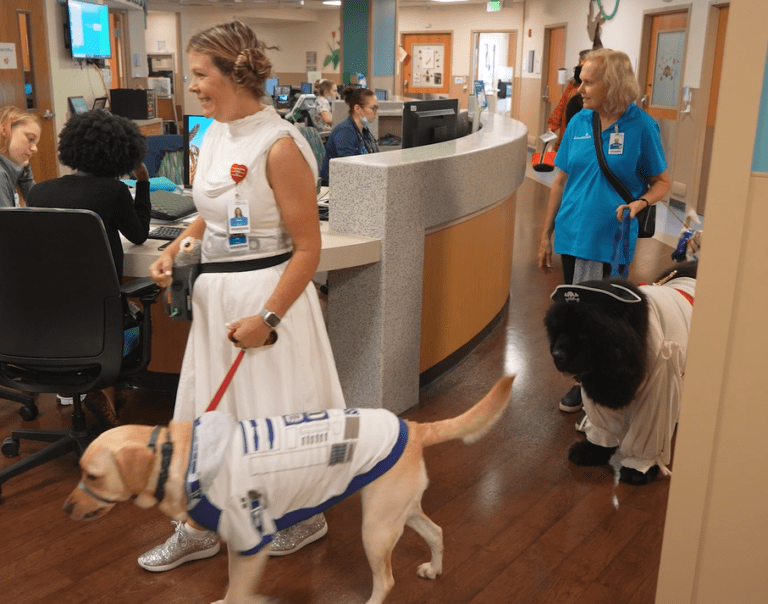
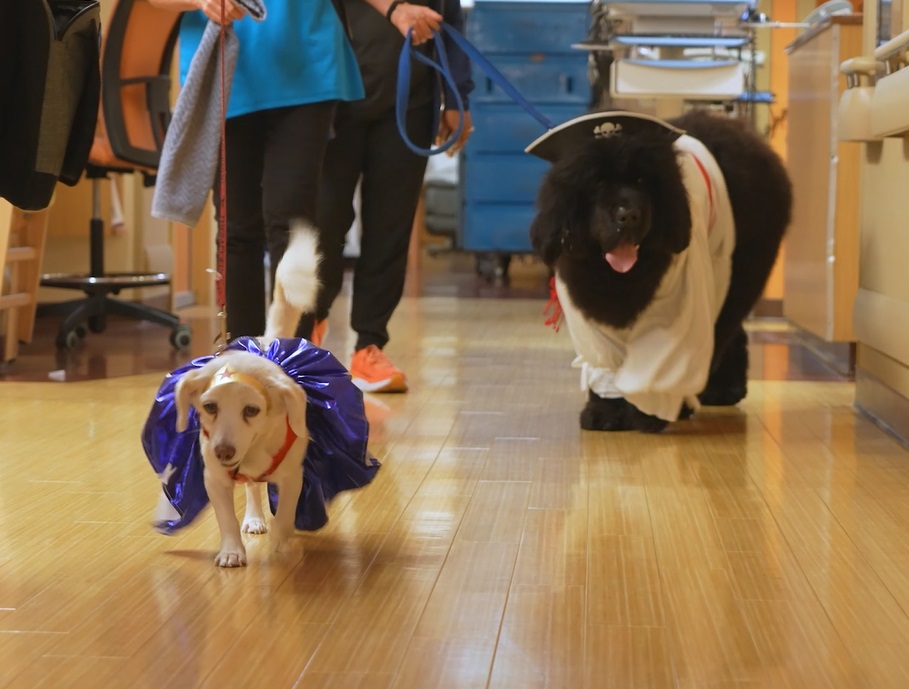
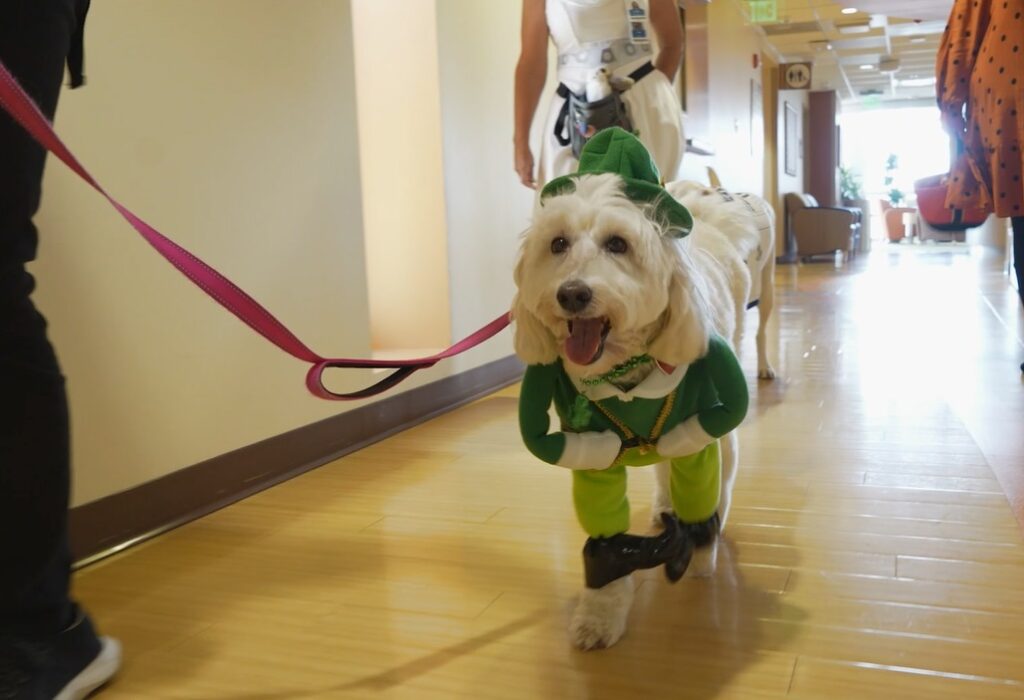
Embracing the spirit of the season, pet therapy volunteers dressed their specialty-trained dogs in Halloween costumes for tail-wagging trick-or-treating. The costume-clad canines took to hospital hallways at AdventHealth for Children in Orlando to visit pediatric patients and healthcare team members.
The pet therapy dogs dressed as a leprechaun, a pirate, R2-D2 (alongside his trainer dressed as Princess Leia) and Wonder Woman.
Benefits of Pet Therapy Programs
According to the American Veterinary Medical Association, animals can provide essential aid to people with disabilities and varying health conditions. There are three types of assistance animals: service animals, emotional support animals and therapy animals.
(AdventHealth)
Many people impacted by emotional stress find animals to be calming. This includes those impacted by depression, PTSD, schizophrenia and other conditions. Plus, doctors, therapists and other professionals attest that the physical interaction with therapy pets likewise benefits those impacted by stroke, traumatic brain and spinal cord injuries, amputations, burns and other conditions that require both physical and emotional rehabilitation.
For example, a patient with weakness in the arm may enjoy petting a pet therapy dog’s soft fur without even realizing that the repetitive, controlled motion is, indeed, physical therapy.
Aside from dogs, a variety of animals have the potential to serve as therapy pets, including birds, cats, horses, pigs, guinea pigs and rabbits.
AdventHealth’s Volunteer Pet Therapy Program
AdventHealth Volunteer Services’ Pet Therapy Program features canines that play an instrumental role in the care offered at this Central Florida-based hospital system. The dogs serve as cheerleaders, entertainers and, again, physical therapy assistants, bringing patients smiles and a much-needed distraction.
(AdventHealth)
Operating under strict policies and infection control guidelines, as well as the approval of the Society for the Prevention of Cruelty to Animals (SPCA), canine teams (dog + human trainer) make more than 9,000 visits to patients each year.
According to the hospital’s media team, AdventHealth’s Pet Therapy Program is actively seeking additional volunteers to lead tail-wagging efforts. To learn more, call (407) 303-6938 or visit AdventHealth.com.
Trick-or-treaters love collecting tons of Halloween candy. But here’s a scary fact: On average on Halloween, children consume more than 16 times the daily recommendation of sugar, according to the National Retail Federation. That equates to about three cups of raw sugar! Yikes… it’s time to talk about how to donate Halloween candy.
Typically, enjoying sweet treats in moderation is fine for most people with and without disabilities. But too much of a good thing – including Halloween candy – isn’t advised by the majority of healthcare professionals. Furthermore, it’s important to be aware that people with disabilities are less likely to be of healthy weight and more likely to be obese than people without disabilities.
To limit excessive sugar rushes among your little ghosts and goblins, consider donating some of the Halloween goodies that your family collects to good causes, including efforts that benefit the disability community.
Here are ways to donate Halloween candy to disability-serving organizations…
Halloween Candy Buy Back
Halloween Candy Buy Back partners with dental offices and other businesses to financially reward youngsters who choose to exchange Halloween candy for healthier items, like toothbrushes. The initiative was established by Dr. Chris Kammer, a founding member of the American Academy of Cosmetic Dentistry, with the intention to: (1) encourage trick-or-treaters to protect their teeth, and (2) foster a sense of charitable giving.
Because of potentially high sugar consumption and less-than-ideal oral hygiene skills, children of all abilities are at risk for cavities and other dental issues. This concern is even greater among people with disabilities who may lack proper training of or understanding of oral care, have inconsistent or limited access to dental care, encounter inaccessible office spaces, or have aversions to dental care due to sensory conditions or other issues.
Halloween Candy Buy Back aligns with both Move Forward America and Operation Shoebox. These two organizations distribute candy and other care package items to active-duty troops as well as veterans, including disabled veterans and their families. The benefits of this donation are actually two-fold. You see, in addition to treating troops and veterans, research suggests that when someone does something good, a happiness high ensues. That means that if you donate Halloween candy, your endorphins may elevate!
Ronald McDonald House Charities is a nonprofit that supports children with serious illnesses, including an array of disabilities, and their families. Their programming allows families to stay together during periods of hospital stays, either at a Ronald McDonald House, which includes accessible amenities, or other accommodations like nearby hotels.
Because many children who are ill or injured are unable to participate in trick-or-treating, numerous chapters of Ronald McDonald House Charities accept unopened Halloween candy to be shared with children and their families. To locate a site, visit rmhc.org.
Run by Soldier’s Angels, this program allows donors to send sweets to active military service members, as well as retired, disabled veterans and caregivers. In fact, patients at VA hospitals typically love receiving these sweet surprises! Click here to see the collection site map.
As the largest privately-funded nonprofit in the world, the United Way strives to create solutions that build stronger communities, which includes disability-inclusive efforts. The United Way focuses on enhancing education, strengthening financial stability and making all communities healthier. Some chapters collect Halloween candy to donate to underserved populations. [As a reminder, the disability community is the nation’s largest minority group and, yes, often underserved]. Find your local United Way chapter at UnitedWay.org.
More Opportunities to Donate Halloween Candy
Police or fire stations, nursing homes and homeless shelters often accept (and appreciate receiving) leftover Halloween candy. Do call ahead to your preferred donation site for further details.
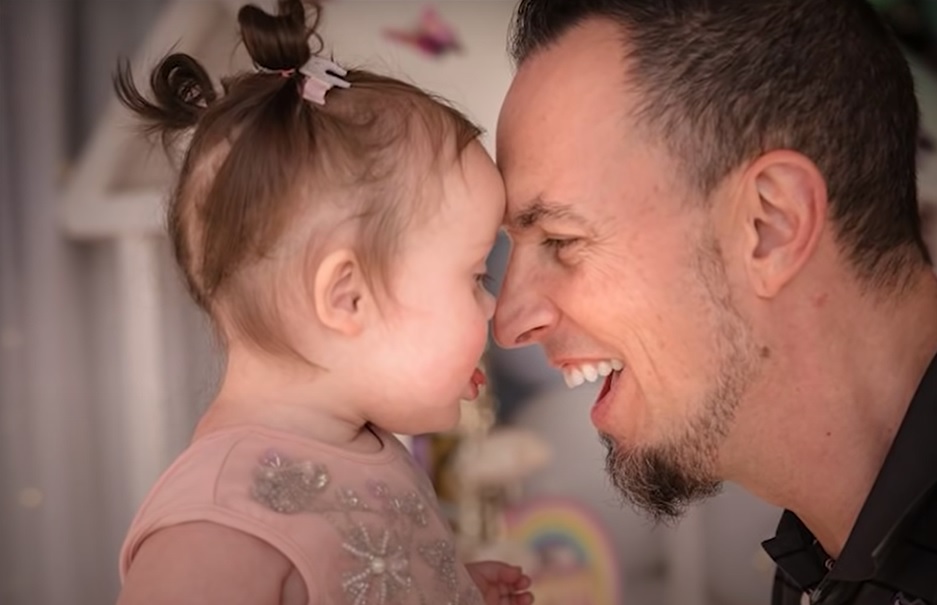
Grammy Award-winning musician and founding member of the hard rock bands Alter Bridge, Tremonti and, most notably, Creed, Mark Tremonti recently released his most ambitious and challenging creative project to date. The jazz-style work, a far departure from his typical rock genre, was inspired by his daughter Stella, who was born with Down syndrome.
Tremonti partnered with the National Down Syndrome Society (NDSS) to release the unexpected album of Frank Sinatra covers titled Tremonti Sings Sinatra. Tremonti recorded the tracks with the remaining members of Sinatra’s band, including Mike Smith, Sinatra’s musical director. The seasoned orchestra professionals admitted to doubting Tremonti’s capabilities but were, then, blown away by his surprising crooner-style skills. Tremonti had already won the approval of Stella, who joyfully smiles every time her daddy sings to her.
Tuning in for Down Syndrome Awareness
The album of selections from Sinatra’s catalog was released earlier in 2022, as part of a new charity initiative created by Tremonti called Take A Chance For Charity. Soon after, the album landed #1 on the Billboard Music Chart’s Current Traditional Jazz Album and Independent Album categories!
“It’s a different vibe; a different journey,” Tremonti said in a YouTube video. He felt called to step outside of his comfort zone and use his public platform to further disability awareness and, more specifically, fundraise for Down syndrome research and initiatives.
People with Down syndrome have an extra chromosome which, according to the National Down Syndrome Society, can cause intellectual developmental disabilities, as well as low muscle tone, small stature, an upward slant to the eyes and other differing characteristics. Proceeds from the album support the NDSS and the work they do to advocate for and support individuals with Down syndrome and their families.
(Tremonti via YouTube)
This isn’t the first time Tremonti has aligned with the disability community. During his teenage years, his mother, Mary, was diagnosed with lupus, technically known as systemic lupus erythematosus. Lupus, according to the Lupus Foundation of America, is a chronic condition that can cause inflammation and pain in any part of your body, though most commonly affecting skin, joints and internal organs like the kidneys and heart. It’s an autoimmune disease, which means that one’s immune system — the body system that usually fights infections — attacks healthy tissue instead. After Mary passed away in 2002, Tremonti wrote and recorded the song ‘In Loving Memory’ as a tribute to her and his grief process.
Jazzing Up Down Syndrome Fundraising
“For years, I’ve loved singing along to Frank’s songs. One night, I found an old video of him performing ‘The Song Is You’ from 1944. It made me want to dive into his vocal approach. I was all in and I wanted to do something with it,” Tremonti shared in an NDSS press release. He says Stella’s Down syndrome diagnosis offered clarity as to why he so admired the iconic singer.
“Frank Sinatra raised more than a billion dollars for charity and that is a fact I wish the public knew more about. Beneath his cool and calm persona, he had a big heart,” Tremonti explained of his motivation. “I decided to do this record to raise funds for families and individuals with Down syndrome. This project is the start of a new purpose that I will have for the rest of my life.”
While the vocal approach is heartwarmingly similar, popular tunes like “I’ve Got The World On A String,” “My Way” and “That’s Life” found a fresh tone with Tremonti’s chops. Best known for his guitar playing, especially during the post-grunge musical era in the late 90s and early 2000s, Tremonti left the instrumentals to Sinatra’s band and solely focused on the vocals for the collection. Also known for songwriting, Tremonti, of course, did not pen the lyrics to the 14 tracks, but he did paint the original artwork featured on the album cover.
Playing It Forward
Following the release of Tremonti Sings Sinatra, the singer performed the cover tracks at venues in London, England, as well as Orlando, Florida, where he resides with his family. Tremonti, accompanied live by members of Sinatra’s band, is set to perform at the Fly Me to the Moon gala and auction, benefitting NDSS. The event will be held at the Ziegfeld Ballroom in New York City on March 2, 2023.
Tremonti Sings Sinatra includes the following songs:
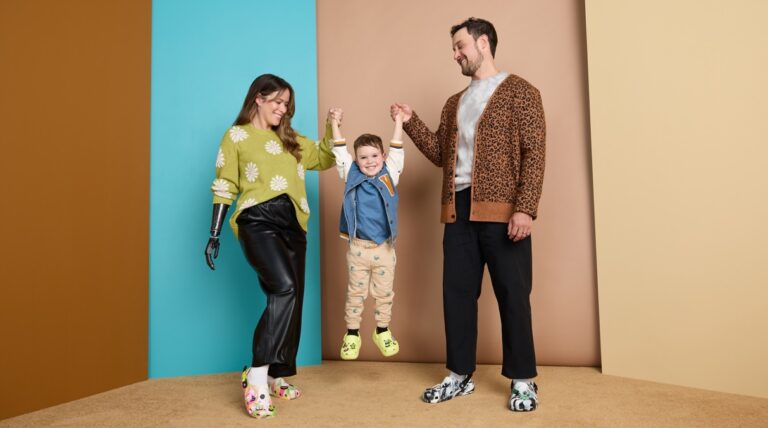
Two decades ago, the Crocs shoe maker nibbled its way into the fashion industry. These unique foam clogs were initially marketed as boating shoes. But, thanks to their ultimate comfort level, a much broader consumer base stepped up. Crocs is now expanding its reach even further with the launch of its new adaptive shoe.
Inclusive fashion is, undoubtedly, in demand. You see, in the United States alone, at least 61 million — or 1-in-4 — adults live with a disability, according to the Centers for Disease Control and Prevention. The disability community is the nation’s largest minority group.
Crocs didn’t want to bite off more than it could chew with inclusive design, so the company wisely partnered with Zappos Adaptive, the inclusive branch of the online footwear retailer Zappos.com. The collaborative effort then grew even more. A Zappos representative told AmeriDisability that Zappos Adaptive and Crocs collaborated with a focus group of people with disabilities to better understand their dressing needs through wear testing for accessibility and comfort. It was, according to this source, incredibly important for both teams to listen to the feedback and understand the challenges and opportunities for the inclusive shoe product.
(Zappos)
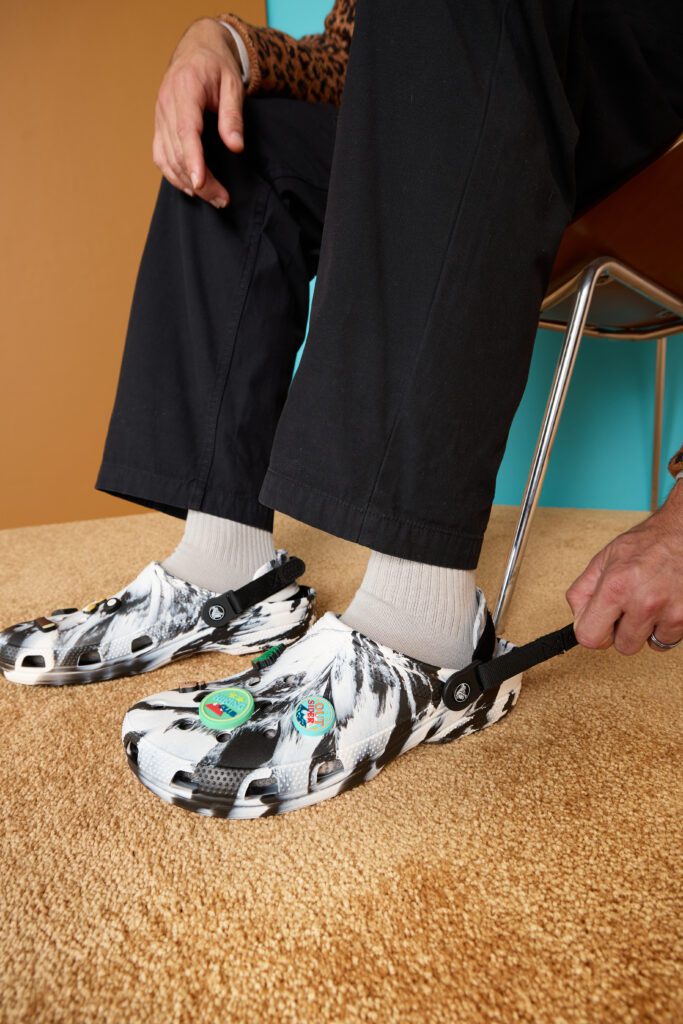
After 18 months of finessing its inclusive design with focus group input, the Crocs Classic Slip Resistant Clog kicked off a new area of adaptive footwear. The Crocs Classic Slip Resistant Clog features:
adjustable (or removable) heel strap with textured pull tabs,
ventilation ports for added breathability (as well as help to shed water and debris),
“Crocs welcomes all one-of-a-kinds and is committed to helping everyone feel comfortable in their own shoes. Our Adaptive Clog designed with Zappos was designed with this mission at the forefront. With added traction and security, we’re bringing the comfort and style of our iconic clog to all people. Complete with personalization opportunities with our Jibbitz charms, everyone can feel empowered to be their authentic selves,” Deanna Bratter, Crocs Global Head of Sustainability, shared with AmeriDisability.
The new adaptive style of Crocs is sold exclusively at Zappos.com in five color styles, including black/white marbled, electric pink/multi-marbled, digital violet, white and black. Priced at $54.95 to $59.95, this clog is offered in both Men’s (size 2-13) and Women’s (size 4-15).
Crocs has sold more than 855 million pairs of shoes since its inception. The company produces more than $2.3 billion in annual sales, making Crocs one of the world’s 10 largest non-athletic footwear brands. And we suspect that the Crocs Classic Slip Resistant Clog will also be beloved by clog fans – with and without disabilities.
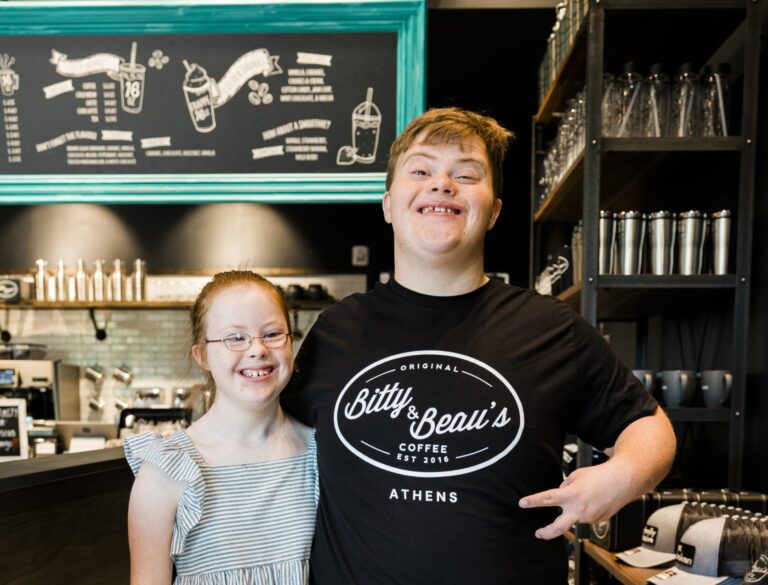
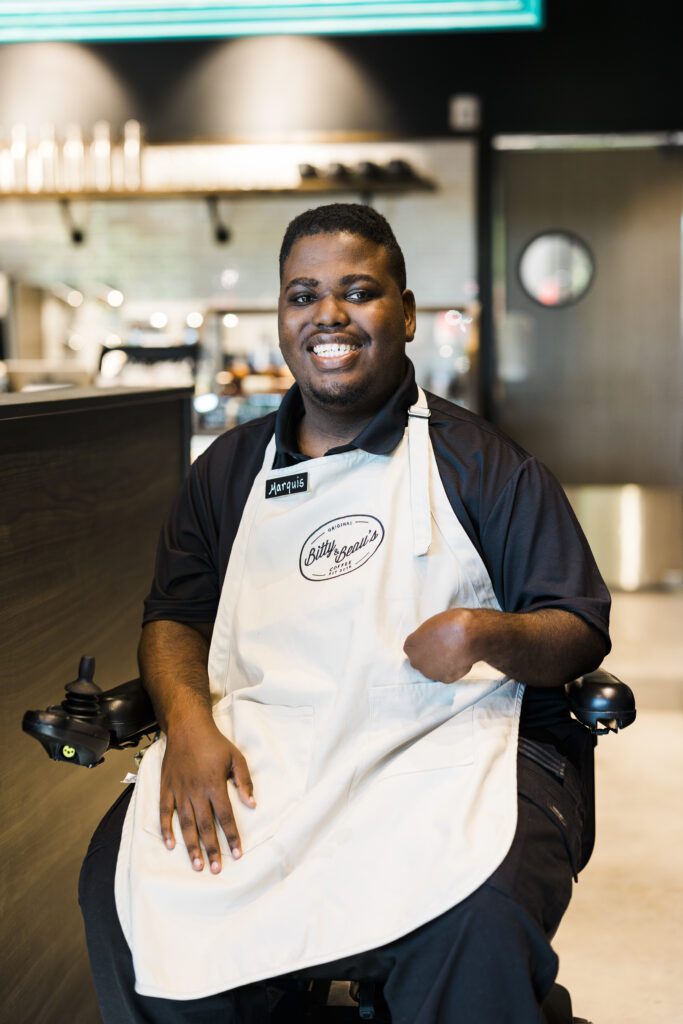
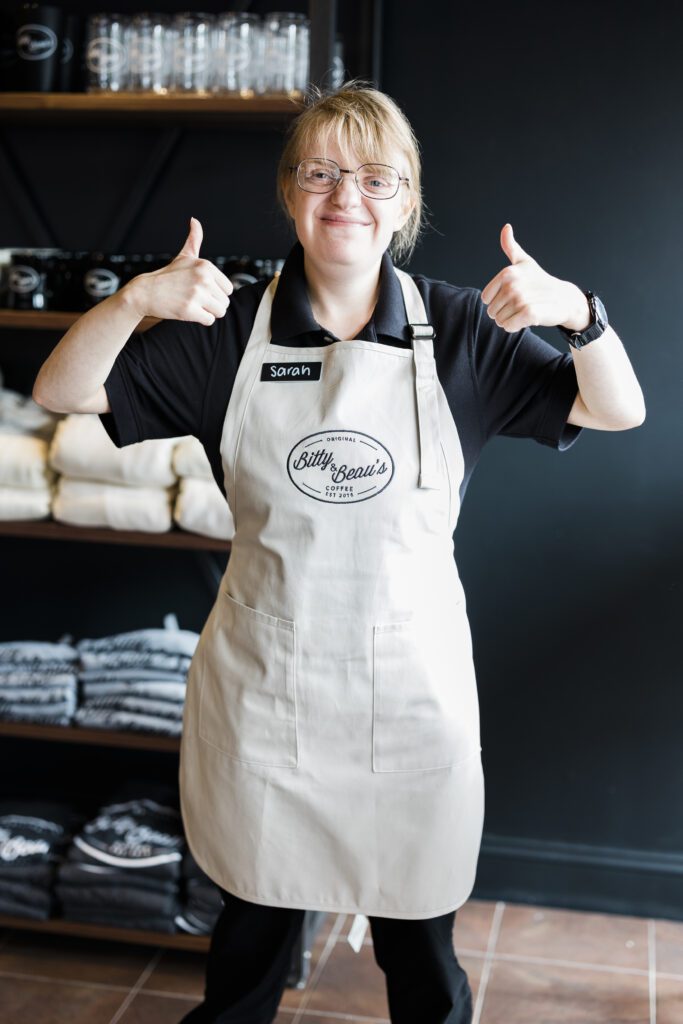
Coffee drinkers are raising their glasses to one of America’s favorite drinks… well, raising mugs, insulated tumblers and to-go cups with lids. According to the Statista Global Consumer Survey, coffee was reported by U.S. adults as the most regularly consumed beverage. In this survey, coffee even fared better than bottled water, sports drinks, tea and alcoholic drinks. If java isn’t exactly your jam, the inclusive business model of Bitty & Beau’s Coffee might just broaden your horizons.
Parents Pour Their Hearts into Inclusive Employment
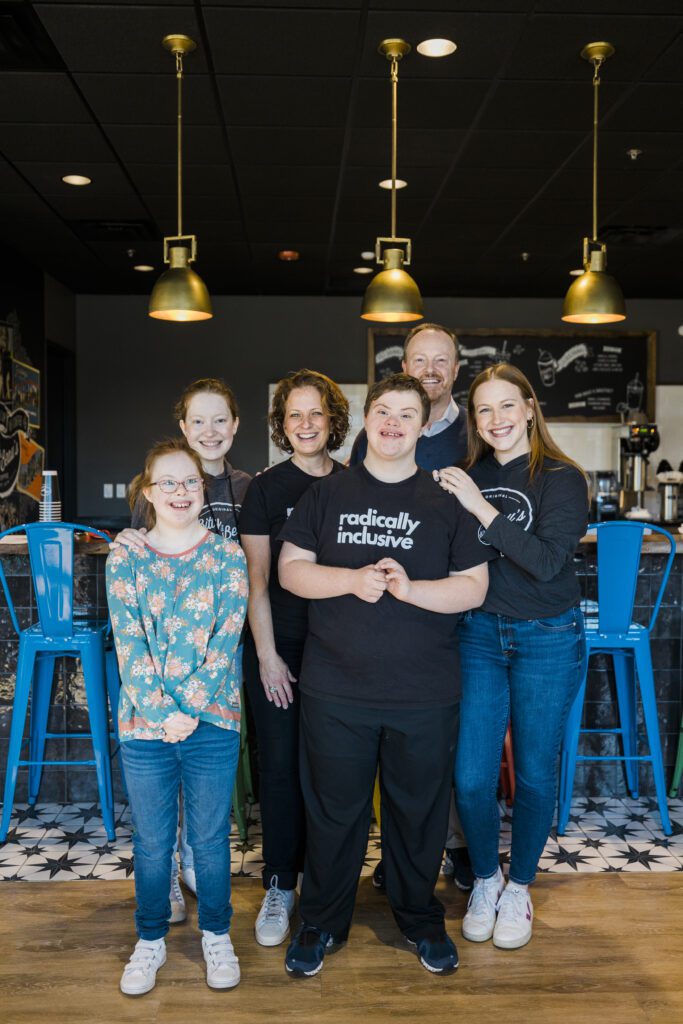
Just like most parents, Amy and Ben Wright strived to nurture their children in a happy environment and, eventually, hoped to see all four of them advance into the workforce. But the parents — of Lillie (23 years old), who has autism; Emma Grace (22 years old); Beau (18 years old), who has Down syndrome; and Bitty (13 years old), who also has Down syndrome — came to understand that people with disabilities often struggle to land meaningful employment. Unfortunately, 81% of adults with intellectual or developmental disabilities do not have paid employment, according to research reported by Special Olympics.
“What we discovered is that while the education systems have come a long way, they’re designed to prepare kids for jobs that don’t exist for them,” Ben shared. Then, a solution jolted Amy faster than a shot of espresso!
“It hit me like a lightning bolt: a coffee shop,” Amy recalled. “I realized it would be the perfect environment for bringing people together. Seeing the staff taking orders, serving coffee — they’d realize how capable they [i.e. members of the disability community] are.”
The Wright Family (Bitty & Beau’s Coffee)
In January 2016, the Wrights opened the original Bitty & Beau’s Coffee shop in Wilmington, North Carolina. The company emphasized its inclusive employment mission with a goal to not only sell tasty coffeehouse delights but to empower people with disabilities to become more valued, accepted and included in the community.
Serving Up Warmth
From black to light, caffeinated to decaffeinated, hot to iced, Bitty & Beau’s Coffee has a diverse drink menu to satisfy all. Customers may order warm or cold coffee classics, such as lattes, cappuccinos, espresso and Americanos; plus frappes and smoothies. Assorted bites like bagels, muffins and cinnamon rolls are also available for purchase.
The company’s distinctive service quickly warmed the hearts of customers near and far. As of fall 2022, Bitty & Beau’s Coffee has 23 franchise locations across 13 states, with over 350 employees with differing abilities. Apparently, consumers nationwide are craving inclusive businesses and services – and, sometimes, with cream and sugar! In fact, Bitty & Beau’s Coffee was deemed the most sought-after takeout restaurant in South Carolina, according to a study from move.org.
(Bitty & Beau’s Coffee)
Why Drinking Coffee is Beneficial
Coffee often gets a bad rap but, according to some health experts, a cup of Joe a day is actually beneficial to one’s health. Drinking coffee on a regular basis, as reported by the Cleveland Clinic, has been shown to lower the risk of developing several conditions, including Alzheimer’s, colorectal and liver cancers, depression, Parkinson’s disease and Type 2 diabetes; in addition to providing protection against liver cirrhosis in people at risk of the disease (such as those with alcohol use disorder or fatty liver disease).
Aside from these scientifically-proven health benefits, supporting the mission of Bitty & Beau’s Coffee can stimulate a person’s endorphins. It’s called the “do good, feel phenomenon.” Research suggests that when someone does something good, a happiness high ensues. So in this case, customers of Bitty & Beau’s Coffee can feel good about investing their purchasing power into a business model that gainfully employs people with intellectual disabilities.
Want to Stir the (Coffee) Pot More?
Craving a cup of coffee and then some? Stop into one of Bitty & Beau’s 23 locations and/or shop online for bagged coffee and company-themed swag and accessories. For those who really love coffee and want to further the important mission of inclusive workplaces, Bitty & Beau’s Coffee has franchise opportunities available. And while the company has greatly expanded, family remains at its core.
“The whole family is involved,” Amy tells AmeriDisability. “Our older girls [Lillie and Emma Grace] have leadership roles in the company.”
Listen, all parents seem to possess problem-solving superpowers when it comes to their kids and, perhaps, that’s especially true when it comes to parents of children with special needs, as the Wrights have demonstrated. In 2017, Amy was honored with CNN’s Hero of the Year Award. During her acceptance speech, Amy publically proclaimed to her children: “Bitty and Beau — I would not change you for the world… but I will change the world for you!”
And that she has. So let’s raise a glass (um, a coffee mug) to Bitty & Beau’s Coffee for empowering all people, especially those with disabilities, to feel valued, accepted and included in the community AND the workforce.
(Bitty & Beau’s Coffee)
Want more content like this? Check out these articles:
This October, children and adults of all abilities are focused on costumes, candy and all things pumpkin spice. A whopping 69% of consumers plan to celebrate this spooky holiday, which is an increase from 65% reported in 2021 (during the pandemic), according to the National Retail Federation’s annual survey. Ghosts, vampires, werewolves and witches aside, Halloween can be a scary time for service dogs, companion animals and family pets. Have no fear… AmeriDisability is treating you to a list of Halloween safety tips to keep your howling hounds and black cats safe.
1. Candy is Not So Dandy
Reserve the Halloween candy for trick-or-treaters only! According to the ASPCA, several popular Halloween treats are toxic to pets. Chocolate in all forms—especially dark or baking chocolate—can be very dangerous for cats and dogs. Plus, sugar-free candies containing the sugar substitute xylitol can cause serious problems in animals.
Be sure to trash all wrappers properly. Animals, especially batty cats, like to play with balled-up wrappers that resemble toys. However, ingesting aluminum foil or cellophane can cause intestinal blockages and induce vomiting.
2. Pumpkin Spice is Not So Nice
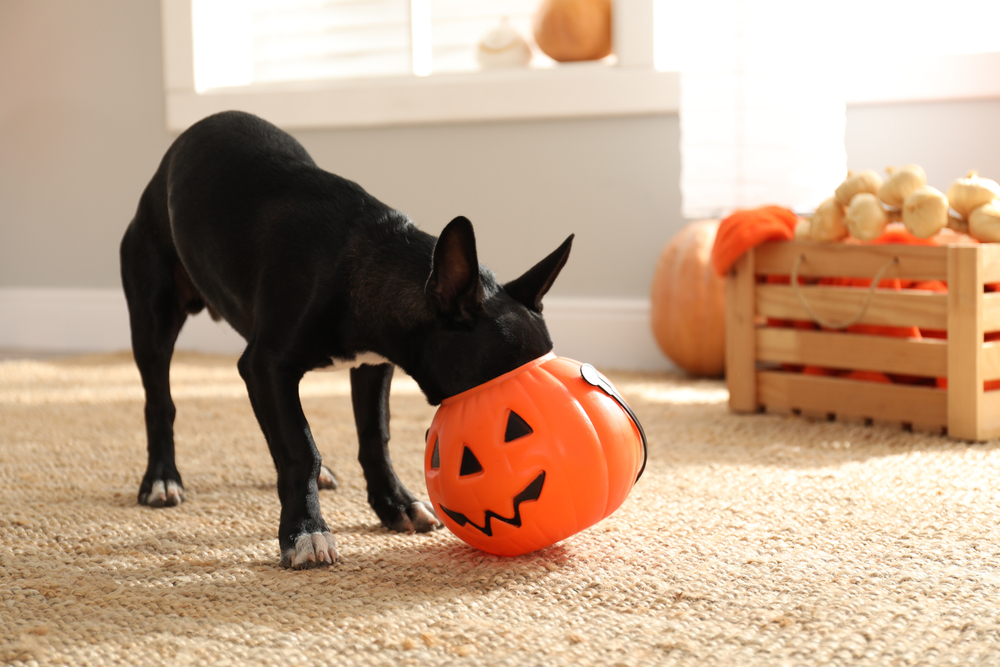
While non-toxic, not all forms of pumpkin are safe for your monster mutt. Plain pumpkin, and even some seeds, is typically okay and even nutrient-dense when consumed in moderation. However, anything pumpkin spice isn’t as nice! Pumpkin pie filling contains added fat, sugar and spices like cinnamon, cloves, ginger and nutmeg; some of which can be toxic to dogs.
(Shutterstock)
Pumpkin isn’t the only fruit/veggie that animal owners should be mindful of. If you have fall-colored corn cobs on display near your pumpkins, be sure that your animal doesn’t nibble on them as corn kernels can obstruct the intestinal tract.
3. Sniffing Out Trouble
The crisp air is full of seasonal scents, like apple cider, cinnamon and pumpkin spice, thanks to the flicker of fragrant candles. Do be mindful that strong scents can overwhelm an animal’s senses and even ignite hazards. When your curious canine is near, take caution when lighting candles or when sipping a pumpkin spice latte by the fire pit.
4. Doggone Decorations
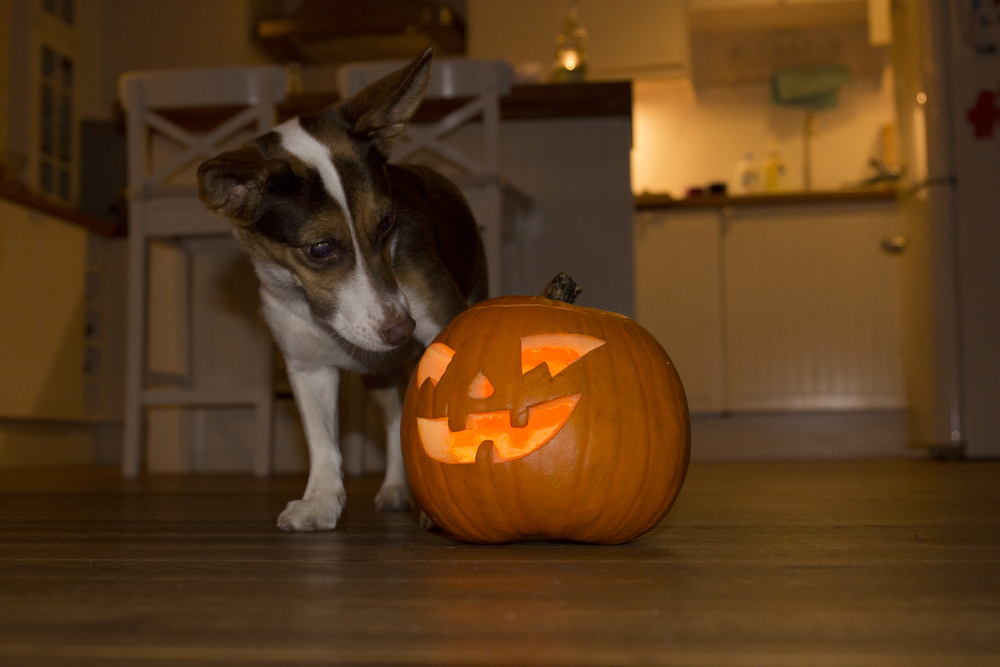
Fun Halloween décor can help you enjoy this holiday even more. But, similarly to the scented candle caution, take note of fire hazards associated with candle-lit Jack-O-Lanterns. You wouldn’t want your furry friend to be burned by your festive porch display. In addition to candles, artificial lights add another potential hazard for hounds. Be sure your pooch can’t nibble on electrical cords or low-handing decorative light strings.
5. Stray Away
On Halloween night, you may have many visits from trick-or-treaters, meaning frequent opening and closing of the front door. Stay aware of your animal’s access to the door and ensure that tag identifications and microchips are up-to-date.
(Shutterstock)
6. Haunted Hound
Your service dog, companion animal and pet are, of course, part of the family. But sidewalks overflowing with loud, costume-clad kiddos may be overwhelming for some animals. Service and/or companion animals are essential for many people with disabilities but, for those who can spare Fido a scare, consider leaving your animal at home; but, again, only if this is not a hindrance or threat to your health and safety(not typically applicable with service animals.
7. Tail-Wagging Trick-or-Treating
If you do decide to venture out on Halloween night with your dog, make sure he/she is on a secure leash. Since the time change means darkness falls earlier, consider outfitting your tail-wagging pal with a reflective collar. And, as you wander the neighborhood, ensure that your animal doesn’t chew on glow sticks that may have been accidentally dropped by trick-or-treaters.
8. Costumed Canines
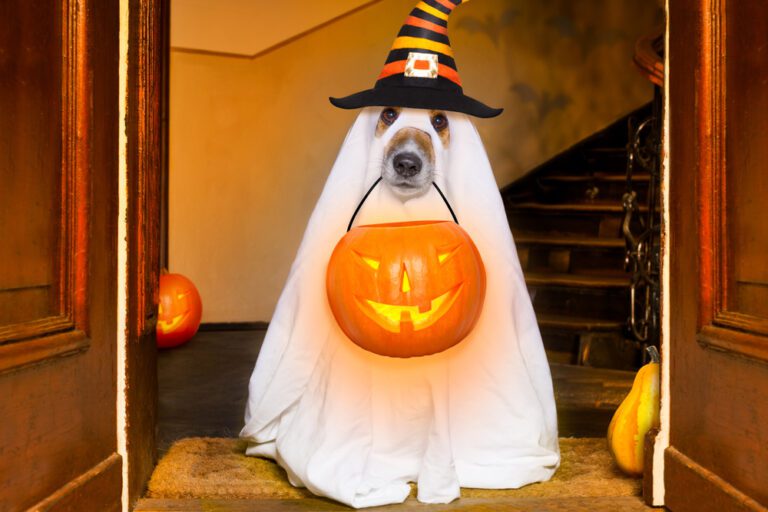
If you love dressing your fur baby up, you might be eyeing a costume for Halloween. Note that animal attire should not be too snug or baggy, restrict mobility or breathing, or hinder the ability to go to the bathroom or communicate. Costumes should be free of choking hazards (i.e. beads, buttons, feathers, etc.).
If you suspect your pet has ingested something toxic, please call your veterinarian or the ASPCA Poison Control Center at (888) 426-4435 immediately.
These Halloween safety tips can help ensure that your family has a Happy Halloween!
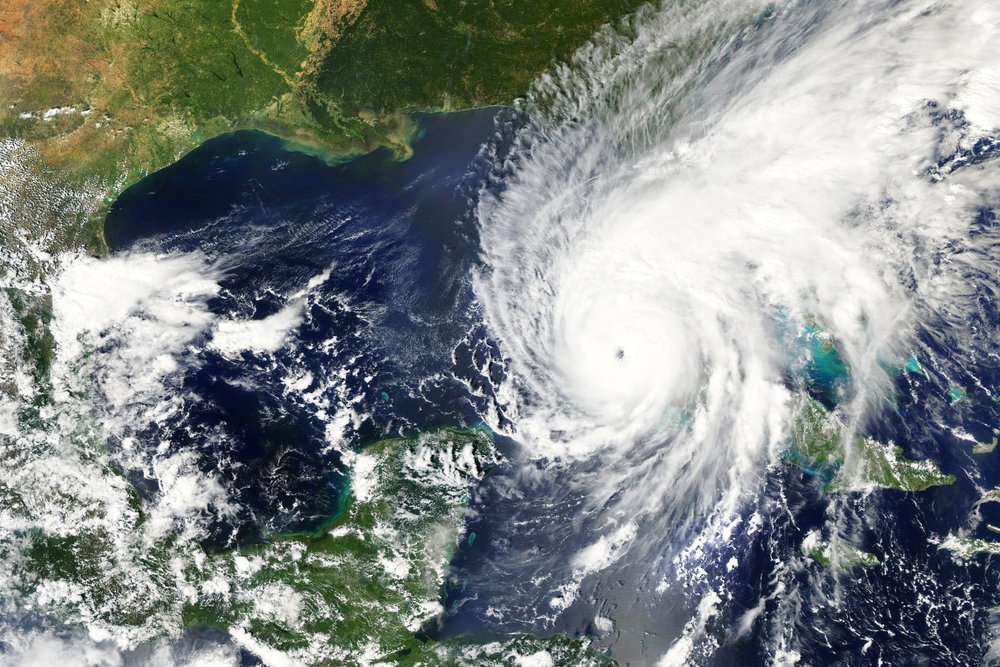
At the end of September 2022, Hurricane Ian grew to be a very large and powerful Category 4 hurricane. Its destruction impacted portions of the southeastern United States, especially Florida and South Carolina, as well as Cuba. Well over 100 deaths have been attributed to Hurricane Ian thus far, with the number of lives lost continuing to climb. This is in addition to catastrophic damage to homes, businesses, hospitals, schools and other properties.
Following Hurricanes Katrina and Rita, the National Council on Disability published a detailed report (in 2006) that showed that people with disabilities were disproportionately affected by those storms. While information connected to Hurricane Ian continues to be gathered, it appears that, likewise, members of the disability community have also been more so affected by this recent storm — compared to those without disabilities. Additionally, the demographics of the impacted communities in Florida are primarily senior-aged, which typically amplifies health and disability factors.
Disabled Community is Disproportionately Affected by Hurricanes
Because of health concerns, mobility issues and the use of medications and assistive devices, the evacuation, sheltering and recovery experiences vastly differ for people with disabilities.
(Shutterstock)
During preparations, the needs of the disability community may be overlooked. For example, people with visual and/or hearing disabilities may not have obtained all pertinent safety information. And even though some areas were deemed to be under a mandatory evacuation order, some people with disabilities were unable to evacuate because transportation was inaccessible and/or the logistics proved to be too challenging.
Now that families are displaced post-storm, those with disabilities face additional hurdles. For example, those with special needs may miss in-school or in-home health aid and/or therapy sessions. People who require lifesaving medications, may not receive prescriptions on time because of delayed mail service or if pharmacies are closed from storm damage. Similarly, many will miss medical appointments and essential treatments, like surgeries, infusions and rehabilitative services, to name a few. Of course, the issue of power outages can significantly affect those with chronic conditions and/or disabilities. Plus, when displaced, it can be difficult to find accessible temporary housing solutions.
How to Help Hurricane Ian’s Disabled Victims
There are agencies and protocols in place to help mitigate the needs of vulnerable populations, including the disabled community. But, especially when processing the shock of a disaster, navigating resources can feel overwhelming. Federal agencies such as FEMA, as well as Florida’s Division of Emergency Management, provide guidelines on how to support hurricane victims, including those with disabilities.
(Shutterstock)
According to FEMA, financial donations are the fastest, most flexible and most effective method of supporting those in need during hurricane recovery.
Preparing the Disability Community for Future Storms
As we prioritize the recovery phase of Hurricane Ian, it’s important to also take note of lessons learned from this devastating event so improvements can be made in preparation for future hurricanes and other natural disasters. This includes inclusive emergency planning and preparation to better meet the needs of the medically fragile and people with disabilities.
In preparation for future events, FEMA recommends that members of the disability community:
Tricks aside, Halloween is full of treats. Maybe that’s why Halloween has grown to become the second biggest retail event of the year. There’s a scary amount of Jack-o-lanterns, candy, spooky decorations and, of course, costumes! For just one night annually, trick-or-treaters of all abilities can dress up as anything their hearts desire. For people with disabilities and/or wheelchair users, however, shopping for adaptive Halloween costumes can feel a little daunting.
Here’s some “boo-tiful” news… adaptive Halloween costumes, including those specially designed for wheelchair users, are now much more accessible. In fact, big box stores (like Target) have added Halloween costumes to their adaptive clothing lines. But since time is quickly ticking down to All Hallow’s Eve, online shopping may be the best bet for last-minute costuming needs. AmeriDisability has rounded up adaptive Halloween costumes for kids that are easily accessible via Amazon.
Disclosure: This article contains affiliate links. If you make a purchase through them, AmeriDisability may earn a small commission at no additional cost to you.
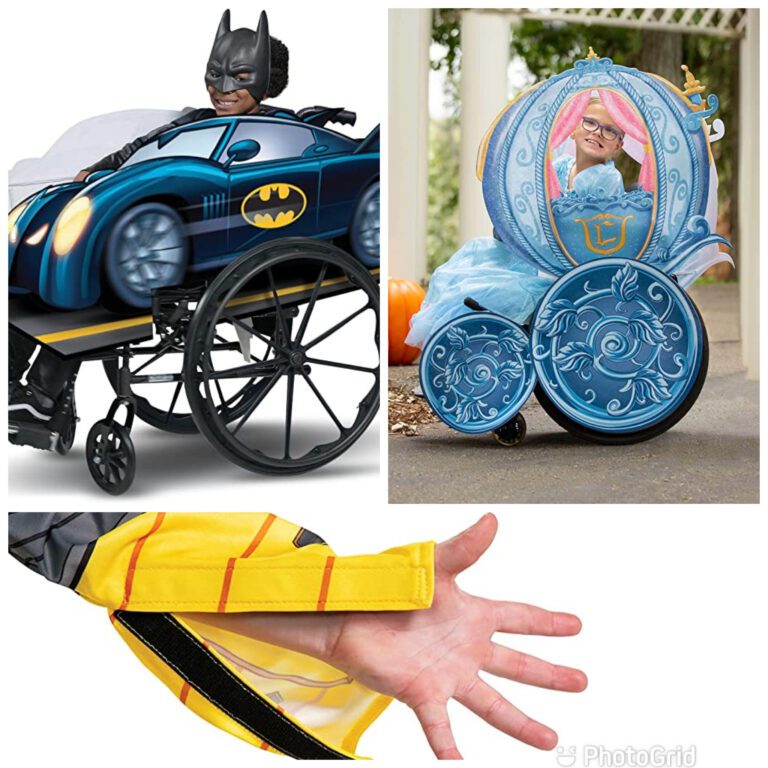
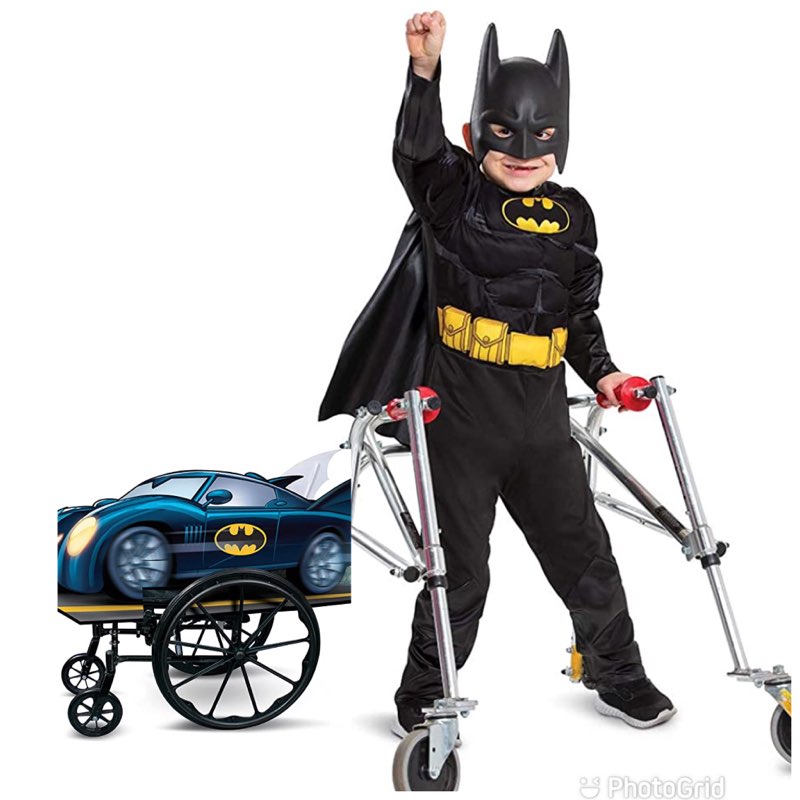
Batman ranks as the fifth most popular Halloween costume among children, according to the National Retail Federation. From Gotham City to your very own neighborhood, your little Dark Knight will feel comfortable, thanks to the accessibility features of this padded suit. Wheelchair-using superheroes can complete the look with an adaptive Batmobile Wheelchair Cover.
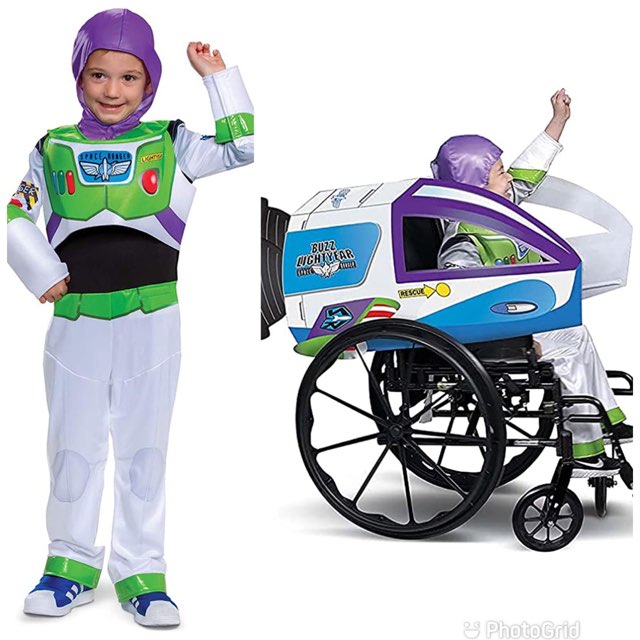
Halloween fun will blast off “to infinity and beyond” with this adaptive Buzz Lightyear costume. Plus, the Buzz Lightyear Spaceship Wheelchair Cover will make this toy-themed costume the favorite (sorry Woody!).
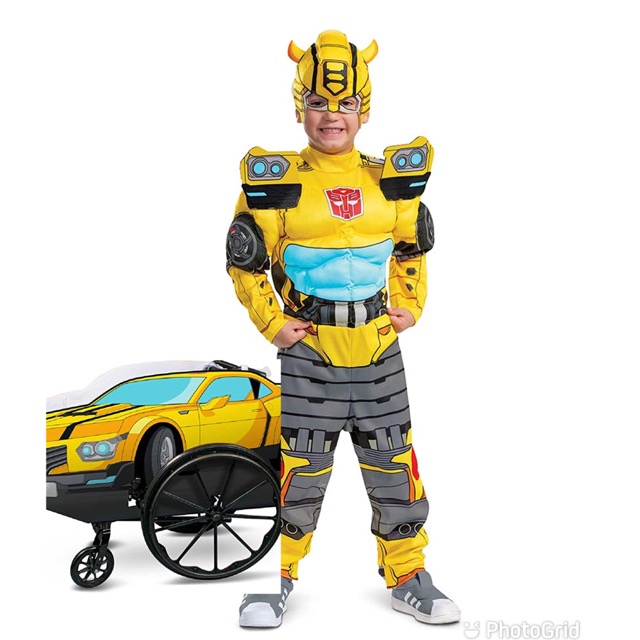
Orange and black won’t be the only dominant colors on Halloween. Bumblebee, the black and yellow transformer, will be the buzz of the night! Plus, the Bumblebee Adaptive Wheelchair Cover is designed to easily attach to any wheelchair or walker with adjustable fabric straps.
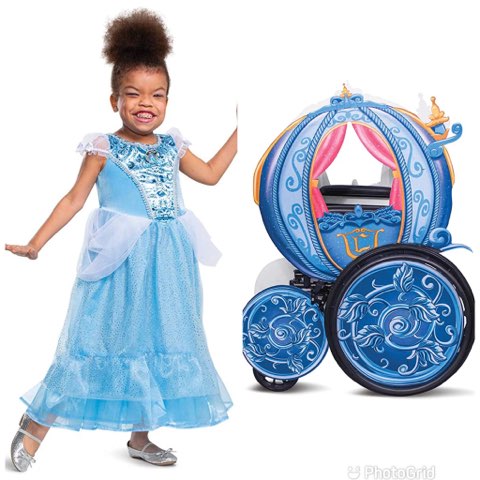
This costume combination is fit for royalty! The classic Cinderella Adaptive Costume features a boo-tiful blue hue with sparkly embellishment that will surely make your little princess feel magical. And thanks to an equally stunning carriage accessory, onlookers will be dazzled by the whimsical wheelchair cover.
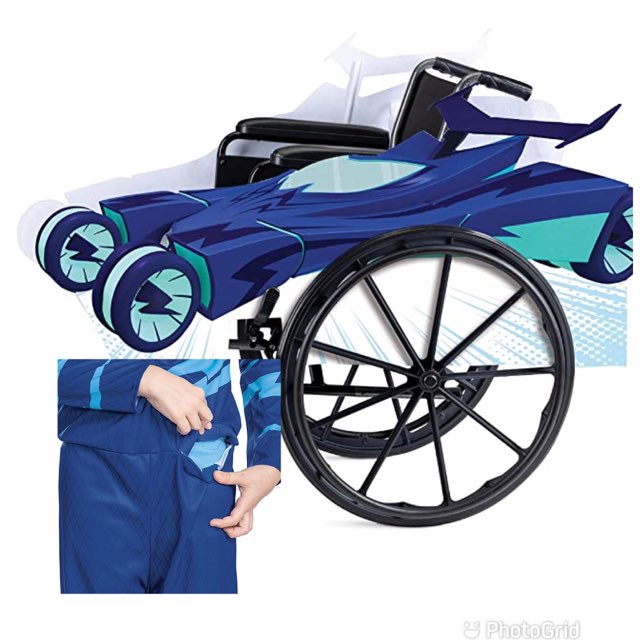
Black cats are commonly linked to Halloween. Well, this popular blue cat costume isn’t spooky but, rather, super cute. Yes, “it’s time to be a hero” with this Adaptive Catboy jumpsuit. Once Connor becomes Catboy, he can utilize his Cat Car!
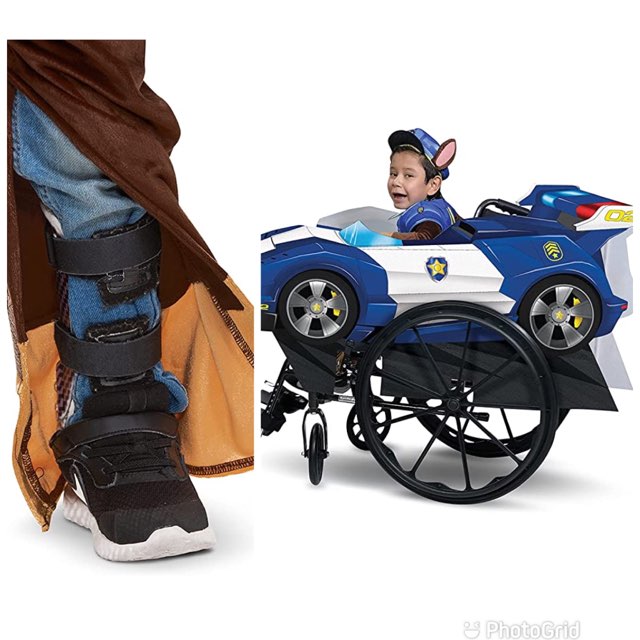
Chase is on the case! And in this case… it’s all about sniffing out the Halloween candy. This Paw Patrol leader may feel inclined to howl (or bark) at the moon and then drive full speed ahead to the next trick-or-treat house in a wheelchair-accessible patrol vehicle. FYI, according to a MarketWatch survey, Paw Patrol costumes are the most popular this year among kiddos, so odds are Chase will see Ryder, Marshall, Rubble, Skye, Rocky, Zuma and Everest too.
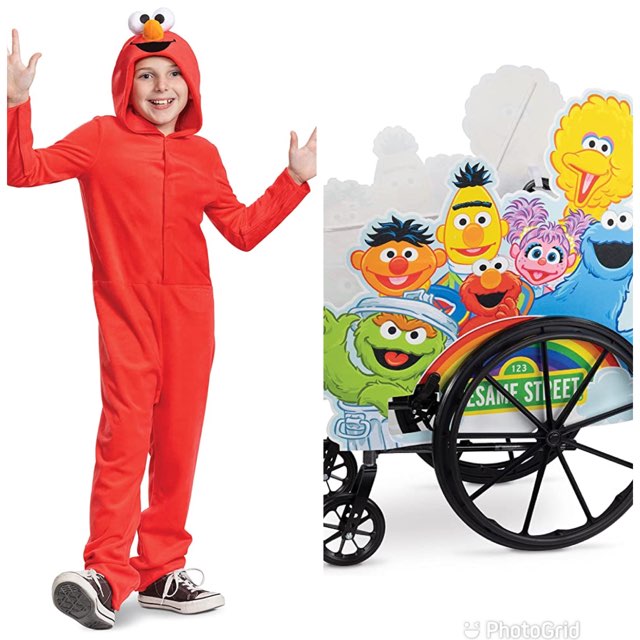
Sesame Street first aired in 1969, and more than fifty years later the show remains popular among children and adults alike. Elmo ranks as the show’s second most popular character (following Cookie Monster). But since this holiday is all about candy and not cookies, we’re confident Elmo will navigate the neighborhood just fine. And the whole Sesame Street gang can come along too, thanks to the Sesame Street Character Wheelchair Cover.
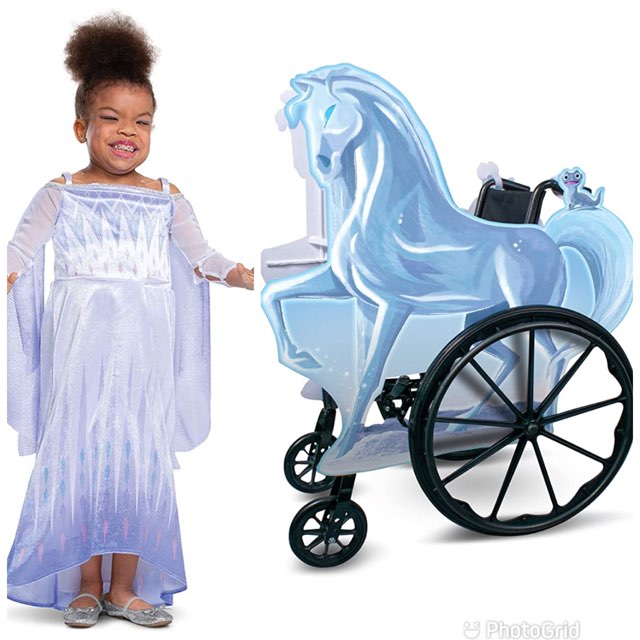
This Snow Queen Elsa Adaptive Costume is among the season’s hottest picks. It features a comfortable back-of-dress opening for ease of use, plus abdominal access. The dress has frosted diamond detailing and a sparkly cape. Wheelchair users can also order the Ice Nokk Adaptive Wheelchair Cover.
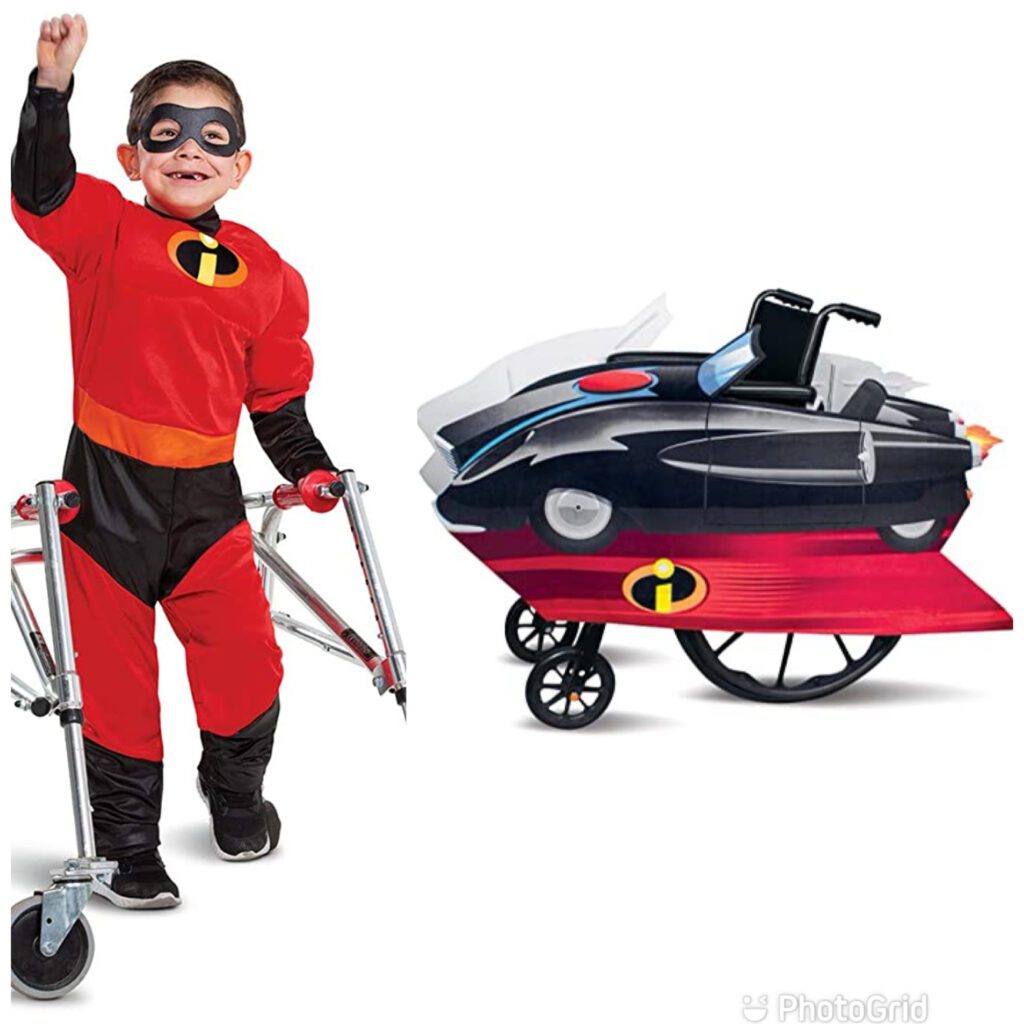
Just like in the movie, your family of undercover superheroes can embark on an important mission. This Dash Adaptive Costume pairs really well with the Incredibles Car Adaptive Wheelchair Cover. This Incredibles look will be, well, totally incredible.
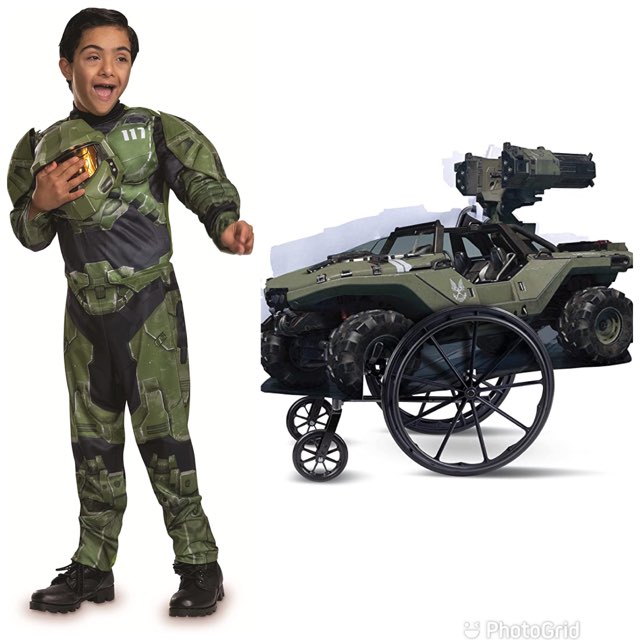
It’s cool to share candy on Halloween but, if you’re going to battle it out over candy, you better suit up. Tweens and teens that enjoy video gaming may be interested in this Master Chief Adaptive Costume from Halo, the military science fiction game. The complimentary Warthog Wheelchair Cover resembles Halo’s fictional armored fighting vehicle. [But seriously, no fighting please!]
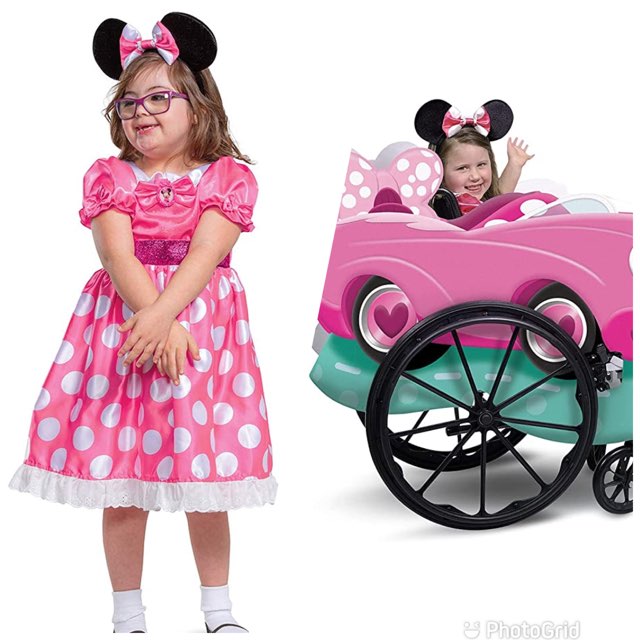
Your trick-or-treater will be tickled pink with this fashion-forward take on Minnie Mouse’s classic polka-dot dress and iconic ears. Minnie’s matching wheelchair cover is also pink, with heart and polka-dot detailing. It’ll be a magical night for sure.
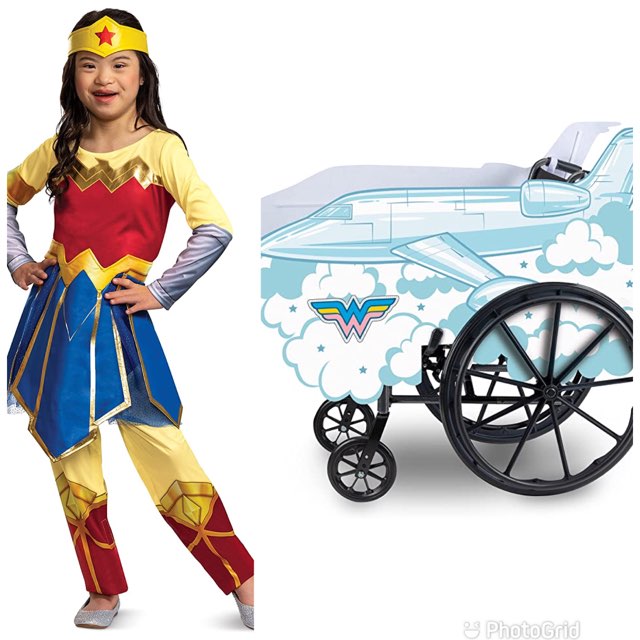
Costumes featuring Justice League characters, including Wonder Woman, rank second in popularity among kiddos, according to MarketWatch. This Wonder Woman Costume features accessibility-friendly arm sleeves, abdominal and inseam openings for quick access, a detachable skirt and a soft foam tiara. Plus, your hero can take flight with the Invisible Jet Wheelchair Cover.
(Amazon)
Here are More Adaptive Halloween Options Available on Amazon
If your trick-or-treater is dreaming of an epic wheelchair-friendly Halloween costume that you just can’t seem to find in stores or online, reach out to Magic Wheelchair, a nonprofit outfitting children (between the ages of 5 and 17) with spectacular wheelchair-friendly costumes. The founder, Ryan Weimer, launched the effort in 2008 after making a pirate ship for his son who has spinal muscular atrophy. Magic Wheelchair typically requires eight weeks’ time for custom costume projects so do plan ahead for next year.