Saturday, February 21, 2026
spot_img
autism products
Html code here! Replace this with any non empty raw html code and that's it.
Home Blog Page 64

Craving Pumpkin Spice? This Sweet Fall Treat will Satisfy

0

Fall is about cooler weather, football, sweaters and warm, delicious food. It’s about gathering around the table with loved ones to enjoy a snack or meal and making memories that will last a lifetime. As the weather changes, there are few better places to be than the kitchen, whipping up something amazing for all who are gathered.

This fall season, when you’re craving something sweet, try this Pumpkin Bread with Chocolate Chips recipe (keep scrolling for step-by-step instructions). It’s rich with lots of semi-sweet chocolate chips but also has a prominent pumpkin flavor that’s hard to resist.

Made from start to finish in less than an hour, this treat gives you more time to rake leaves, carve pumpkins and cuddle up by the fireplace. It can be a perfect yummy for get-togethers, from parties and events to just a couple of friends enjoying each other’s company.

Great Flavor + Great Benefits 

This pumpkin recipe is easy to make and provides an opportunity to get the little ones, including children with disabilities, involved in the kitchen. Meal prep and cooking are, in fact, great ways to focus on and build up fine motor skills — think measuring, pouring, stirring and the act of eating itself.

It’s OK to indulge in chocolate on occasion without guilt. And we know you’ll love this recipe as is; but if you’d like to opt for healthier chocolate, choose dark chocolate. Most dark chocolate is high in flavonoids, particularly a subtype called flavanols that are associated with a lower risk of heart disease. Some studies suggest chocolate or cocoa consumption is associated with a lower risk of insulin resistance and high blood pressure in adults. And speaking of insulin concerns, the American Diabetes Association actually lists pumpkin as one of the choices within its starchy vegetable category!

According to the Mayo Clinic, pumpkin is nutrient-rich due to its bright orange color. This hue comes from beta-carotene, an antioxidant and precursor to vitamin A — meaning beta-carotene is converted to vitamin A in the body. Vitamin A is important to preserve vision, fight infections, maintain healthy skin and bones, and regulate cell growth and division.

Pumpkin is also low in calories, and a good source of fiber and potassium, which helps your muscles contract, regulate fluids, maintain normal blood pressure and balance minerals in and out of body cells.

RECIPE: Pumpkin Bread with Chocolate Chips

Prep time: 10 minutes | Cook time: 45-50 minutes

Servings: 12

Ingredients:

  • Nonstick cooking spray
  • 1 1/2 cups all-purpose flour
  • 1/2 teaspoon salt
  • 1/2 teaspoon baking powder
  • 1/2 teaspoon baking soda
  • 2 teaspoons pumpkin pie spice
  • 1 cup canned pumpkin
  • 1/3 cup brown sugar
  • 1/3 cup granulated sugar
  • 1/2 cup vegetable oil
  • 3 eggs, at room temperature
  • 1/2 tablespoon vanilla extract
  • 1 cup semi-sweet chocolate chips
  • 1 cup mini semi-sweet chocolate chips

Directions:

  1. Preheat oven to 350 F. Spray 8-by-4-inch loaf pan with nonstick cooking spray and line with parchment paper. Set aside.
  2. In a large bowl, whisk flour, salt, baking powder, baking soda and pumpkin spice. Set aside.
  3. In a medium bowl, combine canned pumpkin, brown sugar, granulated sugar, oil, eggs and vanilla extract. Stir together.
  4. Stir wet ingredients into dry ingredients; mix until combined.
  5. Fold in chocolate chips.
  6. Pour batter into loaf pan. Bake 45-50 minutes until a toothpick inserted into the center comes out clean.
  7. Cool at least 10 minutes in the pan before removing to wire rack to finish cooling.

Source: Culinary.net via Family Features

Want more fruit and veggies? Check out AmeriDisability’s article titled “These Rainbow-Colored Foods Help Fight Off Memory Loss.”
Tremors Disappear After Cutting Edge, Incision-Free Brain Surgery

0

On a recent morning, Forrest Ault walked into AdventHealth Celebration with tremors in both arms so severe that he struggled with simple tasks such as drinking from a cup, writing or clearing the dinner table.

Just hours later, he drove back to his Central Florida home with his left arm restored to how it once was — the uncontrollable shake was gone.

“I was a one-armed man and now I have two arms again,” said Ault as he reflected back on those first moments after he became one of the first patients to undergo an incision-free brain surgery called Focused Ultrasound recently launched at AdventHealth.

Ault, who began experiencing tremors as early as his teens, had developed rhythmic shaking in both arms, but his left side – the one that was treated – was far worse. For years, doctors told him there wasn’t much that could be done to help.

Massive Impact of Minimally-Invasive Brain Surgery

That changed when he learned about the procedure technology by Insightec and talked with Dr. Chandan Reddy, a neurosurgeon at AdventHealth in Central Florida who performs the procedure.

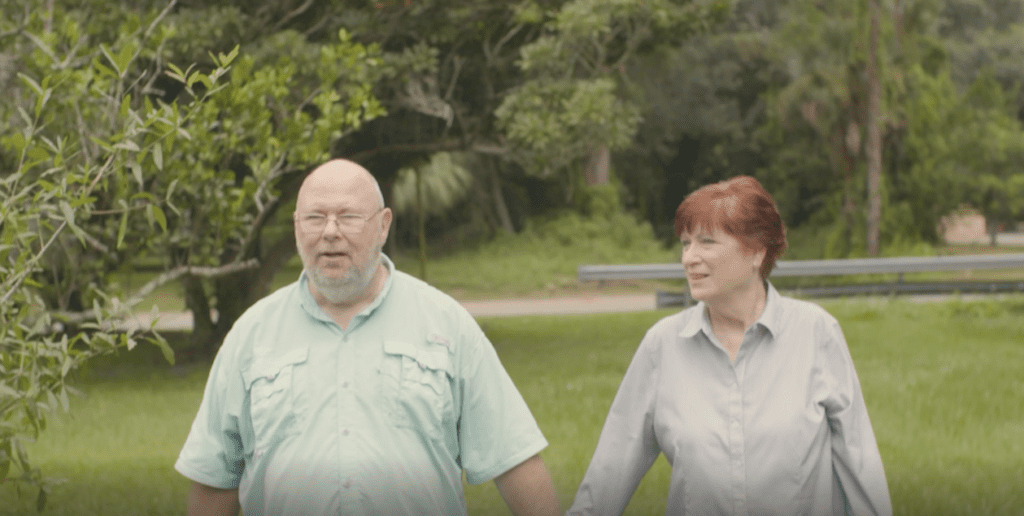
Forrest Ault with his wife Anne
Forrest Ault. pictured with his wife Anne, saw results immediately after minimally-invasive brain surgery.

“Talking with Dr. Reddy made me feel better than anything,” Ault said. “He was great.”

He said he was skeptical when he learned the results would happen so quickly and be so transformative.

“In your mind, you’re going, ‘Yeah, sure OK,’ and I was hoping for a 70% reduction or something like that,” he said. “But it was instantly no tremor at all!”

Ault’s wife, Anne, said she was stunned by the outcome. “When I saw him and he held out his hand, I just broke out crying,” she said. “The joy of seeing what that surgery did and accomplished… there aren’t any words.”

Reddy said he knew when he met Ault that the procedure could be a “life-changing event” for him as it is with many patients who suffer from essential tremor, which often interferes with everyday tasks and can cause discomfort or embarrassment in social situations.

How this Minimally-Invasive Brain Surgery Works

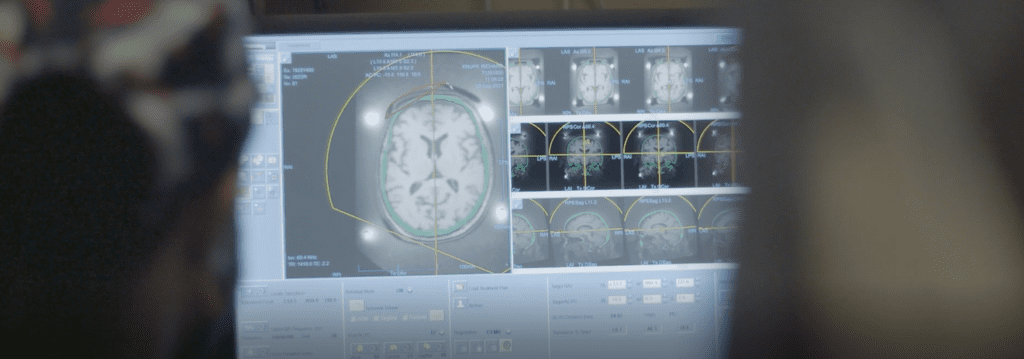
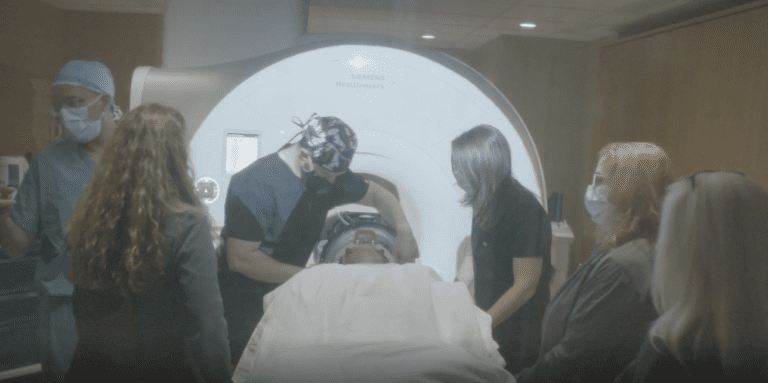
During the procedure, the patient undergoes an MRI while wearing a helmet with transducers that can focus more than a thousand beams to heat the exact point in the brain that is causing the tremors.

Dr. Reddy
Dr. Chandan Reddy, a neurosurgeon at AdventHealth performs the minimally-invasive brain surgery.

“The MRI allows us to target and also measure the temperature in the brain,” Reddy said. “This technology allows us to very precisely target and destroy a tiny area in the brain that’s part of the tremor circuit.”

While the Focused Ultrasound treatment is incision-free, patients must have their heads shaved and have a frame attached to their head to keep them motionless during the treatment.

The traditional alternative surgery to treat essential tremor typically requires an overnight hospital stay and weeks of recovery time because the skull must be opened to access the portion of the brain causing the tremor.

The minimally invasive nature of the Focused Ultrasound procedure played a big role in convincing Ault to move forward. His procedure was at 11 a.m. and he and his wife were on their way home by mid-afternoon, he said.

Orlando Offers Minimally-Invasive Brain Surgery

AdventHealth Celebration, just beyond Orlando, which launched the innovative treatment earlier this year, has performed more procedures than any other location in Central Florida with patients traveling from as far as Alaska.

The offering is the latest in AdventHealth’s suite of minimally invasive brain surgery techniques along with GammaKnife, LITT (Laser Interstitial Thermal Therapy), Endoscopic endonasal skull-base surgery, endoscopic microvascular decompression and port-based surgeries.

brain scans
The MRI allows surgeons to target and also measure the temperature in the brain.

AdventHealth, which is one of the Top 50 neurology and neurosurgery programs in the country, according to US News & World Report, has built its minimally invasive brain surgery program over 20 years to treat a variety of brain tumors and other disorders. Those techniques have provided excellent outcomes to a growing number of patients who seek out care at AdventHealth, said Dr. Mel Field, neurosurgeon and medical director of AdventHealth’s Minimally Invasive Brain Surgery Program.

“These procedures offer a gentler approach than traditional surgeries for certain tumors or disease that already have established treatments – and the outcomes are typically equal or better than those standard treatments,” Field said. “Minimally invasive brain surgery also offers people who have no other options, a way to treat deep or complicated brain disease.”

For Ault, the Focused Ultrasound procedure allowed him to return to things he loves such as cooking and painting and even perform simple chores like clearing the table after dinner and a “bunch of little things that no longer complicate your day.”

“If you qualify, you should go for it,” Ault said.

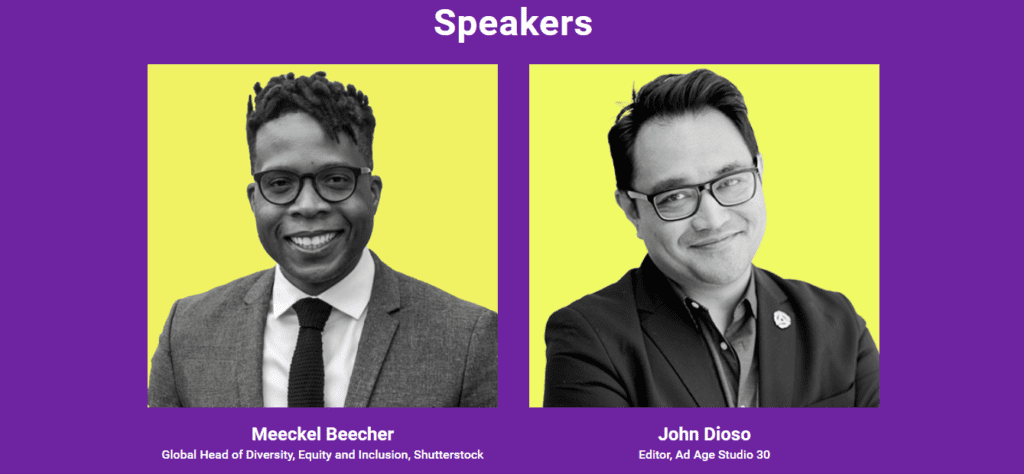
VIRTUAL EVENT: How Shutterstock is leading the movement for more inclusive content

EVENT: Ad Age Studio 30 Live — A custom conversation made possible by Shutterstock

WHAT: How Shutterstock is leading the movement for more inclusive content

WHEN: Thursday, Oct. 28, 2021 at 1:00 pm EDT

Actress Zyra Gorecki, Disability Advocate and Star of NBC’s ‘La Brea,’ is a Happy Camper

Actress Zyra Gorecki is one happy camper ─ literally and figuratively! It is because she attends Camp No Limits that she landed her breakout role as Izzy Harris on NBC’s ‘La Brea.’

Camp No Limits’ isn’t geared toward theater training per se. It’s more of a typical camp experience for children with limb differences. It just so happens that casting executives reached out to camp counselors in search of a teen amputee to portray Izzy. Gorecki not only fits the bill physically but she’s quickly winning over viewers with her acting chops.

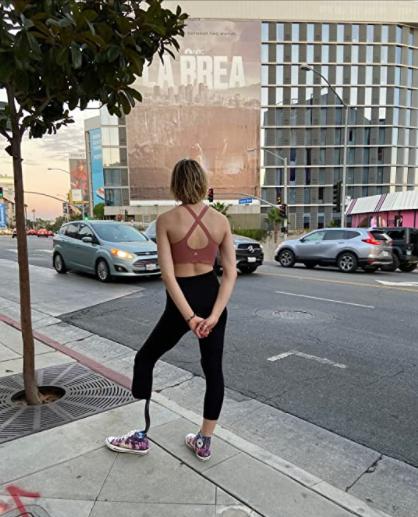
Zyra Gorecki with La Brea poster
Zyra Gorecki views a promotion for La Brea. Credit: @_zyra_g via Instagram

Adapting with Limb Loss

At the age of 13, Gorecki lost her leg in a logging accident in rural Michigan. Trying to cut lumber for her home’s woodstove, a large log fell and crushed her foot which led to amputation. It wasn’t long after that Gorecki became a Camp No Limits attendee and the rest, as they say, is history.

Gorecki’s television portrayal is sort of historic too. You see, representation of people with disabilities is, unfortunately, lacking. Even though 26% of American adults have some type of disability, according to the Centers for Disease Control, only 2.4% of all speaking or named characters in films are shown with a disability, according to a study by the USC Annenberg School for Communication and Journalism. The staggering gap between 2.4% and 26% is unacceptable and perplexing.

More importantly, 2.4% doesn’t represent the reality of our diverse world and, thus, the diversity of television and film viewers. Thankfully, viewers are finally voicing support of inclusive casting. A recent ‘Disability Inclusion in Movies and Television’ survey by the Ruderman Family Foundation found that “half of U.S. households support accurate portrayals of disabled characters and would sign up for a content distributor committed to disabled actors. Their spending power is estimated at $10.4 billion per month for U.S. households.”

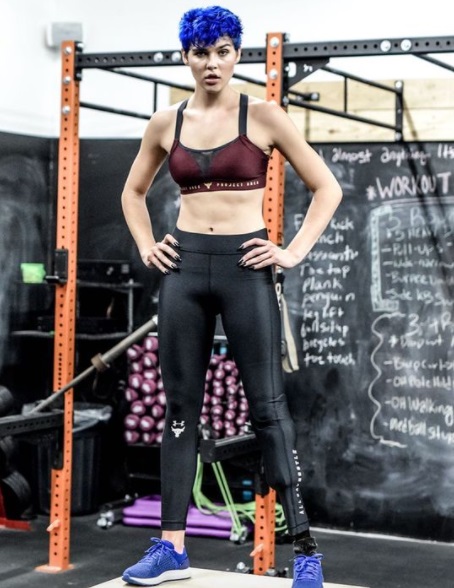
Zyra Gorecki models healthy living
Credit: @_zyra_g on Instagram

Kickstarting Diversity Inclusion

Gorecki says she’s excited to amp up the chatter surrounding disability inclusion within the entertainment field and beyond. In fact, the now 19-year-old, who stands a striking 6-feet-tall, first put herself out into the world as a model with the goal of inspiring other young girls with limb loss and varying disabilities. Gorecki is also vocal about her battle with anxiety.

“I hope that some person or little kid or whoever it is will see me and go, ‘I can do it, too.’ I hope one day I will be a good role model to somebody,” she shared in an interview with northjersey.com.”

‘La Brea’ debuted on September 28, 2021, and some critics are comparing this sci-fi drama to ‘Lost’ which aired from 2004 to 2010. In the premiere wearing a black blade prosthetic, Gorecki’s character outruns a massive sinkhole that swallows her mother, brother and much of downtown Los Angeles. In real life, Gorecki sports a prosthetic by Amputee Blade Runners, a non-profit organization that helps provide free running prosthetics for amputees.

During the series, viewers will follow Izzy and her father as they set out to find their family and other lost Californians. Watch ‘La Brea’ on Tuesdays at 9 p.m. on NBC or later on Peacock and Hulu.

Want more content like this? Read these articles:

Feature photo image credit: IMDb

How to Have a Healthy Halloween

0

Too much Halloween candy got you spooked? Try some of these healthy tips for party snacks and trick-or-treats. These ideas are so good, it’s scary!

Curb the Candy Craze

The kids look adorable in their costumes and are counting down the days until the spookiest day of the year (October 31)! Are you ready for the sugar rush? With a little creativity, you can find fun ways to include some healthy options in the mix, whether you’re having a party with friends or trick-or-treating in the neighborhood.

For the Trick-or-Treater

  • Fill up first. What kid doesn’t want to eat their favorite candy right when it goes into their trick-or-treat bag? Having a healthy meal BEFORE your kids go trick-or-treating can reduce their temptation to snack while walking or to overindulge because their tummies will be full.
  • Bag the monster bag. Choose or make a smaller collection container for your child and steer clear of the pillowcase method. If you encourage kids to only take one piece of candy from each house, they’ll be able to visit more houses in the neighborhood.
  • Get moving. Get some exercise by making Halloween a fun family activity. Walk instead of driving kids from house to house. This may be especially important for members of the disability community to note because statistics show that people with disabilities are less likely to be of healthy weight and more likely to be obese than people without disabilities. So, for Halloween, set a goal of how many houses or streets you’ll visit, or compete in teams to do as many as you can. Bring a bottle of water and a flashlight, and wear comfortable shoes for walking.
  • Look before you eat. Check expiration dates and inspect all edibles before allowing children to eat them. Don’t let children eat anything with questionable or unknown ingredients, especially if they have food allergies.
  • Have a plan. Halloween can be a great time to talk with kids about moderation and making smart eating choices. Plan in advance how much candy they’ll be allowed to take at each house, keep and eat. If they’re old enough, let them help decide what to do with excess candy. [See suggestions later on in this article.]
photo credit: Target

For the Party Host

  • Up the fright factor. Serve healthy snacks dressed up in the Halloween theme. There are lots of creative ideas online at this time of year, like banana ghosts, apple monster mouths, carrot witch fingers, and candy-corn-colored fruit popsicles or parfaits!
  • Play with food. Incorporate healthy foods into party activities, such as decorating oranges like Jack-O-Lanterns and bobbing for apples.
  • Keep ’em on their feet. Include plenty of physical activities, like a zombie dance party, three-legged monster race, spider crawl, or pumpkin toss.
  • Rethink the drink. Don’t forget that cutting back on sugary treats includes soda and sugar-sweetened beverages. Offer water, unsweetened tea, 100% juice, or fat-free/low-fat milk instead. Make a Halloween-themed punch from sparkling water and a splash of 100% orange juice, garnished with plenty of orange slices and black grapes or blackberries.

For the Stay-At-Home Crew

  • No self-service. Hand out treats to each trick-or-treater – one per child – instead of letting them decide how much to take. If you have more than one item, ask them to choose which they prefer. This can help you get control of your Halloween budget, too!
  • Avoid the whole mess. Want to avoid candy altogether, not to mention masses of kids at your door? Dress your family up in costumes and go see a movie or deliver healthy Halloween treats to your local police or fire station, nursing home or children’s hospital.
  • Be that house. You don’t have to pass out candy on Halloween. Start a new tradition and give out healthier treats or non-edible items. Don’t worry, we’re not talking about toothbrushes! Get creative, and keep it colorful and kid-friendly. Here are some ideas…
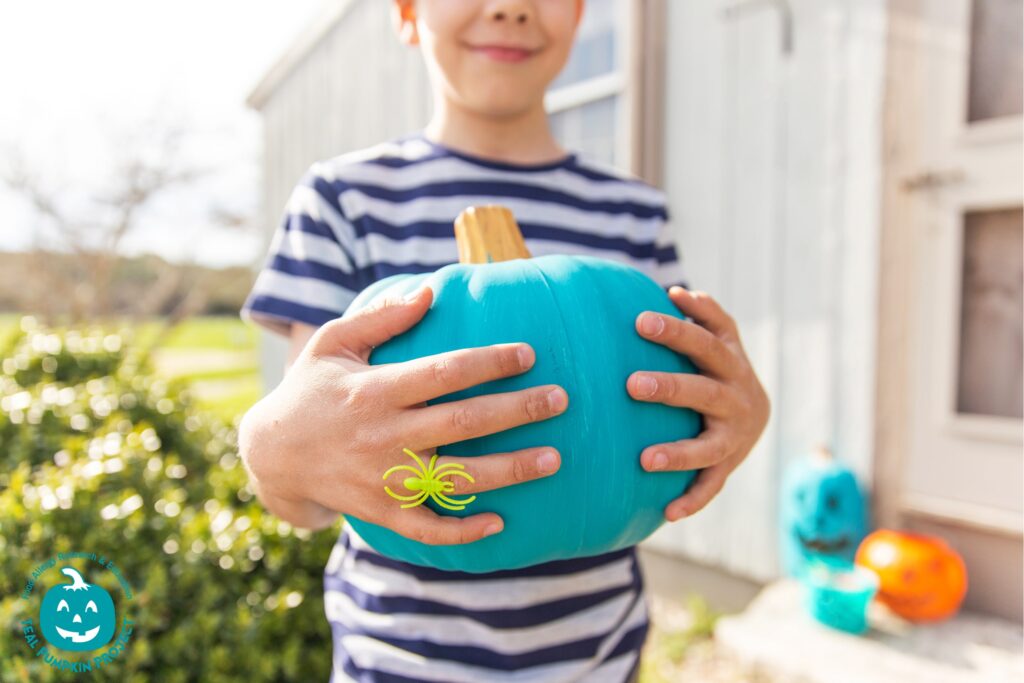
teal pumpkin project
credit: Teal Pumpkin Project

Healthier edible treats:

  • Clementines, blood oranges, or oranges decorated like Jack-O-Lanterns (with non-toxic ink)
  • 100% juice boxes or pouches
  • Snack-sized packages of pretzels, popcorn, graham crackers, dried fruit or vegetables, trail mix, nuts, or pumpkin seeds
  • 100% real fruit strips, ropes or leathers
  • Squeezable yogurt tubes or pouches
  • Single-serving containers of mandarin oranges
  • Sugar-free gum

    Non-edible items:
  • Glow sticks or small glow-in-the-dark toys
  • Bouncy balls
  • Mini plush toys and wind-up toys
  • Crayons and coloring books (or intricate coloring pages for older kids)
  • Stickers or stamps
  • Temporary tattoos
  • Bubble makers
  • Spider rings or vampire teeth
  • Slime, putty or squishy toys
  • Friendship bracelets

Be careful to avoid giving very small items that could be a choking hazard to little ones.

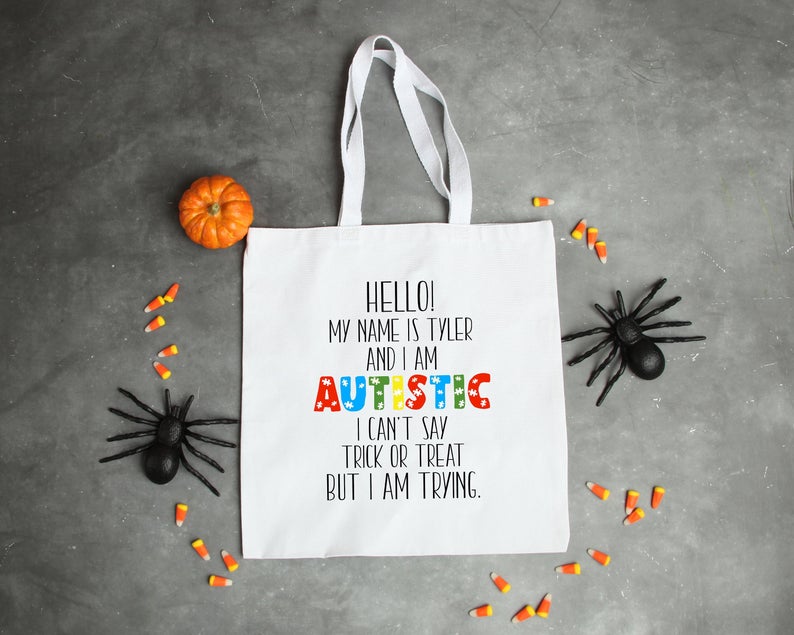
autism halloween bag

What to Do with Excess Candy

Afraid you’ll be dealing with an excess of Halloween treats until long after Valentine’s Day? Here are some ideas for enjoying the evening’s haul responsibly and getting rid of leftover candy:

  • Let each child keep enough candy to have one or two pieces a day for one or two weeks (long enough for the excitement to wane). Throw away, donate or re-purpose the rest.
  • When your child asks for a piece of candy, pair it with a healthy snack, such as an apple, banana, nuts, or celery with peanut butter.
  • “Buy back” candy from your child with money or tokens they can trade in for a fun activity, like a day at the zoo, an afternoon playing at the park, going ice skating, or a day at the pool.
  • Some dentists’ offices have buy-back or trade-in programs, too.
  • Save it for holiday baking.
  • Save it to fill the piñata at the next birthday celebration or give out with Valentine cards.
  • Use it in an arts and crafts project or to decorate a holiday gingerbread house.
  • Donate excess candy to a homeless shelter, children’s hospital, or care package program for troops overseas. A familiar sweet treat from home can be comforting during the holidays.

Have no fear – you got this! Let’s make Halloween fun, spooky, and a little healthier, too.

Source: American Heart Association

For more Halloween-themed content, check out the following AmeriDisability articles:

Popular Gym Chain Announces Focus on Accessible Exercise Equipment

0

Planet Fitness along with the Paralyzed Veterans of America, National Council on Independent Living, and American Council of the Blind (collectively “Coalition for Inclusive Fitness” or the “Coalition”) announced a commitment to expand access to accessible exercise equipment. Planet Fitness is one of the largest and fastest-growing global franchisors and operators of fitness centers with more members than any other fitness brand,

“As a leader in the industry and home of the Judgement Free Zone, it is our mission to provide an inclusive and welcoming environment to anyone who comes through our doors,” said Chris Rondeau, Planet Fitness’ Chief Executive Officer. “People with disabilities face significant barriers when attempting to access health and wellness activities, and it’s clear that health inequity is often due to a lack of access and opportunity. Today’s commitment is another way we are working to eliminate barriers and enhance people’s lives by providing a high-quality fitness experience for everyone.”

Strengthening Steps Ahead

The Coalition is focused on working with global organizations to build inclusive health communities that provide people with disabilities equal access to, and opportunities for, healthy living.  Planet Fitness is committed to providing inclusive equipment in all new clubs and adding it to existing clubs across the country as franchise owners replace current offerings, as inclusive commercial-grade equipment becomes available for purchase and is approved by Planet Fitness for inclusion in its clubs.

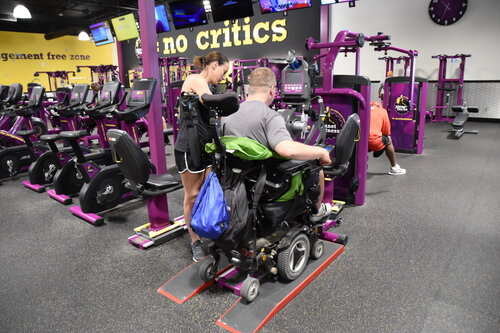
accessible exercise equipment

Planet Fitness will enhance the amount and variety of accessible equipment provided at its clubs by adding new inclusive equipment that conforms with ASTM standards as it becomes commercially available for purchase after clearing through a due diligence process, in accordance with set phased-in time parameters.

This equipment will include:

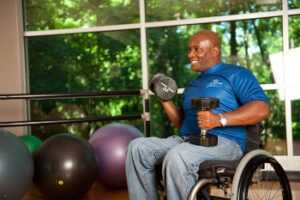
  • An inclusive dual cable strength machine that allows a person to perform multiple exercises from a seated position, including from a wheelchair.
  • A recumbent cardio machine where movement of the arms can move the legs, and vice-versa, and, in addition, the seat can be removed so it can be operated from a wheelchair.
  • Multiple cardio machines, which, depending upon availability, can include: treadmills, elliptical devices, upright bikes and/or recumbent bikes.
  • All new cardio machines will have inclusive features including raised tactile buttons and the ability to receive audible instructions and performance feedback through headphones. This will enable blind users to operate cardio machines independently.

Planet Fitness will also include the inclusive fitness symbol on all accessible equipment, share information about the roll-out of accessible equipment on its website (as it becomes available in its clubs), and continue its practice of providing customer service regarding the use of accessible equipment.

senior exercise

A Team Approach 

“We applaud Planet Fitness for this historic commitment to the disability community,” said Richard Thesing, Coalition for Inclusive Fitness’ Chief Executive Officer.  “At the present time, there are no cardio machines that can be used by blind people and very few fitness centers have cardio or strength machines that can be used by people with mobility disabilities. This marks a huge step forward towards providing individuals with disabilities with a truly inclusive fitness experience. We hope this will be the start of an industry-wide effort to provide individuals with disabilities the opportunity to enjoy an accessible fitness experience and take similar steps to making that a reality.”

“People who are blind face a myriad of chronic health conditions due in no small part to the lack of accessible exercise and fitness equipment available in the market today,” said Eric Bridges, Executive Director, American Council of the Blind. “The lack of accessible user interfaces and audible output for nearly all types of exercise and fitness equipment prevents people who are blind and experiencing vision loss from independently operating, purchasing and enjoying the use of fitness and exercise equipment, and thereby taking control of their own health and wellbeing.  ACB applauds Planet Fitness for their collaboration with the disability community, and we encourage other fitness and exercise providers to follow their leadership to enable people with disabilities the freedom to take control of their health.”

planet fitness slogan

“Exercise is for everyone,” said Emily Seelenfreund, Staff Attorney at Disability Rights Advocates – one of the organizations representing the Coalition.  “Planet Fitness’ pioneering commitment to increasing accessibility should serve as a model for fitness facilities across the country.”

“For people with spinal cord injuries and disorders, being able to access exercise equipment that meets their needs can be essential to maintaining an exercise program that increases their strength and endurance for rehabilitation, health, and overall sense of well-being,” said Heather Ansley, Associate Executive Director of Government Relations, Paralyzed Veterans of America.  “We believe that this commitment will help make accessible equipment more available in people’s communities and we are pleased that Planet Fitness has stepped forward to help meet this critical need.”

For more content like this from AmeriDisability, read: 

Sweet, Simple and Nutritious Back-to-School Breakfasts

0

With back-to-school schedules in full swing, mornings are pretty hectic for families. For parents of children with ADHD (like mine), the struggle seems especially tough attempting to navigate getting out of bed, serving a picky-eater-approved breakfast, tackling morning hygiene, dressing efficiently, monitoring medications, and packing all of the day’s necessities.

As a mother of a child with ADHD, mealtime is NOT my favorite time of day. Yes, it’s common for little ones to be picky eaters. But then layer on a suppressed appetite, sensory issues, and so on. Still, I know that packing my babe with nutrition is important on many levels. And that, of course, holds true for all parents, whether your child has ADHD, other special needs, or is considered typical. A healthy breakfast can give your student a brain and body boost that’ll last all day long.

child slicing banana

It’s possible to prepare easy breakfasts that’ll power little learners, in spite of the morning rush. Fresh fruit is a breakfast staple, and a nutritious option like watermelon is a sweet way to satisfy hunger (and thirst). As a refreshing ingredient or standalone treat, watermelon includes just 80 calories and no fat. It’s an excellent source of vitamin C (25%) and because it’s made of 92% water, it’s a flavorful way to encourage kids to start a busy day well hydrated.

A bowl of watermelon cut into cubes, balls, or fun shapes is a winning idea, but you can also think outside the rind. Here are ways to give watermelon a place at your breakfast table:

  • Top a grain-based cereal like corn flakes or oatmeal with bite-size bits.
  • Make watermelon donuts for a grab-and-go delight.
  • Freeze cubes overnight and use them in place of ice in smoothies.
  • Put a twist on a breakfast favorite with watermelon oat flour waffles.
  • Add a layer of oat crumble to a bowl of watermelon balls for a savory, satisfying treat.
Frozen watermelon balls

It’s All in the Preparation

Kid-Friendly Cuts
It’s no secret that kids gravitate toward fun foods. Watermelon is a versatile fruit that offers plenty of serving options that let kids get hands-on and creative.

Slices
A classic watermelon slice may be basic, but it does have a few tricks up its sleeve. With the rind on, it’s an instant finger food with a built-in “handle.” Add a wooden stick for watermelon you can eat like a sucker, or pop it in the freezer for a cool way to start the day.

Cubes
Simple and versatile cubes are a solution for banishing breakfast boredom. You can cube a melon and use them differently every day of the week by eating them on their own, mixing in a fruit salad, layering with other ingredients, blending in a smoothie and more.

Sticks
There’s nothing like a dipper to get kids’ attention. A watermelon stick offers a bit of rind to hold onto and a juicy strip of sweet melon that’s perfect for dunking in a cup of yogurt or fruit dip.

Cutouts
Cut watermelon into thin slices and use cookie cutters to create a treat that shows off creativity.

watermelon dippers
Watermelon dippers

Recipes for Success

Try these yummy recipes…

Watermelon Oat Flour Waffles
Yield: 8 waffles

Ingredients

Waffles:

  • 1 cup old-fashioned or regular oats
  • 3/4 cup all-purpose flour
  • 1 tablespoon baking powder
  • 1/2 teaspoon salt
  • 1 cup watermelon juice
  • 1/2 cup vegetable oil
  • 4 egg whites
  • nonstick cooking spray

Garnish:

  • 2 cups plain Greek yogurt
  • 3 cups watermelon, diced 1/2 inch
  • fresh mint leaves
  • powdered sugar (optional)
  • honey (optional)

Directions

  • Preheat Belgian or regular waffle iron.
  • In a blender, process oat flakes into flour.
  • In a bowl, mix oat flour, all-purpose flour, baking powder, and salt. Mix in watermelon juice and oil.
  • Whip egg whites into stiff peaks and fold into batter.
  • Spray hot waffle iron with nonstick cooking spray. Pour batter into waffle iron and bake 3-4 minutes, or according to waffle iron instructions. Repeat with the remaining batter.
  • Garnish waffles with yogurt, watermelon cubes, mint sprigs, powdered sugar, and honey, if desired.
watermelon breakfast dish
Watermelon Oat Flour Waffles

Watermelon Donuts
Servings: 1

Ingredients

  • 2 slices seedless watermelon, 1 1/2 inches thick
  • 2 tablespoons nonfat plain Greek yogurt
  • 1 pinch sugar
  • vanilla, to taste
  • 9 slivered almonds

Directions

  • Cut out donut shapes from watermelon slices.
  • Sweeten Greek yogurt with sugar and vanilla, to taste, to create the frosting.
  • Frost half of watermelon donuts with half of the frosting. Add a layer of remaining watermelon donuts and top with remaining frosting.
  • Sprinkle toasted almonds over top and serve.

For more watermelon recipes, visit watermelon.org.

Nancy DeVault is an award-winning writer/editor contributing to local and national publications. Her storytelling spans a wide range of topics, including charity, disability, food, health, lifestyle, parenting, relationships, and travel. She is married with two kiddos and describes herself as a lover of the outdoors, fitness, news, traveling and binge reading magazines while sipping coffee.

Seven Years Later, Here’s Why the Ice Bucket Challenge Remains Cool

0

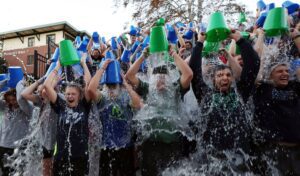
Can you believe it’s been seven years since social media newsfeeds were dominated by the Ice Bucket Challenge? In case your brain is frozen in time from all that ice, let me refresh your memory. In 2014, the Ice Bucket Challenge was the hottest (well, coolest) viral sensation intended to generate awareness for ALS (amyotrophic lateral sclerosis), and specifically for The ALS Association. This nonprofit is dedicated to finding a cure for ALS, also known as Lou Gehrig’s disease, and supporting those afflicted with the progressive neurodegenerative disease that affects nerve cells in the brain and the spinal cord.

How It Worked

The challenge was this: Either pour a bucket of ice water over your head or make a meaningful donation to an ALS charity to advance research ─ preferably both. Participants were then asked to share video proof on social media and tag (to nominate) others to partake in the icy dare too. Maybe the shock of the ice was intended as punishment for those that chose to just do the social bucket dump rather than donate to the cause. I’m not sure. But millions bravely poured buckets and, thankfully, donations poured in as well.

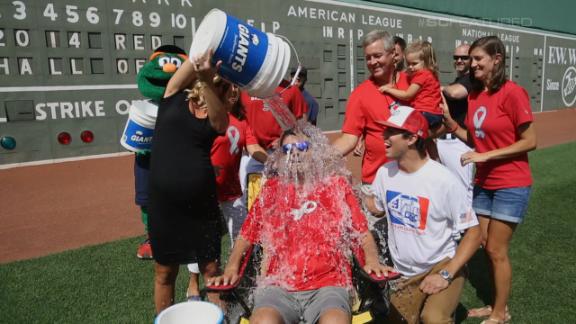
The Ice Bucket Challenge became a viral sensation.
The Ice Bucket Challenge became a viral sensation. Photo courtesy of Team FrateTrain via Facebook

Did It Work?

The Ice Bucket Challenge was perhaps the coolest dare of its kind to date. But, as awareness campaigns tend to do overtime, the online push naturally burnt out. According to The ALS Association, however, the Ice Bucket Challenge has a lasting impact. Here are some things we learned: 

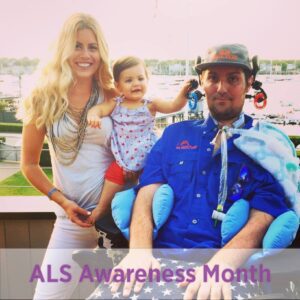
  • The Power of One (to Millions): Pete Frates and his family helped start this groundbreaking effort. The former Boston College baseball captain was diagnosed in 2012 at the age of 27. Then, in 2014 as an active volunteer for The ALS Association (Massachusetts Chapter), this one warm-hearted person started the coolest challenge with simple, good intentions that impacted the cause (and your own social media page) beyond expectations.
  • Social Media Driven: Seven years ago, I was thrilled and impressed that The ALSThe Ice Bucket Challenge Association achieved monumental attention with this viral dare. Seriously, think about how big the Ice Bucket Challenge became. Professional athletes, politicians (including Presidents), celebrities and, of course, tons of your Facebook friends all participated. It was incredible to watch social media influence millions of people and, as a result, drive philanthropy.
  • Money Talks: An estimated 17 million people raised more than $200 million worldwide for the fight against ALS. According to The ALS Association website, the Ice Bucket Challenge generated $115 million for their national office in 2014 alone. This spurred a massive increase in the Association’s capacity to invest in promising research, the development of assistive technologies and increased access to care and services for people living with ALS. An independent research organization reported that donations from the 2014 Ice Bucket Challenge enabled The ALS Association to increase its annual funding for research around the world by 187 percent!

Let’s Keep Awareness Cool

Presently, as stated by The ALS Association, people with ALS are at risk of even greater life-threatening complications if they contract the coronavirus. For the ALS community, that means extreme isolation to ensure that persons with ALS, and their family members, are not exposed to COVID-19. To keep ALS awareness and fundraising going during these uncertain times of the pandemic, the Association recently produced a PSA that illustrates when the pandemic weans, people living with ALS will still struggle to do the things most take for granted every day if we don’t come together around the cause. Check out the “When This is Over” PSA here.

Sadly, Pete Frates died in December 2019 at the age of 34. He left behind a loving and supportive family, including his wife Julie, daughter Lucy, parents John and Nancy, and siblings Andrew and Jennifer. Pete also left behind a lasting legacy that we can all learn from.

His selfless leadership helped The ALS Association become a top funder of ALS-related research and advances. Most recently, in September 2021, the Association announced it had created a new diagnostic guide, called thinkALS. This will help neurologists more quickly diagnose ALS. Earlier diagnoses allow patients to participate in clinical trials and access treatments and benefits sooner, as well as receive care services support.

Pete Frates and his family
The Frates family started an ALS awareness effort like never before.

I tip my bucket — oh, I mean my hat– to the Frates family, The ALS Association and, of course, the many participates who took the challenge and, more importantly, now keep the conversation surrounding ALS advancement going. Look, the Ice Bucket Challenge significantly broadened the audience to hear The ALS Association’s important call to action. Until there’s a cure, there has to be care. Seven years later, I still care. Do you? I hope so. Check out ways to get involved at als.org/get-involved.

Nancy DeVault is an award-winning writer/editor contributing to local and national publications. Her storytelling spans a wide range of topics, including charity, disability, food, health, lifestyle, parenting, relationships and travel. Married with two kiddos, Nancy describes herself as a lover of the outdoors, fitness, news, traveling and binge reading magazines while sipping coffee.

Strength and Beauty While Living with Alopecia Areata

0

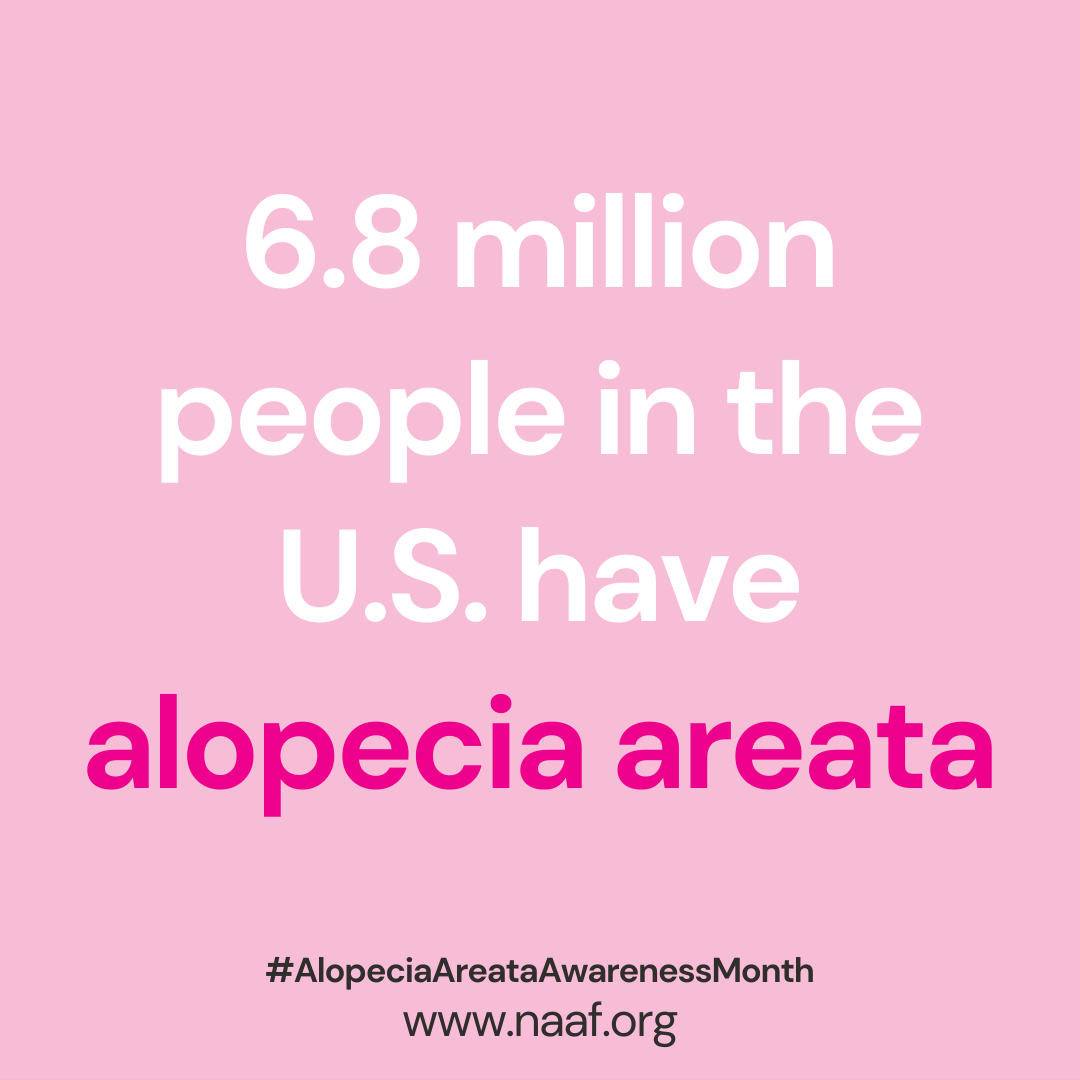
Alopecia areata is a common autoimmune condition that causes hair loss on the scalp, face and other areas of the body. Nearly 7 million people in the United States are affected by the condition that has no cure, effective treatments or standard of care. Alopecia areata can affect anyone at any age and may be temporary or a life-long condition.

Thirty-year-old Ebony Jean was diagnosed with alopecia areata at age four when she started losing clumps of hair, which left patches on her scalp. By the fifth grade, she was living with total permanent hair loss, or alopecia universalis.

Living with alopecia areata is not easy for many – and especially those who are diagnosed at a young age. The condition is plagued with stigma, which can wreak havoc on mental health and well-being. In Jean’s case, not only did she have to deal with the uncertainty and unpredictability of the condition, but she also dealt with traumatizing mistreatment and bullying by her peers and, in some cases, teachers.

“Kids used to ask me questions like, ‘What did you do to your hair?’ and ‘Why is it like that?’” in reference to her wigs, she recalls. “There were rumors that I was a cancer patient. I experienced a lot of rejection despite trying really hard to fit in.”

The mental health toll she experienced was real and still stings her today. However, she never gave up – she focused on herself, her studies and did what she could to stay social.

Enter fashion. Jean always had a passion for fashion and felt its head-to-toe magic for as long as she can remember. It’s a personal way to express herself.

In college, she began dabbling in photography and was able to bring her love for fashion and beauty to life. For many years, she tried altering her appearance to look like others, but something shifted when she turned 25. Jean embraced her inner and outer beauty and started a pageant career. In fact, she was the first African American living with alopecia areata to take the stage in Miss Michigan USA.

In 2016, Jean attended the National Alopecia Areata Foundation’s (NAAF) annual conference – which was a life-changing event for her. She was able to connect with people like herself living with alopecia areata who had embraced their condition. It was the first time Jean publicly shared her story – and struggles – with 500 people in attendance, which she described as “the most freeing and beautiful moment.”

Jean continues to be actively involved in NAAF and uses her voice to advocate for change. Through social media, she helps others who may be going through the same struggle to help educate, empower and motivate – while embracing fashion and beauty.

To learn more about alopecia areata, visit NAAF.org.

Courtesy of Family Features.

If you enjoyed this article, you may also like:

Facts & Stats: The Skinny on Disability and Obesity

0

September is National Childhood Obesity Month; and some people with disabilities, including children, are at a greater risk of obesity.

Facts and statistics can sometimes seem alarming. The following information is presented with the intention to educate and empower.

Overweight and obesity are both labels for ranges of weight that are greater than what is generally considered healthy for a given height. The terms also identify ranges of weight that have been shown to increase the likelihood of certain diseases and other health problems. Behavior, environment, and genetic factors can affect whether a person is overweight or obese.

Adults

For adults, overweight and obesity ranges are determined by using weight and height to calculate a number called the “body mass index” (BMI). BMI is used because, for most people, it correlates with their amount of body fat.

  • An adult who has a BMI between 25 and 29.9 is considered overweight.
  • An adult who has a BMI of 30 or higher is considered obese.
Children

Among children of the same age and sex, overweight is defined on CDC growth charts as a BMI at or above the 85th percentile and lower than the 95th percentile. Obesity is defined as having a BMI at or above the 95th percentile.

Is BMI the Best Assessment for All

Researchers have shown that BMI may not be the best measurement for some people with disabilities.

For example, BMI can underestimate the amount of fat in people with spinal cord injuries who have less lean muscle mass.

Some researchers prefer measuring a person’s waist or neck where extra fat might be on the body, and using other methods to determine if a person is overweight or obese.

The Obesity Epidemic

Obesity affects different people in different ways and may increase the risk for other health conditions among people with and without disabilities.

People with Disabilities
  • Children and adults with mobility limitations and intellectual or learning disabilities are at greatest risk for obesity.
  • 20% of children 10 through 17 years of age who have special health care needs are obese compared with 15% of children of the same ages without special health care needs.
  • Annual health care costs of obesity that are related to disability are estimated at approximately $44 billion.

In the United States
  • More than one-third of adults – more than 72 million people – are obese.
  • Obesity rates are significantly higher among some racial and ethnic groups. Non-Hispanic Blacks or African Americans have a 51% higher obesity prevalence and Hispanics have a 21% higher obesity prevalence than Non-Hispanic Whites.
  • CDC Vital Signs report, titled State-Specific Obesity Prevalence Among Adults – United States, 2009,” points out that people who are obese incurred $1,429 per person extra in medical costs compared to people of normal weight.
  • Annual health care costs of obesity for all adults in the United States were estimated to be as high as $147 billion dollars for 2008.

Challenges Facing People with Disabilities

People with disabilities can find it more difficult to eat healthy, control their weight, and be physically active. This might be due to:

  • A lack of healthy food choices.
  • Difficulty with chewing or swallowing food, or its taste or texture.
  • Medications that can contribute to weight gain, weight loss, and changes in appetite.
  • Physical limitations that can reduce a person’s ability to exercise.
  • Pain.
  • A lack of energy.
  • A lack of accessible environments (for example, sidewalks, parks, and exercise equipment) that can enable exercise.
  • A lack of resources (for example, money, transportation, and social support from family, friends, neighbors, and community members).

Step It Up!

Step It Up! aims to increase walking across the U.S. by calling for access to safe and convenient places to walk and wheelchair roll for people of all ages and abilities.

What can be done?

Obesity is a complex problem that requires a strong call for action, at many levels, for both adults as well as children. More efforts are needed, and new federal initiatives are helping to change our communities into places that strongly support healthy eating and active living.

All people can:
  • Eat more fruits and vegetables and fewer foods high in fat and sugar.
  • Drink more water instead of sugary drinks.
  • Watch less television.
  • Support breastfeeding.
  • Promote policies and programs at school, at work, and in the community that make the healthy choice the easy choice.
  • Be more physically active.

Physical Activity for People with Disabilities

Evidence shows that regular physical activity provides important health benefits for people with disabilities. Benefits include improved cardiovascular and muscle fitness, mental health, balance, and a better ability to do tasks of daily life.

Health Consequences of Overweight and Obesity

Overweight and obesity increases the risk of a number of other conditions, including:

  • Coronary heart disease
  • Type 2 diabetes
  • Cancers (endometrial, breast, and colon)
  • High blood pressure
  • Lipid disorders (for example, high total cholesterol or high levels of triglycerides)
  • Stroke
  • Liver and Gallbladder disease
  • Sleep apnea and respiratory problems
  • Osteoarthritis (a degeneration of cartilage and its underlying bone within a joint)
  • Gynecological problems (abnormal periods, infertility)

For similar content by AmeriDisability, check out these articles:

Source: CDC